Kansas County Treasurer Offices
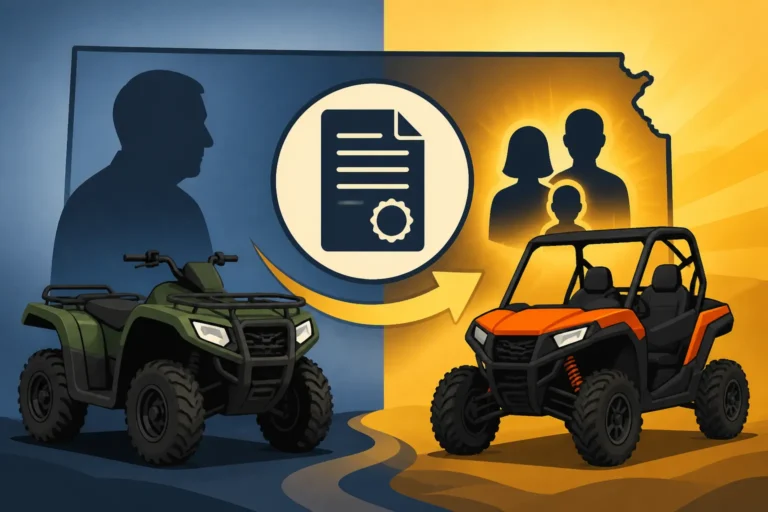
If you've ever tried to title an ATV or UTV in Kansas, you might have felt a bit like you're playing a bureaucratic game of hide-and-seek. Unlike traditional vehicles that usually go through a state DMV, your off-road machine in the Sunflower State has a different path: the local county treasurer's office. This guide is here to demystify that process, walk you through exactly what your local office does for your powersports machine, and help you navigate the paperwork so you can spend less time in line and more time on the trails.
The Essential Role of Your County Treasurer's Office
When it comes to your ATV or UTV in Kansas, the county treasurer's office isn't just another government building; it's the absolute hub for all things titling. Many folks, especially those new to off-road machines or new to Kansas, might instinctively look for a state-level Department of Motor Vehicles (DMV) or a separate OHV agency. But in Kansas, that's not how it works, and understanding this local focus is key to a smooth experience.
More Than Just a DMV Branch
Think of your county treasurer's office as your local, decentralized DMV for most vehicle-related transactions, including the unique category of off-road vehicles. While they handle car and truck titles and tags too, they are also your go-to for your quad or side-by-side. This means that instead of a singular state agency dictating all the nuances, much of the practical application and interaction happens right in your hometown county. It’s a system designed to keep things local, but it can be confusing if you’re expecting a centralized state bureaucracy.
For example, when you purchase a brand-new side-by-side from a dealer in Wichita or a used ATV from a private seller near Dodge City, you won't be sending paperwork off to Topeka. Instead, you'll be heading to the county treasurer's office in Sedgwick County or Ford County, respectively. They are the ones who process the initial title application, handle title transfers, and collect any applicable sales tax. It's a system that can sometimes feel like a lot of local variations, but the core function remains consistent: your off-road machine gets its official state paperwork here, at the county level.
Why Local Matters for Your Off-Road Machine
The decision to route ATV and UTV titling through local county treasurer offices highlights Kansas's approach to these machines. Since most ATVs and UTVs are classified as "nonhighway vehicles" in Kansas, they don't get traditional road tags or annual registrations like cars. This immediately sets them apart and shifts the administrative burden to the local level, where the emphasis is on ownership documentation rather than road legality. [Kansas Titles ATVs as Nonhighway Vehicles] is a great resource if you want to understand this classification more deeply.
Furthermore, your local county treasurer's office is also responsible for collecting sales tax on your purchase. This isn't just state sales tax; it includes the often-overlooked local sales taxes that vary from county to county, and sometimes even within city limits. You'll pay the sales tax rate for the county where you reside, or where the machine will be primarily kept, at the time you title it. This means that if you buy a machine from a dealer in one county but live in another, you'll pay the sales tax rate for your home county when you visit your local treasurer. This local connection is precisely why you need to go to your county's office, not necessarily where you bought the machine.
Understanding the Titling Process for ATVs and UTVs
Titling an ATV or UTV in Kansas involves a specific set of steps and documents, whether your machine is fresh off the dealership floor or a seasoned veteran bought from a private party. The county treasurer's office is your partner in this, helping ensure all the "i"s are dotted and "t"s are crossed.
Initial Titling for New and Used Machines
For a brand-new ATV or UTV, the process typically starts with the Manufacturer’s Certificate of Origin (MCO). This document is essentially the birth certificate of your machine, provided by the dealership. You'll take this MCO, along with proof of identification and payment for the title fee and sales tax, to your county treasurer's office. It's usually a straightforward process, as the MCO clearly establishes the machine's origin and initial ownership. The dealer will often provide you with a temporary tag for your road-legal vehicles, but for ATVs and UTVs, it's just the MCO you'll bring to the treasurer.
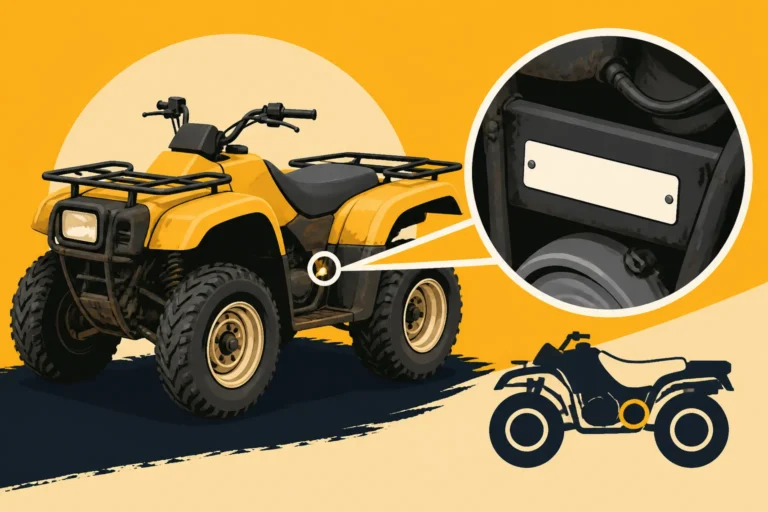
Things get a little more intricate when you're titling a used machine purchased from a private seller. In this scenario, you'll need the previous owner's signed-off title. This is where a clear and comprehensive bill of sale becomes absolutely crucial, detailing the buyer, seller, purchase price, date, and vehicle identification number (VIN). If you're wondering what kind of paperwork you need, [Kansas Title Paperwork Explained] goes into great detail. You can even find templates for a robust bill of sale from resources like LawDepot, which can help ensure all necessary information is included for the county treasurer's office. This helps avoid any questions about the transaction when you get to the counter. Remember, you generally have [Kansas Gives You 60 Days to Apply] for your title from the date of purchase, so don't delay!
The Nonhighway Title Explained
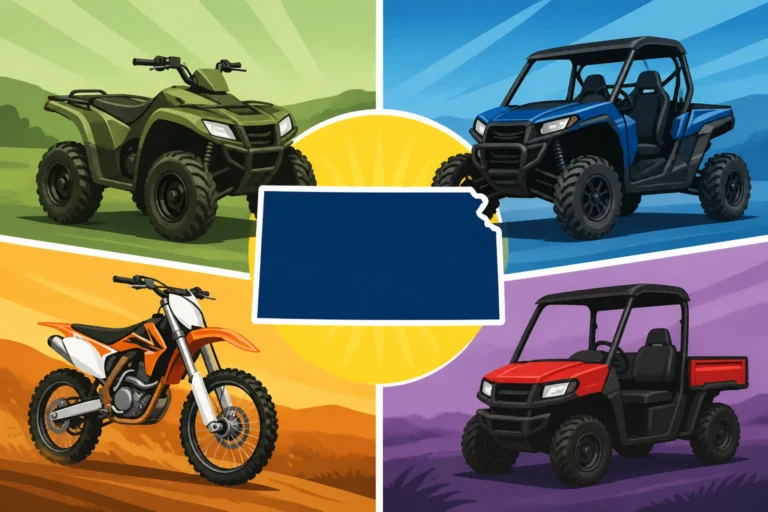
One of the most important distinctions to understand in Kansas is the "nonhighway title." For most ATVs, UTVs (that aren't WSUVs or street-legal golf carts/micro-utility trucks), and dirt bikes, this is the type of title you'll receive. It's an official document of ownership, proving that the machine belongs to you, but it explicitly states that the vehicle is not authorized for regular road use. This classification is fundamental to Kansas law regarding these machines. [Why an ATV Is Titled as a Nonhighway Vehicle] offers more insights into the legislative reasons behind this.
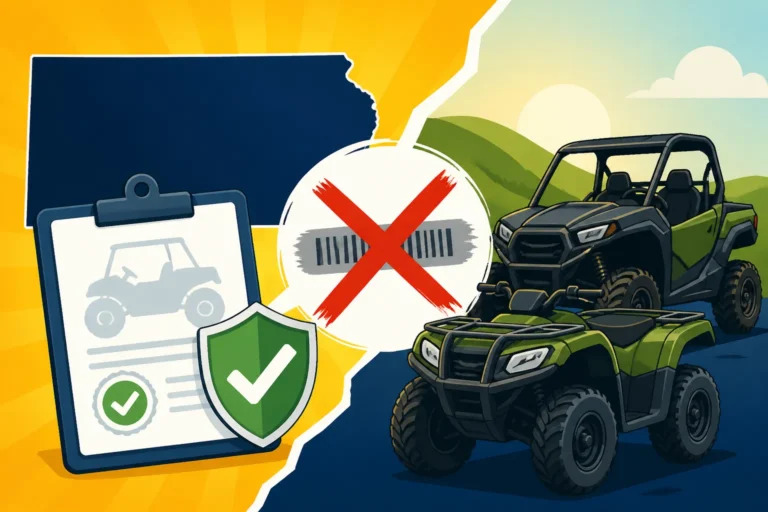
A common point of confusion is that because a nonhighway title proves ownership, some people assume it also comes with a tag or registration for trail riding or even limited road use. However, [Kansas Has No OHV Registration] in the traditional sense, meaning there are no annual renewal fees or license plates issued by the state for these titles. The primary purpose of this title is to track ownership for sales tax purposes and to provide a clear chain of custody, which is vital for both buyers and sellers. The fee for this essential document is usually minimal, often around [Kansas Charges $10 for a Title], making the ownership documentation process relatively affordable.
Common Scenarios and How Your Treasurer's Office Helps
Life happens, and sometimes the titling process isn't as straightforward as walking in with a perfect MCO. Whether you've lost an important document or are trying to transfer ownership in unusual circumstances, your county treasurer's office is equipped to help you navigate these bumps in the road.
Dealing with Lost Titles or Missing Paperwork
It's a common nightmare scenario for any vehicle owner: you've got a great ATV, but the title is nowhere to be found. Perhaps it was lost in a move, damaged, or simply never received from a previous owner who may now be unreachable. The good news is that your Kansas county treasurer's office can assist with replacing a lost title. You'll typically need to fill out an application for a duplicate title and provide identification, and there will be a small fee. This process is detailed further in [Replacing a Lost Kansas Nonhighway Title].
What if there was no title to begin with, or the previous owner never titled it in Kansas? This often happens with older machines, or those purchased at auctions, like a [Titling a Quad Bought at a Farm Auction]. In these cases, the treasurer's office can guide you on the use of a Nonhighway Affidavit, specifically the TR-13. This affidavit, when properly completed, can help establish a chain of ownership and allow you to title the machine. You might need to provide additional documentation like a bill of sale, or a notarized statement from the previous owner if available. For situations where you're starting with minimal paperwork, preparing a comprehensive bill of sale using a resource like LawDepot can be incredibly helpful to provide as much verifiable information as possible. [Kansas Nonhighway Affidavits] is a good read if you're facing this challenge.
Transferring Ownership and Sales Tax Collection
When you buy or sell a used ATV or UTV in Kansas, the transfer of ownership always funnels through the county treasurer's office. As the seller, you'll sign over your existing nonhighway title to the buyer. As the buyer, you'll take that signed title, along with a bill of sale, to your county treasurer's office to apply for a new title in your name. This process ensures a legal and recorded transfer of ownership. [Kansas Titles After a Private Sale] provides a comprehensive look at this process from both sides.
Crucially, this is also where sales tax enters the picture, even for private sales. Unlike many states where sales tax is collected at the point of sale, Kansas mandates that sales tax on off-road vehicles (and other vehicles) be collected by the county treasurer at the time of titling. This means that when you go to get your new title, you’ll also be paying the state and local sales tax on the purchase price you declared on your bill of sale. Your local county treasurer’s office will use the purchase price listed on your bill of sale, along with any trade-in value, to calculate the sales tax owed. Having a clear, detailed bill of sale, possibly created with a template from LawDepot, can simplify this calculation and prevent discrepancies at the counter. [Kansas Sales Tax Collected at Titling] explains this often-surprising aspect of Kansas vehicle purchases.
Work-Site Utility Vehicles WSUVs and Their Unique Titling
Kansas has a specific classification for certain types of utility terrain vehicles (UTVs) known as Work-Site Utility Vehicles, or WSUVs. This category has its own distinct titling requirements and, significantly, offers limited road use privileges under specific conditions that don't apply to standard ATVs or UTVs. This distinction is often a source of confusion for owners, but your county treasurer's office can help clarify it.
What Makes a Machine a WSUV?
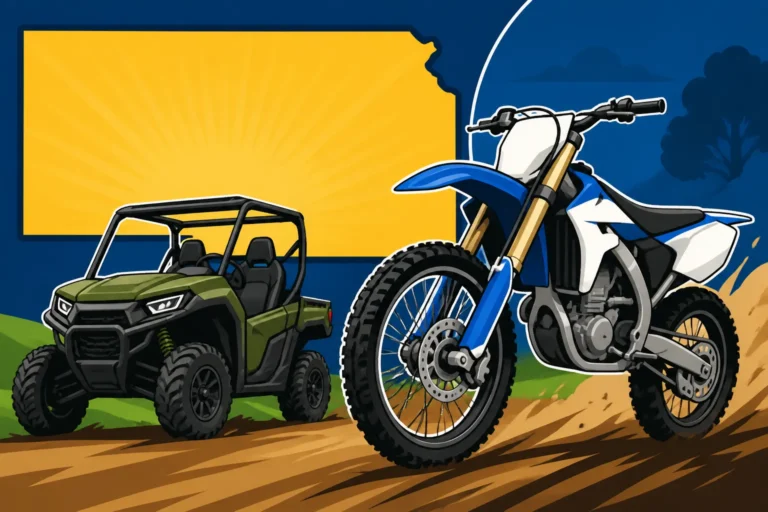
A machine qualifies as a WSUV in Kansas if it meets several specific criteria outlined in state law. First, it must be used primarily for work-related purposes on a work site, such as a farm, ranch, or construction site. Beyond its use, there are clear physical characteristics: the machine must be less than [Kansas WSUV Width of 48 Inches] wide, weigh more than [Kansas WSUV Weight Over 800 Pounds] unladen, and have seating designed for side-by-side passengers, not straddle seating like an ATV. These aren't just arbitrary numbers; they are precise legal definitions that dictate how your machine is titled. [What Makes a Side-by-Side a Work-Site Utility Vehicle] delves deeper into these definitions.
The WSUV classification is unique to Kansas. Many out-of-state visitors or new residents are often surprised by it because [The Work-Site Utility Vehicle Class No Neighbor State Has]. This means if you're coming from Missouri or Oklahoma, the machine you called a UTV might fall into this specific WSUV category in Kansas, which could affect its titling and potential for limited road use. It's crucial to understand these specifications because if your UTV fits these criteria, it will be titled as a WSUV, which is distinct from a generic "nonhighway vehicle" title.
Titling and Road Use for WSUVs
Titling a WSUV follows a process similar to other nonhighway vehicles, handled by your county treasurer's office. You'll still need the MCO for new machines or a signed-off title and bill of sale for used ones. The key difference lies in the specific WSUV designation on the title itself. This distinction is important because, unlike standard ATVs or UTVs that receive a basic nonhighway title and are generally banned from public roads, WSUVs have statutory exceptions for limited road use.
These exceptions are typically tied to agricultural or work-site purposes, allowing WSUVs to operate on certain county and township roads for short distances or to cross highways under specific conditions. However, having a WSUV title doesn't grant unrestricted street-legal status. It's a conditional allowance. Your county treasurer's office will ensure your machine is properly classified and titled, setting the foundation for any authorized road use. Understanding [Kansas Work-Site Utility Vehicle Road Rules] is vital, and always remember to check local city or county ordinances, as they can impose additional restrictions even on WSUVs.
Navigating the County Treasurer's Office Experience
A trip to the county treasurer's office can be quick and painless, or it can be a frustrating exercise in multiple trips and forgotten documents. A little preparation goes a long way to ensure you're in and out efficiently, getting your ATV or UTV titled without a hitch.
What to Bring to Avoid Multiple Trips
One of the most common reasons for needing a second trip to the treasurer's office is missing paperwork. To save yourself time and hassle, always gather all necessary documents before you go. For a new machine, this means the Manufacturer's Certificate of Origin (MCO), a valid photo ID, and payment for the $10 title fee and sales tax. For a used machine, you'll need the previous owner's signed-off title, a complete bill of sale (which you might draft using a reliable template from a service like LawDepot), and your photo ID and payment. [What to Bring to the Treasurer's Office to Title] provides an excellent checklist to help you prepare.
It’s also wise to bring proof of your Kansas address, such as a utility bill, if your driver's license doesn't reflect your current residency. Regarding payment, most county treasurer offices accept various forms, including cash, checks, and often debit or credit cards (though credit card payments may incur a small processing fee). It’s always a good idea to confirm acceptable [Kansas Title Payment Methods] with your specific county office beforehand, especially if you plan to pay with a card. Having everything organized will make the process much smoother for both you and the clerk assisting you.
Common Questions and Tips for a Smooth Visit
County treasurer offices handle a high volume of transactions, so patience is always a virtue. To make your visit as smooth as possible, consider calling ahead, especially if you have a unique titling situation or just want to confirm office hours and peak times. This can save you a long wait. Clerks hear a lot of [Kansas Title Questions Treasurers Hear], so don't be shy about asking your specific questions before you arrive or at the counter. They are there to help clarify the process.
You might also have questions about things like changing an address on your title if you've recently moved within Kansas. While the primary focus during titling is establishing ownership and collecting tax, most offices can also process minor administrative updates like an [Kansas Title Address Change] during your visit. Be prepared for potential wait times, especially mid-day or at the end of the month. Arriving early in the morning or later in the afternoon can sometimes lead to a quicker experience. The goal is to walk in prepared, ask questions if you have them, and leave with your off-road machine legally titled.
Required Documents for Titling an ATV/UTV in Kansas
To help summarize, here's a quick reference for the documents you'll generally need when visiting your Kansas County Treasurer's Office to title an ATV, UTV, or WSUV. Remember that specific situations (e.g., inherited machines, missing VINs) might require additional documentation, so always call ahead if you have a unique case.
| Document Type | New Machine Purchase | Used Machine Purchase (Titled) | Used Machine Purchase (Untitled/Affidavit) | Replacement of Lost Title |
|---|---|---|---|---|
| Proof of Ownership | Manufacturer's Certificate of Origin (MCO) | Previous Owner's Signed Title | Bill of Sale (detailed) & TR-13 Affidavit | Your Photo ID & Previous Title Info |
| Proof of Purchase Price | Dealer Invoice | Bill of Sale (detailed, signed by seller & buyer) | Bill of Sale (detailed, signed by seller & buyer) | Not Applicable |
| Identification | Valid Photo ID (Driver's License) | Valid Photo ID (Driver's License) | Valid Photo ID (Driver's License) | Valid Photo ID (Driver's License) |
| Proof of Residency | Utility Bill or Lease (if ID address is outdated) | Utility Bill or Lease (if ID address is outdated) | Utility Bill or Lease (if ID address is outdated) | Utility Bill or Lease (if ID address is outdated) |
| Payment | Title Fee ($10) & Sales Tax (State & Local) | Title Fee ($10) & Sales Tax (State & Local) | Title Fee ($10) & Sales Tax (State & Local) | Duplicate Title Fee ($10-15 typical) |
| Additional (If Applicable) | Any lien holder information | Any lien release documentation, or lien holder info | Notarized statements, photographs of VINs | Lien release (if financed) |
Remember, the county treasurer's office is your partner in this process. Don't hesitate to reach out to them directly with questions specific to your situation. Being prepared is the best way to ensure your off-road adventures start with all the proper paperwork in order!
Disclaimer
This article is for general informational purposes only and does not constitute professional advice. Laws, prices and regulations vary by location and change over time. Consult a qualified professional for guidance on your specific situation.