Choosing the Right Class on a Form
Kansas off-road vehicle classifications help owners correctly title ATVs and work-site utility vehicles on official forms.
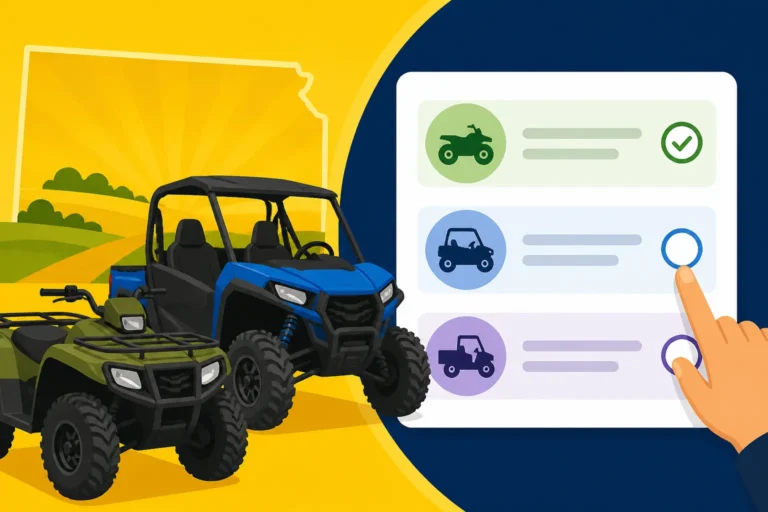
Kansas off-road vehicle classifications help owners correctly title ATVs and work-site utility vehicles on official forms.
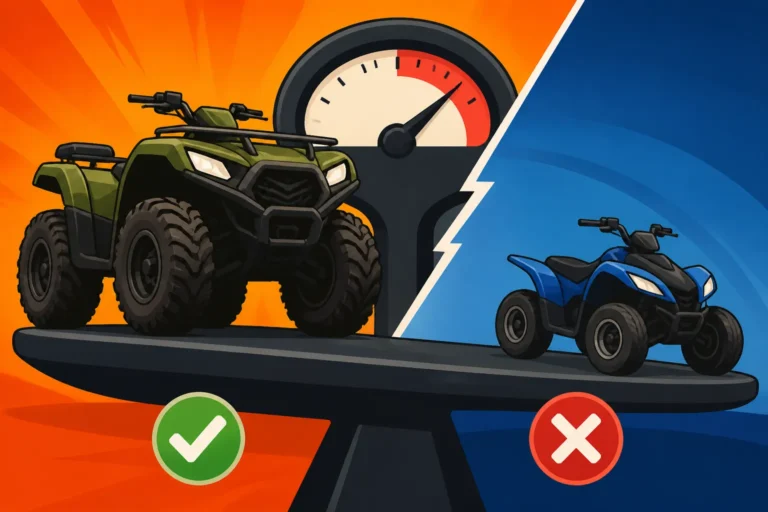
Kansas work-site utility vehicle laws use an 800-pound weight floor that excludes small ATVs and side-by-sides.
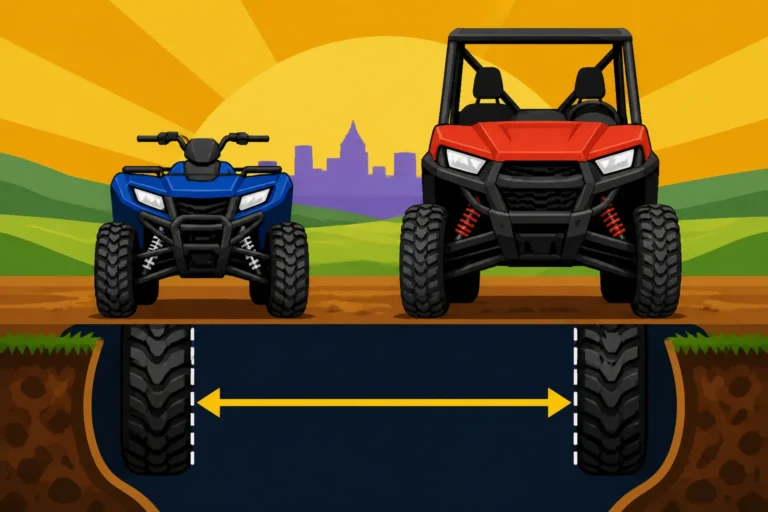
Kansas Work-Site Utility Vehicle classification rules require a maximum width of forty-eight inches for proper state titling and registration.
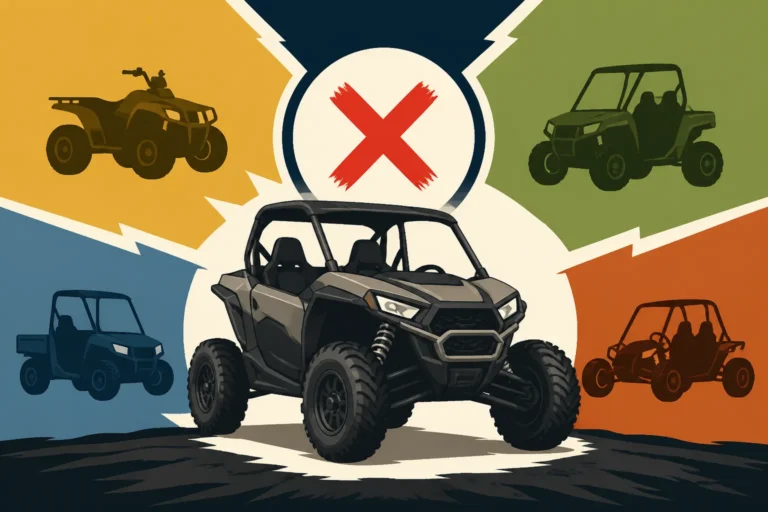
Kansas off-road vehicle classes and titling rules explain what happens when unique machines fit no standard legal category.

Kansas Statute 8-15,100 explains why vehicle definitions and legal classifications determine public road access and restrictions for ATVs.

Kansas Chapter 8 defines an all terrain vehicle using four or more low pressure tires, a straddle seat, and handlebars.
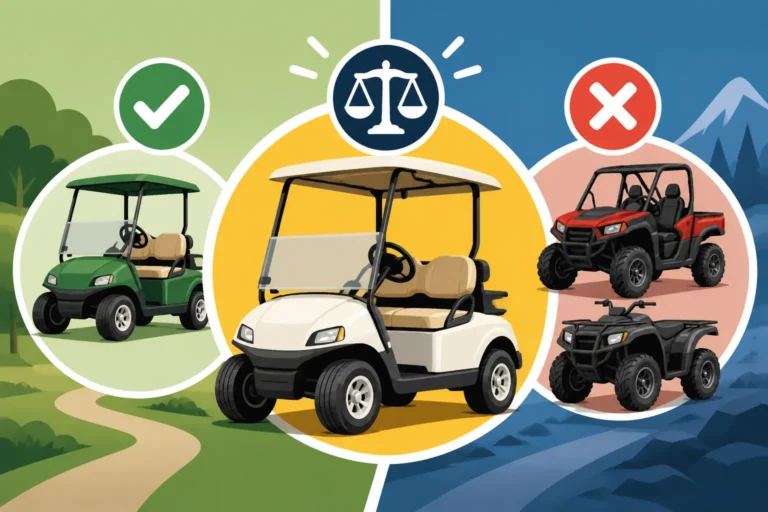
Kansas law defines a golf cart by unladen weight limits, speed ranges, and its original course design purpose.
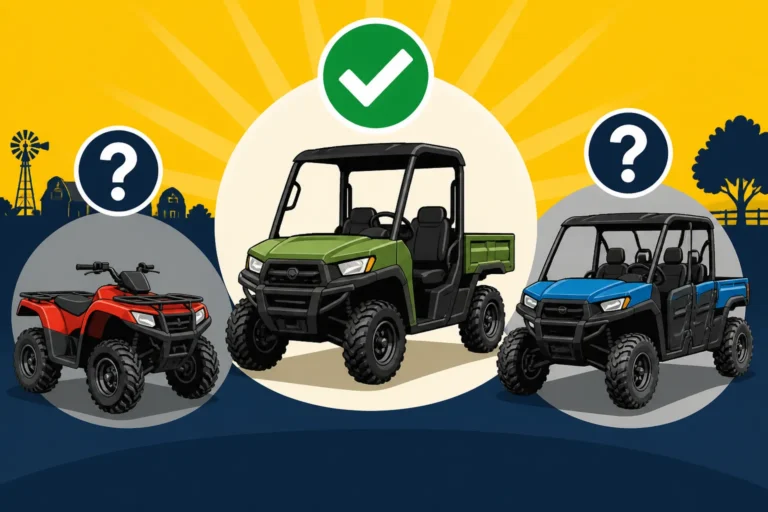
Kansas law defines micro utility trucks by enclosed cabs, cargo beds, and lower operating speeds for work tasks.

Kansas law recognizes four distinct off-road classes, determining titling rules, sales tax payments, and where machines can legally operate.

Questions for the Kansas County Treasurer Office explain nonhighway titles, required paperwork, and agricultural exceptions for ATVs.