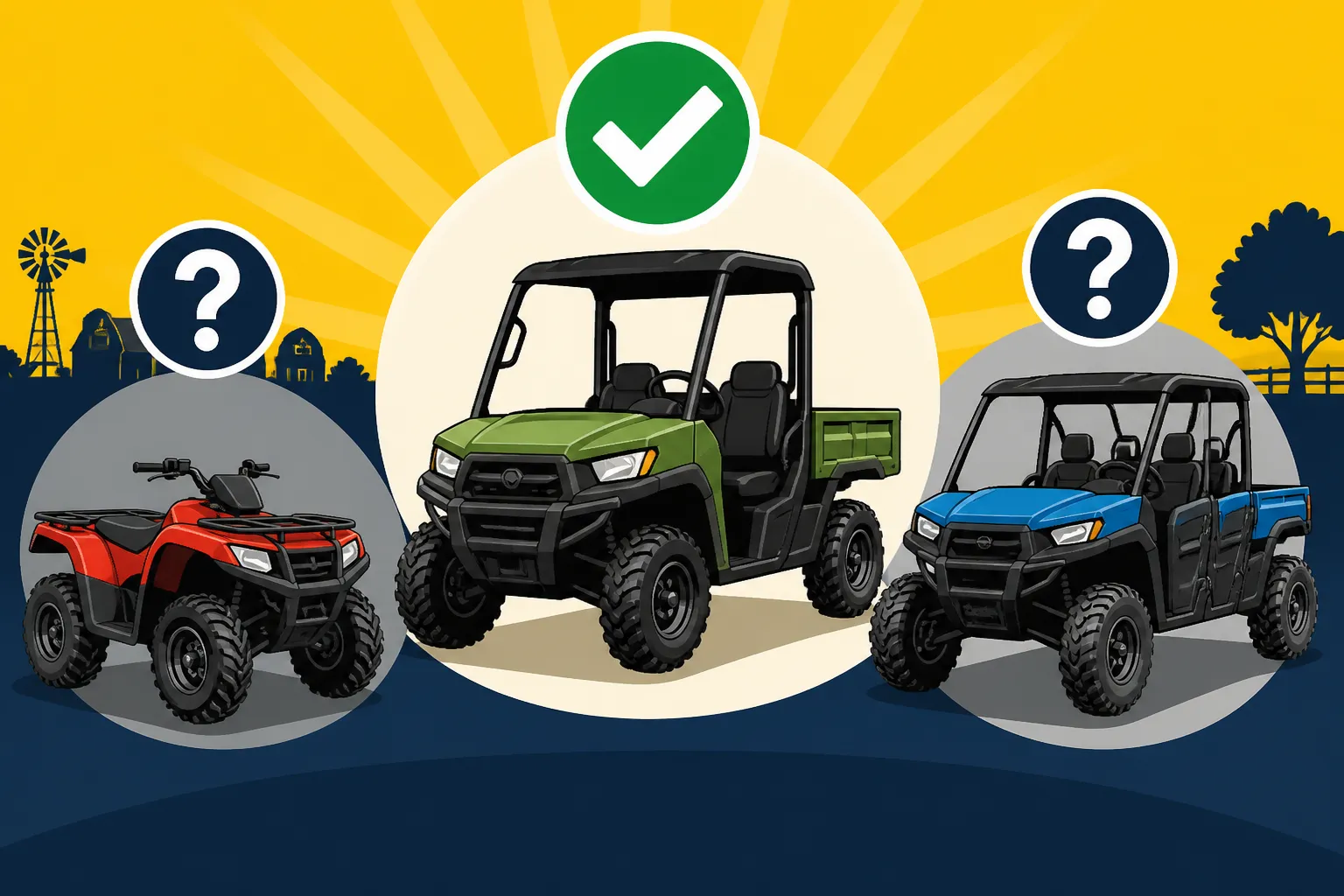
What Counts as a Micro Utility Truck
It's incredibly frustrating when you're trying to figure out the rules for your off-road machine in Kansas, only to find a bewildering array of terms like ATV, UTV, golf cart, and then, suddenly, "Micro Utility Truck." What even is that? Is it a tiny pickup? A souped-up golf cart? This guide is here to cut through the confusion and explain exactly what Kansas law considers a Micro Utility Truck, how it differs from other vehicles, and what that means for you as an owner or potential buyer.
Defining the Micro Utility Truck in Kansas Law
Kansas has its own way of classifying off-road vehicles, and the Micro Utility Truck (MUT) is one of those unique categories that can really throw people for a loop. Unlike an All-Terrain Vehicle (ATV) that's built primarily for single-rider recreational thrills, or a Side-by-Side (UTV) often used for both work and play, the Micro Utility Truck carved out its own niche in the state's statutes. It's specifically designed with a different primary purpose in mind, and that purpose drives its legal definition.
The Statutory Definition: Breaking Down the Legal Language
When you dig into Kansas state law, a Micro Utility Truck is defined quite distinctly. It's generally described as a motor vehicle that is not originally manufactured to meet federal motor vehicle safety standards for highway operation, but it’s still distinct from your typical ATV or UTV. The key elements of its definition usually revolve around its physical characteristics:
- Enclosed Cab: Unlike many open-air ATVs or UTVs, a Micro Utility Truck typically features an enclosed cab, offering more protection from the elements. This isn't just a simple windshield and roof; we're talking about a more complete enclosure.
- Cargo Bed: A defining feature is often a cargo bed, much like a small pickup truck, designed for hauling materials or equipment. This immediately points to its utility-focused design rather than a recreational one.
- Seating Capacity: It's often designed to carry a limited number of passengers, typically two, side-by-side, within that enclosed cab.
- Weight and Dimensions: While specific figures aren't always universally applied across definitions, Micro Utility Trucks are usually heavier and sometimes wider than many standard ATVs. They are, however, still "micro" compared to a full-size pickup.
- Speed Limitations: These vehicles are typically engineered for lower speeds than standard automobiles, making them suitable for specific types of tasks or environments rather than high-speed highway travel.
It's this combination of characteristics that really locks in its classification. If you're looking at a machine and wondering, "Is this what they mean?" you should be thinking about a small, enclosed utility vehicle with a bed, built for work around a specific property or limited area.
Key Characteristics: Size, Speed, Purpose
To really understand what counts as a Micro Utility Truck, let's break down the practical aspects beyond just the legal text. First off, its purpose is paramount. These vehicles are intended for utility tasks – think campus maintenance, large industrial facilities, gated communities, or specific work sites where a full-size truck is too large or unnecessary, and a golf cart is too flimsy or lacks cargo capacity. They're not generally bought for ripping through trails or hunting expeditions, though they might traverse some rough terrain within their designated work zones.
Their size, while "micro," is still substantial enough to perform serious work. They are often equipped with features like sturdy suspension, heavier-duty tires, and sometimes even heating or air conditioning within their enclosed cabs, things you wouldn't typically find on a basic golf cart. Their speed is another limiting factor; they are designed to operate safely at lower speeds, usually under 25 or 30 miles per hour, which is a critical distinction when it comes to road legality. This speed constraint means they aren't meant for fast-moving public roads but are perfectly suited for navigating properties or very specific low-speed areas. If you need to complete paperwork for one of these, especially if you're engaging in a private sale, services like LawDepot can assist you in drafting proper documentation to ensure all parties are protected.
Why the "Micro Utility Truck" Designation Matters
Understanding whether your vehicle falls into the Micro Utility Truck category in Kansas is more than just academic; it has direct, real-world implications for how you can own, title, and operate it. The state's classifications aren't arbitrary; they dictate everything from what paperwork you need to where you're legally allowed to drive.
Titling and Registration Differences: How It's Handled at the County Treasurer's Office
One of the biggest impacts of a vehicle being classified as a Micro Utility Truck in Kansas is how it's handled at the county treasurer's office. Unlike passenger cars or trucks, or even some larger UTVs that might be titled as a [Work-Site Utility Vehicle], the Micro Utility Truck often has a specific set of requirements.
Kansas generally titles ATVs as [Kansas Titles ATVs as Nonhighway Vehicles], meaning they don't get a regular vehicle registration or annual tag. Micro Utility Trucks, however, might fall into a different category depending on their specific characteristics and how the manufacturer originally designated them. It’s crucial to know that while your ATV might simply receive a [Kansas's Nonhighway Title Explained], a Micro Utility Truck might require slightly different forms or a specific classification from the Department of Revenue if it meets certain criteria for on-road use under local ordinances. When you go to title your machine, whether it's an ATV or a Micro Utility Truck, you'll be dealing with the [Kansas County Treasurers Handle Titles], not a state-level agency directly for the initial process. The cost for a title generally involves a standard fee, which is typically a modest flat rate. You also have a deadline; [Kansas Gives You 60 Days to Apply] for your title after purchasing the vehicle. If you're trying to figure out the exact forms or process, a good place to start is often a general bill of sale, which you can create using a reliable template, sometimes found on platforms like LawDepot. This ensures you have proof of ownership for the titling process.
Road Use and Restrictions: Where Can You Drive It?
This is where the rubber meets the road, quite literally. The classification of your vehicle as a Micro Utility Truck heavily influences where you can legally operate it. By default, many off-road vehicles, including most ATVs and UTVs, are generally prohibited from public roads in Kansas. However, Micro Utility Trucks sometimes exist in a grey area or have specific allowances, especially within the confines of certain city ordinances or private properties.
For instance, while [Kansas Bans ATVs Inside City Limits by Default], some cities in Kansas have passed ordinances that allow for the limited operation of certain types of utility vehicles, which could include Micro Utility Trucks, on city streets. These ordinances usually come with strict stipulations regarding speed limits, required safety equipment (like lights, turn signals, and mirrors), and specific areas of operation. You might find that a Micro Utility Truck can be driven on a city street posted 25 mph or less, but certainly not on a high-speed highway or an interstate. It's not uncommon for these allowances to be tied to a specific permit or city tag that you'd obtain directly from the local municipality, like the [Louisburg's UTV Tag Fees in Kansas] for UTVs, which might extend to Micro Utility Trucks under certain conditions.
It's vital to check with your local city or county government for their specific rules, as [Kansas UTV Street Legal Rules by City] can vary dramatically. What's allowed in one town might lead to a hefty ticket in another. The intent of the Micro Utility Truck classification is usually to facilitate its use for specific work applications, not general transportation. This means if you're on a ranch, construction site, or a sprawling campus, it's perfectly at home. If you're planning a trip to the grocery store, you might need to reconsider.
Micro Utility Truck vs. Other Kansas Off-Road Vehicles
The biggest source of confusion often comes from trying to distinguish a Micro Utility Truck from its more common off-road cousins. While they might share some characteristics, their fundamental design, purpose, and legal treatment in Kansas are quite different. Understanding these distinctions is key to avoiding legal trouble and ensuring you have the right machine for your needs.
How It Differs from ATVs and Side-by-Sides
Let's clear up the primary differences between a Micro Utility Truck and your typical ATV or side-by-side (UTV) in Kansas:
| Feature | Micro Utility Truck | All-Terrain Vehicle (ATV) | Side-by-Side (UTV) |
|---|---|---|---|
| Primary Purpose | Work, utility tasks, hauling, property maintenance | Recreational, sport riding, trail exploration | Work (farm, ranch) & recreational (trails, hunting) |
| Seating | Usually side-by-side, enclosed cab, 2 passengers | Straddle seat, 1-2 passengers | Side-by-side bench/bucket, 2+ passengers |
| Steering | Steering wheel | Handlebars | Steering wheel |
| Cab | Typically enclosed with a roof, windshield, doors | Open-air, no full enclosure | Often open-air, some models with partial enclosure |
| Cargo Area | Dedicated cargo bed | Rear rack, sometimes small storage box | Cargo bed (larger than ATV's), often tiltable |
| Speed | Lower top speeds (e.g., <25-30 mph) | Moderate to high top speeds | Moderate to high top speeds |
| Titling (KS) | Specific utility vehicle title, varies by specific characteristics/local ordinance | [Kansas's Nonhighway Title Explained] | [Titling a Side-by-Side in Kansas] (often nonhighway or Work-Site Utility Vehicle) |
| Road Use (KS) | Limited, often by local ordinance, specific work sites | Generally prohibited, very limited exceptions | Generally prohibited, specific work/farm exceptions |
As you can see, the Micro Utility Truck leans heavily into the "utility" aspect, often resembling a miniature work vehicle more than a recreational one. ATVs are designed for active, dynamic riding, with the rider straddling the machine. Side-by-sides bridge the gap, offering utility and recreation, but even they typically don't have the fully enclosed, lower-speed, dedicated work focus of a Micro Utility Truck. The [Kansas Machines Exempt From Registration] list usually includes ATVs because of their nonhighway classification, but Micro Utility Trucks might have different local requirements if they qualify for any limited road use.
Distinguishing from Golf Carts: Why It's Not Just a Fancy Golf Cart
This is another common point of confusion, especially since some golf carts can be customized with lift kits, aggressive tires, and even small cargo beds. However, there are fundamental differences that Kansas law often recognizes:
- Construction and Durability: Micro Utility Trucks are generally built with a more robust chassis, suspension, and drivetrain than a typical golf cart. They are designed for heavier loads and more demanding tasks than cruising around a golf course or a quiet neighborhood.
- Engine vs. Electric Focus: While both can be electric, many Micro Utility Trucks come with more powerful internal combustion engines or heavy-duty electric motor systems designed for sustained work. Golf carts, even gas-powered ones, are usually optimized for lighter duty and shorter bursts of activity.
- Safety Features: Micro Utility Trucks often incorporate more advanced safety features, reflective of their intended use in potentially more challenging environments. They might have more substantial roll-over protection, heavier-duty braking systems, and more comprehensive lighting than a basic golf cart.
- Purpose-Built Design: At its core, a golf cart is for golf. A Micro Utility Truck is for work. Even if a golf cart has been modified to look more like a utility vehicle, its underlying design principles and components are typically still those of a golf cart.
These distinctions are critical because [Kansas Golf Cart Road Rules] are often very specific and different from those that might apply to a Micro Utility Truck, especially regarding speed limits, designated crossing points, and equipment requirements.
Practical Examples and Scenarios: When You Might Encounter One
So, where are you most likely to see a Micro Utility Truck in action?
- Large Estates and Ranches: For landowners with extensive property, a Micro Utility Truck is perfect for moving tools, feed, or equipment across fields and driveways without needing a full-size truck. It’s an efficient workhorse.
- University Campuses: Many universities use these vehicles for groundskeeping, maintenance, security patrols, and moving supplies between buildings. Their compact size and lower speed make them ideal for navigating pedestrian-heavy areas.
- Industrial Complexes and Warehouses: Inside large facilities, they can transport parts, tools, or personnel quickly and efficiently, often in areas where larger vehicles are impractical or prohibited.
- Gated Communities or Retirement Villages: For residents or staff needing to get around and perform light tasks, a Micro Utility Truck offers more utility than a golf cart while remaining compact and maneuverable.
- Fairgrounds and Event Venues: During setup, tear-down, or throughout an event, these trucks are invaluable for moving equipment, managing waste, and providing assistance over spread-out areas.
These scenarios highlight the "utility" aspect of the Micro Utility Truck. It's about getting work done efficiently in specific, often low-speed, environments. If you're considering buying one, perhaps through a private sale, make sure you have a clear [Kansas Title Paperwork Explained] and consider using a reliable service like LawDepot to generate a comprehensive bill of sale, ensuring all details are captured correctly. This helps protect both the buyer and seller, especially with a vehicle that might have a nuanced classification.
Disclaimer
This article is for general informational purposes only and does not constitute professional advice. Laws, prices and regulations vary by location and change over time. Consult a qualified professional for guidance on your specific situation.