Why an 800-Pound Weight Floor Excludes Small Quads
It can be incredibly confusing trying to figure out how your specific off-road machine fits into Kansas's titling laws. Many folks assume all side-by-sides are treated the same, or that a larger ATV automatically gets a different title, only to run into a brick wall at the county treasurer's office. This guide is here to untangle the specific question of the 800-pound weight floor and why it's so critical for classifying certain machines, particularly explaining why smaller quads typically fall outside that specific designation, even if they still need a title.
Understanding Kansas's Nonhighway Vehicle Classes
Kansas law has a very specific way of looking at off-road vehicles, and it's not always as straightforward as "it's an ATV, so it's a nonhighway vehicle." While that's often true, understanding the nuances can save you a lot of headaches when you go to title your machine. The state categorizes these machines to ensure they're titled correctly, even if they aren't registered for road use like a car or truck.
The Broad Category: Nonhighway Vehicles
First things first, most of the off-road machines we love to ride in Kansas—ATVs, dirt bikes, and many side-by-sides—fall under the general umbrella of "nonhighway vehicles." This means, quite simply, that they are not designed or manufactured for general use on public highways. This distinction is crucial because it dictates the type of title you'll receive and the rules that apply to your machine. You won't be getting a standard vehicle registration or annual tag for these.
It's easy to assume "nonhighway" means "no paperwork," but that's a common misconception that can lead to problems down the road. Even though these machines aren't driven on public roads in the same way cars are, they still represent a significant investment and, just like any other motor vehicle, require proper documentation of ownership. This is where the nonhighway title comes into play, establishing legal ownership and protecting you from issues like theft or disputes during a private sale. For more detailed information on this, you can look into [Kansas Titles ATVs as Nonhighway Vehicles] or [How Kansas Law Defines a Nonhighway Vehicle].
Different Sub-Classes Within Nonhighway
Within this broad nonhighway vehicle category, Kansas further refines its classifications based on specific characteristics of the machine. These sub-classes include all-terrain vehicles (ATVs), recreational utility vehicles, micro utility trucks, golf carts, and a special category known as work-site utility vehicles (WSUVs). Each of these has its own set of definitions, often based on things like width, weight, seating configuration, and steering mechanism.
The reason for these different classes isn't just to make things complicated; it's because different types of machines are designed for different purposes and may have varying legal implications, especially if they ever touch public roads under specific, limited circumstances. For example, a golf cart might have very different rules for crossing a street than a high-performance sport UTV. Understanding which sub-class your machine falls into is the first step in correctly navigating the titling process and understanding any potential usage restrictions.
The 800-Pound Weight Floor and Work-Site Utility Vehicles (WSUVs)
When you start digging into Kansas titling rules for utility vehicles, you'll inevitably bump into the concept of the "work-site utility vehicle," or WSUV. This particular classification has a very specific set of criteria, and a key one—the 800-pound unladen weight floor—is often misunderstood, leading to confusion about why some UTVs and almost all ATVs don't fit this designation.
What Defines a Work-Site Utility Vehicle?
A Work-Site Utility Vehicle (WSUV) in Kansas isn't just any side-by-side that you use for work. The law defines it quite precisely. To qualify as a WSUV, a machine must meet several specific requirements. It needs to be designed for off-road use, primarily for maintenance, utility, or landscaping tasks. Critically, it must have a steering wheel (not handlebars like an ATV), bench or bucket seating designed for side-by-side passengers, and a width of no more than 48 inches.
However, the weight requirement is where many machines are either included or excluded. A WSUV must have an unladen (empty) dry weight of more than 800 pounds. This is a very important threshold. These machines are typically heavier-duty, often found on construction sites, large properties, or commercial landscaping jobs. For a deeper dive, check out [Kansas Work-Site Utility Vehicles Explained] or [What Makes a Side-by-Side a Work-Site Utility Vehicle].
Why the 800-Pound Threshold Matters
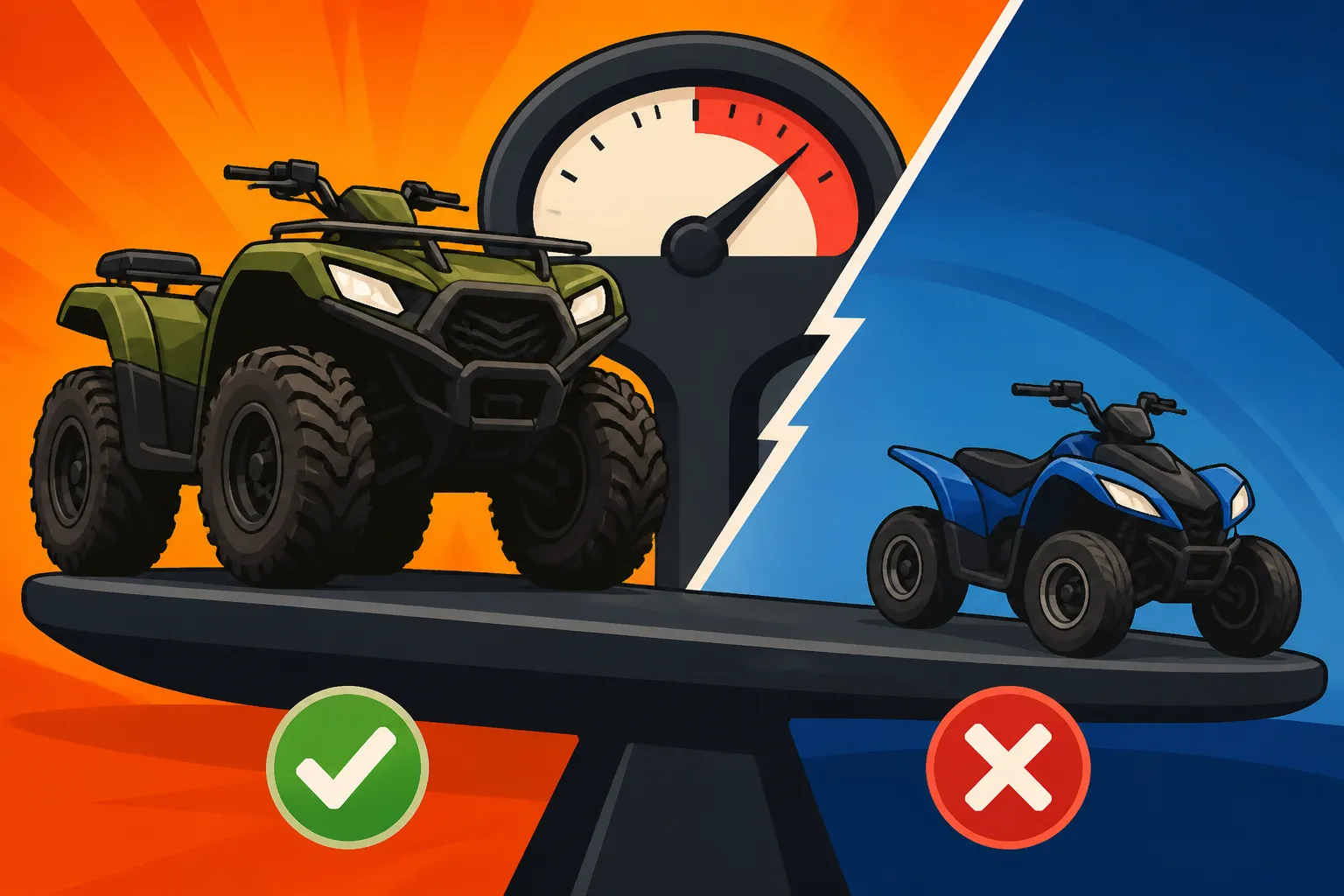
The 800-pound unladen weight floor is not an arbitrary number. It serves as a legal distinction to differentiate more robust, utility-focused machines from lighter-weight recreational vehicles or standard ATVs. Machines exceeding this weight often come with more powerful engines, larger frames, and enhanced carrying or towing capacities, which are hallmarks of a machine truly designed for significant work applications rather than just recreational trail riding.
This weight floor, combined with the other defining characteristics like a steering wheel and side-by-side seating, helps the state categorize these vehicles for specific purposes. While WSUVs are still generally nonhighway vehicles, their classification can sometimes grant them particular, limited exceptions for road use within certain communities or work environments that might not apply to lighter, more recreational machines. So, when you see references to [800 Pounds Unladen for a Work-Site Vehicle], know that it's a critical legal marker for this specialized class.
How Small Quads Are Excluded by Weight
Here's where the core question of why small quads are excluded from this WSUV classification becomes clear: they simply don't meet the minimum 800-pound weight requirement. Most traditional ATVs, especially smaller or youth models, weigh significantly less than 800 pounds. Even many full-size, adult ATVs can hover around 500-700 pounds, making them fall short of the WSUV definition.
Because they don't meet the weight floor, and typically also lack a steering wheel and side-by-side seating, ATVs are simply classified as "all-terrain vehicles" within the broader nonhighway vehicle category. This doesn't mean they aren't titled; it just means they don't get the specific WSUV designation. This is an important distinction to grasp, as misunderstanding it can lead to confusion about your machine's legal status and potential road-use rules, if any, that might apply.
How an ATV's Weight Impacts Its Title Classification
Understanding the weight distinctions for Kansas nonhighway vehicles can feel like navigating a maze, but it's crucial for properly titling your machine. The key takeaway here is that an ATV's typical weight excludes it from being classified as a Work-Site Utility Vehicle (WSUV), but it absolutely does not exclude it from needing a title.
ATVs Don't Meet WSUV Weight Criteria
The vast majority of All-Terrain Vehicles (ATVs), whether they are sport quads designed for speed and agility or utility ATVs built for chores around the farm, almost universally fall below the 800-pound unladen weight threshold required for a Work-Site Utility Vehicle. A typical sport ATV might weigh anywhere from 350 to 500 pounds, while a larger utility ATV could be in the 600 to 750-pound range.
This means that while your ATV is definitely a "nonhighway vehicle," it will not be specifically titled as a "Work-Site Utility Vehicle" at the county treasurer's office. This is a fundamental difference in classification, and it's essential to understand that just because your machine is powerful or capable of work, it doesn't automatically make it a WSUV in the eyes of Kansas law. Its physical characteristics, especially its weight, steering, and seating, are what determine its legal designation.
Implications for Titling Your Quad
So, what does this mean for titling your ATV? It means you will still go through the standard nonhighway vehicle titling process, but your machine will simply be identified as an "All-Terrain Vehicle" on its title. This is precisely why [Why an ATV Is Titled as a Nonhighway Vehicle] is such a common and important question. The 800-pound weight floor isn't about whether your ATV needs a title; it's about which specific category within the nonhighway vehicle umbrella your machine belongs to.
This distinction is important because different categories can sometimes have different rules, particularly concerning potential, limited road use if a local municipality has an ordinance. However, the foundational requirement to establish ownership through a title remains the same for all nonhighway vehicles. When you visit the treasurer's office, they will use the manufacturer's Certificate of Origin (MCO) and the machine's stated characteristics to determine the correct classification before issuing your [Kansas Nonhighway Title Explained].
Titling Your Machine: What You Need to Know (Regardless of Weight)
Regardless of whether your machine is a lightweight ATV, a heavier WSUV, or another type of nonhighway vehicle, the core process for titling in Kansas remains consistent. It's a critical step that establishes legal ownership, protects your investment, and is generally required before you can legally ride or sell your machine. Don't let the classification details deter you from completing this essential paperwork.
Your Local County Treasurer Is Key
When it comes to titling any off-road vehicle in Kansas, your first and primary stop will be your local county treasurer's office. This is where all vehicle titling in Kansas happens, not at a state-level agency. The staff there are well-versed in the various classifications and requirements, though it's always a good idea to call ahead and confirm their specific hours and any unique local requirements. They are the gatekeepers to getting your machine properly documented.
It's common for people to think they need to visit a state office or that the process for an off-road vehicle is entirely different from a car, but it's handled right there in your county. The same office that issues titles for cars, trucks, and motorcycles will be the one processing your nonhighway vehicle title application. Be sure to check your county's specific office, as rules and staffing can vary slightly from place to place. More information on this can be found at [Kansas County Treasurers Handle Titles].
Essential Paperwork You'll Need
Gathering the correct paperwork is paramount to a smooth titling process. For a new machine, you'll need the Manufacturer's Certificate of Origin (MCO), which acts as the birth certificate for your vehicle. For a used machine, you'll need the previously issued title, properly signed over to you. In both cases, a bill of sale is crucial, even if it's a simple handwritten document. This document verifies the purchase price, which is essential for calculating sales tax. If you're looking for a reliable template, resources like LawDepot offer printable bill of sale forms that can simplify this step.
Other documents you might need include proof of identification, proof of address, and funds to cover the titling fee and any applicable sales tax. If you purchased your machine from a private seller and the original title is missing, you might need to use specific affidavits or other forms, so it's always best to contact your treasurer's office beforehand to understand all possibilities. You can learn more about this by checking out [Kansas Title Paperwork Explained] or [How to Title an ATV in Kansas].
Don't Miss the 60-Day Deadline
Kansas law gives you a strict 60-day window from the date of purchase (or assignment date on the title) to apply for your new title. This isn't just a suggestion; it's a legal requirement. Failing to title your machine within this timeframe can result in penalties and additional fees. Life gets busy, but marking this deadline on your calendar immediately after acquiring your machine can save you money and hassle.
The clock starts ticking the moment ownership is transferred, whether that's when you drive off the dealer's lot or shake hands with a private seller. Even if you're using a template from a service like LawDepot for your bill of sale, ensure the date is accurately recorded, as this is what the county treasurer will use to determine if you're within the 60-day window. Plan to visit the treasurer's office well before the deadline to avoid any last-minute stress or unexpected charges. More details on this can be found in [Kansas Gives You 60 Days to Apply] and [Sixty Days From the Assignment Date].
Here's a quick comparison of the key characteristics that differentiate ATVs and WSUVs in Kansas:
| Feature | All-Terrain Vehicle (ATV) | Work-Site Utility Vehicle (WSUV) |
|---|---|---|
| Steering | Handlebars | Steering Wheel |
| Seating | Straddle (like a motorcycle) or limited passengers | Bench or Bucket (side-by-side) |
| Width | Varies, often under 48 inches for quads | No more than 48 inches |
| Unladen Weight | Typically less than 800 pounds | More than 800 pounds |
| Primary Use | Recreation, sport, light utility | Maintenance, utility, landscaping, work-site tasks |
| Road Use | Generally prohibited, very limited exceptions | Generally prohibited, limited exceptions for specific work or local ordinances |
| Titling Class | Nonhighway Vehicle (All-Terrain Vehicle) | Nonhighway Vehicle (Work-Site Utility Vehicle) |
Ultimately, while the 800-pound weight floor is a key differentiator for the Work-Site Utility Vehicle classification in Kansas, it's just one piece of the puzzle. Every off-road machine intended for use in the Sunflower State, regardless of its weight or specific design, requires proper titling. Understanding these distinctions ensures you approach the county treasurer with confidence, knowing exactly what kind of title you're seeking for your machine and why.
Disclaimer
This article is for general informational purposes only and does not constitute professional advice. Laws, prices and regulations vary by location and change over time. Consult a qualified professional for guidance on your specific situation.