Riding as Near the Right as Practicable
It's a common dilemma for anyone who owns an ATV, UTV, or even a golf cart in Kansas: you need to get from one field to another, or maybe just cross a state highway, and suddenly you're on a public road. The law tells you to "ride as near the right as practicable," but what does that even mean when you're on a gravel road with no shoulder, or a busy two-lane highway with traffic flying by? This guide will dive deep into Kansas's rules for riding on public roadways, helping you understand the nuances of staying to the right and keeping yourself out of trouble.
Navigating Kansas Roads: What "As Near the Right as Practicable" Really Means for Your Off-Road Machine
Let's be honest, the phrase "as near the right as practicable" can feel a bit vague when you're actually out there on your machine. It's not a hard-and-fast distance, like "stay exactly two feet from the white line." Instead, it's a principle rooted in common sense and safety, designed to ensure that off-road vehicles, when legally allowed on public roads, don't impede or endanger other traffic. This rule is a cornerstone of Kansas traffic law for many types of vehicles, including ATVs, UTVs, golf carts, and micro utility trucks, when they operate under specific exceptions.
The underlying idea is simple: public roads are primarily for traditional motor vehicles. When you're operating something slower, wider, or less visible, you have a responsibility to share the road in a way that minimizes risk for everyone. "Practicable" means what is reasonable and feasible given the circumstances. It acknowledges that road conditions aren't always perfect. You might encounter potholes, washouts, narrow shoulders, or even ditches that make hugging the extreme right edge unsafe. It's a balance between staying as far right as possible and maintaining control and safety for yourself and your machine. Ignoring this balance can lead to dangerous situations and, unfortunately, tickets. Many riders find themselves in a bind, trying to follow the letter of the law without risking a rollover in a ditch.
The Origin and Intent of the Rule
This directive isn't unique to ATVs or UTVs; it's a fundamental tenet of Kansas's rules of the road, often found in statutes governing slow-moving vehicles or those with specific exemptions for road use. The legislature put this language in place to ensure a consistent standard for safe operation. Imagine a tractor pulling a wide implement on a rural highway. The operator is expected to stay as far right as possible to allow cars to pass, but nobody expects them to drive through a cornfield just to avoid the pavement. Your ATV or UTV, when legally on the road, falls into a similar category of needing to yield to faster, more conventional traffic.
For your off-road machine, this rule often comes into play when you're utilizing one of the specific exceptions Kansas law provides. For instance, farmers might ride their ATVs or UTVs on highways for agricultural purposes. In such cases, the law doesn't just say "you can ride on the road"; it almost always adds conditions, and "riding as near the right as practicable" is a very common one. It's about minimizing the impact of your slower, less road-oriented machine on the flow of traffic and ensuring a clear path for others.
Interpreting "Practicable" in Real-World Scenarios
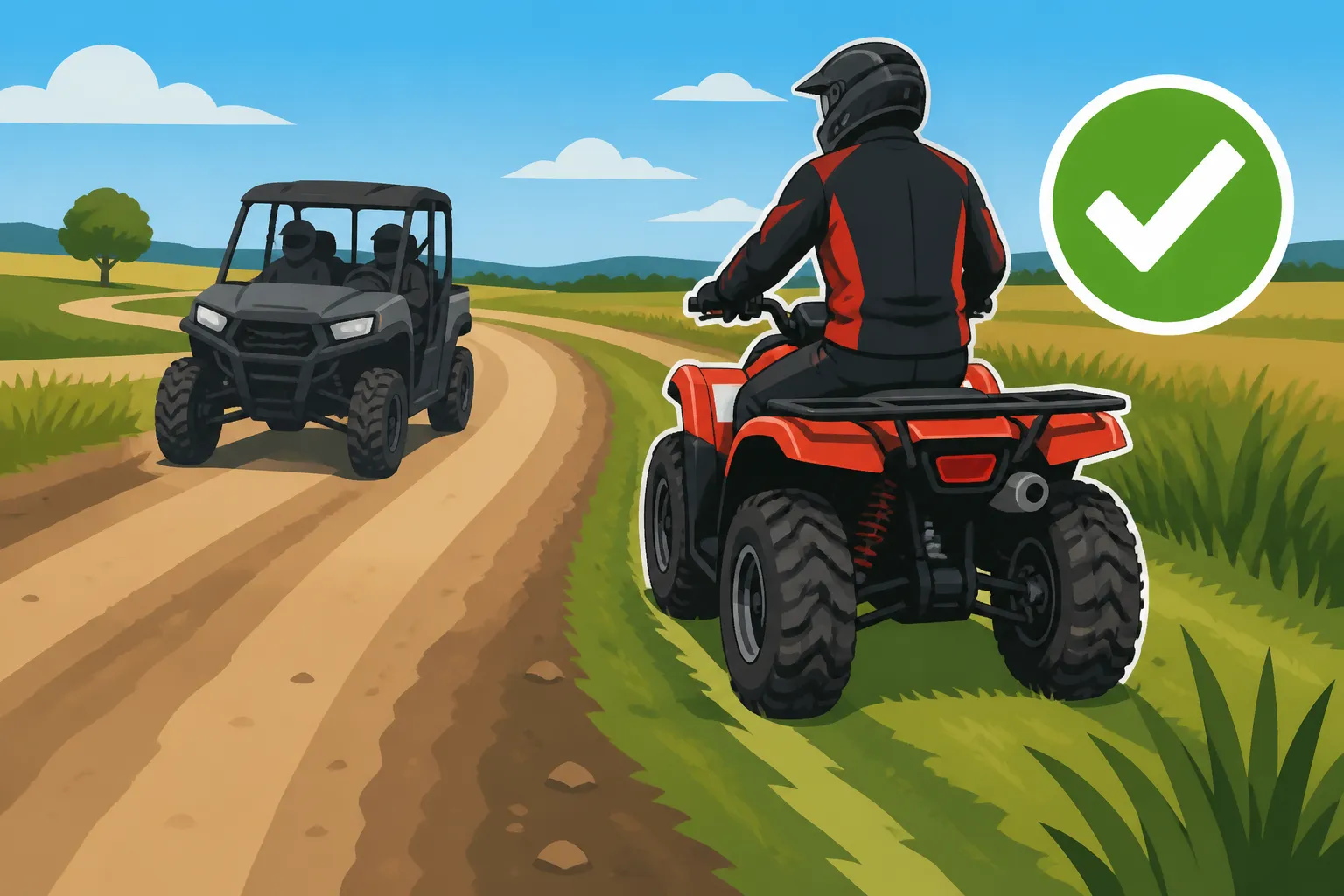
So, what does "practicable" actually look like? It means using your judgment. On a smooth, wide county road with a clear shoulder, "as near the right as practicable" might mean keeping your right tires a foot or two from the edge of the pavement or gravel. However, if that same road suddenly narrows, has deep ruts on the shoulder, or has a steep drop-off into a ditch, "practicable" means staying far enough left to avoid those hazards, even if it puts you a little further into the lane.
Consider a situation where you're riding on a dusty gravel road. If you're too far to the right, you might be driving directly into thick, loose gravel, which can make your machine unstable. In this case, moving slightly left to a more packed part of the road might be more "practicable" for maintaining control. The key is that you're not moving left arbitrarily; you're doing so out of a genuine safety concern. Law enforcement officers, while enforcing the rule, are generally looking for egregious violations – riders purposefully hogging the lane or weaving unsafely, rather than someone adjusting for a legitimate road hazard. It's about being a responsible, predictable road user.
When This Rule Applies: Specific Scenarios for ATVs, UTVs, and Other Unconventional Vehicles
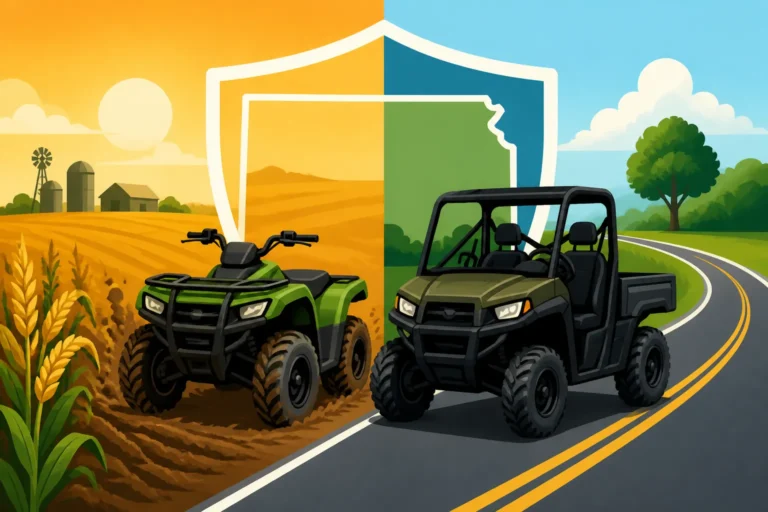
The "as near the right as practicable" rule isn't a blanket statement for all off-road machines in Kansas. It comes into play only when certain types of machines are legally allowed on public roads under specific conditions. Understanding these conditions is crucial, because if your machine isn't legally supposed to be on that road in the first place, then being "as near the right as practicable" won't save you from a citation. Kansas law defines different classes of machines, and these classifications dictate if and how they can use public roads.
Agricultural Use Exceptions on Highways
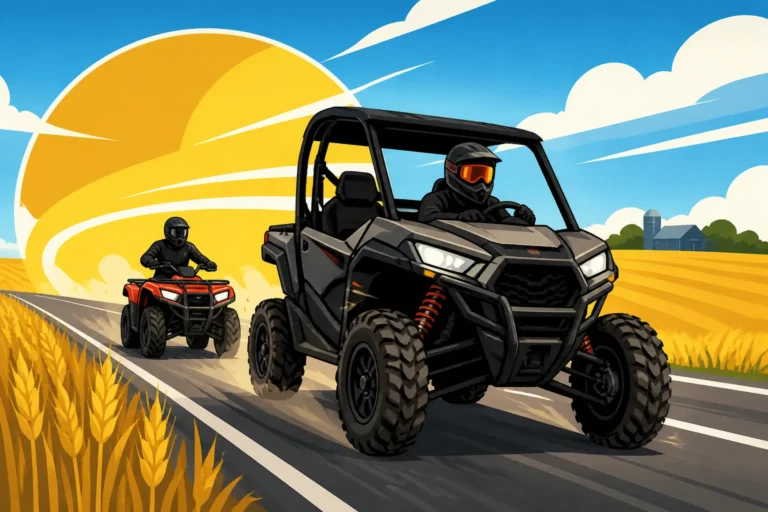
For many Kansas farmers, an ATV or UTV is an indispensable tool, often needing to move between fields or across property boundaries that require brief stints on public roads. Kansas law provides specific exceptions for these agricultural trips. When you're on a state highway or a county road for a legitimate agricultural purpose, that's when the "as near the right as practicable" rule kicks in for your ATV or UTV.
For instance, if you're driving your side-by-side from your barn to a field a mile down [Kansas Agricultural Trips on a 65 mph Road], you must adhere to this rule. This means if you're on a blacktop road, you'll be hugging the right edge, allowing faster traffic to pass safely. The same applies to county roads, even if they're gravel. The intent is to allow necessary farm work to continue while minimizing disruption and danger to other drivers. It's a common sight in rural Kansas, and most locals understand the need for farmers to use these machines on the road, but courtesy and safety dictate staying to the right.
Work-Site Utility Vehicle (WSUV) Regulations
Kansas has a unique class of vehicle called a Work-Site Utility Vehicle (WSUV). These are essentially UTVs that meet specific criteria regarding width, weight, and seating. If your UTV qualifies as a WSUV, it might be allowed on certain public roads, especially within specific city limits or county areas that have passed enabling ordinances. When operating a WSUV on roads where it's authorized, the "as near the right as practicable" rule is absolutely critical.
These vehicles are typically larger than ATVs and often used for maintenance, construction, or other work-related tasks. Because they might be wider and potentially slower, their legal operation on public roads comes with the responsibility of sharing the road safely. [Kansas Work-Site Utility Vehicle Road Rules] outline these conditions, and almost universally, staying to the right is a core component. Cities like Louisburg, De Soto, or Andover, which have opted to allow WSUVs (and sometimes other UTVs) on their streets, expect these machines to operate predictably and safely, which includes adhering to the right-hand rule.
Crossing State Highways
Even if your ATV or UTV is generally not street legal, Kansas law often allows for the crossing of a state highway. This is usually permitted at a 90-degree angle, as quickly and safely as possible, and only if there's no other practicable way to get from one private property to another. During this brief crossing, you are still expected to operate your machine responsibly. While the focus here is on the quick crossing itself, the principle of not impeding traffic and doing so safely implicitly involves staying to the right within the lane you're crossing, if applicable, and certainly yielding to any oncoming traffic. You're not meant to drive down the highway, but merely get across it. This distinction is vital for rural landowners.
Local City Ordinances Allowing UTVs and Golf Carts
Many Kansas cities have taken matters into their own hands and passed local ordinances allowing golf carts, UTVs, or even specific types of ATVs on certain city streets. [Kansas Cities That Authorize ATV Street Use] covers some of these examples. If you live in a town that has such an ordinance, and you've met all the local requirements (like getting a city permit, having insurance, and equipping your machine with necessary safety features), then you're allowed to use those designated streets.
When riding in these cities, the "as near the right as practicable" rule is almost always part of the local regulations, mirroring state law. For example, if your city allows golf carts on streets with speed limits of 25 mph or less, you're still expected to stay to the right. This is especially important in urban or suburban settings where traffic density is higher and pedestrians or bicycles might also be sharing the road. Whether it's a golf cart that fits [What the Law Counts as a Golf Cart] or a UTV, the expectation for road sharing remains consistent. Always check your specific city's ordinances, as they can vary greatly, but the right-hand rule is a constant.
Staying Safe and Compliant: Practical Tips for Riding on the Right
Adhering to the "as near the right as practicable" rule isn't just about avoiding a ticket; it's fundamentally about your safety and the safety of others. While the law gives you a bit of wiggle room based on conditions, being proactive in your approach to road riding will make you a safer, more confident operator. It's about being seen, being predictable, and understanding your machine's limitations on paved or gravel surfaces.
Enhancing Visibility: Be Seen, Be Safe
One of the biggest challenges for off-road machines on public roads is visibility. Your ATV or UTV is smaller, often less reflective, and rides lower than a car or truck, making it harder for other drivers to spot you, especially at dusk or dawn. This is where good equipment makes a huge difference.
- Lights, Lights, Lights: Ensure all your lights are functional. Headlights, taillights, and brake lights are non-negotiable. If you're often on roads after sunset, consider adding auxiliary lights that are road-legal and don't blind oncoming traffic. [Kansas Lighting Rules After Sunset] provides specific guidelines.
- Reflective Gear: Wear a high-visibility vest or jacket, especially in low light conditions. You can also add reflective tape to your machine. Think about what a driver approaching from behind will see.
- Flags: If you're riding in an area with hills or blind curves, a safety flag mounted high on your machine can significantly increase your visibility. Many riders already use these for dune riding, and they're just as useful on a rural Kansas road.
- Mirrors: Ensure you have functional side mirrors and a rearview mirror. Knowing what's behind you is critical for making safe decisions about staying to the right, especially when approaching passing vehicles. Aftermarket mirrors from a brand like SuperATV can offer broader fields of view and robust construction, which are a definite plus on rough rural roads where vibrations can loosen less durable components.
Speed and Road Condition Considerations
Your off-road machine isn't designed for highway speeds, and typically, when you're allowed on a public road, there will be speed restrictions. Even if no specific speed limit is posted for your vehicle, you should always operate at a speed appropriate for the conditions and the type of road.
- Slow Down: On gravel roads, excessive speed can kick up dust, reduce your visibility, and make it harder to react to sudden changes in the road surface. On pavement, high speeds can lead to instability, especially if your tires aren't designed for road use.
- Assess the Shoulder/Ditch: Before you commit to hugging the right edge, quickly scan the area. Is the shoulder firm and wide, or does it drop off sharply into a deep ditch? Are there culverts, mailboxes, or other obstructions? If the "practicable" edge of the road is treacherous, move slightly left into the lane to maintain control, but be prepared to pull over if a vehicle approaches from behind.
- Dust Control: On dry gravel roads, riding too far to the right can put you in the thickest dust. This impacts your own visibility and creates a hazard for following vehicles. Adjust your position slightly left to find a clearer, more stable path, but always be ready to move right to let others pass.
Group Riding Etiquette and Local Ordinances
If you're riding with a group, the "as near the right as practicable" rule still applies to each individual machine. Don't ride side-by-side on a two-lane road; single file is the safest and most compliant option. Communication within your group is also key.
- Single File: Always ride in single file when on a public road, giving ample space between machines.
- Designate a Leader and Sweeper: The leader can watch for oncoming traffic and road hazards, while the sweeper can communicate with the group about vehicles approaching from the rear.
- Know Your Local Laws: As mentioned, [Kansas UTV Street Legal Rules by City] vary dramatically. Just because you can ride on a county road for agricultural purposes doesn't mean you can ride through the main street of your nearest town. Always check with city hall or the county treasurer's office about specific ordinances in your area. They often have pamphlets or information online.
Beyond the Letter of the Law: Consequences and Considerations
Understanding the letter of the law is one thing, but it's equally important to grasp the real-world implications of not following the "as near the right as practicable" rule, both in terms of legal penalties and broader considerations like insurance and public perception. Being a responsible rider means considering all these factors.
Potential Penalties for Non-Compliance
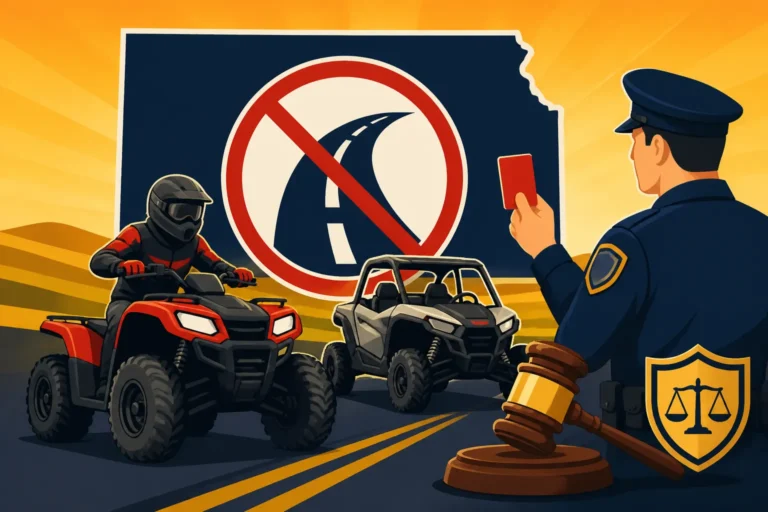
Ignoring the "as near the right as practicable" rule, especially when combined with other road use violations, can lead to various legal consequences. A sheriff's deputy or local police officer has the authority to issue citations for improper operation of your machine on a public road.
- Fines and Court Costs: The most immediate consequence is a ticket. Fines for traffic violations in Kansas can vary, but even a basic infraction can quickly add up once court costs are factored in. [Kansas Penalties for Illegal Road Riding] details some of these potential costs. It might seem minor, but repeated offenses or a serious incident can escalate.
- Machine Impoundment: In severe cases, or if you're operating a machine illegally on the road (e.g., an ATV in a city without an ordinance), law enforcement may have the right to impound your vehicle. Getting it back involves fines, storage fees, and often a lengthy administrative process.
- Loss of Privileges: While not always directly tied to this specific rule, repeated violations of road use laws could, in extreme circumstances, affect your driving privileges for conventional vehicles if the incident involves reckless behavior.
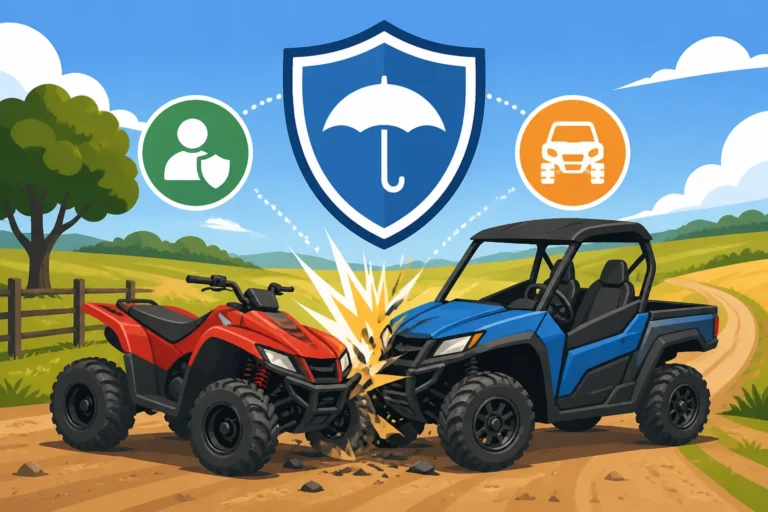
- Accident Liability: If you are involved in an accident while improperly operating your machine on a public road (for example, if you were not riding as far right as practicable and contributed to a collision), your liability could be significantly increased. This brings us to the crucial topic of insurance.
Insurance Implications and Accident Reporting
Many riders assume their homeowner's policy will cover their ATV or UTV, but this is often not the case, especially if the incident occurs on a public road. If you're legally operating your machine on a public road under an exception or local ordinance, you must understand your insurance coverage.
- Coverage Gaps: Most standard off-road vehicle policies are designed for off-road use. An incident on a public road might be excluded or have limited coverage. If a city ordinance requires insurance for UTVs on its streets, that policy must specifically cover road use. If you're involved in a collision and found to be in violation of a traffic law, your insurer might deny the claim or only cover a portion, leaving you financially responsible for damages and injuries.
- Reporting Requirements: [Kansas Accident Reporting for an ATV Crash] outlines what you need to do if you're involved in an accident. If the crash occurs on a public road and meets certain criteria (injury, property damage over a certain amount), it must be reported to law enforcement, just like any other vehicle accident. Failure to do so can lead to additional legal problems. Make sure you have the proper paperwork and contact information readily available.
Public Perception and Responsible Riding
Beyond the legal and financial aspects, how you operate your ATV or UTV on public roads shapes the public's perception of all off-road riders. Every time you ride on a public road, you are an ambassador for the entire community of ATV and UTV owners.
- Protecting Privileges: If riders consistently disregard traffic laws, ride unsafely, or are perceived as reckless, it can lead to negative public sentiment. This might prompt city councils to repeal ordinances that currently allow UTVs on streets, or it could prevent new ordinances from being passed. What was once a convenient route could become off-limits due to a few bad apples.
- Sharing the Road Respectfully: When you ride as near the right as practicable, you're not just following the law; you're showing respect for other road users. This makes conventional drivers more tolerant of off-road machines on the road. A wave, a nod, or simply being courteous goes a long way in building goodwill.
- Setting an Example: If you have younger riders in your family or group, your actions on public roads set a powerful example. Teach them the importance of this rule and responsible road sharing. This helps ensure a positive future for off-road riding in Kansas.
In Kansas, the convenience of using your ATV or UTV for short stints on public roads comes with the responsibility of doing so safely and legally. The rule to ride "as near the right as practicable" is a common-sense guideline that, when followed, ensures you can get where you need to go without endangering yourself or others. Always know the specific rules for your machine, for your location, and for your intended use, and prioritize safety above all else.
| Aspect of Rule | Explanation | Practical Application |
|---|---|---|
| "Near the Right" | Stay as close to the right edge of the road as physical conditions allow. | Hugging the shoulder or far right of the lane. |
| "As Practicable" | What is reasonable and safe given current road conditions, hazards, and traffic. | Avoiding potholes, loose gravel, steep drop-offs, or unsafe shoulders. |
| Legal Basis | General Kansas traffic law for slow-moving vehicles and specific exceptions (e.g., agricultural, WSUV). | Applies during [Kansas Agricultural Trips on a 65 mph Road] or under [Kansas Work-Site Utility Vehicle Road Rules]. |
| Why it Matters | Ensures safety, allows faster traffic to pass, minimizes road obstruction. | Reduces risk of collisions, allows flow of traffic, avoids being a hazard. |
| Consequences | Tickets, fines, potential impoundment, increased liability in accidents. | Avoids [Kansas Penalties for Illegal Road Riding] and ensures insurance coverage for incidents. |
| Enhancing Safety | Use proper lighting, reflective gear, mirrors, and appropriate speed. | Equipping your machine with [Kansas Lighting Rules After Sunset] features, using a safety flag. |
| Local Variations | Check city or county ordinances, as rules for UTVs and golf carts vary widely. | Confirming [Kansas Cities That Authorize ATV Street Use] and their specific requirements. |
Disclaimer
This article is for general informational purposes only and does not constitute professional advice. Laws, prices and regulations vary by location and change over time. Consult a qualified professional for guidance on your specific situation.