Kansas Equipment Checks by Deputies
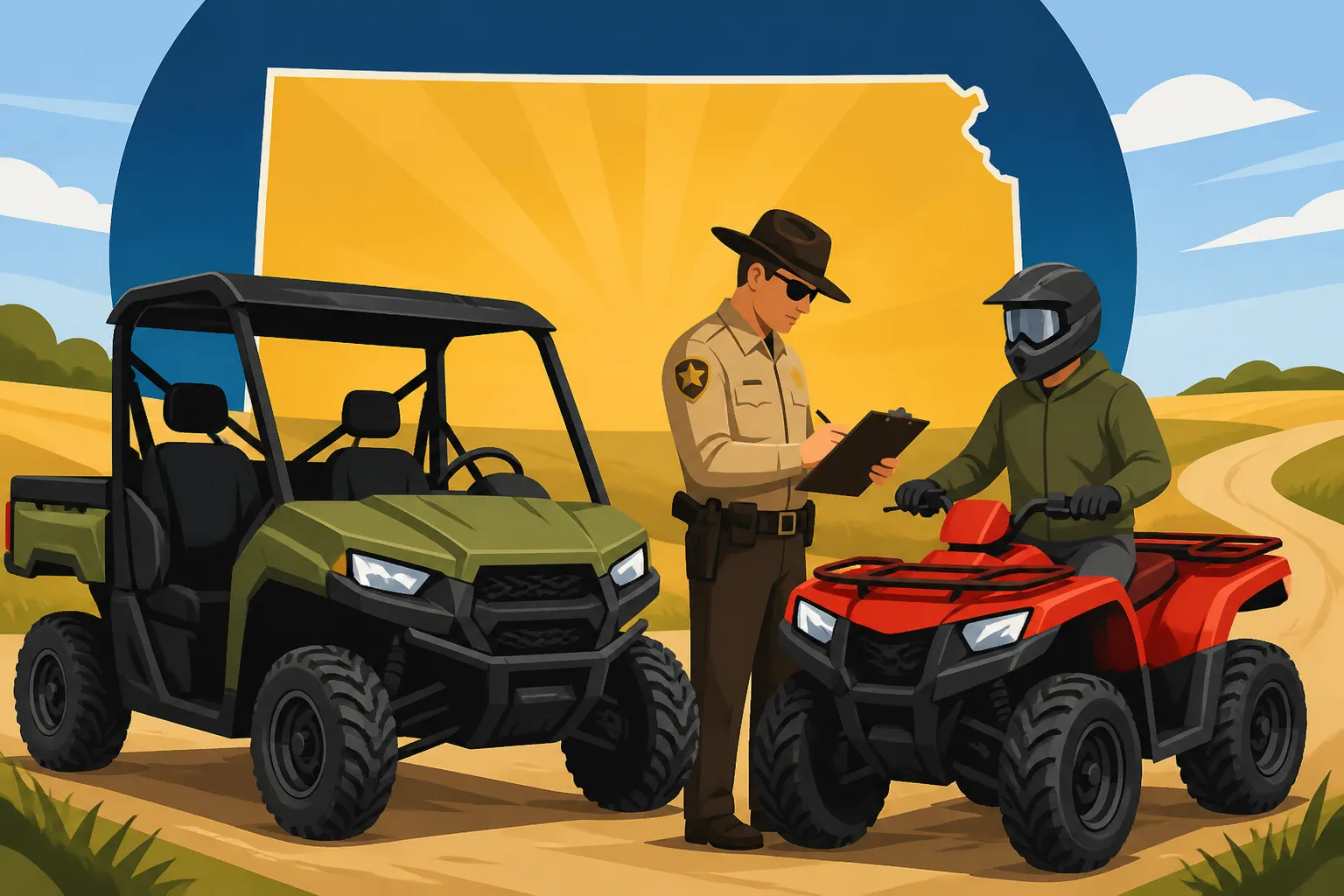
Picture this: You're just trying to get from your pasture to the next field over, maybe heading to the gas station in your UTV for a quick fill-up, or even just crossing a county road for a minute, and suddenly, those flashing lights appear in your rearview. It's a deputy, and they're pulling you over. For many Kansas ATV and UTV owners, an unexpected equipment check by law enforcement can be a nerve-wracking and confusing experience, especially with the state's nuanced rules about off-road machines on public roads. This guide will walk you through exactly what Kansas deputies are looking for when they stop an ATV or UTV on a road, helping you understand the laws and prepare your machine to stay on the right side of them.
The Unexpected Stop: Why Deputies Check Your Machine
It's a common scenario for many riders in rural Kansas: you’re using your ATV or UTV for work or recreation, perhaps just moving it from one part of your property to another, and find yourself briefly on a public road. While this might seem innocent enough, Kansas law generally prohibits the operation of ATVs and UTVs on public roadways, with very specific exceptions. Deputies aren't out to spoil your fun; their primary goal is to ensure public safety and verify that anyone operating a machine on a road is doing so legally and safely.
The Legal Framework for Off-Road Machines on Kansas Roads
The fundamental truth for riders in the Sunflower State is that off-road vehicles like ATVs and most UTVs are not designed or intended for road use. Kansas law reflects this by generally banning them from state and federal highways, and usually from city streets and county roads unless a specific exception applies or a local ordinance has been passed. This means that if a deputy sees you on a road, their first thought is often to confirm you're not breaking the law. They're looking for evidence that your presence on the road falls under one of those narrow exceptions, such as agricultural use or if your UTV qualifies as a Work-Site Utility Vehicle (WSUV) or Micro Utility Truck (MUT) in a city that permits it. Without proper understanding, what seems like a quick hop across the road can quickly turn into a citation. [Kansas ATV Road Rules Under 8-15,100] explains the statutes that govern these machines.
What Law Enforcement Is Looking For
When a deputy initiates a stop, they're typically conducting a quick assessment to determine the legality of your operation. This isn't just about your machine's equipment; it's also about you and where you're riding. They'll want to confirm you have a valid driver's license, if required for the type of machine or road you're on, and that you're old enough to operate it. They're also checking for obvious safety hazards, such as excessively worn tires, missing lights, or visible modifications that might compromise the vehicle's integrity or make it less safe for a brief road excursion. Essentially, they're looking to match your situation—your machine, your age, your license, and your location—against the allowable exceptions in state law or local ordinances. This initial assessment helps them decide whether to issue a warning, a citation, or simply provide information about where you can and cannot ride.
Specific Equipment Deputies Will Inspect on Kansas Roads
Once you're stopped, the focus often shifts to the physical state of your machine. While ATVs and UTVs aren't road-legal in the same way cars are, certain equipment is either legally required for the exceptions that allow road use or is critical for your safety and visibility to other motorists. Understanding these specifics can prevent a headache and a potential ticket.
Lighting Requirements for Road Use
One of the most common reasons for an equipment check, especially around dawn or dusk, involves lighting. Even if your ATV is only briefly crossing a state highway as permitted by law, or your UTV is traveling on a city street under a local ordinance, proper lighting is paramount. Kansas law often defers to "motorcycle lighting standards" for ATVs when they are allowed on roads for agricultural purposes. This means you need at least one functioning headlight that illuminates the road ahead and a tail light visible from the rear. For UTVs that qualify as Work-Site Utility Vehicles (WSUVs) or Micro Utility Trucks (MUTs) and are operated under a local city ordinance, the lighting requirements become much more extensive. These often include headlights, tail lights, brake lights, and even turn signals, mirroring traditional street-legal vehicle standards. Remember, the law requires these lights to be on from sunset to sunrise, or whenever visibility is otherwise impaired. Upgrading to brighter, more reliable LED lights from a company like SuperATV can significantly improve your visibility and compliance, especially if you find yourself on a road when the light is fading. Don't forget, even during daylight hours, proper brake lights are crucial for preventing rear-end collisions. [Kansas Lighting Rules After Sunset] goes into more detail about these requirements.
Safety Gear and Vehicle Modifications
Beyond lights, deputies will assess other safety features and modifications on your machine. For ATVs, Kansas doesn't have a universal helmet law for adult riders off-road, but local ordinances might impose one if you're riding on sanctioned city streets. For riders under 18, helmets are generally recommended and often required by private parks. For UTVs, seatbelts are a non-negotiable safety feature, and deputies will expect all occupants to be properly buckled in.
Tires are another crucial inspection point. While off-road tires are fantastic for the trails and fields, aggressively knobby tires can wear quickly on pavement and may not provide adequate traction for road speeds. If your UTV is operating under a city ordinance, it might have specific tire requirements for street use. Beyond the basics, deputies may also look for:
- Mirrors: Side mirrors and a rearview mirror are often required for UTVs operating on city streets. Many riders add sturdy aftermarket mirrors from places like SuperATV to ensure they have clear visibility behind them.
- Horn: A functional horn is usually a must for any vehicle sharing public roads.
- Brakes: Your brakes must be in good working order, with sufficient pad life and responsive action.
- Exhaust System: While not always a direct "equipment check," excessively loud or modified exhaust systems can draw unwanted attention and may lead to citations under local noise ordinances, even if the primary stop was for something else.
Ensure your machine is equipped with these essentials to make your short road stints as safe and compliant as possible.
Registration and Titling Documentation
This is where Kansas law can get particularly tricky for off-road enthusiasts. For most ATVs, Kansas does not require annual registration or a "tag" in the traditional sense, as they are titled as [Kansas Titles ATVs as Nonhighway Vehicles]. However, this doesn't mean you don't need proof of ownership. A deputy will almost certainly ask for your driver's license and proof that you own the machine, such as your Kansas nonhighway title or a bill of sale.
For UTVs, the situation varies greatly depending on how the machine is classified and where it's being operated.
- Standard UTVs: Like ATVs, these are typically non-highway titled and not registered. Proof of ownership (title) is key.
- Work-Site Utility Vehicles (WSUVs) and Micro Utility Trucks (MUTs): If your UTV fits the specific dimensions and weight criteria for a WSUV or MUT, and you are operating it in a city that has passed an ordinance allowing them on city streets, then additional documentation is required. This often includes a city-issued tag or permit, and proof of insurance. Without these specific city permits, even a WSUV is not generally street legal. For instance, cities like Louisburg have their own ordinances for UTVs, requiring a city tag and proof of insurance before you can ride on their streets. Deputies in these areas will specifically check for these city-issued documents. [Louisburg's UTV Tag Fees in Kansas] are an example of these local requirements.
Always carry your driver's license (if applicable), proof of ownership, and any city-issued permits or insurance cards when operating your machine, especially if you're venturing onto any public road.
| Equipment/Document | ATV (Agricultural Use) | WSUV/MUT (City Ordinance) | Golf Cart (City Ordinance) |
|---|---|---|---|
| Driver's License | Yes | Yes | Yes (often restricted) |
| Proof of Ownership | Yes (Nonhighway Title) | Yes (Nonhighway Title) | Yes (Nonhighway Title) |
| City Permit/Tag | No | Yes | Yes |
| Proof of Insurance | No (State-wide) | Yes (often by ordinance) | Yes (often by ordinance) |
| Headlights | Yes (Motorcycle Std.) | Yes | Yes |
| Tail Lights | Yes (Motorcycle Std.) | Yes | Yes |
| Brake Lights | Yes (Motorcycle Std.) | Yes | Yes |
| Turn Signals | No (Recommended) | Yes (Usually Required) | No (Hand Signals) |
| Rearview Mirror | No (Recommended) | Yes (Usually Required) | Yes (Usually Required) |
| Horn | No (Recommended) | Yes (Usually Required) | Yes (Usually Required) |
| Seatbelts | N/A (Single-seat focus) | Yes (All Occupants) | Yes (All Occupants) |
| Slow-Moving Emblem | Yes (Under 25 mph) | Yes (Under 25 mph) | Yes (Under 25 mph) |
What to Do During an Equipment Check and Potential Consequences
Getting stopped by law enforcement is rarely a pleasant experience, but how you handle it can make a significant difference in the outcome. Knowing your rights, understanding the law, and being prepared are your best defenses.
Interacting with Law Enforcement
When a deputy pulls you over, the first rule is simple: remain calm and cooperative. Pull over safely to the side of the road, turn off your engine, and keep your hands visible. When the deputy approaches, greet them politely. Avoid arguing or becoming confrontational. They are simply doing their job to enforce the law and ensure safety.
Have your documents ready. This means your driver's license, your ATV or UTV title (or a bill of sale for recent purchases), and if you're in a city with a UTV ordinance, your city-issued permit or tag and proof of insurance. Being able to quickly and clearly provide these documents shows respect for the officer's time and demonstrates that you are a responsible operator. If you believe you are operating under a specific exception, such as [Kansas's Agricultural Exception for Road Use], clearly and calmly state your purpose for being on the road. For example, "Officer, I'm just moving my side-by-side from my north field to my south field for agricultural work." The more informed and cooperative you are, the smoother the interaction is likely to be.
Common Violations and Penalties
Ignoring the rules or being unprepared for an equipment check can lead to various consequences. The most common violations include operating an off-road machine on a prohibited roadway, lacking required safety equipment, or failing to have the necessary permits or documentation for street-legal operation in an ordinance city.
- Warnings: For minor infractions or first offenses, particularly if you are polite and cooperative, a deputy might issue a warning and advise you on the correct procedures or equipment.
- Citations and Fines: More serious violations, or repeated offenses, will likely result in a traffic citation. The fines can vary widely depending on the specific violation and the jurisdiction. Operating a machine on a road where it's outright prohibited can lead to significant penalties. [Kansas Penalties for Illegal Road Riding] can range from hundreds of dollars in fines plus court costs.
- Impoundment: In extreme cases, especially if the machine is being operated dangerously, by an underage or unlicensed driver, or is involved in a serious incident, the machine could be impounded. This is a costly and inconvenient outcome that can be avoided by adhering to the rules.
Understanding these potential consequences should reinforce the importance of knowing and following Kansas's nuanced laws for off-road machines on public ways.
How to Prepare Your Machine for Kansas Road Use (When Permitted)
The best defense against an unexpected equipment check is proactive preparation. If you anticipate any road use, even just crossing a street, take the necessary steps to ensure your machine and documentation are in order.
- Know Your Local Ordinances: Before taking any UTV on a city street, check with the specific city clerk or police department to see if they have a UTV or Golf Cart ordinance. Many cities in Kansas have unique rules, and what's legal in one town may not be in another. [Kansas City Ordinances by City] for UTVs and golf carts are constantly evolving.
- Conduct Pre-Ride Checks: Always do a quick safety check before you head out. Ensure all your lights are working, brakes are functional, tires are properly inflated, and your horn (if equipped/required) gives a good blast. Check your mirrors, especially if you've added them from a company like SuperATV, to ensure they're clean and correctly adjusted.
- Equip for Compliance: If you plan on operating your UTV under a city ordinance, make sure it has all the required equipment: proper lights, turn signals, horn, rearview mirror, and seatbelts for all passengers. For ATVs on agricultural trips, ensure you have sufficient lighting for dusk/night and consider a slow-moving vehicle emblem if you'll be traveling below 25 mph.
- Carry Your Documents: Keep your driver's license, title, and any necessary city permits or insurance cards in a waterproof container on your machine. A physical copy is always best, but a clear, accessible digital copy on your phone can also work in a pinch.
- Understand Your Machine's Classification: Knowing if your UTV meets the criteria for a Work-Site Utility Vehicle or Micro Utility Truck in Kansas is key, as these classifications unlock different possibilities under local ordinances. [What Makes a Side-by-Side a Work-Site Utility Vehicle] elaborates on these details.
By following these steps, you can significantly reduce the stress and potential penalties associated with a deputy's equipment check, allowing you to focus on the task at hand or simply enjoying the ride where it's permitted.
Disclaimer
This article is for general informational purposes only and does not constitute professional advice. Laws, prices and regulations vary by location and change over time. Consult a qualified professional for guidance on your specific situation.