Kansas Lighting Rules After Sunset
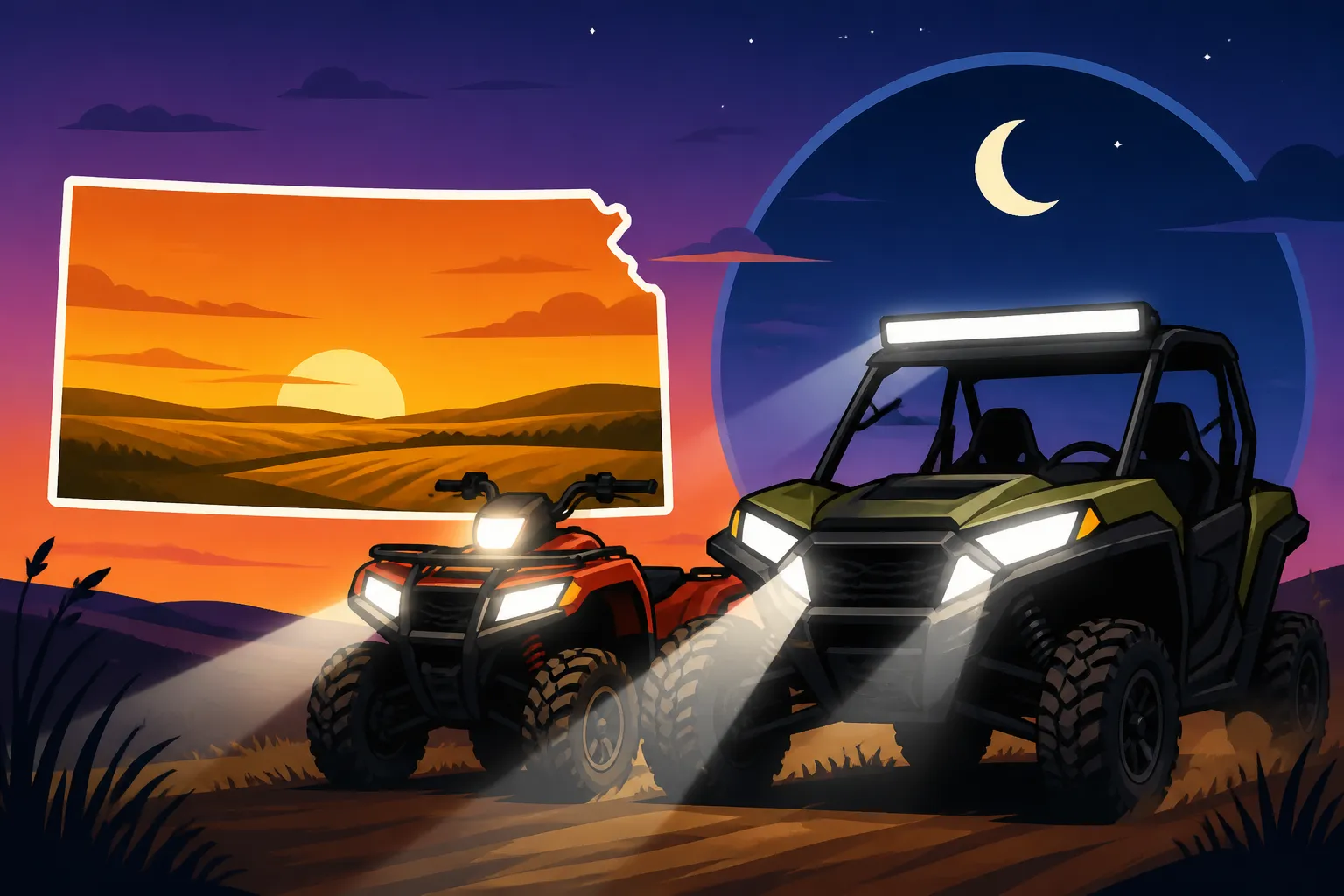
There’s a special allure to riding your ATV or UTV as the sun dips below the horizon, or even under a blanket of stars. The quiet of the evening, the crisp air, and the unique challenges of navigating by machine lights can be an incredible experience. But here in Kansas, that magical twilight ride comes with a crucial set of legal requirements, especially if you plan to venture anywhere near public roads or even cross them. Many riders get caught off guard, thinking their daytime setup is fine, only to discover too late that Kansas law has specific rules about lighting after sunset. This guide is here to shed some light on those rules, making sure your nighttime adventures are both safe and legal.
The Blanket Ban and the Need for Lights
Kansas law, for the most part, has a pretty firm stance on ATVs and UTVs on public roads: they're generally not allowed. This blanket ban exists for a variety of reasons, primarily safety, given these machines aren't designed or equipped like typical road vehicles. However, as with most rules, there are specific exceptions, and it's within these exceptions that the need for appropriate lighting becomes absolutely paramount, especially as darkness falls.
Why Night Riding Demands Specific Rules
Imagine cruising down a familiar gravel road or across a field in broad daylight. You can see obstacles, gauge distances, and react to changing terrain with relative ease. Now, imagine doing that in dim twilight or complete darkness. The inherent dangers skyrocket. Your field of vision shrinks dramatically, making it difficult to spot dips, ruts, or unexpected debris. Other vehicles, even just a farmer on a tractor moving between fields on a private drive, might not see your machine until it's too late. The low light obscures silhouettes and depth perception, turning even a simple turn into a potential hazard.
Kansas understands these risks. That's why, even when an ATV or UTV is permitted to operate on or near a public thoroughfare—whether it’s for a quick crossing, an agricultural trip, or in one of the cities that allows street use—the moment the sun sets, the game changes. Your machine transitions from an off-road toy to a vehicle interacting with spaces where other road-legal traffic expects to see specific types of illumination. Without the right lights, you're not just risking a ticket; you're risking a serious accident. It's not just about what you can see; it's crucially about making sure everyone else can see you.
General Principles of Visibility
At its heart, the legal requirement for lighting after sunset boils down to two fundamental principles: "being seen" and "seeing what's ahead." These aren't just legal niceties; they are the bedrock of nighttime safety. "Being seen" means your machine must have appropriate rear-facing lights to warn approaching traffic and anyone behind you of your presence. This is especially vital for vehicles like ATVs and UTVs, which have a smaller profile than cars or trucks. A single small taillight might not be enough on a dark road to grab the attention of a distracted driver.
"Seeing what's ahead" focuses on your ability as the rider to navigate safely. On unlit backroads, farm lanes, or even when briefly crossing a state highway, your headlights need to be powerful enough to illuminate the path forward, highlighting potential hazards, animals, or changes in the road surface. This isn't just about a dim glow; it's about casting enough light to react safely. The goal is to ensure that from both the front and the rear, your machine is unmistakable. Twilight, foggy conditions, heavy rain, or even just the early morning hours before sunrise all count as "after sunset" in the eyes of the law, demanding proper illumination for everyone's safety.
Motorcycle Lighting Standards as the Baseline
It might seem a bit odd, but when Kansas law discusses lighting requirements for off-road machines that are granted specific permissions to interact with public roads, it often points to motorcycle lighting standards. This isn't because your side-by-side is suddenly considered a two-wheeled vehicle, but because motorcycles, like ATVs and UTVs, are smaller and can be less conspicuous than larger automobiles. The law uses these established standards as a practical and effective baseline for ensuring visibility and safety.
Kansas Law's Reference to Motorcycles
When you delve into the Kansas statutes concerning vehicles that are permitted to operate on public roads under specific circumstances – even if they're not fully "street legal" – you'll often find references to standards typically applied to motorcycles. This isn't an arbitrary choice. Motorcycles share some key characteristics with ATVs and UTVs: a relatively narrow profile, a single primary light source for visibility from the front, and the need for clear signaling. By referencing [Kansas Motorcycle Lighting Standards], the law ensures that these unconventional vehicles, when they enter the public sphere, meet a recognized minimum level of illumination designed for smaller, less-seen vehicles.
What do these motorcycle standards generally entail? Typically, they require at least one, but no more than two, headlamps. These headlamps must be capable of illuminating the road ahead to a certain distance, ensuring the driver can see potential hazards. Additionally, a motorcycle needs a red taillamp visible from a specific distance to the rear, and critically, a red brake light that illuminates when the brakes are applied. These three elements form the basic safety triangle: light to see, light to be seen from behind, and light to signal deceleration. Applying these principles to an ATV or UTV making an agricultural trip, for example, makes a lot of sense for promoting road safety.
Specific Requirements for Headlights
For any ATV or UTV operating on a public road after sunset under one of the state's exceptions, the headlights are your first line of defense. Kansas law generally mandates that headlamps must be capable of illuminating persons and vehicles at a specified distance. While exact distances can vary depending on high or low beam settings, the overarching principle is "adequate illumination." This means your headlights shouldn't just be a dim glow; they need to project enough light to allow you to safely identify obstacles, read road signs, and react to other traffic. On an open, unlit county road during an agricultural trip, a robust set of headlights isn't just a compliance item, it's a necessity for your safety and the safety of others.
Most modern ATVs and UTVs come with factory headlights, but not all are created equal. If you find yourself frequently riding after sunset, or if your machine is a bit older, you might want to consider an upgrade. The law typically requires both low and high beam capabilities, especially if you're venturing onto roads where you might encounter oncoming traffic. You need to be able to dim your lights to avoid blinding others, just like in a car. As for color, headlamps must emit a white or amber light. No blue, green, or purple here. For riders looking to significantly enhance their nighttime visibility and ensure full compliance, brands like SuperATV offer a range of advanced LED light bars and headlights. These aftermarket options often provide superior brightness, a wider beam pattern, and impressive durability, easily meeting or exceeding Kansas's headlamp standards and making your night rides much safer and more enjoyable.
Specific Requirements for Taillights and Brake Lights
Just as important as seeing where you're going is ensuring that you are seen by those behind you. This is where taillights and brake lights come into play. Kansas law requires at least one red taillamp, visible from a specific distance to the rear – often cited as 500 feet, but again, the emphasis is on clear visibility. This taillight should be illuminated whenever your headlights are on, signifying your presence on the road to anyone approaching from behind.
The brake light, typically integrated with or brighter than the taillamp, serves an equally critical function: signaling deceleration. When you apply your brakes, that light needs to illuminate clearly and brightly, immediately alerting drivers behind you that you are slowing down or stopping. This is vital for preventing rear-end collisions, especially on roads where other vehicles might be traveling at higher speeds. For an ATV or UTV making a quick dash across a highway or moving along a county road, having functioning and highly visible taillights and brake lights is a non-negotiable safety feature. It’s part of the basic vehicle-to-vehicle communication that prevents accidents after dark. Ensure yours are always clean, free of mud or dust, and in perfect working order before you head out after sunset.
When Lights Are Legally Required for ATVs & UTVs
While the general rule in Kansas is "no ATVs or UTVs on public roads," several critical exceptions open the door for these machines to interact with the road system. And with those exceptions comes the absolute requirement for proper lighting once the sun goes down. These aren't suggestions; they are legal mandates designed to protect everyone on the road.
Crossing a State Highway in Kansas
One of the most common scenarios where an off-road machine will encounter a public road is when crossing it. Kansas law makes a distinction: while you generally cannot ride your ATV or UTV on a state highway, you are permitted to cross it. This is a vital allowance for farmers, landowners, or recreational riders moving between private properties. However, this permitted crossing, especially after sunset, immediately triggers specific lighting requirements. You can’t just zip across in the dark and expect to be safe or legal.
For a legal and safe crossing after dark, your ATV or UTV must have its headlights illuminated and its taillights on. Think of it like a quick interaction with the road system – even if it's brief, you're still momentarily sharing space with other vehicles that expect to see specific lighting patterns. The headlights allow you to clearly see oncoming traffic and any hazards on the highway, while your taillights warn drivers on the highway of your presence as you move across. Failure to have these lights on can lead to a citation for operating an improperly equipped vehicle. More importantly, attempting to cross a state highway in the dark without proper illumination is incredibly dangerous, putting both yourself and other drivers at severe risk. Always ensure your lights are on and visible before you even approach the highway's edge. This applies to any [Crossing a State Highway in Kansas], not just state highways but any public roadway where you might briefly operate.
Kansas Agricultural Trips on a 65 mph Road
Kansas, with its vast agricultural lands, understands that farmers often need to use their ATVs and UTVs to get work done. This understanding is codified in a significant "agricultural exception" that allows these machines to use public roads for bona fide agricultural purposes. This is a critical distinction: it's not a free pass for recreational joyriding; it's strictly for work-related travel, such as moving equipment between fields, checking irrigation pivots, or tending to livestock in different pastures. If you're utilizing this exception, especially after sunset, the lighting requirements become extremely important.
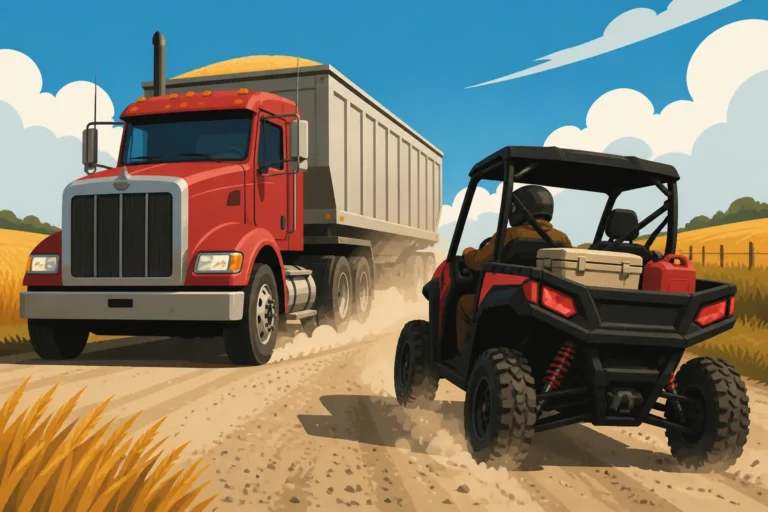
When making [Kansas Agricultural Trips on a 65 mph Road], your ATV or UTV must be equipped with and display the appropriate lighting. This means your headlights (white or amber) must be on, projecting light ahead to meet the motorcycle lighting standards discussed earlier. Your taillights (red) must be illuminated and visible from the rear, and your brake lights (red, brighter) must function properly to signal slowing or stopping. Given that you might be on roads with a 65 mph speed limit, even if you’re traveling much slower, being highly visible to faster-moving traffic is absolutely essential. Many farmers opt for additional auxiliary lighting, such as amber flashing beacons, beyond the minimum legal requirements to enhance their visibility during these critical movements after dark. It's about safety first, and ensuring other drivers see you coming, going, and slowing down.
Cities That Authorize ATV Street Use
While most of Kansas restricts ATVs and UTVs from city streets, some forward-thinking cities have passed local ordinances to allow UTVs (and occasionally ATVs) on specific public roads within their municipal limits. This is a growing trend, offering residents more flexibility for local transportation or access to recreational areas. However, with this privilege comes a clear responsibility for compliance with all traffic laws, including comprehensive lighting requirements when operating after sunset. You cannot assume that just because a city allows street use, it implicitly allows dark-time operation without lights.
If your particular city is one of the [Kansas Cities That Authorize ATV Street Use], their ordinance will almost certainly specify the exact lighting package required for nighttime operation. This typically includes a full complement of DOT-compliant headlights (with high/low beam), taillights, brake lights, and very often, turn signals. You’ll be expected to meet standards much closer to those of a low-speed vehicle or even a car, rather than just basic off-road lights. Many UTVs don't come factory-equipped with turn signals, so this is a common aftermarket addition for street-legal compliance. Before you even think about taking your machine on city streets after dark, always consult your specific city's ordinance. The rules can vary from one town to the next. To make this process easier, SuperATV offers complete street-legal kits that provide all the necessary lighting components – from turn signals and horns to mirrors – to help Kansas riders meet these varied municipal requirements and ensure they're safe and legal after dark.
Work-Site Utility Vehicles WSUVs and Their Lighting
Kansas has a unique classification that often causes a bit of confusion: the Work-Site Utility Vehicle, or WSUV. These aren't your typical recreational ATVs or UTVs, though they share some visual similarities. WSUVs are specifically designed for work, often seen on construction sites, large campuses, industrial complexes, or even within city limits where special permits allow. Because their intended use often involves interaction with paved surfaces or roads, their lighting requirements are often more stringent than those for a purely off-road ATV, especially when operating after dark.
The Unique WSUV Class
The WSUV class is distinct in Kansas law. Unlike a standard ATV which is almost exclusively off-highway, or a UTV which has broader (but still limited) road exemptions, a WSUV is defined by specific dimensions and functions that align it more closely with a true utility vehicle. Generally, a WSUV must be at least 48 inches wide, weigh more than 800 pounds, and have a bench or bucket seating arrangement. These machines are built with purpose, not just play, and their legal status reflects that. As a result, [Kansas Work-Site Utility Vehicles Explained] in the statutes often allows them a bit more latitude for operating on certain roads, particularly in work-related contexts.
The critical takeaway here is that if a WSUV is allowed on a public road, or even within certain private areas that resemble public thoroughfares (like large facility grounds), after sunset, it must have full, functioning lighting. Because these vehicles are designed for more "serious" work and might be operating in environments where other vehicles (from cars to forklifts) are present, their lighting isn't just a recommendation; it's a fundamental safety requirement. Think of them as operating in a grey area between a recreational off-road machine and a true, low-speed road vehicle. This means they are held to a higher standard of visibility.
Specific WSUV Lighting Needs
Given their potential for limited road use, WSUVs operating after dark are expected to have a comprehensive lighting package. This usually includes standard headlamps (white or amber, with high/low beam capabilities), red taillamps visible from a significant distance, and fully functional red brake lights. Beyond these basics, many WSUVs are also legally required to have turn signals, which are essential for signaling intentions when sharing a road with other vehicles. Reflectors, strategically placed on the sides and rear, further enhance visibility. In essence, if a WSUV is allowed on a public road after sunset, it's expected to have a lighting setup that mirrors a slow-moving vehicle or even a small automobile, ensuring it can clearly communicate its presence and intentions to other drivers.
Another crucial component for WSUVs on public roads after dark is a slow-moving vehicle (SMV) emblem. If the WSUV cannot maintain the posted speed limit, this bright orange triangle, visible from the rear, is a non-negotiable safety feature. It acts as an additional warning to faster-moving traffic that the vehicle ahead is operating at a reduced speed. You can find details on similar requirements under [Kansas Micro Utility Truck Equipment Rules]. Many WSUVs come from the factory with these more robust lighting and safety packages. However, for those that don't, or for riders looking to upgrade, SuperATV offers a variety of lighting accessories and components that can help ensure your WSUV is fully compliant and highly visible, enhancing safety for everyone on the road, whether it's a private work site or a publicly accessible lane.
Other Unconventional Vehicles and Their Nighttime Rules
Kansas law doesn't just categorize ATVs, UTVs, and WSUVs. It also addresses other "unconventional vehicles" that sometimes find their way onto public roads, especially within city limits. Golf carts and micro utility trucks (MUTs) fall into this category, and like their off-road counterparts, they too face strict lighting mandates when operating after sunset.
Golf Cart Lighting on Public Streets
Ah, the humble golf cart. Often seen as a leisurely way to get around the links or a campground, golf carts are increasingly popping up on city streets in communities that have passed specific ordinances allowing their use. While this can be a convenient option for short trips, it's absolutely critical to remember that if your city permits golf carts on public roads, especially after dark, they come with a laundry list of equipment requirements.
For a golf cart to be street-legal after sunset in a Kansas city, it typically needs to be equipped with a full complement of lights. This means working headlights that illuminate the road ahead, red taillights visible from the rear, and functional red brake lights that light up when you slow down. Many city ordinances also stipulate the need for turn signals, a horn, and mirrors, essentially treating the golf cart like a low-speed vehicle. Without these, your evening cruise could quickly turn into a ticket, or worse, a dangerous situation. These are not optional accessories; they are legal necessities for operating a [Kansas Golf Cart Road Rules] after dusk. And like WSUVs, if the golf cart cannot maintain the posted speed limit, a slow-moving vehicle (SMV) emblem on the rear is usually required to warn other drivers. Always check your local city hall for their specific ordinance, as requirements can vary widely from town to town.
Micro Utility Trucks After Dark
Micro Utility Trucks (MUTs) are another distinct class of unconventional vehicle in Kansas. These are small, purpose-built trucks, often imported, that are designed for utility work, typically with a top speed suitable for local roads. Unlike ATVs or UTVs, MUTs are often fully street-legal from the outset, assuming they meet the state's equipment requirements. Because they are intended for primary road use, their lighting standards are much closer to those of a conventional automobile.
If you own a [What Counts as a Micro Utility Truck] and plan to operate it after sunset, there's no ambiguity: it must have a complete, DOT-compliant lighting package. This includes functional headlights (with high and low beams), red taillights, brake lights, front and rear turn signals, and side and rear reflectors. The expectation is that an MUT will blend in with regular traffic from a visibility standpoint, even if it's traveling at a lower speed. These vehicles are inspected to ensure they meet these standards before they can be titled and registered for road use. Essentially, if an MUT is on a Kansas road after dark, it must be as clearly visible and communicative as any other vehicle, ensuring maximum safety for both the MUT driver and everyone else on the road.
Practical Considerations and Safety Beyond the Law
While meeting the letter of the law for lighting is crucial, it's just the starting point. True safety when riding your ATV or UTV after sunset goes beyond minimum legal requirements. It involves enhancing your machine's visibility, preparing yourself as a rider, and understanding the severe consequences of non-compliance.
Enhancing Visibility with Aftermarket Lighting
Let's be honest: factory lighting on many ATVs and UTVs is designed for off-road use, often just bright enough to meet basic operating needs. While it might meet the minimum legal standard for a quick road crossing or an agricultural trip, it might not be truly sufficient for optimal visibility, rider comfort, or confidence, especially on pitch-black trails or unlit county roads. This is where aftermarket lighting shines, literally.
Upgrading your lighting system can dramatically improve your nighttime riding experience and safety. Consider adding LED light bars to the front for a wider and more powerful beam pattern than standard headlights. Auxiliary pod lights can fill in dark spots, illuminate ditches, or act as dedicated spot beams for specific tasks. Upgraded LED headlights and taillights can replace dimmer factory units, offering significantly brighter output with lower power draw. Brands like SuperATV specialize in robust, weather-resistant aftermarket lighting solutions that are built for the demands of off-road use while also providing superior performance for those moments when you're interacting with public roads. These enhancements not only make you more visible to others but also allow you to see hazards, animals, and terrain changes much sooner, giving you more time to react. Investing in quality aftermarket lighting is investing in your safety and enjoyment, far beyond what the law merely requires.
Rider and Machine Preparation for Night Riding
Even with the best lights on your machine, proper preparation is key for safe and enjoyable night riding. Before every sunset adventure, make it a habit to perform a quick pre-ride check. Ensure all your lights – headlights (high and low beam), taillights, brake lights, and any auxiliary lights or turn signals – are clean, functioning correctly, and properly aimed. Mud, dust, or even a spider web can significantly reduce light output. Check the wiring for any frays or loose connections that could cause a failure mid-ride.
Your attire also plays a vital role in being seen. While your machine has lights, reflective clothing, helmets with reflective elements, or even a simple reflective vest can make you much more visible to other drivers, especially if you're briefly dismounted or if your machine's lights are momentarily obscured. It adds another layer of conspicuity that could be life-saving. Beyond visibility, always remember that riding after dark means reduced depth perception and reaction time. Slow down. Drive more cautiously than you would during the day. Ride within your headlight's throw, meaning don't outrun your lights. And whenever possible, ride with a buddy. Two machines with working lights are always more visible than one, and having someone else along provides an extra set of eyes and help in case of an unforeseen issue. [Kansas Sunset to Sunrise Lighting Rules] are there for a reason, and personal preparedness enhances that safety.
Legal Consequences of Non-Compliance
Ignoring Kansas's lighting rules, especially after sunset, carries real legal and safety ramifications. If a law enforcement officer spots you operating an ATV or UTV on a public road, crossing a highway, or utilizing an agricultural exemption without the mandated lights after dark, you can face a citation. These typically come with fines and court costs, which can quickly add up. In some severe cases, or with repeat offenses, your machine could even be impounded. Details on such penalties can often be found under topics like [Kansas Penalties for Illegal Road Riding].
However, the legal penalties are often the least of your worries. The biggest, most profound consequence of non-compliance is the increased risk of an accident. Operating a low-profile machine like an ATV or UTV in the dark without proper illumination is a recipe for disaster. Other drivers, especially those traveling at higher speeds, simply won't see you until it's too late. This could lead to severe injuries, property damage, and even fatalities. No shortcut is worth that risk. Understanding [Kansas Lighting Requirements on a Machine] and [Lights Your Quad Needs to Ride After Sunset] and then ensuring your machine meets or exceeds them is not just about avoiding a ticket; it's about protecting yourself, your passengers, and everyone else on Kansas roads. It’s a small investment in time and money for immense peace of mind and, more importantly, your safety.
| Machine Type | Headlights | Taillights | Brake Lights | Turn Signals | SMV Emblem | Primary Use Case (after sunset) |
|---|---|---|---|---|---|---|
| ATV (Ag Exception) | Required (white) | Required (red) | Required (red) | Recommended | Recommended | Agricultural movements on certain roads |
| UTV (Ag Exception) | Required (white) | Required (red) | Required (red) | Recommended | Recommended | Agricultural movements on certain roads |
| WSUV | Required (white) | Required (red) | Required (red) | Often Required | Often Required | Work-site travel, limited public road access |
| Golf Cart (City Ord) | Required (white) | Required (red) | Required (red) | Often Required | Often Required | City street use where permitted |
| Micro Utility Truck | Required (white) | Required (red) | Required (red) | Required | Often Required | Primary road legal use, low-speed transport |
Disclaimer
This article is for general informational purposes only and does not constitute professional advice. Laws, prices and regulations vary by location and change over time. Consult a qualified professional for guidance on your specific situation.