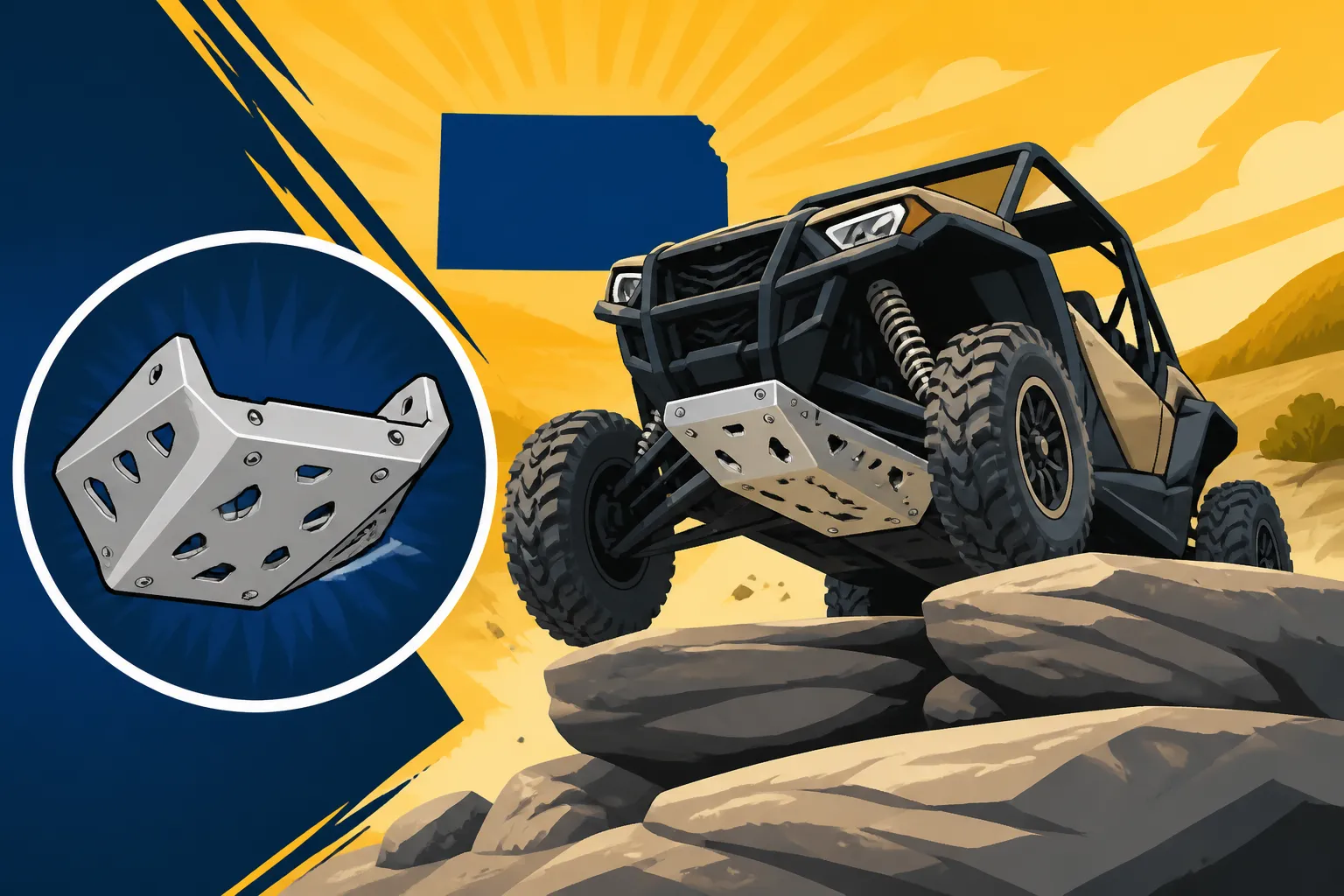
Skid Plates for Rock Park Ledges
A rocky ledge can turn a fun Kansas ride into a tow-out or an expensive repair when your ATV or UTV’s underside catches an exposed edge. A skid plate helps shield vulnerable components from impacts, but the right setup depends on your machine, the terrain, and how you ride. This guide explains what to protect, how to choose a plate, and how to prepare for rocky trails.
Why skid plates matter on rocky Kansas trails
What your machine’s underside is up against
On rocky ground, the tires and suspension do not absorb every hit. A ledge, sharp stone, or uneven shelf can contact the underside of the machine, where components such as the engine, transmission, frame rails, and differential may sit close to the ground. Even a slow crawl can cause damage if the vehicle settles onto an edge or a wheel drops into a gap.
The risk is not limited to dramatic, high-speed impacts. A rider easing over a rock may scrape the belly pan repeatedly, while a side-by-side can drag its center section as its front and rear wheels climb at different times. Small strikes can bend or crack parts, loosen fasteners, or leave a vulnerable component exposed for the next obstacle.
That is why riders exploring Kansas terrain with rock sections should think about protection before they unload. Areas such as Kansas Rocks Recreation Park near Mapleton are known for rocky riding, but conditions can differ from one route to another and from one visit to the next. For a broader sense of where rocky terrain fits into local riding options, see Kansas Trails With Rock Sections and Kansas Riding Near Mapleton.
What a skid plate protects
A skid plate is a protective panel mounted underneath an ATV or UTV. Depending on the design, it may cover only the center of the chassis or extend farther to shield front and rear sections, A-arms, or other vulnerable areas. Some machines come with basic factory protection, but that does not necessarily mean every exposed area is covered or that the original material suits frequent rock riding.
Look carefully at your own machine rather than assuming the product description tells the whole story. Check the underside with a flashlight and identify exposed components, gaps between panels, and areas where the existing plate ends. If you ride a UTV, inspect the front and rear differentials and the center section. On an ATV, pay attention to the frame, engine area, and suspension components.
Protection also has limits. A skid plate can reduce direct contact with rocks, but it cannot make a machine immune to hard impacts, prevent every hang-up, or replace sensible line choice. It is one part of a safety and maintenance setup, alongside appropriate tires, careful riding, and a pre-ride inspection.
Skid plates and the rest of your setup
A stronger plate is most useful when it works with the machine’s other equipment. Tires influence grip and how readily your wheels climb or slip on rock, while ground clearance and wheelbase affect how easily the belly contacts a ledge. If you are updating your setup for Mapleton’s terrain, Choosing Tires for the Rock at Mapleton can help you think through the tire side of the decision.
Consider how you actually use the machine. A rider who spends most of the day on smoother paths may need a different protection package from someone who regularly crawls over rock shelves. A farm machine that occasionally visits a riding park may also have different priorities from a dedicated trail vehicle. Choose protection based on the terrain you expect to encounter and the components you want to safeguard, not simply the most extensive package available.
Choosing a skid plate for an ATV or UTV
Compare material and coverage
Skid plates are commonly made from materials such as plastic, aluminum, or steel, and each has trade-offs. Plastic plates are often lighter and can slide across obstacles smoothly. Aluminum can provide a balance of weight and impact resistance, though it may dent. Steel is robust but can add weight, and a damaged or poorly fitted plate may be harder to remove or service.
There is no single material that is best for every machine or every rider. Compare plate thickness and design, the mounting points, the areas covered, and whether the manufacturer specifies compatibility with your exact model and year. If a plate is advertised as a full-coverage kit, verify what “full” means for your machine. It may not include every suspension or drivetrain component.
| Plate consideration | What to check | Why it matters |
|---|---|---|
| Material | Plastic, aluminum, steel, or a combination | Affects weight, impact behavior, and sliding over obstacles |
| Coverage | Front, center, rear, and vulnerable components | Helps reveal any unprotected gaps |
| Fit | Exact machine model and year | Poor fit can leave parts exposed or interfere with other equipment |
| Mounting | Fastener locations and access | Secure installation matters, and service access should remain practical |
| Maintenance | Drain, cleaning, and inspection access | Mud, grit, and debris can collect behind a plate |
Before buying, ask whether the plate works with your machine’s existing accessories. A winch mount, bumper, suspension component, or aftermarket exhaust can affect fit. If the instructions are unclear, confirm compatibility with the manufacturer or a qualified dealer before ordering.
Think about weight, clearance, and service
More coverage can mean more weight. On some machines, added weight underneath may affect handling or clearance, so compare the product’s design with your riding needs rather than treating maximum coverage as an automatic upgrade. A plate that hangs lower than the original component can also become the new contact point on a ledge.
Service access deserves attention too. A plate that must be removed for routine maintenance may add time to oil changes or inspections. That does not make it a poor choice, but it is worth knowing before the first service appointment. Look for drain access where appropriate and consider how easily you can clean grit from the spaces between the plate and the machine.
A poorly maintained plate can hide problems. After repeated rock contact, remove or inspect it according to the maker’s guidance. Look for cracks, bent edges, missing fasteners, and signs that a plate has shifted. If it is rubbing against a hose, wire, or other component, stop and correct the issue before riding again.
Match the plate to the trails you plan to ride
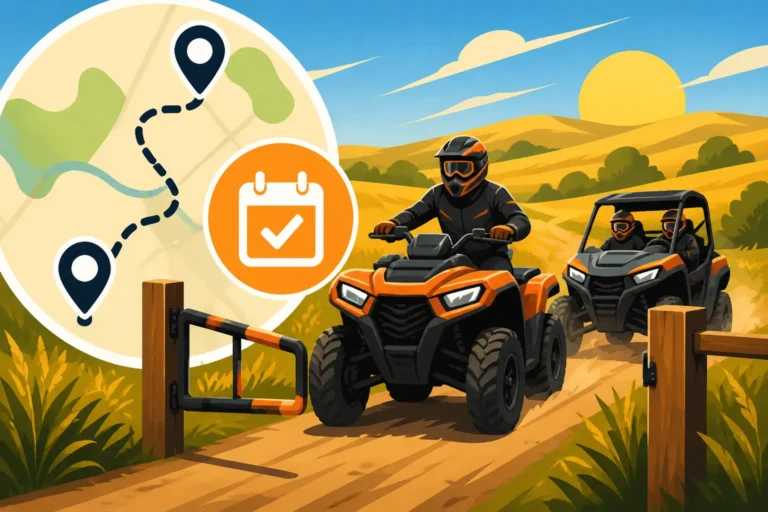
A riding map can help with trip planning, but it cannot tell you that every obstacle will be appropriate for your machine or skill level. Before towing to a park, check current access, rules, and trail conditions through the riding area’s own channels. Tools such as onX Offroad can help you review mapped routes and plan around an area, but confirm details with the park before relying on any route information.
It is especially important to verify whether a route allows your type of machine. ATV access and side-by-side access are not always interchangeable, and trail width or terrain can make a route unsuitable even when a machine is technically permitted. Start with Kansas Trails That Allow Side-by-Sides if you are planning a UTV outing, and check Kansas Trail Conditions Before You Tow before committing to a long drive.
For Kansas Rocks Recreation Park, review the park’s own rules and route guidance before you arrive. You can also read Kansas Rocks Park Rules for Riders and What a Mapleton Rock Park Day Pass Covers while planning. A skid plate is useful, but it does not make a closed, unsuitable, or restricted route a good choice.
Preparing for ledges and rocky obstacles
Inspect and install protection before the ride
Install the skid plate according to the manufacturer’s instructions, using the specified hardware and tightening sequence. Do not assume that a plate is secure because it appears flush. Check that it does not interfere with moving suspension parts, steering, hoses, wiring, or the exhaust. If you are not comfortable confirming the fit, have a qualified technician inspect the installation.
Before leaving home, inspect the plate and its fasteners. A loose fastener can let the plate shift and catch on an obstacle. Make sure the edges sit properly and that no gap leaves a vulnerable component exposed. Carry the tools needed for basic trail-side checks, and know how to recognize when damage is serious enough to end the ride.
It helps to add the underside to your regular maintenance routine. After a muddy or rocky outing, clean the area and check for trapped debris. Look for scrape marks, dents, cracks, and loose mounting points. A quick look in the driveway after a ride can catch an issue before it becomes a costly surprise on the next trip.
Approach obstacles slowly and deliberately
When you reach a ledge, pause and assess it instead of charging forward. Consider the height, shape, landing area, and available traction. Pick a line that keeps the machine stable and reduces the chance of the belly or a differential resting on the edge. If you cannot see the landing or understand the obstacle, getting off to inspect it may be the wiser choice.
Use controlled momentum rather than sudden throttle. A sharp acceleration can cause a tire to climb abruptly or the machine to shift unexpectedly. Keep your body position and speed suited to the machine and obstacle, and avoid placing yourself where a roll, slide, or sudden movement could trap you. UTV passengers should follow the manufacturer’s safety guidance and remain properly secured.
Do not treat the skid plate as permission to test a line beyond your ability. A plate may help the machine slide over a minor contact, but a vehicle can still become high-centered, lose traction, or suffer damage. If the route looks too difficult, choose another line or turn around. The goal is to finish the ride with the machine in good condition, not to prove that every ledge is passable.
Carry a practical inspection kit
A small trail kit can make it easier to deal with minor problems without encouraging you to continue after serious damage. Consider carrying basic hand tools that fit your machine, a flashlight, work gloves, and the equipment you normally use for safe recovery. Check that any recovery gear is appropriate for your vehicle and that you know how to use it before you need it.
A navigation plan is also part of preparation. onX Offroad can be useful for reviewing mapped areas and organizing a route, but keep in mind that a digital map is not a substitute for posted signs, landowner permission, or current park directions. Download or otherwise prepare for limited cell service, and tell someone where you plan to ride if you are heading into an area with poor coverage.
Finally, make a simple habit of checking the plate whenever you stop for a break. Look for fresh scrapes, loose bolts, or debris caught underneath. If the plate has shifted or a component is exposed, reassess whether continuing is safe. A short pause at the trail can prevent a minor issue from becoming a breakdown.
How to decide whether your protection is enough
Use your own riding history as a guide
Think about what your machine has already encountered. Repeated scratches in one area may show where the factory plate is taking hits or where your usual line choice brings the underside close to rocks. A dent does not automatically mean the plate has failed, but it is a reason to inspect the mounting points and the component behind it.
Also consider how often you ride rocky terrain. If a machine only visits a rocky park occasionally, a focused protection upgrade may make more sense than replacing every panel. If rocky trails are a regular part of your riding, broader coverage and a more frequent inspection routine may be worthwhile. In either case, weigh the cost of the plate against the cost and inconvenience of repairing a vulnerable component.
Do not use damage to the plate alone as your measure of success. If a panel is repeatedly taking hard hits, consider whether the route, tires, clearance, or riding technique needs attention. Protection works best when it reduces ordinary contact, not when it is used to compensate for a machine being pushed into terrain it cannot safely handle.
Reassess after changes to the machine
A new tire size, suspension change, bumper, or other accessory can affect clearance and plate fit. After making modifications, inspect the full underside again. A previously suitable plate may no longer cover the same areas, or its mounting hardware may conflict with a new accessory.
The same applies when switching machines. ATV and UTV designs differ, and even vehicles from the same manufacturer can have different underside layouts. Confirm the exact model and year before transferring a plate or ordering a replacement. If you are buying a used machine, inspect the existing protection for cracks, missing hardware, and signs of impact before assuming it is ready for rocky trails.
If the machine has taken a hard hit, have a qualified mechanic inspect hidden areas when necessary. A plate can conceal damage to a frame or component, and a bent panel may be pressing against something important. Continuing to ride without checking can turn a repairable issue into a more serious failure.
Build the protection decision into trip planning
A good rocky-trail plan starts before the trailer is hitched. Check the park’s access and machine rules, assess whether the route matches your experience, and make sure your machine is equipped for the terrain. onX Offroad may help with route preparation, while direct confirmation from the riding area helps you avoid relying on an outdated or incomplete map.
For a trip to Mapleton, take time to review the park’s current information, make sure your machine is allowed on the routes you plan to ride, and inspect your protection before departure. Kansas Trail Etiquette Locals Expect offers useful reminders for sharing riding areas respectfully. Planning carefully, choosing a suitable line, and maintaining your skid plate are all part of protecting both the machine and the ride.
Disclaimer
This article is for general informational purposes only and does not constitute professional advice. Laws, prices and regulations vary by location and change over time. Consult a qualified professional for guidance on your specific situation.