Syracuse Sand Dunes’ 1,300 Acres in Kansas
Syracuse Sand Dunes offers a very different ride from Kansas’s familiar gravel roads and clay trails: soft, shifting sand can turn a relaxed outing into a demanding day for both rider and machine. This guide explains what the park’s roughly 1,300 acres mean in practice, how to prepare, what to check before towing out, and how to make a safer, more enjoyable visit.
What Syracuse Sand Dunes’ 1,300 acres mean
Park acreage is not the same as open riding space
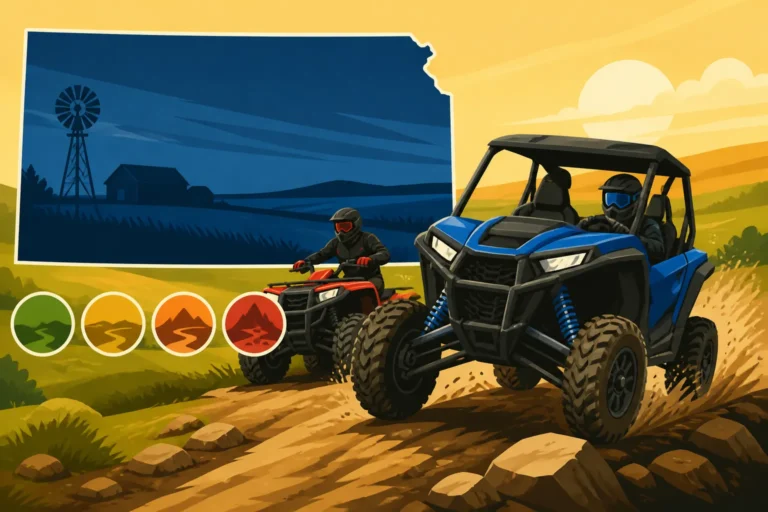
Syracuse Sand Dunes is in Hamilton County, near the town of Syracuse in western Kansas. Its roughly 1,300 acres make it a substantial destination for off-road riding in a part of the state where public riding options can be limited. The setting is especially appealing if you want to ride sand rather than spend the day on rock, mud, or hard-packed trails. [Syracuse Sand Dunes' 1,300 Acres in Kansas]
Still, a park’s total acreage doesn’t necessarily mean every acre is open for riding. Land may include parking, camping, facilities, water, boundaries, or areas that are closed or restricted. Follow the park’s posted rules and signs, and use the riding areas it identifies rather than assuming an open-looking dune is fair game.
That distinction matters when you’re arriving with a trailer and a group. If one rider heads off based on a guess about where the park boundary runs, the group can end up scattered or riding somewhere they shouldn’t. Before you unload, ask where vehicles are allowed, where they are not, and whether trails or zones have different rules.
How sand changes the ride
Sand behaves differently from the hard-packed surfaces many Kansas riders know. It shifts under tires, can hide ruts, and may feel loose even when the surface looks smooth. A machine that handles easily on a farm lane may require more throttle, attention, and momentum in deep sand. That doesn’t mean every section is difficult, but it does mean you should expect to adapt as the terrain changes.
Riders often find that steering technique takes a little adjustment. In loose sand, abrupt turns or sudden braking can make a machine feel less settled. Smooth inputs and a pace that leaves room to react are generally more helpful than trying to force a tight turn at speed. If you’re new to dunes, watch how the terrain changes and give yourself time to learn the surface before tackling steeper or more rutted areas.
Sand also puts extra demands on equipment. It can work its way into filters, moving parts, and protective gear, while prolonged high-rev riding can make a full day more tiring than expected. Prepare for the surface, take breaks, and check your machine during the ride rather than waiting until something feels wrong. [Kansas Dune Riding in Hamilton County]
Plan for your machine, skill level, and group
Choose a ride that fits your experience
Syracuse Sand Dunes may be a good fit for experienced riders looking for a sand-focused outing, but the same terrain can feel intimidating to someone who has never ridden loose sand. If you’re bringing a new rider, a child, or someone on a recently purchased machine, talk through expectations before you arrive. Agree on a pace, a regrouping point, and what to do if anyone gets separated.
A practical first outing is usually better than an ambitious one. Start with an area or loop that feels manageable, learn how your tires respond, and build confidence gradually. A rider who is comfortable on a quad at home may still need time to understand how the same machine reacts on soft dunes. An inexperienced driver in a side-by-side can also misjudge how much room a turn or climb requires.
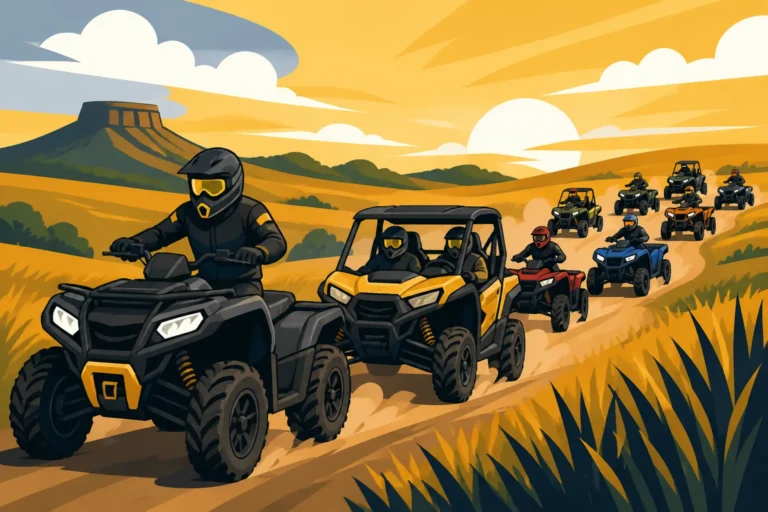
Groups should set simple ground rules. Keep enough space between machines to avoid dust and sudden stops, don’t follow so closely that you can’t see the surface ahead, and agree that no one rides beyond their comfort level just to keep up. If the group has different machine types or abilities, let the more cautious riders set the pace.
Prepare the machine for loose terrain
Before loading up, check the basics: tire condition, brakes, steering, cooling, fuel, and the machine’s air filter. Sand can be hard on a poorly maintained vehicle, and a small issue can become a long walk back to the trailer. Bring the tools and supplies you know how to use, and don’t treat a backup strap or basic repair kit as a substitute for preventive maintenance.
Tire pressure is one of the details riders often ask about when preparing for sand. Lower pressure can increase the tire’s footprint, but the correct setting depends on the tire, machine, load, and manufacturer guidance. Don’t copy another rider’s setup without checking whether it suits your own vehicle. If you adjust pressure, use a gauge and bring a way to reinflate before hauling the machine home.
A sand-focused preparation checklist can help:
- Inspect the machine and confirm routine maintenance is up to date.
- Check the owner’s manual for tire and operating guidance.
- Pack water, eye protection, sun protection, and a basic first-aid kit.
- Bring recovery equipment appropriate for your machine and group.
- Set a regrouping plan and make sure everyone knows the park’s boundaries.
- Clean or inspect the air filter after riding, following the manufacturer’s instructions.
For more detail on tire setup, review [Airing Down for Deep Sand]. It’s also worth remembering that a dune park may require equipment such as a visible flag. Check [Flags Required on Dunes] and the park’s own entry rules before you go.
| Planning question | Why it matters at a sand park | What to do before unloading |
|---|---|---|
| Is the machine suited to loose terrain? | Sand can demand more traction and control than hard-packed ground. | Check the owner’s guidance and choose a route that matches your experience. |
| Are tires and filters in good shape? | Sand and long periods of riding can expose maintenance problems. | Inspect tires and service items before the trip. |
| Does everyone know the boundaries? | Total acreage doesn’t mean every section is open to riding. | Review posted maps, signs, and current park instructions. |
| Is the group prepared for separation? | Dust, terrain, and different riding speeds can spread a group out. | Set regrouping points and a simple communication plan. |
| Are camping or water activities permitted? | Nearby facilities or a pond may have separate rules. | Confirm access and use rules directly with the park. |
Check access, rules, and conditions before you tow
Confirm practical details with the park
A long drive to western Kansas makes a quick pre-trip check worthwhile. Ask the park about operating days, access arrangements, current closures, trail or riding-area conditions, required equipment, and any rules that affect your machine. Don’t rely on an old message, a social media post, or a previous visit if the information could have changed.
Clarify what admission or access covers, too. Riders sometimes assume that parking, camping, pond access, and riding are all included in one arrangement, but those activities can have different rules. Syracuse Sand Dunes has a stocked pond, but its presence alone does not establish whether a particular activity is permitted, what equipment may be used, or where visitors can go. Check [Syracuse Sand Dunes Has a 40-Acre Stocked Pond] and confirm the park’s current instructions before planning around the water.
Ask about the details that could change your plan: whether reservations are needed, what payment methods are accepted, how check-in works, whether a group can arrive together, and what happens if weather affects access. These are ordinary logistics, but they matter when you’ve packed several machines and driven a trailer across the state.
Read signs and respect restricted areas
A park’s rules are part of the ride, not just paperwork at the gate. Pay attention to signs about speed, direction of travel, restricted areas, noise, passenger limits, camping, and safety equipment. If a sign is unclear, ask before you ride. It’s much easier to get an answer while parked than to discover that you’ve crossed into a closed zone.
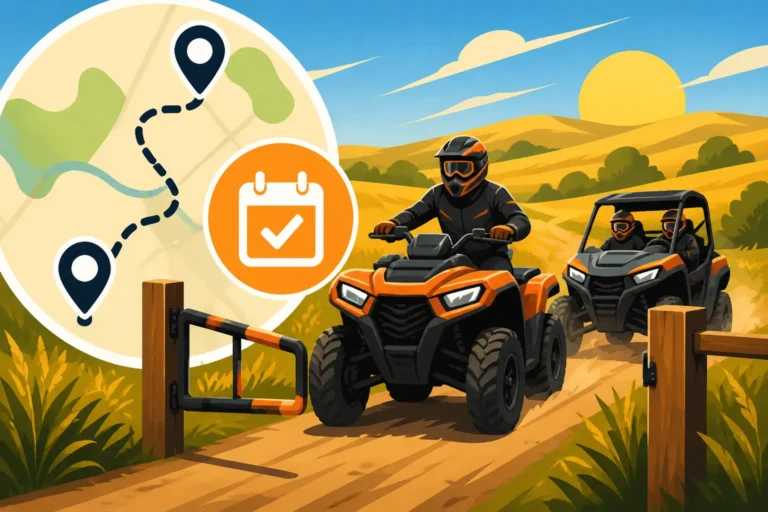
The presence of a trail or track on a mapping app does not automatically mean it is open, legal, or safe to use. Apps can help you understand an area and plan a route, but they are not a replacement for a park’s current map and posted instructions. onX Offroad can be useful for reviewing your planned route and keeping track of where your group is, particularly when riders are spread out. Treat it as a planning aid, not permission to enter an area.
Keep your own vehicle’s use within the park rules even if other riders appear to be doing something different. Following another machine into an unsigned area or copying a risky line can put you, the park, and other visitors in a difficult position. For the broader rules that apply at the property, consult [Syracuse Sand Dunes Park Rules].
Use weather and surface conditions to make a go-or-no-go call
A forecast can affect more than whether you’ll get wet. Wind, heat, storms, and changing surface conditions can all change how comfortable and manageable a ride feels. Open terrain offers limited shade, and a group that is focused on riding can underestimate how quickly it is using water or getting tired. Bring more drinking water than you expect to need and schedule breaks before riders are exhausted.
If rain or strong weather is possible, check with the park before leaving home. Access or conditions may change, and a sandy surface may ride differently after weather moves through. Don’t assume that a trip is worthwhile just because the trailer is loaded. A brief call can save a long drive if the park has closures or conditions that don’t suit your group.
For more general preparation, review [Kansas Trail Conditions Before You Tow]. If you use a mapping tool such as onX Offroad, check your route before departure and save the information you may need offline; cell service can be unreliable in rural areas. Once at the park, let official signs and staff guidance take priority over a saved track.
Make the trip work for riders and non-riders
Decide whether camping belongs in the plan
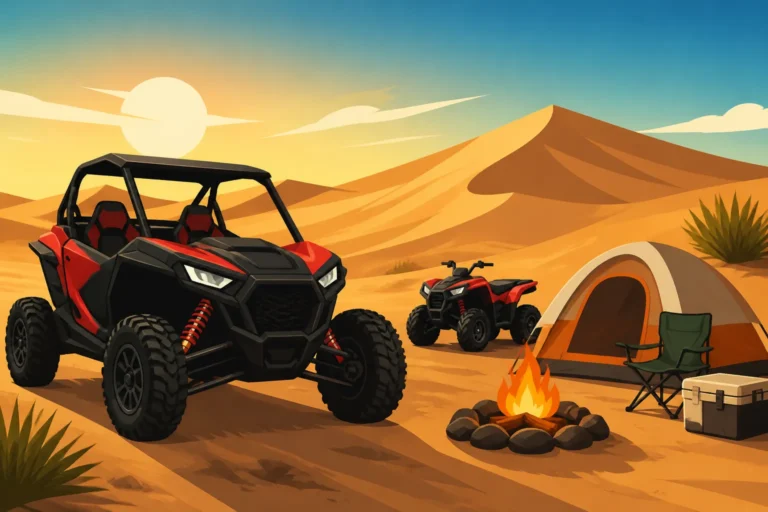
Camping can turn a long drive into a more relaxed weekend, especially for a group coming from elsewhere in Kansas. But don’t assume that a campground’s location guarantees a particular type of access or that every site works for every trailer. Ask about reservation requirements, available facilities, vehicle parking, quiet hours, and whether you can ride directly from the camping area or must trailer to a designated staging point.
The same advance check applies to recreational amenities. A pond can make a destination more appealing for family members who aren’t riding all day, but access may be limited by the park’s rules, conditions, or operating arrangements. Ask what visitors can do there and whether those activities require separate preparation. Avoid planning around a feature until you know how the park allows it to be used.
If you’re comparing overnight options, [Kansas Riding Areas With RV Hookups] can help you think through what to ask about facilities. Confirm details directly with the destination before committing your group’s schedule, especially if you’re bringing a larger RV or arriving with several trailers.
Keep a group day organized without making it rigid
A simple itinerary helps a mixed group enjoy the day without turning the ride into a race. Choose a time to check in, unload, review rules, and regroup before the first ride. Set a few meeting points that are easy to describe, and make sure every rider knows how to return to the staging area. If a rider has a phone or GPS device, don’t assume that it will work everywhere; agree on a backup plan.
It can help to split a large group into smaller riding groups based on ability and machine type. That way, confident riders can travel at a suitable pace without pressuring beginners, while less experienced riders can stop and learn without feeling they are holding everyone up. Each group should have a lead rider and a sweep rider who stays behind the last machine.
Protect time for ordinary needs. Eating, drinking, checking machines, and taking breaks are not interruptions to the trip; they help prevent fatigue and small problems from spoiling the afternoon. In hot or windy weather, consider shortening the riding plan. A good visit doesn’t depend on covering every open area.
Choose Syracuse for the ride it offers
Compare the terrain with your expectations
Syracuse Sand Dunes is a sensible choice when your group specifically wants a sand-oriented ride in Kansas. It may be less suitable if you’re looking for smooth, clearly marked beginner loops, technical rock features, or a paved recreation setting. The right destination depends on your machine, confidence, and preferred terrain—not just the acreage listed in a park description.
Before deciding, compare the riding experience you want with what the property actually offers. Look for current information about vehicle limits, terrain, facilities, and access. [Kansas ATV Trails: Where You Can Actually Ride] offers a broader look at the state’s riding options, while [Kansas Riding Areas With Sand] can help place a dune destination in context.
You can also use onX Offroad to explore trip logistics and orient yourself to the surrounding region, but confirm routes and access with the park. A line on a map does not guarantee permission, and a route that appears short can take longer when you’re towing, unloading, or moving a group safely.
Get ready for a more rewarding first visit
If this is your first time at Syracuse Sand Dunes, arrive with a flexible plan rather than a list of terrain you must conquer. Start with the park’s directions and rules, choose a comfortable first ride, and check in with your group afterward. Ask what felt easy, what felt challenging, and whether anyone needs a different pace or more instruction before heading out again.
Keep expectations grounded. The acreage gives the park room for a substantial sand-riding experience, but it doesn’t promise that every area will suit every machine or rider. Your best day may come from exploring a smaller section carefully, taking breaks, and leaving enough energy for the trip back to the trailer.
A little planning also makes repeat visits easier. Note what tires and gear worked well, how much water your group used, and which questions you want to ask before the next trip. Keep the park’s rules and current directions handy, and check them again before you tow. That preparation helps you focus on riding rather than sorting out avoidable surprises at the gate.
Disclaimer
This article is for general informational purposes only and does not constitute professional advice. Laws, prices and regulations vary by location and change over time. Consult a qualified professional for guidance on your specific situation.