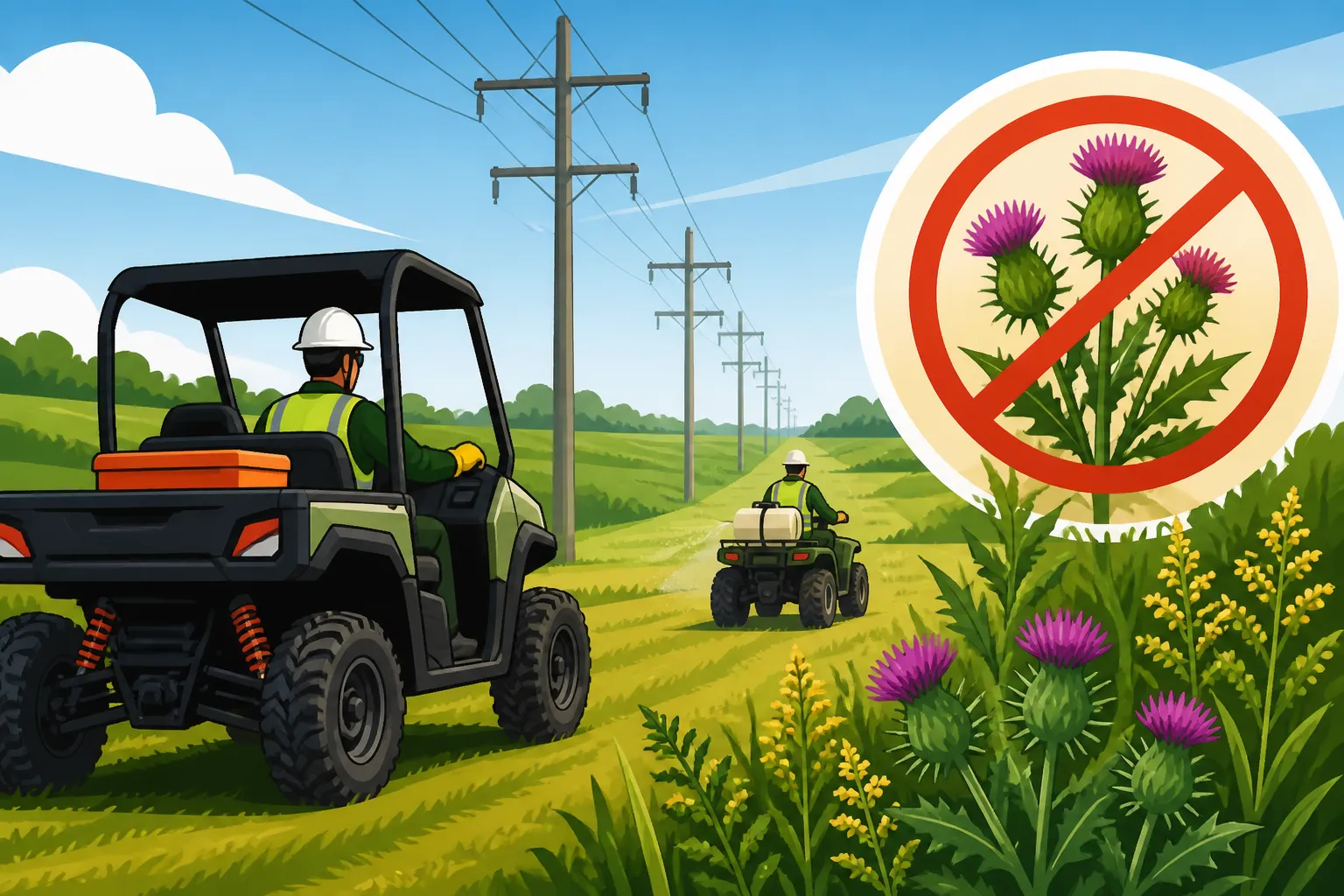
Why Noxious Weed Crews May Ride the Right-of-Way
Many of us have been driving down a Kansas county road or even a state highway, minding our own business, when we see an ATV or UTV seemingly cruising along the shoulder or even crossing the pavement. For private citizens, this is almost always a no-go, leading to confusion and frustration. This guide will unravel the specific circumstances and legal exceptions that allow noxious weed control crews to operate their off-road machines on public rights-of-way in Kansas, shedding light on a critical aspect of rural life and public service.
The General Rule: Why ATVs Are Banned on Kansas Roads
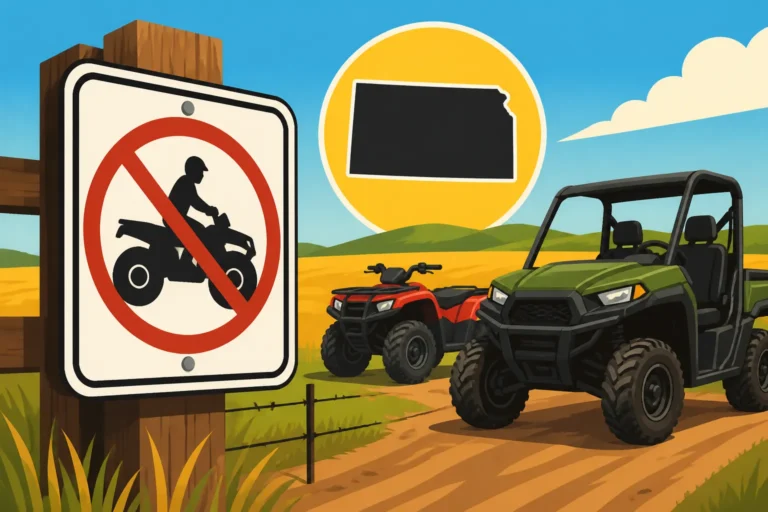
It's a common point of confusion for new ATV and UTV owners in Kansas, and even for many long-time residents: why can't I just take my quad down the county road to my buddy's house or to the local store? The short answer, which often frustrates enthusiasts, is that Kansas state law generally prohibits the operation of ATVs and most UTVs on public roads. This isn't just a suggestion; it's a foundational statute that aims to keep these machines, designed primarily for off-road use, off busy thoroughfares where they might pose a safety risk to themselves and other drivers. The law sees these vehicles as distinct from traditional street-legal cars, trucks, and motorcycles, even if they have headlights and turn signals. They simply aren't engineered or regulated for the demands of highway speeds and traffic flow.
Understanding Kansas's Default Ban on Off-Road Machines
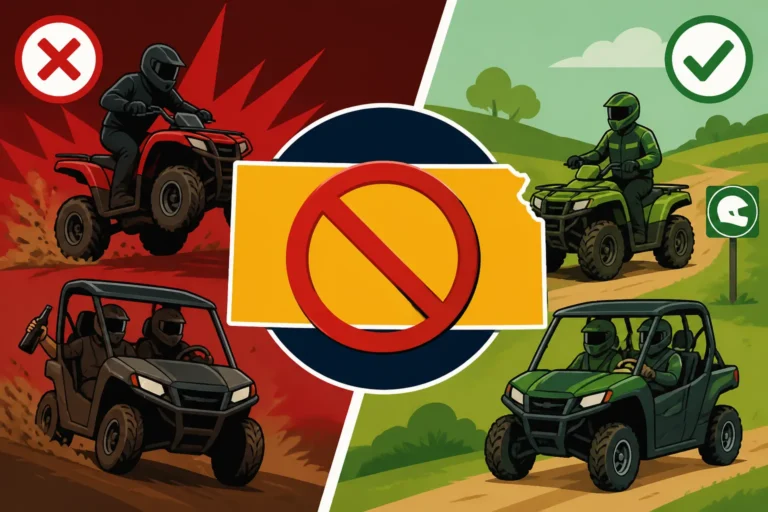
Kansas law explicitly defines what constitutes an "all-terrain vehicle" or ATV, and this definition is crucial. These machines are typically designed for off-highway use, characterized by features like low-pressure tires, handlebars for steering, and a seat designed to be straddled by the operator. The statute then generally prohibits the operation of these vehicles on any public highway, road, or street. There are exceptions, of course, which we'll dive into, but the default position is a firm "no." This applies whether you're talking about a utility quad used for chores or a sport quad built for thrills. Even side-by-sides, which often feel more car-like, fall under similar restrictions unless they meet specific criteria as a "work-site utility vehicle" or are explicitly permitted by a local ordinance. It’s vital for riders to understand that without one of these specific exceptions, riding an ATV or UTV on a public road can lead to fines, citations, and even impoundment. Understanding this baseline helps clarify why seeing a noxious weed crew on the road might seem like a contradiction. This is a topic thoroughly covered in [Can You Drive an ATV on the Road in Kansas?].
The Difference Between a Title and Road Legality
Here’s another common misunderstanding that often trips up riders: the idea that if your ATV or UTV is titled, it must be street-legal. In Kansas, that's simply not the case. Your off-road machine must be titled, even if you only ever ride it on private land or dedicated trails. The state requires a [Kansas Nonhighway Title Explained] for ATVs and UTVs. This title proves ownership and helps with sales tax collection and stolen vehicle recovery. However, having a title absolutely does not grant you permission to drive on public roads. Think of it like a dirt bike. You can title a dirt bike, but you can't ride it down Main Street without specific modifications to make it street-legal, which for a typical dirt bike is a significant undertaking, and even then, Kansas rules for motorcycles are different. For ATVs and UTVs, the title confirms your ownership of a "nonhighway vehicle," which, as the name suggests, means it's not for the highway. So, when you see a noxious weed crew, their machines are undoubtedly titled, but their road presence isn't due to the title itself; it's due to specific exemptions related to their work. This distinction is crucial for understanding [Why an ATV Is Titled as a Nonhighway Vehicle] but not registered for road use like a car.
The Specific Exception: Public Duty and Agricultural Use
Now that we've established the general rule against ATVs and UTVs on Kansas roads, let's explore the critical exceptions that allow noxious weed crews to operate there. This isn't a loophole, but a deliberate legislative allowance designed to enable essential public services and agricultural operations that rely on these machines. These exceptions are carved out because the nature of the work performed often requires access to areas that are not easily reached by conventional vehicles and sometimes necessitates traversing public rights-of-way to get to these work sites. It’s a pragmatic approach to ensure that vital tasks, like controlling invasive plants, can be efficiently carried out.
When Public Service Overrides General Road Rules
Noxious weed control is a critical public service in Kansas. These weeds, if left unchecked, can devastate agricultural lands, harm livestock, reduce biodiversity, and even pose fire hazards. County noxious weed departments are tasked with controlling and eradicating these plants, often working along public roads, ditches, and other rights-of-way. The law recognizes that these crews need to move specialized equipment, including ATVs and UTVs fitted with sprayers or other tools, from one patch of weeds to another. Requiring them to load their machines onto trailers for every short hop between treatment areas would be incredibly inefficient, costly, and impractical. Therefore, Kansas law includes provisions that allow these public entities, and their contractors, to operate off-road vehicles on public highways for specific governmental functions. This isn't just a casual ride; it's about enabling a statutory duty. The exemption often falls under broad categories related to "agricultural purposes" or "maintenance of public ways," which directly align with the work of noxious weed crews. This allows them to perform tasks like those covered under [Kansas Noxious Weed Department Exception].
How the Agricultural Exemption Applies to Weed Control
Beyond explicit public service clauses, the agricultural exemption is a broad category that often provides cover for noxious weed control operations. Kansas is an agricultural state, and its laws reflect this reality. Agricultural vehicles and equipment often have special allowances for road use, recognizing that farmers need to move machinery between fields, or take products to market. While a noxious weed crew isn't "farming" in the traditional sense, their work is undeniably tied to the health and productivity of agricultural land. Controlling weeds along ditches and fence lines prevents their spread into valuable crop and pastureland. Therefore, the use of ATVs and UTVs for noxious weed control can often be considered an "agricultural purpose" under the spirit of the law, especially when the work directly benefits or protects agricultural interests. This typically allows them to operate on county and township roads, and sometimes even state highways for short distances, particularly when moving directly between work sites. For instance, a sprayer mounted on a UTV, perhaps with some robust aftermarket parts from a company like SuperATV to handle the weight and rough terrain, would be considered essential agricultural equipment in this context, even if it's operated by a county crew rather than a private farmer. This mirrors the allowances given for [Kansas Agricultural Trips on a 65 mph Road] where other farm machinery might be operating.
What Makes a "Noxious Weed Crew" Machine Different
While we've discussed the legal basis for noxious weed crews to use ATVs and UTVs on Kansas roads, it's also important to understand that these aren't just recreational machines taking a joyride. Their vehicles, their operations, and their crew members are typically distinguished by specific characteristics and safety protocols that set them apart from the average rider. This differentiation is not just about legality; it's about public safety and fulfilling their professional duties efficiently.
Identifying Legitimate Work-Site Utility Vehicles
When you see a UTV being used by a noxious weed crew, it's often configured specifically for that purpose. These aren't always your standard sport side-by-sides. Many are "work-site utility vehicles" (WSUVs), a specific class of off-road machine in Kansas that has its own set of rules and can sometimes have greater road access under certain conditions, particularly if it's for commercial or governmental use. A WSUV often has a specific width, weight, and seating capacity, and it's almost always clearly identifiable. You'll likely see flashing lights, reflective tape, and often a prominent display of the county's name or the contractor's logo. They might be equipped with large spray tanks, booms, or other specialized tools permanently or semi-permanently mounted, making it clear they are not being used for recreation. These vehicles are tools for a specific job, much like a specialized tractor or construction equipment. The purpose of these identifiers is not just for branding, but for safety—they signal to other drivers that this is a working vehicle operating in a professional capacity, requiring caution. For example, some crews might use heavy-duty axles and lift kits from SuperATV to ensure their vehicles can carry heavy spray loads across uneven terrain and maintain clearance. Understanding the definition of a [Kansas Work-Site Utility Vehicles Explained] helps differentiate these from purely recreational models.
Safety Considerations for Crews and Other Drivers
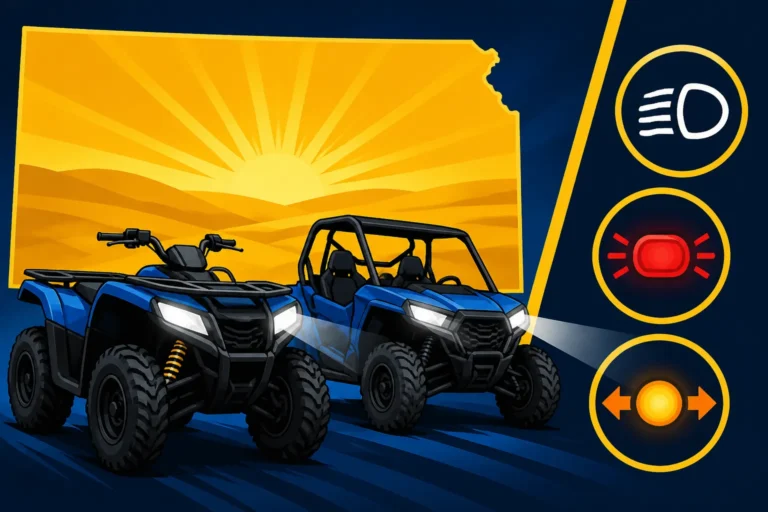
Given that these machines are operating on public roads, even if it's just the right-of-way, safety is paramount. Noxious weed crews are typically trained professionals who adhere to strict safety protocols. Their vehicles are often outfitted with additional safety features beyond what a recreational rider might have. This can include highly visible slow-moving vehicle emblems, bright flashing lights (amber or sometimes even green, depending on local ordinances and state guidelines for public service vehicles), and flags. The operators themselves are usually wearing appropriate personal protective equipment (PPE), including high-visibility clothing. For other drivers encountering these crews, it means exercising extra caution. These machines are slow-moving, can be wide, and might be making frequent stops or moving erratically to target specific weed patches. It's crucial to slow down, give them plenty of space, and pass only when it's safe to do so. Remember, they are doing essential work to protect the environment and agriculture of Kansas, and their presence on the road is for a necessary public benefit. This extends to understanding general [Kansas Slow-Moving Emblem Rules] that apply to various types of slower vehicles on public roads.
Navigating the Right-of-Way Safely: Tips for Everyone
Understanding why noxious weed crews are on the right-of-way is one thing, but knowing how to interact with them and the environment they're working in is another. For both the crews and the general public, safety and awareness are key to ensuring that essential work gets done without incident. The right-of-way isn't just the paved road; it often includes the shoulder, ditches, and the area alongside the road where these crews are typically operating, sometimes extending quite a distance from the pavement itself.
What to Do When You Encounter a Weed Control Machine
If you're driving and come across a noxious weed control crew using an ATV or UTV on or near the right-of-way, your best course of action is simple: slow down, be patient, and give them ample space. These machines might be moving at very low speeds, stopping frequently, or even backing up to get to specific areas. They often have chemicals on board, and their attention is focused on the task at hand, which might mean they're not always looking for fast-approaching traffic. Look for flashing lights, orange cones, or other warning signs they might have deployed. If you need to pass, ensure you have a clear line of sight, enough room, and that you're not passing in a way that could endanger the crew or yourself. Never assume they've seen you or are aware of your intentions. Their work is often meticulous and requires concentration. They are there for a specific purpose, typically controlling plants that are harmful or invasive, and rushing past them recklessly could put everyone at risk. This kind of interaction highlights the importance of general road etiquette and understanding the unique circumstances of different road users. Always keep an eye out for potential hazards, much like you would when encountering a tractor or other farm equipment on a rural road.
Understanding the Purpose of the Right-of-Way
The "right-of-way" isn't just the paved portion of the road. It includes the entire strip of land legally designated for public use, encompassing shoulders, ditches, and sometimes a wider area extending beyond the road edge. This wider strip is crucial for infrastructure like utility lines, drainage, and, yes, weed control. Noxious weeds frequently establish themselves in these roadside areas, making them prime targets for control efforts. The presence of an ATV or UTV in the ditch or on the grassy shoulder, while unusual for a recreational rider, is perfectly logical and necessary for a weed crew. They are targeting plants in those specific locations to prevent them from spreading to adjacent private lands. Sometimes, they might need to cross the paved portion of the road to access another section of the right-of-way, particularly on rural roads where turnarounds are sparse. Understanding that the right-of-way has multiple functions beyond just vehicle passage helps demystify why these machines are where they are. It's all part of maintaining the public infrastructure and protecting Kansas's agricultural backbone. In this context, the equipment they use, whether it's stock or enhanced with heavy-duty components from SuperATV, is specifically chosen for its ability to navigate these varied terrains, from steep ditches to rocky shoulders. This is a key aspect of [Kansas Work-Site Utility Vehicle Road Rules] that applies to professionals carrying out official duties.
Here's a quick comparison to summarize the distinctions:
| Feature | Private ATV/UTV Rider | Noxious Weed Crew (ATV/UTV) |
|---|---|---|
| Primary Purpose | Recreation, personal property access | Essential public service, agricultural support |
| Road Legality | Generally prohibited on public roads/right-of-way | Specific exceptions for official duties/agricultural work |
| Vehicle Configuration | Stock or customized for recreation/personal use | Often specialized (e.g., sprayers, heavy-duty parts), visible branding |
| Operational Speed | Varies off-road; usually not designed for road speeds | Often slow, stopping frequently, moving deliberately |
| Safety Markings | Minimal, standard lights (if any) | Flashing lights, slow-moving emblems, high-vis vehicles |
| Legal Justification | None for general road use; limited private access only | State statutes and agricultural exemptions for public duty |
Disclaimer
This article is for general informational purposes only and does not constitute professional advice. Laws, prices and regulations vary by location and change over time. Consult a qualified professional for guidance on your specific situation.