Kansas Agricultural Trips on a 65 mph Road
It’s a common scenario across rural Kansas: you need to get your ATV or UTV from one field to another, or maybe run a quick errand down a county road that happens to lead to a state highway. You know your machine is essential for farm work, but the rules about where you can legally drive it on public roads can feel like a tangled mess. This guide aims to untangle those rules, specifically addressing the agricultural exception and the often-misunderstood allowances for traveling on or crossing state highways, including those with 65 mph speed limits.
The Blanket Ban: Why Off-Road Machines Are Generally Prohibited on Kansas Roads
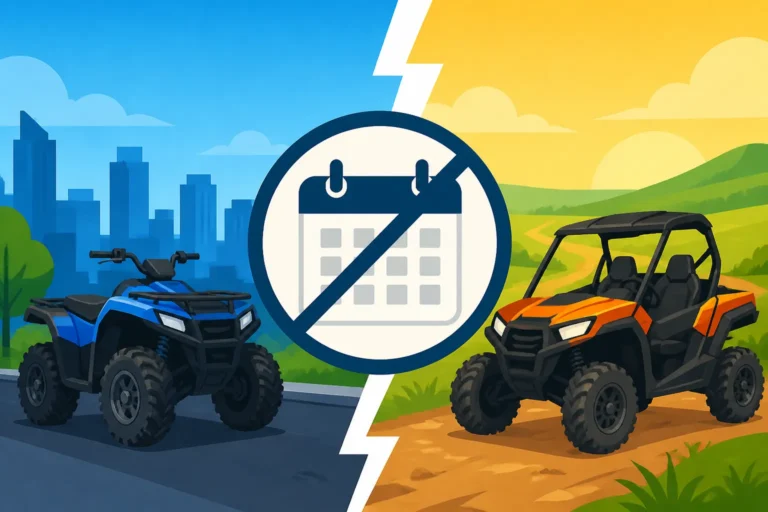
Let's start with the hard truth that often catches new owners off guard: generally speaking, Kansas law doesn't want your ATV or UTV on public roads. It's not personal; it's about safety and the distinct design of these vehicles. Unlike cars, trucks, or motorcycles, off-road machines aren't built to share the pavement with fast-moving traffic, nor are they typically equipped with the full suite of safety features required for highway use.
Understanding the Default Prohibition
Kansas has a pretty clear stance on this: unless specifically exempted or authorized by a local ordinance, your off-road machine belongs off the road. This baseline rule is in place for several very practical reasons. Off-road tires, for instance, aren't designed for asphalt and can compromise handling at speed. The lack of standard turn signals, rearview mirrors, and often, adequate lighting further complicates safe integration into road traffic. For many owners, this feels incredibly frustrating. You're simply trying to move your tool from one part of your property to another, or access a different parcel of land, and suddenly you're facing potential legal issues just for a short stretch on the blacktop. This is where understanding the exceptions becomes critical. For a comprehensive overview, it helps to review [Kansas ATV Road Rules Under 8-15,100].
The state's general prohibition aims to prevent dangerous situations where machines not designed for road conditions could cause accidents or impede traffic flow. It's a broad stroke designed to cover the vast majority of scenarios. However, the law does recognize that these machines are vital for certain industries, especially agriculture, and has carved out specific allowances to prevent undue burden on farmers and ranchers. Navigating this general ban while still utilizing your machine for its intended purpose requires a careful reading of the nuances.
The Definition Difference: ATV vs. Work-Site Utility Vehicle
Kansas law is particular about what it calls an "ATV" and other similar machines, and these definitions significantly impact what you can and can't do on the road. An All-Terrain Vehicle (ATV) is broadly defined as a motorized off-highway vehicle designed to travel on four or more low-pressure tires, having a seat designed to be straddled by the operator, and handlebars for steering. These are your traditional four-wheelers.
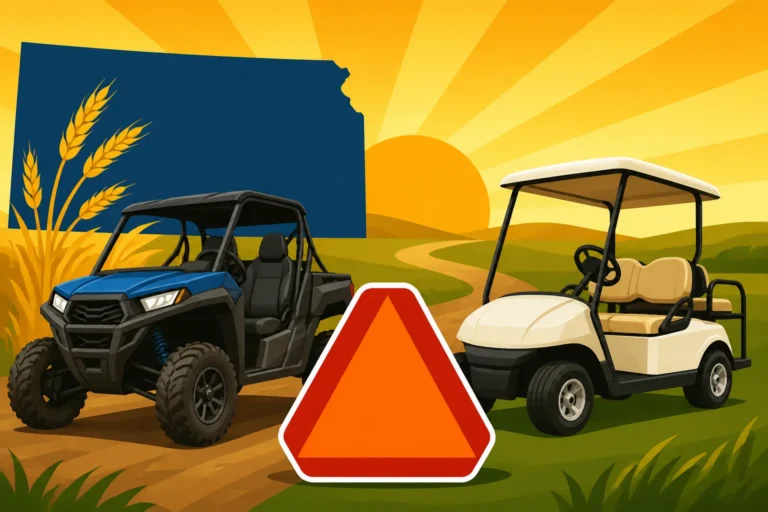
On the other hand, a "Work-Site Utility Vehicle" (WSUV) is a distinct class. It's also a motorized off-highway vehicle, but it's typically designed for utility work and often features a bench or bucket seat, a steering wheel instead of handlebars, and a cargo bed. Think of many modern side-by-sides. These distinctions are crucial because WSUVs often have different, slightly broader allowances for road use, particularly under local ordinances. Golf carts and micro utility trucks also have their own specific sets of rules. It’s important to know which class your machine falls into, as a misclassification could lead to fines. Understanding [Kansas Work-Site Utility Vehicle Road Rules] can clarify these differences and their implications.
This careful legal delineation means that while your two-seater side-by-side might look similar to a neighbor's ATV, the law might treat them quite differently, particularly when it comes to road access. Manufacturers like SuperATV offer a wide range of accessories for both ATVs and UTVs, but remember that adding features like turn signals or mirrors doesn't automatically reclassify your machine or make it street legal in all situations. The core legal definition established by the state remains paramount.
The Agricultural Exception: What It Really Means for Your Machine
Now, let's talk about the exception that brings a sigh of relief to many Kansas farmers and ranchers: the agricultural exemption. This isn't a free pass to joyride, but a specific allowance for legitimate work-related travel. Understanding its precise boundaries is key to avoiding trouble.
Specifics of the Farm Exemption for Road Use
The agricultural exception allows ATVs and UTVs to be operated on public roads if they are being used for an "agricultural purpose." This isn't just a vague term; it means activities directly related to farming, ranching, or other agricultural operations. Picture yourself needing to check cattle in a different pasture accessed by a county road, moving fencing supplies from one field to another, or hauling feed to livestock on an adjacent property. These are classic examples of legitimate agricultural uses. It also covers tasks like moving from your farm home to a field a mile down the road for planting or harvesting, or transporting tools for irrigation repair.
The spirit of this law is to facilitate the necessary work of agriculture without requiring farmers to load and unload their machines onto trailers for every short distance. It recognizes that these machines are indispensable tools in rural Kansas. However, this exception does not extend to recreational riding, even if you own farmland. Taking your UTV down the road to meet friends at a local diner, or going for a scenic cruise, would not typically fall under "agricultural purpose" and could lead to a citation. To delve deeper into what exactly counts, explore [What Counts as an Agricultural Trip on a Highway].
Limitations on Roadways and Speed Limits
This is where the topic gets particularly specific about "65 mph roads." While the agricultural exception does permit you to use your ATV or UTV on public roads for agricultural purposes, it absolutely does not mean you can travel at 65 mph, or even on all types of 65 mph roads. The critical distinction here is between county and township roads versus state highways.
Generally, for agricultural purposes, you are most likely to be permitted on unpaved or lower-speed paved county and township roads. These roads often have lower speed limits and less traffic, making them safer for off-road machines. However, even on these roads, you are expected to operate your machine as far to the right as practicable, stay off the paved portion if possible, and maintain a safe speed appropriate for your vehicle and road conditions.
When it comes to state highways, especially those with 65 mph limits (like U.S. routes or state routes), the rules tighten significantly. While you may be allowed to cross a state highway (which we'll discuss next), sustained travel on a 65 mph state highway is generally prohibited for ATVs and UTVs, even for agricultural purposes. The speed differential alone creates an extreme hazard, and these roads are simply not designed for the slower, less protected off-road machines. Think about the common sense involved: if a car is traveling at 65 mph and encounters your ATV moving at 25 mph, the risk of a severe accident skyrockets. Many local residents also want to understand [Kansas Rules for Riding a County Road] as it’s a more common query than state highways.
Essential Requirements for Agricultural Road Use
Even when you're legitimately using your ATV or UTV for agricultural purposes on an approved road, there are still specific legal requirements you must meet. These aren't suggestions; they are mandates designed to ensure the safety of yourself and others sharing the road.
Driver's License and Age Considerations
Operating any motorized vehicle on a public road in Kansas, even under an agricultural exception, requires a valid driver's license. This is a non-negotiable point. Just because you're on a county road for farm work doesn't mean you can bypass the basic requirement of being a licensed driver. This applies to anyone, regardless of age, who is behind the wheel or handlebars of an ATV or UTV on a public thoroughfare.
The law is clear that [The Farm Exception Still Requires a Driver's License]. This means that a 15-year-old operating a UTV on the family farm might be perfectly fine within the confines of private property, but once they pull out onto a public road, even for a short agricultural trip, they must possess a valid Kansas driver's license. Parents and farm owners need to be acutely aware of this, as permitting an unlicensed driver to operate on public roads can lead to serious legal repercussions for both the driver and the owner of the machine.
Lighting and Safety Equipment
Visibility is paramount, especially when sharing roads with other vehicles. If you're operating your ATV or UTV on a public road, even for agricultural purposes, and especially between sunset and sunrise, your machine must be adequately lit. This typically means having working headlights, taillights, and brake lights. While many ATVs and UTVs come with basic lighting from the factory, these might not always meet the minimum requirements for road use, especially in low-light conditions.
Kansas law often refers to [Lights Required Like a Motorcycle] for some of these machines, which gives you a good standard to aim for. This includes a white headlight visible from 500 feet and a red taillight visible from the same distance. For UTVs, turn signals and rearview mirrors are also highly advisable, and often required by any local ordinances that permit road travel. Even for agricultural trips, enhancing your visibility is crucial. Adding reflective tape to your machine, especially the rear and sides, can provide an extra layer of safety. This is where quality aftermarket accessories come in handy. Investing in an upgraded light bar or brighter LED lights from a company like SuperATV can significantly improve your visibility to other drivers, making your farm trips safer. Always check [Kansas Lighting Rules After Sunset] to ensure your setup is compliant.
Navigating State Highways and Crossing Rules
State highways, especially those with higher speed limits, present the most stringent restrictions for ATV and UTV operation. It's crucial to understand the very limited circumstances under which your machine can legally interact with these roads.
Crossing a State Highway: Yes, But with Caution
Here’s a small but significant allowance: you are generally permitted to cross a state highway, including those with 65 mph speed limits, for agricultural purposes. This is not the same as traveling on the highway. A crossing must be direct and as quick as safely possible, perpendicular to the flow of traffic. Think of it as moving from a field on one side of the highway to a field directly across on the other side. You are expected to yield to all oncoming traffic and make your crossing only when it is safe to do so.
This allowance is a practical necessity for many farming operations where land parcels are divided by busy roads. However, it's a moment of heightened risk. Drivers on state highways often aren't expecting a slow-moving ATV or UTV to suddenly appear in their path. Always use extreme caution, ensure clear visibility in both directions, and consider using hand signals to indicate your intention to cross. For more specific guidance, see [Crossing a State Highway in Kansas] and [Crossing at Any Point on a State Road]. Never assume drivers will see you; take every precaution to ensure you see them and they have ample time to react.
Interstates and Federal Highways: Absolutely Forbidden
Let's be crystal clear: under no circumstances are ATVs or UTVs, even those being used for agricultural purposes, permitted on interstates or federal highways in Kansas. This includes I-35, I-70, and any designated U.S. highways that function as high-speed, controlled-access roadways. The dangers associated with operating a slow-moving, unprotected off-road machine on these types of roads are simply too great, and the law reflects this with an absolute prohibition.
Attempting to drive an ATV or UTV on an interstate or federal highway is not only incredibly dangerous but also carries severe penalties, including hefty fines, impoundment of your vehicle, and potentially criminal charges. There is no agricultural exception for these roads. It is critical for all ATV and UTV owners in Kansas to understand this fundamental rule. Never even consider taking your machine onto these types of highways. For unambiguous information, refer to [Kansas Bans ATVs on Interstates] and [Kansas Bans ATVs on Federal Highways].
Common Misconceptions and Local Ordinances
The world of ATV and UTV road legality is rife with misunderstandings. It's easy to get caught up in rumors or assume certain things are true. Let's clear up a couple of common ones and discuss how local laws factor in.
The Myth of the "Farm Tag" or "Agricultural Plate"
One of the most persistent myths is the idea that if your ATV or UTV is used for farm work, there's some special "farm tag" or "agricultural plate" that makes it street legal. In Kansas, this simply isn't the case for ATVs. Unlike some other states or certain types of farm machinery, ATVs and UTVs primarily designated as off-road vehicles do not get a special license plate or tag that grants them general street legality for agricultural purposes.
In fact, [Kansas Has No OHV Registration] system for ATVs and UTVs. While your machine will receive a nonhighway title, this title merely establishes ownership and does not come with a license plate or imply road legality. The agricultural exception for road use is exactly that – an exception to the general prohibition, tied to the purpose of the trip and specific road types, not a special registration. This means you won't be heading to the county treasurer's office asking for a farm tag for your quad. For more details on this, you can look up [Why an ATV Is Exempt From Registration Entirely].
The Role of City and County Ordinances vs. State Law
While state law sets the baseline, local city and county governments in Kansas do have the authority to pass ordinances that can modify the rules for off-road vehicle use within their specific jurisdictions. This is especially true for Work-Site Utility Vehicles (WSUVs) and golf carts, which are often the focus of these ordinances. For example, many cities across Kansas have passed ordinances that allow WSUVs (side-by-sides) or golf carts on certain city streets, usually those with lower speed limits (e.g., 30 mph or less), during daylight hours, and often with specific equipment requirements like turn signals, horn, and rearview mirrors.
However, it’s crucial to understand that these local ordinances do not override state law regarding state highways or the fundamental prohibition on interstates. A city ordinance allowing your UTV on its 25 mph residential streets doesn't suddenly grant you permission to drive it on the 65 mph state highway that runs through town. These ordinances are specific to the local jurisdiction's lower-speed roads and typically involve obtaining a city permit or tag. If you're wondering if your town has an ordinance, check [Kansas Cities That Authorize ATV Street Use] or [Kansas UTV Street Legal Rules by City]. If your local area does allow UTVs on its streets, you might find that adding accessories like a proper mirror kit or turn signal kit from SuperATV can help you meet the necessary equipment requirements for a city permit. Always verify with your specific city hall or county clerk's office, as rules vary dramatically from one community to the next.
Practical Advice and Avoiding Penalties
Understanding the law is one thing; putting it into practice responsibly is another. Here’s some advice to help you stay on the right side of the law and avoid unnecessary headaches.
Documenting Your Agricultural Purpose
If you're using your ATV or UTV on a public road under the agricultural exception, and you're stopped by law enforcement, be prepared to explain and, if possible, demonstrate your agricultural purpose. While you might not need to carry a binder of documents, having a plausible, clear explanation is helpful. For example, if you're hauling fencing wire, that's pretty clear. If you're just driving from one side of your property to another, be ready to articulate that it's to check livestock or move equipment for field preparation.
Always be polite and cooperative with law enforcement officers. They are simply doing their job to ensure public safety. A calm, respectful explanation of your agricultural activity is far more effective than an argumentative or evasive response. Showing that you understand the rules and are genuinely using the machine for work can go a long way.
Penalties for Illegal Road Use
The consequences for illegally operating an ATV or UTV on Kansas public roads can range from frustrating to severe. If you're caught riding where you shouldn't be, or without the proper equipment when required, you could face fines, which vary depending on the specific violation and local jurisdiction. These fines can add up quickly, especially when court costs are factored in.
Beyond monetary penalties, there's also the risk of your machine being impounded. Imagine needing your UTV for farm work only to have it towed away because you took it on a prohibited road. This not only incurs towing and storage fees but also puts a significant wrench in your daily operations. In some cases, particularly with repeat offenses or dangerous driving, more serious charges could be filed. Understanding these potential outcomes should underscore the importance of strictly adhering to the law. Always consult [Kansas Penalties for Illegal Road Riding] to understand the full scope of potential consequences. Choosing durable components and ensuring your machine is always in good working order, perhaps with quality parts from SuperATV, can also help prevent breakdowns that could lead to unexpected stops or issues with law enforcement.
Comparing Road Types for Agricultural ATV/UTV Use in Kansas
To help summarize, here's a quick comparison of different road types and how the agricultural exception generally applies:
| Road Type | Agricultural Use Allowed? | General Speed Limit | Key Considerations |
|---|---|---|---|
| Private Property | Yes | N/A | Always permitted, no state restrictions on operation. |
| County/Township Roads | Yes | Varied (typically 25-55 mph) | Generally allowed for legitimate agricultural purposes. Must operate as far right as practicable. Adequate lighting required after dark. Valid driver's license mandatory. Speed should be safe for conditions. |
| State Highways | Crossing only | Varied (up to 65 mph) | Allowed for direct, perpendicular crossings for agricultural purposes. Absolutely no sustained travel on state highways, especially those with 65 mph limits. Exercise extreme caution, yield to all traffic. |
| Interstates | No | 75 mph | Absolutely forbidden under all circumstances. Severe penalties. |
| Federal Highways (Non-Interstate) | No | Varied | Generally forbidden for sustained travel. May permit crossing in very specific, limited scenarios, but this is rare and highly discouraged due to danger. Always confirm with local authorities if unsure. Safer to avoid entirely. |
| City Streets (with ordinance) | Yes (for UTVs/Golf Carts) | Typically 25-40 mph | Permitted only if your specific city or county has passed an ordinance. Often requires city permit/tag, specific equipment (turn signals, mirrors), and is limited to lower-speed streets. Does not override state highway or interstate prohibitions. Always verify with local authorities. |
Remember, this table is a general guide. Always confirm the specific rules with your local county sheriff's office or city hall, especially regarding city streets and any nuanced local interpretations of state law.
Disclaimer
This article is for general informational purposes only and does not constitute professional advice. Laws, prices and regulations vary by location and change over time. Consult a qualified professional for guidance on your specific situation.