Kansas Golf Cart Road Rules
You've bought that shiny new (or new-to-you) golf cart, picturing breezy drives around your neighborhood, maybe even a quick run to the local store for an iced tea. But then reality hits: Kansas road laws for golf carts are far from straightforward, leaving many owners scratching their heads, worried about getting a ticket just for enjoying their machine. This guide aims to cut through the confusion, offering a comprehensive look at what you really need to know to safely and legally operate your golf cart on public roads in the Sunflower State.
The Basics: What Kansas Law Says About Golf Carts on Roads
Navigating the legal landscape for golf carts on Kansas roads can feel like trying to hit a moving target while blindfolded. Many owners assume that because their cart is small and slow, it's somehow exempt from the stringent rules that apply to cars or even some off-road vehicles. This simply isn't the case, and misunderstanding the fundamental legal definitions is often where the trouble begins. Kansas law has specific classifications for vehicles, and golf carts often fall into a unique, and sometimes confusing, category.
The Default Ban and Local Control
Here’s the cold, hard truth that often catches golf cart owners off guard: generally speaking, Kansas state law prohibits golf carts from being operated on public streets and highways. This isn't just a suggestion; it's the default rule. So, if you're living in a rural area or a town that hasn't taken specific action, the answer is likely "no" to road use. This can be incredibly frustrating, especially if you see neighbors in other towns zipping around on their carts without issue. It feels unfair, right? You just want to use your machine to get around your community.
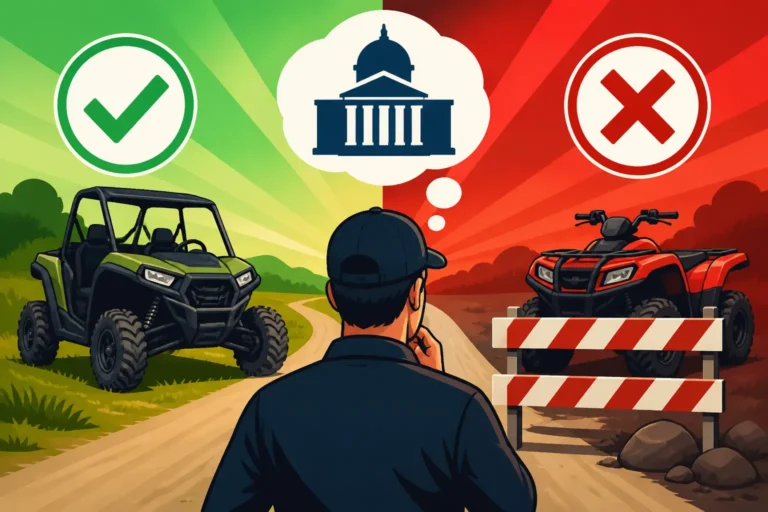
However, there's a crucial caveat to this statewide prohibition, and it's the reason you see golf carts in some communities and not others. Kansas grants local control to cities and counties, allowing them to pass their own ordinances to permit and regulate golf cart usage on their public roads. This means that whether you can legally drive your golf cart on the street isn't a state-level "yes" or "no" but rather a hyper-local "maybe, if your city says so." This patchwork of rules means what's perfectly legal in one town might lead to a ticket just a few miles down the road. It puts the onus squarely on you, the owner, to do your homework.
So, while the state generally says no, it empowers your local government to say yes. This creates a significant challenge for owners, as there's no single state permit or universal set of rules to follow. Instead, you're responsible for understanding the specific nuances of your local municipality. Without that local ordinance, that scenic drive to the corner store could land you in hot water with local law enforcement, who are simply enforcing the standing state law in the absence of a local exception.
Why Golf Carts Are Different from ATVs/UTVs
Many people lump all "off-road" or "recreational" vehicles together, assuming that if an ATV or UTV can get street-legal in some capacity, a golf cart must be able to as well. This is a common misconception that can lead to major headaches. In Kansas, golf carts, ATVs, and UTVs are distinct categories under the law, and their allowances for road use vary significantly. For instance, ATVs are generally titled as "nonhighway vehicles" in Kansas, making them explicitly not for road use, with very limited exceptions for agricultural purposes or crossing highways. [Kansas Titles ATVs as Nonhighway Vehicles]
UTVs, on the other hand, have a more complex situation. They can sometimes qualify as "work-site utility vehicles" (WSUVs) if they meet specific criteria regarding width, weight, and design. WSUVs have their own limited road use permissions, often restricted to specific types of roads or purposes. You can dive deeper into that specific classification in articles like [What Makes a Side-by-Side a Work-Site Utility Vehicle]. The critical difference is that golf carts are primarily designed for golf courses and low-speed, off-road leisure, while ATVs are for rugged terrain and UTVs often bridge the gap between utility work and recreation.
The distinctions are critical because they dictate not only where you can ride but also what equipment your machine needs, if any, to be considered street-legal. Unlike some UTVs which might need extensive modifications to meet WSUV standards, golf carts are almost always classified as "golf carts" by Kansas law, and their ability to be on the road stems solely from a local city or county ordinance. They don't have a state-level "street legal" pathway like some other machines might. This means that if your city doesn't have an ordinance, you can't just add a turn signal kit and head out. The base classification and the source of authority (state vs. local) are completely different, so don't assume the rules are interchangeable. Understanding [Golf Carts and UTVs Follow Different Kansas Rules] is key to avoiding issues.
Defining a Golf Cart Under Kansas Law
So, what exactly is a golf cart in the eyes of Kansas law? It's not just any small, slow vehicle. Kansas statutes provide a specific definition that helps differentiate a golf cart from, say, a micro utility truck or a low-speed vehicle (LSV). Generally, a golf cart is defined as a motor vehicle that has not less than three wheels, is designed for operation on a golf course, and is not capable of exceeding speeds of 20 to 25 miles per hour. The exact speed cap can sometimes vary slightly by state or local interpretation, but the core idea is that it's a slow-moving machine designed for a specific recreational purpose.
This definition is crucial because it dictates which set of rules applies to your vehicle. If your machine, for example, is capable of going 35 miles per hour, even if it looks like a golf cart, it might no longer be legally classified as such. It could instead fall into the "low-speed vehicle" (LSV) category, which has its own entirely different set of state-mandated equipment requirements and often needs to be titled and registered like a car. Similarly, a small truck-like vehicle might be a "micro utility truck," again with different rules. It's not just about looks; it's about specifications.
Knowing this definition helps you immensely when you're doing your local research. When you talk to your city clerk or sheriff's department, you can confidently state that you own a "golf cart" as defined by Kansas statutes, which ensures you're discussing the correct set of regulations. Without this clarity, you might get information pertaining to an ATV or a UTV, which simply won't apply. This legal definition is the foundation upon which any local road use ordinance will be built, so understanding it is the first step toward getting your cart ready for approved street use. The bottom line is that your vehicle must meet the specific design and speed criteria to truly be considered a golf cart and benefit from any local ordinances that permit their use. [Kansas Title for a Golf Cart] will discuss this further.
Where You Can (and Can't) Ride Your Golf Cart in Kansas
The biggest question on every golf cart owner's mind is, "Can I actually ride this thing on the road?" The answer, as we've established, depends almost entirely on your specific location within Kansas. There's no one-size-fits-all rule, and what's permissible in a golf-course community near Wichita might be strictly forbidden in a small town in western Kansas. This section aims to help you understand how to navigate this localized landscape.
Navigating City Streets and Ordinances
This is where the rubber meets the road, quite literally. If you want to drive your golf cart on public streets, your city or county must have an ordinance specifically allowing it. Without that local law, you're out of luck. These ordinances typically outline a whole host of conditions: which roads are allowed, speed limits, required equipment, hours of operation, and sometimes even a local registration or permit fee. It's a significant undertaking for a city council to pass such an ordinance, as it involves public safety considerations and often community debate.
Finding out if your city has an ordinance can sometimes feel like a treasure hunt. The best first step is to contact your local city clerk's office or the police department (or sheriff's office if you're in an unincorporated area). Ask them directly about "golf cart ordinances" or "rules for golf carts on public streets." Be specific that you're asking about golf carts, not UTVs or ATVs, as the rules are different. They should be able to direct you to the relevant sections of their municipal code or inform you if no such ordinance exists. Some cities are very clear and even have online information, while others may require a bit more digging. [Kansas Golf Cart Ordinances by City] can offer a starting point.
When an ordinance does exist, read it carefully. Don't just skim it. Pay attention to the fine print. Does it restrict golf carts to streets with speed limits of 25 mph or less? Are you prohibited from riding on state highways that pass through town? Are there specific operating hours, like "sunrise to sunset"? Many ordinances will also detail the required safety equipment, which we'll cover in the next section. Missing a single detail could lead to a citation, even if you thought you were complying. This due diligence is entirely your responsibility, but once you understand the local rules, you can ride with confidence, knowing you're operating within the law. Knowing [How a City Council Opens Its Streets to UTVs] can also provide insight into the legislative process, even though it's focused on UTVs, the process for golf carts is similar.
Crossing State Highways and Busy Roads
Even if your city has an ordinance allowing golf carts on local streets, there are almost always restrictions when it comes to crossing or briefly traveling on state highways or busier, higher-speed roads. Kansas law typically places more stringent rules on these major thoroughfares due to increased traffic volumes and higher speed limits. For golf cart owners, this often means that while you can cruise down your residential street, a quick jaunt across a 55 mph highway might be illegal, even if you're just trying to get to the other side of town.
Most city ordinances that permit golf cart use will have specific clauses regarding crossing state highways. Often, they will allow crossings only at intersections where the golf cart can proceed safely, typically at a right angle, and when the posted speed limit on the highway itself is below a certain threshold, like 30 or 35 mph. You cannot simply drive along a state highway for an extended period, even for a short distance, unless explicitly permitted by specific signage or a very rare, tailored ordinance. These rules are in place for your safety and the safety of other motorists. High-speed vehicles are not expecting a slow-moving golf cart to suddenly appear or travel alongside them.
It's absolutely critical to know these crossing rules for your specific municipality. If you're planning a route that involves crossing a busy road, double-check the ordinance. If the ordinance is silent on the matter, then the default state prohibition on golf carts on highways likely still applies, making any crossing illegal. Always exercise extreme caution, use appropriate signaling, and only cross when you have a clear, safe path. Remember, a golf cart provides minimal protection in a collision with a full-size vehicle, so understanding and adhering to these crossing regulations is paramount. [Kansas Golf Carts Crossing a 30 mph Road] might be relevant here.
Private Property and Designated Paths
While the rules for public roads can be complex, there's always an unrestricted zone for your golf cart: private property. On your own land, or on the land of others with their explicit permission, you can typically operate your golf cart freely, without needing special permits, equipment, or licenses. This includes golf courses themselves, private communities with their own internal roads (as long as those roads aren't dedicated public rights-of-way), large farms, or industrial complexes.
Many communities are also developing designated golf cart paths or trails that are separate from public roads. These might be found in planned residential developments, around lakes, or connecting specific amenities. If you're on a path specifically designated for golf carts, you are generally operating legally, as these paths are either private or fall under special local regulations that permit their use. However, always be aware of any posted rules or hours of operation for these specific paths, as they are managed spaces.
The beauty of private property and designated paths is the freedom they offer. You don't have to worry about traffic laws, equipment requirements, or city ordinances. This is where your golf cart can truly shine as a convenient, fun, and efficient mode of local transportation. If your primary use for a golf cart is limited to your acreage, a private community, or a golf course, then the complexities of Kansas road laws become largely irrelevant to you, which can be a huge relief. However, as soon as one wheel touches a public street, even for a second, you enter the realm of local regulations, so always be mindful of where your private fun ends and public rules begin.
Essential Equipment for Street-Legal Golf Carts
So, your city has an ordinance allowing golf carts on public roads—fantastic! But simply having permission isn't enough. These ordinances almost always come with a list of required safety equipment designed to make your golf cart more visible and safer for shared road use. Skipping these requirements is a surefire way to invalidate your street-legal status and invite a citation from law enforcement. Don't let a lack of proper gear spoil your ride.
Lighting Requirements for Day and Night
One of the most critical safety upgrades for any golf cart hitting public roads is a comprehensive lighting system. Think about it: golf carts are small, low to the ground, and often blend into the background, especially in varying light conditions. To mitigate this, most Kansas city ordinances will mandate specific lighting features. This isn't just about being able to see where you're going; it's about being seen by other drivers.
Typically, an ordinance will require at minimum headlights, taillights, and brake lights. The headlights should provide adequate illumination for driving after dark and be visible from a significant distance. Taillights and brake lights are equally important, ensuring that vehicles behind you can see your presence and anticipate your stops. Beyond these basics, many ordinances also require turn signals, both front and rear. This allows you to clearly communicate your intentions to other drivers, a fundamental aspect of safe road sharing. Reflectors on the sides and rear of the cart might also be a specific requirement, further enhancing visibility, especially at dusk or dawn. [Kansas Sunset to Sunrise Lighting Rules] are universally important for any vehicle operating after dark, and golf carts are no exception.
If your golf cart didn't come equipped with these items from the factory (and many basic golf carts don't), you'll need to install aftermarket kits. Companies like SuperATV offer a wide range of universal and model-specific lighting kits, turn signal kits, and horn kits that can help you meet these requirements. Make sure any lights you install are bright enough to meet local standards and are properly wired and aimed. This investment isn't just about compliance; it's about making yourself and your passengers safer on the road. Without proper lighting, even a slow-speed cruise could become hazardous in low visibility.
Safety Features Beyond the Lights
While lighting is paramount, a street-legal golf cart needs more than just illumination. Cities that permit golf cart use often include a full suite of other safety features in their ordinances, designed to bring golf carts closer to the standards of other road-going vehicles. These requirements are all about enhancing driver control and passenger safety.
A functional braking system is non-negotiable. Your golf cart's brakes must be in good working order, capable of stopping the vehicle effectively and reliably. This includes a parking brake that can hold the cart stationary on an incline. Beyond stopping, you need to be able to hear and communicate. A horn is almost always required, allowing you to alert pedestrians or other drivers to your presence. Just a little "beep-beep" can prevent a big accident, especially in busy parking lots or residential areas. Additionally, side mirrors and a rearview mirror are common requirements. These allow the driver to have a clear view of traffic approaching from behind and to the sides, crucial for changing lanes, turning, or simply being aware of your surroundings.
Some ordinances might also specify additional items like a windshield (made of safety glass), seat belts for all occupants, or even tires that are rated for street use. While golf carts don't typically reach high speeds, seat belts can still prevent injuries in sudden stops or minor collisions. When considering aftermarket upgrades, like those from SuperATV, always prioritize safety equipment that enhances your visibility, control, and passenger protection. Remember, these aren't just arbitrary rules; they are there to help prevent accidents and ensure that golf carts can coexist safely with other vehicles and pedestrians on public roads.
Slow-Moving Vehicle Emblems
This is one piece of equipment that is almost universally required for golf carts on public roads in Kansas, and it's something many drivers might not initially think about: the slow-moving vehicle (SMV) emblem. This distinctive orange-red reflective triangle is a nationally recognized safety symbol, and its presence on the rear of your golf cart is a powerful indicator to other drivers that your vehicle is traveling at significantly slower speeds than typical traffic.
The purpose of the SMV emblem is simple: it gives approaching drivers ample warning to slow down and prepare to pass your golf cart safely. Because golf carts are generally limited to speeds under 25 mph, they can create a significant speed differential with other vehicles, especially on roads with higher posted limits. Without that visual cue, a driver might not realize how slowly you're moving until they're too close, leading to dangerous situations or sudden braking. Kansas law often requires this emblem for any vehicle that cannot maintain the speed of normal traffic, particularly when operating on roads with speed limits above 25 mph, even if only crossing them. [Kansas Golf Carts and Slow-Moving Emblems] will delve more into this specific requirement.
Proper placement of the SMV emblem is also important. It should be securely mounted on the rear of the golf cart, visible from a distance, and not obstructed by any cargo or accessories. It's not just a suggestion; it's a legal requirement in many jurisdictions for any low-speed vehicle like a golf cart operating on public roads. Don't underestimate its importance; this small, triangular sign is a major player in ensuring your safety by communicating your speed differential to everyone else on the road.
Driver and Passenger Requirements for Golf Cart Operation
It's not just the golf cart itself that needs to be properly equipped; the person behind the wheel and any passengers also have their own set of rules and responsibilities. Just because you're driving a golf cart doesn't mean you're exempt from basic driving regulations or common-sense safety practices. In Kansas, these requirements are often dictated by the same local ordinances that permit golf cart road use.
Driver's License and Age Restrictions
One of the most frequently asked questions about golf cart road use is whether you need a driver's license. The answer, in almost all cases where a city or county permits golf carts on public roads in Kansas, is a resounding yes. While you might not need a special endorsement, the person operating a golf cart on a public street must possess a valid driver's license. This means that if your license is suspended, or if you're too young to have one, you cannot legally operate a golf cart on public roads, even if the city says it's otherwise okay.
This requirement ensures that the person behind the wheel has at least a basic understanding of traffic laws, road signs, and safe driving practices. A golf cart is still a motor vehicle, and operating it on a public thoroughfare demands the same level of responsibility and awareness as driving a car. Law enforcement will often enforce this vigorously, as an unlicensed driver poses a significant risk to themselves and others. It's not just about knowing how to drive the cart; it's about knowing how to interact with the larger traffic ecosystem.
Age restrictions also often go hand-in-hand with the driver's license requirement. If you need a license, then by default, you must be at least 16 years old (or whatever the minimum age is in Kansas to obtain a provisional driver's license). Some cities might even specify a higher minimum age for golf cart operators, or they might have specific rules for young drivers operating golf carts on private property versus public roads. Always check your local ordinance for any explicit age limitations beyond the basic driver's license requirement. Don't let your teen hop in the driver's seat on a public street without confirming they meet all legal criteria.
Passenger Rules and Seating Capacity
Golf carts are often seen as a fun way to transport multiple people, but there are strict rules about how many passengers you can carry and where they can sit when operating on public roads. These rules are primarily about safety and preventing overloading or unsafe riding practices.
Most city ordinances will specify that the number of passengers cannot exceed the manufacturer's designed seating capacity. If your golf cart is built with two seats, you can't have four people crammed onto it, with two hanging off the back. Similarly, passengers are almost always required to remain seated while the golf cart is in motion. Standing, riding on laps, or having passengers ride on the sideboards or rear cargo area (unless specifically designed for passengers with proper restraints) is generally prohibited and incredibly dangerous. In the event of a sudden stop or turn, unseated passengers can be easily thrown from the vehicle, leading to serious injuries.
If your golf cart has been modified with a rear-facing seat kit, ensure that it's a properly installed and safe addition, and that it doesn't exceed the overall weight capacity of the cart. While these kits are popular, always consider the balance and handling implications, especially when carrying multiple passengers. The goal is to ensure that everyone riding in the golf cart is doing so in a safe and secure manner, reducing the risk of accidents or injuries, especially when sharing the road with other traffic.
Insurance and Other Important Considerations
Here's another area that causes a lot of confusion: insurance. Unlike cars, which are mandated by state law to carry liability insurance, golf carts often fall into a gray area. Kansas state law does not universally require insurance for golf carts unless they meet the definition of a low-speed vehicle or other tagged vehicle. However, this doesn't mean you're off the hook, or that insurance isn't a good idea. In fact, many cities that permit golf cart use on their roads do require proof of liability insurance. [Kansas Insurance Comes From City Ordinances] because cities have the power to create their own insurance mandates.
If your city ordinance requires insurance, you absolutely must comply. You might need to add your golf cart to your existing auto or homeowner's policy, or purchase a separate policy specifically for the golf cart. Be prepared to show proof of insurance if requested by law enforcement or your city clerk when applying for a local permit. Even if your city doesn't require it, carrying liability insurance for your golf cart is an incredibly smart decision. Accidents happen, and if you're involved in a collision that's your fault, liability insurance can protect you from devastating financial consequences. Imagine hitting a parked car, or worse, causing injury to a pedestrian; without insurance, you'd be personally responsible for all damages and medical bills.
Beyond insurance, other considerations include understanding local curfews or hours of operation for golf carts, obeying all traffic laws (stop signs, yield signs, speed limits, etc.), and being mindful of pedestrians and cyclists. Always drive defensively, assume other drivers don't see you, and operate your golf cart with courtesy and respect for everyone else sharing the road. A golf cart is a great way to enjoy your community, but it comes with responsibilities.
The Process of Getting Your Golf Cart Road Ready in Kansas
Alright, so you've done your research, you understand the distinctions, and you know your city might allow golf carts on its roads. Now comes the practical part: getting your golf cart legally ready to roll. This isn't always a simple flip of a switch; it often involves a combination of research, modifications, and bureaucratic steps. But with a clear plan, you can navigate this process successfully.
Researching Local Ordinances
The absolute first step, before you buy any aftermarket parts or even think about driving on the street, is to confirm your city's specific rules. We've touched on this, but let's break down the process more methodically. Start by visiting your city's official website. Look for sections on "municipal code," "city ordinances," "transportation," or "vehicle regulations." Use the search function on their site for terms like "golf cart," "low-speed vehicle," or "utility vehicle." Many cities now have their municipal codes digitized and searchable online, which is a fantastic resource.
If you can't find anything online, or if the language is unclear (municipal codes can be dense!), your next stop is the city clerk's office. This is typically located at city hall. Call or visit them in person. Politely explain that you own a golf cart and are trying to understand the local rules for operating it on public streets. They are usually the gatekeepers of this information and can point you to the correct ordinance, or confirm if one even exists. Be prepared to ask specific questions: What roads are allowed? What equipment is required? Is a permit or registration needed? Is there an age requirement for drivers?
Don't assume anything based on what you see others doing. Just because your neighbor drives their golf cart on the street doesn't mean it's legal, or that they aren't about to get a ticket. Their cart might meet the requirements, or they might simply be breaking the law. Your goal is to be 100% compliant, so rely only on official city information. The peace of mind that comes from knowing you're legal is worth the effort of this initial research. It's far better to spend an hour at city hall than to face a hefty fine down the road.
Equipping Your Cart for Compliance
Once you have a copy of your city's ordinance and a clear understanding of its requirements, it's time to assess your golf cart. Most basic golf carts sold for golf course use will not have all the necessary equipment for street legality. This is where the modifications come in, turning your leisure machine into a road-worthy vehicle.
Make a checklist directly from the ordinance:
- Headlights (adequate for night driving)
- Taillights
- Brake Lights
- Turn Signals (front and rear)
- Horn
- Rearview Mirror
- Side Mirrors
- Slow-Moving Vehicle (SMV) emblem
- Windshield (safety glass often required)
- Seat belts (for all seating positions)
- Properly rated tires (if specified)
Go through your cart item by item and note what you have and what you need. For the items you need, you'll likely be looking at aftermarket kits. Companies specializing in UTV and golf cart accessories, such as SuperATV, offer a wide array of lighting kits, turn signal kits, horns, and mirror sets that can be installed on most golf cart models. When purchasing, make sure the kits are universal enough or specifically designed for your cart's make and model. If you're not comfortable with electrical wiring or mechanical installations, consider hiring a professional golf cart mechanic or a local shop that specializes in UTV and golf cart modifications. [Kansas Equipment Checks by Deputies] can happen, so ensure everything is in working order.
This equipping phase is where you'll make a financial investment, so budget accordingly. It's often not just a matter of slapping on a few lights; sometimes, you need a full street-legal kit that integrates multiple components. Take your time, ensure all installations are secure and functional, and don't cut corners on safety. This step is about transforming your cart into a vehicle that can safely interact with other traffic on public roads.
Navigating City Hall for Permits and Tags
With your golf cart fully equipped and ready to meet the ordinance's specifications, the final hurdle is often the administrative process at city hall. Many cities that allow golf carts on their roads will require a local permit, registration, or even a specialized city-issued tag. This process helps the city track how many golf carts are operating on their streets and ensures that owners have met all the necessary requirements.
The exact steps will vary by municipality, but generally, you can expect to:
- Complete an Application: Fill out a form providing your contact information, golf cart details (make, model, VIN/serial number), and possibly an affirmation that you meet all ordinance requirements.
- Provide Proof of Equipment: Some cities might require you to bring your golf cart for a physical inspection by the police department or a designated city official. They will check to ensure all required lights, mirrors, horn, and SMV emblem are present and functional. They might even check for a valid driver's license and proof of insurance at this stage.
- Pay a Fee: Most cities will charge an annual or one-time permit/registration fee. This fee helps cover the administrative costs and sometimes goes towards maintaining local roads. Be prepared for this expense; it's a small price to pay for legal road access. [Kansas City Tag Fees for a UTV] could give you an idea of what similar city fees might be like, though golf cart fees may differ.
- Receive Your Permit/Tag: Once everything is approved, you'll be issued a permit or a city tag (often a sticker or a small plate) that must be displayed on your golf cart as specified by the ordinance. This is your official permission slip to ride on city streets.
Make sure to keep a copy of your permit, proof of insurance, and your driver's license with you whenever you're operating the golf cart on public roads. Law enforcement officers may ask to see these documents during a traffic stop. This final step formalizes your compliance and gives you the peace of mind to enjoy your golf cart legally in your community.
Common Mistakes and Misconceptions About Golf Cart Road Use
Despite the best intentions, many golf cart owners still fall prey to common misunderstandings or mistakes that can lead to tickets, accidents, or even legal trouble. The complex, localized nature of Kansas law for golf carts makes these pitfalls all too easy to stumble into. Being aware of these common errors is key to avoiding them.
Assuming All Low-Speed Vehicles Are the Same
This is perhaps the most pervasive misconception: that any small, slow vehicle on four wheels is treated equally under the law. In Kansas, this simply isn't true. While a golf cart is a type of low-speed vehicle, it's not the only type, and the laws governing them can be vastly different. Kansas statutes define specific categories for "golf carts," "low-speed vehicles" (LSVs), "work-site utility vehicles" (WSUVs), and "micro utility trucks." Each has its own definition, its own set of potential equipment requirements, and its own rules for road use.
For example, a true "low-speed vehicle" (LSV) under Kansas law is typically a vehicle capable of speeds between 20-25 mph and 35 mph, must meet federal safety standards, often requires titling and registration like a car, and has more stringent equipment requirements (like VIN, seatbelts, windshield wipers, etc.). Golf carts, on the other hand, are generally capped at 20-25 mph, are primarily designed for golf courses, and usually get their road-legal status through local ordinances, not state registration. Assuming your golf cart is an LSV, or vice-versa, can lead to either unnecessary modifications or, more dangerously, driving an improperly equipped or unregistered vehicle on roads where it's not permitted.
The key takeaway here is specificity. Don't use the terms interchangeably. When you're talking to city officials or researching ordinances, always refer to your machine as a "golf cart." Understand that the rules for [Kansas Micro Utility Truck Road Rules] or [Kansas Work-Site Utility Vehicles Explained] are distinct from golf cart rules. This precise language will ensure you're getting the correct information for your specific machine, rather than general advice that might not apply.
Ignoring Local Rules Due to Neighboring Cities
It's incredibly tempting to look across the county line, see golf carts happily cruising down Main Street in a nearby town, and assume the same rules apply to your community. This is a classic mistake. As we've emphasized, golf cart road rules in Kansas are almost entirely controlled at the municipal or county level. What's perfectly legal and permitted in one town could be strictly prohibited just a few miles away.
Think of it like this: your city council decided to allow golf carts, and they passed an ordinance detailing their specific conditions. The next town over, their city council might have decided not to allow golf carts, or they might have passed an ordinance with completely different requirements and restrictions. There is no state-level reciprocity or blanket permission. You can't argue with a police officer in your town by saying, "But they let them ride in Andover!" The officer is obligated to enforce your town's specific laws.
This means your research isn't just a one-time thing. If you move, or if you plan to drive your golf cart in a different city (perhaps while visiting family or at a lake house), you need to re-do your local ordinance research for that specific location. What applied in your hometown absolutely does not automatically apply elsewhere in Kansas. This hyper-local nature can be frustrating, but it's the reality of the legal landscape. Always verify the rules for the specific jurisdiction where you intend to operate your golf cart on public roads.
Underestimating the Importance of Safety Gear
Another common pitfall is viewing required safety equipment as an annoying expense or a bureaucratic hurdle, rather than essential components for your well-being. Some owners might try to get by with minimal lighting, no horn, or inadequate mirrors, thinking they'll "be careful" or "only drive short distances." This is a dangerous gamble.
The requirements for headlights, taillights, brake lights, turn signals, mirrors, horns, and especially the slow-moving vehicle emblem are not arbitrary. They are designed to address the inherent vulnerabilities of golf carts when sharing roads with larger, faster, and more numerous vehicles. Golf carts are small, quiet, and slower than most traffic. Without proper illumination, signaling, and visibility aids, you become incredibly hard to see and anticipate, especially at dusk, dawn, or in inclement weather.
Imagine this scenario: You're driving your golf cart home at dusk, without working taillights. A driver behind you, perhaps momentarily distracted, doesn't see your cart until the last second. The result could be a rear-end collision, and a golf cart offers very little protection in such an impact. Similarly, turning without a working turn signal can cause confusion and lead to side-impact collisions. Investing in quality safety gear, ensuring it's properly installed and maintained, and always using it isn't just about avoiding a ticket; it's about protecting your life and the lives of your passengers. Don't ever underestimate the critical role these pieces of equipment play in your safety on public roads.
| Equipment Item | Purpose | Typically Required for Street Legal? |
|---|---|---|
| Headlights | Illuminate path, be seen by oncoming traffic | Yes (especially for night operation) |
| Taillights | Be seen from behind, especially at night/dusk | Yes |
| Brake Lights | Signal stopping or slowing down | Yes |
| Turn Signals | Indicate intended direction of travel | Yes (front & rear) |
| Horn | Alert others of presence or danger | Yes |
| Rearview Mirror | View traffic behind | Yes |
| Side Mirrors | View traffic to the sides | Yes (often one on each side) |
| SMV Emblem | Warn drivers of slow-moving vehicle | Yes |
| Windshield | Driver protection (often safety glass) | Often |
| Seatbelts | Occupant restraint in sudden stops/collisions | Often (for all seating positions) |
| Brakes | Reliable stopping power & parking brake | Yes (functional & maintained) |
| Driver's License | Proof of driving competency | Yes |
| Liability Insurance | Financial protection in case of an accident | Often (city ordinance dependent) |
The Future of Golf Cart Road Use in Kansas
The landscape of golf cart usage on Kansas roads isn't static. As communities evolve, and as the popularity of these versatile machines continues to grow, so too do the discussions around their regulation. What's true today might be subtly different tomorrow, underscoring the need for owners to stay informed and potentially even get involved in local decision-making.
Growing Popularity and Community Impact
There's no denying that golf carts are becoming an increasingly common sight beyond the green fairways. From sprawling lake communities to tight-knit suburban neighborhoods and even small rural towns, people are discovering the convenience and fun of golf carts for short-distance transportation. They're quiet, efficient, easy to park, and often more enjoyable for quick errands or neighborly visits than firing up a full-size car. This growing popularity is driven by a desire for a more relaxed, community-focused mode of travel, especially in areas where golf courses are integrated into residential planning.
This surge in popularity isn't without its impacts. On the positive side, it can foster a stronger sense of community, as people are more likely to be out and about, interacting with neighbors. It can reduce short car trips, potentially easing traffic congestion and even contributing to a slightly greener environment (especially with electric models). However, it also brings challenges. Increased golf cart traffic requires careful planning for road safety, appropriate infrastructure (like designated paths or safe crossings), and clear rules to avoid conflicts with pedestrians, cyclists, and larger vehicles. This growing presence is prompting more cities to consider and adopt ordinances, filling the legal void where previously golf carts were simply banned by default.
As more Kansas towns grapple with how to integrate golf carts safely, we're likely to see a continued trend of cities crafting their own ordinances, each tailored to their specific community's needs and traffic patterns. This means the patchwork of rules is likely to become denser, making it even more important for individuals to understand their local laws.
Potential State-Level Changes or Clarifications
While local control has been the dominant theme for golf cart road rules in Kansas, it's not impossible to imagine future changes or clarifications at the state level. When enough individual cities have similar ordinances, or when inconsistencies become too problematic, state legislatures sometimes step in to provide a more uniform framework. This could come in the form of updated definitions, broader permissions, or more consistent safety equipment standards.
For instance, some states have adopted clearer "neighborhood electric vehicle" (NEV) or "low-speed vehicle" (LSV) classifications that directly incorporate golf carts capable of certain speeds, setting statewide parameters for equipment, registration, and road use. While Kansas already has LSV and WSUV classifications, a more explicit state-level treatment of traditional golf carts (those strictly under 20-25 mph) for limited public road use could emerge. This would ideally reduce the current fragmentation of rules and make it easier for owners to understand what's required, regardless of their specific city.
However, state-level changes often involve extensive debate, balancing local autonomy with broader consistency. Any potential legislation would need to consider the diverse needs of Kansas's many cities and rural communities. For now, the focus remains firmly on local ordinances. But staying abreast of any proposed legislative changes in Topeka, particularly those related to vehicle definitions or road use, could provide insight into the future direction of golf cart regulations across the state.
Advocating for Golf Cart Friendly Policies
If you live in a community where golf carts are currently prohibited on public roads, but you believe they could be a safe and valuable addition to local transportation, you have the power to advocate for change. Local governance is often more accessible than state or federal, and your voice can make a difference.
The first step is always to educate yourself on the existing laws and the typical safety requirements. Then, consider forming or joining a local group of like-minded citizens who share your interest in golf cart friendly policies. Together, you can approach your city council or county commissioners. Prepare a well-reasoned presentation that addresses common concerns (like safety, speed, and insurance) and proposes solutions based on ordinances successfully implemented in other Kansas cities. Highlight the benefits: increased community interaction, reduced short-distance car trips, convenience for residents, and potential for local economic boosts.
Be prepared for questions and opposition. Public safety is always a primary concern for local officials, so you'll need to demonstrate how golf carts can be safely integrated. This might involve advocating for specific speed limits on designated streets, strict equipment requirements, or even designated golf cart routes. By being proactive, informed, and respectful in your advocacy, you can contribute to shaping your community's policies and potentially pave the way for a more golf cart friendly future in your corner of Kansas.
Disclaimer
This article is for general informational purposes only and does not constitute professional advice. Laws, prices and regulations vary by location and change over time. Consult a qualified professional for guidance on your specific situation.