Kansas Work-Site Utility Vehicle Road Rules
Navigating the rules for driving Work-Site Utility Vehicles (WSUVs) on Kansas roads can feel like trying to solve a puzzle with half the pieces missing. Many of us invest in these versatile machines for work or property management, only to find conflicting information or vague guidelines when it comes to taking them on a public street, even for a short hop. It’s frustrating when you just need to get from one field to another or cross a road, and you're left wondering if you’re breaking the law. This comprehensive guide aims to clear up that confusion, diving deep into Kansas law for WSUVs and outlining exactly when, where, and how you can legally operate them on public roads.
Understanding the Kansas Work-Site Utility Vehicle (WSUV) Definition
Before we can even talk about hitting the pavement, it's absolutely crucial to understand what Kansas law means when it refers to a Work-Site Utility Vehicle. This isn't just about what you call your side-by-side; it's about specific statutory definitions that determine everything from titling to road use. Without this foundational understanding, you might inadvertently misclassify your machine and find yourself on the wrong side of the law.
What Exactly Qualifies as a WSUV in Kansas Law?
Kansas has a pretty distinct definition for a WSUV, and it boils down to a few key physical characteristics and its intended use. Unlike a regular ATV or even a standard recreational UTV, a WSUV must meet specific criteria regarding its dimensions and purpose. First and foremost, the law dictates that a WSUVs cannot exceed 48 inches in width. This is measured from the widest points of the vehicle, typically across the tires or fender flares, not just the frame. If your side-by-side is wider than that, it simply doesn't fit the WSUV definition, no matter how much "work" you do with it. We've seen many folks surprised by this measurement, especially when aftermarket accessories are added, so always check your machine's actual width. [Kansas WSUV Width of 48 Inches]
Secondly, a WSUV must weigh more than 800 pounds in its unladen (empty) state. This typically excludes smaller, lighter utility quads or even some very compact side-by-sides. The intent here is to categorize more robust, purpose-built machines designed for hauling and heavy-duty tasks, rather than nimble recreational vehicles. So, a lightweight sport quad, even if you use it for chores, wouldn't meet this weight threshold to be a WSUV. [Kansas WSUV Weight Over 800 Pounds] These vehicles are also specifically designed for off-highway use and are often equipped with features like a steering wheel and side-by-side seating, distinguishing them further from traditional ATVs. [Why a Steering Wheel Changes Your Title Class] It's also important to remember that a WSUV is not a "golf cart" or a "micro utility truck," which have their own separate classifications and rules.
Lastly, and perhaps most importantly, a WSUV, as the name suggests, is "manufactured for off-highway use by an employer or owner for utility work purposes." This 'work purpose' is key to how the law views its potential road use. It implies that the machine is primarily used for tasks like hauling materials on a construction site, managing property, or agricultural work, not for cruising around town for pleasure. The entire design and function of the vehicle should point towards utility work, which differentiates it from a recreational UTV that might occasionally haul firewood.
The Importance of a Nonhighway Title for Your WSUV
Once your vehicle meets the physical and purpose-driven definition of a Work-Site Utility Vehicle, the next step in Kansas is securing a proper title. In Kansas, WSUVs, like ATVs and other similar off-road machines, are categorized as nonhighway vehicles. This means they receive a special kind of title: a nonhighway title. [Kansas Titles ATVs as Nonhighway Vehicles] This title is absolutely essential for proving ownership, especially if you're ever involved in an accident, need to sell your machine, or are simply stopped by law enforcement. It identifies your WSUV as a legitimate vehicle, even if it's not meant for everyday street driving.
However, and this is where a lot of confusion stems from, holding a nonhighway title does not automatically grant you permission to drive your WSUV on public roads. [Kansas's Nonhighway Title Explained] It's not like a car title that inherently implies street legality once you add registration and a tag. For WSUVs, the nonhighway title is simply a proof of ownership document, a critical piece of paperwork that establishes your legal claim to the machine. You'll need it when you first purchase the vehicle, whether new or used, and it's handled through your local county treasurer's office. You typically have 60 days from the date of purchase to apply for this title. [Kansas Title Paperwork Explained] Understanding this distinction is vital: the title confirms ownership and classification, but separate statutes dictate permissible road use. Think of it as owning a very nice, specialized tool – you own it, but you can only use it in specific ways and places, and certainly not everywhere.
General Road Use Restrictions for WSUVs in Kansas
Now that we've firmly established what a Work-Site Utility Vehicle is in Kansas, let's tackle the burning question: can you actually drive it on the road? The short answer for most off-road vehicles in Kansas is a resounding "no," but as with many laws, there are exceptions. These exceptions are critical for WSUV owners, but they come with strict conditions that must be understood and followed to avoid trouble.
The Statewide Ban and Its Exceptions
Let's start with the baseline rule in Kansas: for the most part, off-road vehicles, including WSUVs, are generally prohibited from operating on public streets, roads, and highways. This broad ban is in place to protect both the riders and other motorists, as these machines are not designed or equipped for high-speed traffic or the typical demands of road infrastructure. You certainly cannot take your WSUV on interstates or federal highways; those are strictly off-limits, regardless of your vehicle's classification or purpose. [Kansas Bans ATVs on Interstates] [Kansas Bans ATVs on Federal Highways] Furthermore, generally speaking, WSUVs are banned from inside city limits unless a specific local ordinance says otherwise. [Kansas Bans ATVs Inside City Limits by Default]
However, the law isn't absolute, and this is where the WSUV designation offers some specific advantages over a standard recreational ATV or UTV. Kansas law carves out specific exceptions that allow WSUVs to operate on public roads under certain, limited circumstances. These exceptions are not a free pass to cruise the streets, but rather tightly defined situations that acknowledge the utility role of these vehicles. They are generally tied to the "work-site" nature of the vehicle and its operator's purpose. It’s a very different set of allowances compared to, say, a traditional ATV being used solely for recreation.
The "Work-Site" Nature and Permitted Activities
The core of the WSUV road use exception lies squarely in its "work-site" nature and the specific activities being performed. Kansas statutes typically allow WSUVs to be operated on public roads only when traveling to or from a work-site, or between two work-sites. This is a crucial distinction. It doesn't mean you can run to the grocery store, pick up your kids from school, or go for a scenic Sunday drive. It means your road use must be directly and demonstrably tied to the utility work the vehicle is designed for.
Imagine you own a large ranch just outside of town. You use your WSUV, maybe a robust model fitted with SuperATV accessories for added utility and protection, to carry tools, feed, or fencing materials between different sections of your property. If these sections are separated by a public county road, the law generally permits you to use that road to travel directly between your fields or pastures. This is a legitimate "work-site" related activity. Similarly, if you're a contractor moving equipment from one construction zone to another, and the most direct route involves a stretch of county road, that falls under the permitted "between work-sites" exception. This specific allowance is what sets WSUVs apart from most other off-road vehicles in Kansas, whose road access is far more restricted.
It’s important to emphasize that this is about utility work, not recreation. If you’re just trail riding or heading to a friend’s house for a bonfire, even if your WSUV has a nonhighway title, using a public road is likely illegal unless a specific local ordinance permits it. The agricultural exception for road use, which many associate with farm machinery, often applies to WSUVs as well, especially on rural county roads when moving between fields or structures. [Kansas's Agricultural Exception for Road Use] This exception acknowledges the practical necessity for farmers and ranchers to utilize these machines across property boundaries, but always with the understanding that the purpose is agricultural work, not leisure. If you're challenged, you'll need to be able to demonstrate that your use of the road was for a legitimate work-site purpose.
Specific Equipment Requirements for WSUV Road Use
Even if your WSUV qualifies under the Kansas definition and your intended road use falls within one of the legal exceptions, you're not ready to hit the road just yet. Kansas law also mandates specific equipment be present and operational on your WSUV if you're going to use it on public roads. These requirements are in place to ensure visibility and safety for both the WSUV operator and other vehicles sharing the road. Skimping on these can lead to fines, even if your road use is otherwise legitimate.
Essential Lighting and Safety Gear
When your WSUV ventures onto a public road, it effectively becomes a slow-moving vehicle sharing space with cars and trucks. To ensure it's visible and can communicate its intentions, several pieces of lighting and safety gear are absolutely essential, especially if you're operating outside of daylight hours. First off, you must have working headlights and taillights. These aren't just for seeing where you're going off-road; they're vital for other drivers to see you. Brake lights are equally critical, clearly indicating when you're slowing down or stopping. While not always explicitly required for all nonhighway vehicles, many WSUV owners opt to install turn signals, which greatly enhances safety and communication with other motorists. Reflectors, strategically placed on the front, rear, and sides, also boost visibility, particularly at dusk or dawn.
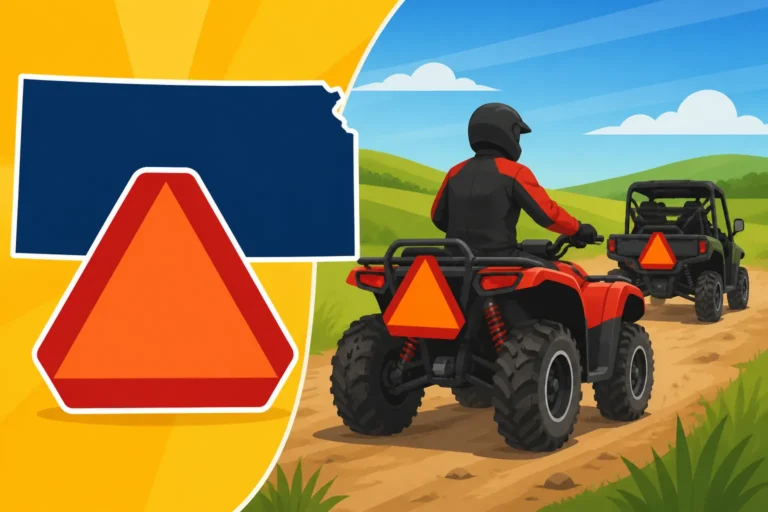
Beyond lighting, a slow-moving vehicle (SMV) emblem is a non-negotiable requirement if your WSUV typically travels at speeds under 25 mph (or whatever the state/local speed threshold is). This bright orange triangle with a red border is a universal sign to other drivers that your vehicle is moving slowly, giving them crucial time to react and slow down. [Kansas Slow-Moving Emblem Rules] Additionally, a working horn is necessary to alert others to your presence, and a rearview mirror is essential for maintaining situational awareness of traffic behind you. Many WSUVs come from the factory with some of this equipment, but often aftermarket upgrades from companies like SuperATV are needed to meet full road-legal specifications for lighting and mirrors, especially if you're adding turn signals or more robust light bars for better visibility.
Beyond the Basics: Other Considerations (Tires, Brakes, Windshields)
While lighting and SMV emblems are often the most emphasized equipment requirements, there are other practical considerations that contribute to road safety for WSUVs. Your tires, for instance, should be appropriate for road use. While aggressive mud tires might be fantastic off-road, they can wear quickly, provide less grip, and make handling unpredictable on pavement. Tires designed with a more all-terrain or even street-specific tread pattern will offer better performance and safety for road travel.
Brakes are another critical component. Your WSUV must have a functional braking system, capable of safely stopping the vehicle. This includes both front and rear brakes, and ideally, an independent parking brake. Before venturing onto public roads, always perform a thorough check of your braking system to ensure it's in top condition. While a full windshield isn't legally required for WSUVs in Kansas like it might be for a passenger car, it's a very wise addition for protection against wind, dust, and debris. It significantly enhances driver comfort and safety, especially when sharing roads with other vehicles.
Finally, while not always explicitly defined in state statutes for WSUVs, local ordinances that allow street use might add further equipment requirements. Some cities might require a certain type of roll-over protection system, specific mirrors, or even a windshield wiper. Always consult the specific local ordinance that permits your WSUV's road use, as it may have additional stipulations beyond the general state guidelines. Over-equipping for safety is almost always better than under-equipping.
Where You CAN Ride a WSUV on Kansas Roads
Understanding the definition and necessary equipment is a solid start, but the real challenge for many WSUV owners is figuring out the specific stretches of pavement where they can legally operate. Kansas law is quite particular about this, distinguishing between simply crossing a road and riding along it for any distance. Getting this wrong can quickly lead to a citation.
Crossing Highways and Riding on County Roads
For most nonhighway vehicles in Kansas, including WSUVs, there's a general allowance for crossing public highways and roads. This means if your property or work-site is split by a state highway, you can typically cross directly and safely, making sure to yield to all oncoming traffic and obeying all traffic signals and signs. This is not a license to drive on the highway, but rather to traverse it at the shortest, most direct point to continue on your journey. [Crossing a State Highway in Kansas] It's a common-sense exception that acknowledges the layout of rural properties and infrastructure.
Riding on county roads, however, is where the specific WSUV exceptions become particularly relevant. While recreational ATVs and UTVs are usually banned from county roads, WSUVs often have more leeway due to their explicit "work-site" designation. If your purpose is to travel to or from a work-site, or between two different work-sites, you can generally operate your WSUV on county or township roads. This is a critical distinction and often applies to agricultural operations, construction sites, or large private properties where different sections are accessed via public rural roads. [Kansas Rules for Riding a County Road]
It’s vital to understand the difference between being permitted to cross a state highway and being allowed to ride along a county road for a sustained period. The latter usually requires the specific "work-site" justification for a WSUV. Always remember that even on these permitted county roads, you are expected to operate safely, adhere to all traffic laws, and share the road responsibly with other vehicles. This typically means staying as far to the right as practicable, allowing faster traffic to pass safely. [Kansas Riders Must Keep to the Right]
Designated Work Zones and Private Property Access
The clearest and least ambiguous situations where WSUVs are permitted on public roads are within designated work zones, construction sites, or when accessing private property that requires a short stretch of public road. If your WSUV is being actively used within a sanctioned construction zone, for example, moving materials or personnel, its operation on the public road within that zone is generally permissible under the work-site utility vehicle classification. These are controlled environments where the presence of such vehicles is expected and often essential.
Similarly, WSUVs often need to traverse short sections of public road to access different parts of a large private property, like a sprawling farm or ranch. For instance, you might have pastures on both sides of a township road, and your WSUV is instrumental in managing livestock or fencing. In such cases, Kansas law generally supports the use of your WSUV on those public roads for the explicit purpose of moving between these private land parcels or work areas. The key phrase to always remember is "work-site purposes."
This also extends to situations where a utility crew, perhaps using a heavily modified WSUV from a company like SuperATV to carry specialized tools, needs to move along a public right-of-way for maintenance or repair work. Their movement, while on a public road, is directly tied to their utility work, thus aligning with the WSUV's intended purpose and the legal exceptions. It's a practical recognition of how these machines are integral to certain industries and operations, allowing them necessary, albeit limited, access to public infrastructure.
Local Ordinances and WSUV Street Legal Status
While state law provides the foundational rules for WSUV road use, it's only half the story. In Kansas, local governments—cities and counties—hold significant power to modify or expand upon these rules within their own jurisdictions. This creates a patchwork of regulations across the state, making it absolutely essential for WSUV owners to check local ordinances. What's legal in one town might be strictly prohibited just a few miles down the road.
The Power of City and County Ordinances
This is perhaps the biggest point of confusion and frustration for WSUV owners in Kansas. State law might set a general prohibition or allow only narrow work-related exceptions, but a city council or county commission can pass its own ordinance to open up certain streets or even all streets to WSUVs. [Kansas Cities That Authorize ATV Street Use] This means that while your WSUV might be banned from city streets by default under state law, a specific city might have voted to allow them. [How a City Council Opens Its Streets to UTVs]
Conversely, even if state law allows some form of WSUV use on certain county roads, a specific county could pass an ordinance that further restricts or prohibits it. This hyper-local variability means there's no single "street legal" answer for all of Kansas. If you live in or plan to operate your WSUV on public roads within a city, your first and most important step is to contact that city's clerk or police department to inquire about specific ordinances related to WSUVs. The same applies if you're primarily operating on county roads and want to ensure there aren't any local county-level restrictions.
These local ordinances don't just grant permission; they almost always come with their own set of rules that you must follow. This could include additional equipment requirements (beyond state law), specific hours of operation, designated streets where WSUVs are allowed, and, most commonly, requirements for permits, insurance, and even inspections. Ignoring these local nuances is a surefire way to run into legal trouble, even if you feel you're complying with state statutes.
What to Expect from a City Permit (Fees, Inspections, Insurance)
If your local city has opted to allow WSUVs on its streets, rejoice! But don't just hop in and go. You'll almost certainly need to jump through a few hoops to obtain a city permit or tag for your machine. [Kansas Cities With UTV Tags] This process is designed to ensure that WSUVs operating on city streets meet local safety standards and that their owners are accountable.
Typically, a city will require an application process that often includes a fee. This fee helps cover the administrative costs of the program and sometimes contributes to local road maintenance. Don't be surprised if the city requires an inspection of your WSUV before issuing a permit. [Police Inspect a UTV Before a City Tag Issues] This inspection will check for mandated safety equipment, which can include functional headlights, taillights, brake lights, turn signals, mirrors, a horn, and possibly a slow-moving vehicle emblem. They want to ensure your WSUV is as visible and safe as possible when sharing the road with cars.
Perhaps the most common requirement from local ordinances is proof of insurance. Almost without exception, if a city allows WSUVs on its streets, it will mandate that you carry liability insurance. [Kansas City Insurance Requirements] This protects you and others in case of an accident. The specific coverage limits will vary, so be sure to check what your city requires. Cities like Louisburg, for example, have specific fee structures for their UTV tags, sometimes charging a higher initial fee and then a lower annual renewal. [Louisburg's UTV Tag Fees in Kansas] It's a system designed to integrate these vehicles safely into the flow of local traffic, and obtaining the necessary permit and understanding its conditions is a fundamental part of legal WSUV operation within city limits.
The Driver and Passenger Rules for WSUVs on Kansas Roads
Operating a WSUV on public roads, even under permitted circumstances, isn't just about the vehicle itself. It's equally about who is behind the wheel and who is riding along. Kansas law has specific expectations for drivers and passengers of all vehicles on public roads, and WSUVs are no exception, even if the general off-road rules are different.
Driver's License and Age Requirements
One of the most frequently asked questions about operating any off-road vehicle on public roads in Kansas is about driver's licensing. If you are operating a WSUV on any public road where it is permitted—whether it's a county road under the work-site exception or a city street under a local ordinance—you are generally required to possess a valid driver's license. [Do You Need a License for an ATV in Kansas?] This means you must be at least 16 years old and have successfully passed the state's driving tests to obtain a standard driver's license. A learner's permit or a restricted license for specific types of vehicles typically won't cut it for WSUV road use.
There isn't a specific, separate "WSUV license" or a lower age limit for operating these machines on public roads in Kansas. The requirement defaults to the standard driver's license law because you are operating a motor vehicle on public thoroughfares, interacting with other licensed drivers and traditional traffic. While Kansas may not have a specific age requirement for WSUV ownership or off-road use on private property (where landowner permission dictates much of it), as soon as that WSUV touches a public road, the rules shift to align with standard motor vehicle laws regarding driver qualifications.
This is a critical point of confusion for many. Just because you can operate your WSUV on your farm at 14 doesn't mean you can drive it down the county road to the next field without a valid driver's license once you turn 16. The moment you enter public roadways, you are held to the same standard as any car or truck driver in terms of licensing.
Passenger Rules and Helmet Laws
When it comes to carrying passengers in your WSUV on Kansas roads, the rules are primarily dictated by the machine's design. Passengers are generally allowed only if the WSUV was specifically designed by the manufacturer to carry them, and they must have proper, designated seating. [Kansas Rules for Passengers on a UTV] This means if your WSUV is a two-seater, you can carry one passenger. If it's a four-seater, you can carry three passengers, and so on. Overloading your WSUV or allowing passengers to ride in cargo beds or on laps is not only extremely dangerous but also illegal on public roads. These rules are in place for safety, as passengers need to be secured within the vehicle, especially when navigating traffic or uneven terrain.
Regarding helmet laws, Kansas is a bit different from some other states. There is no statewide universal helmet law specifically for ATV or UTV (including WSUV) riders of any age, whether off-road or on the limited public roads where they are permitted. [Does Kansas Have an ATV Helmet Law at All?] This means that, by state law, you are not legally required to wear a helmet when operating your WSUV on a public road, even if your road use is legal.
However, this absence of a state-level mandate doesn't mean you shouldn't wear one. Many WSUV owners choose to wear helmets for their own safety, especially considering the potential for rollovers or collisions. Furthermore, while state law may not require it, local ordinances that permit WSUV street use can, and often do, include a helmet requirement, particularly for younger riders or all occupants. Private off-road parks also almost universally require helmets. Always check the specific rules of the city or county where you intend to ride, as their local ordinance may override the state's lack of a helmet law. Safety should always be your top priority, regardless of what the law mandates.
Enforcement, Penalties, and What to Do If Stopped
Even with the best intentions and diligent research, navigating WSUV road rules can still be tricky. Local law enforcement officers are tasked with enforcing these regulations, and misunderstandings can happen. It's crucial to know what to expect if you're stopped and how to respectfully demonstrate your compliance. Ignorance of the law is rarely an excuse, and penalties can be significant.
Common Violations and Associated Penalties
The most common way WSUV owners get into trouble on Kansas roads is by simply riding where they aren't permitted. This could mean operating on a street that hasn't been opened by local ordinance, venturing onto a state or federal highway, or using a county road for purely recreational purposes rather than for a legitimate work-site activity. Other frequent violations include not having the required safety equipment (like proper lighting or an SMV emblem), operating without a valid driver's license, or failing to carry the mandatory insurance if a local ordinance requires it.
The penalties for these violations can vary significantly depending on the specific offense, the jurisdiction (city vs. county), and whether it's a first offense. You can almost certainly expect fines and court costs, which can quickly add up. [Kansas Penalties for Illegal Road Riding] In more severe cases, or for repeat offenses, an officer might impound your WSUV, meaning you'll have to pay towing and storage fees to get it back, in addition to any fines. [Getting a UTV Back After a City Impounds It] This can be a major headache and an unexpected expense.
It's completely understandable to feel frustrated by the complexity of these rules. Many WSUV owners genuinely believe they are within their rights, only to find out they've misunderstood a nuance of the law. This guide aims to reduce that confusion, but the ultimate responsibility rests with the operator to know and follow the specific rules for their location.
What to Do During a Stop and Proving Compliance
If a law enforcement officer pulls you over while you're operating your WSUV on a public road, the most important thing is to remain calm, polite, and cooperative. Pull over safely and follow the officer's instructions. Have your documents readily available: your valid driver's license, proof of your WSUV's nonhighway title, and if you're riding in an area with a local ordinance, your city permit or proof of insurance. [Carrying Papers on a Ranch Road]
This is where your research pays off. If you are operating under a specific city or county ordinance, it can be incredibly helpful to have a physical copy or a digital screenshot of that ordinance accessible on your phone. This allows you to explain and even demonstrate to the officer why you believe your WSUV use is legal in that specific location. For example, you could politely state, "Officer, I'm aware of the general restrictions, but I'm operating under the city of [City Name] Ordinance # [Number], which permits WSUVs on these streets with a valid permit, which I have here." This proactive approach, backed by documentation, can often resolve misunderstandings on the spot.
Officers may not always be intimately familiar with every single local WSUV ordinance, especially in areas where they are less common. By being prepared with your documentation and a clear, respectful explanation of the specific rule you're operating under, you can often clarify the situation and avoid unnecessary penalties. If you are cited, and you believe you were operating legally, you'll have the opportunity to present your case and evidence in court.
Comparing WSUV Rules to Other Off-Road Vehicles
One of the biggest sources of confusion for off-road enthusiasts in Kansas is understanding the nuanced differences between various types of "nonhighway vehicles." An ATV is not a WSUV, which is not a golf cart, and so on. Each category has its own set of rules for titling, equipment, and crucially, road use. Understanding these distinctions is key to avoiding legal pitfalls.
How WSUVs Differ from Standard ATVs and UTVs (Non-WSUV)
We've already established that Work-Site Utility Vehicles (WSUVs) have specific dimensions and are designated for utility work. These characteristics fundamentally set them apart from standard All-Terrain Vehicles (ATVs) and even many recreational Utility Task Vehicles (UTVs) that don't meet the WSUV criteria. For instance, a sport ATV, while incredibly fun for trail riding, is simply not equipped or intended for the same type of road use as a WSUV. [Four Off-Road Classes Kansas Law Treats Differently]
Standard ATVs and recreational UTVs (those that don't fit the WSUV definition) have even more limited road access in Kansas. Their primary road allowance is often restricted to crossing highways or very specific agricultural exceptions when used for farm work. They generally lack the broader "between work-sites" allowance that WSUVs enjoy. This means that if your side-by-side is wider than 48 inches or doesn't meet the weight threshold, it falls into a different category, and its road use is likely far more restricted, regardless of whether you use it for chores. It's a critical distinction to grasp: just because your machine looks like a work vehicle doesn't mean the law classifies it as one.
Interestingly, Kansas has no annual tag fee for ATVs, WSUVs, or other nonhighway vehicles, which further emphasizes their distinction from street-legal vehicles that require annual registration. [Kansas Has No Annual Tag Fee] While they are titled, this lack of an annual tag reinforces their non-road-legal default status, placing the onus on local ordinances and specific state exceptions for any on-road movement.
WSUVs vs. Golf Carts and Micro Utility Trucks
To further complicate matters, Kansas also recognizes other specialized vehicles like golf carts and micro utility trucks, each with their own set of rules that often allow for more flexible road use in certain municipalities than even WSUVs. A golf cart, for example, is defined differently and is often allowed on city streets with lower speed limits or within designated communities, provided it meets local requirements. [What the Law Counts as a Golf Cart] These rules are typically geared towards recreational use in neighborhoods or for short trips around town.
Similarly, a micro utility truck (MUT) is another distinct category, often resembling small, compact trucks, and these also have their own specific equipment and road use regulations. [What Counts as a Micro Utility Truck] They tend to have more lenient street-legal allowances than WSUVs in many areas, as they are often designed with more road-going features from the factory.
The important takeaway here is: do not assume that because golf carts or micro utility trucks are allowed on certain streets, your WSUV automatically gets the same privileges. WSUVs are a separate class, with separate definitions and distinct rules. Understanding these nuances is paramount, and confusing them can easily lead to violations. The following table provides a high-level comparison to help clarify these distinctions.
| Vehicle Type | Key Kansas Definition Points | General State Road Use (Default) | Local Ordinance Impact | Common Equipment (Beyond Basic) |
|---|---|---|---|---|
| Work-Site Utility Vehicle (WSUV) | Max 48" wide, >800 lbs unladen, manufactured for utility work. | Limited to work-site travel, between work-sites, or agricultural purposes on county roads; crossing highways. Not for recreation. | Cities/Counties can open streets; often requires permits, insurance, inspection, specific equipment. | SMV emblem (if slow), headlights, taillights, brake lights, mirrors, horn. |
| All-Terrain Vehicle (ATV) | 3-6 wheels, engine >50cc, rider straddles seat, designed for off-road. | Generally prohibited from public roads, except for crossing highways or specific agricultural work exceptions on county roads. | Very rarely allowed on city streets; if so, often with strict rules, permits, and equipment (more than WSUV). | Minimal state requirements for road use; often needs SMV, lights for crossings. |
| Golf Cart | Electric or fuel, four wheels, for golfing/short-distance travel. | Prohibited on highways; often allowed on city streets with posted speeds 30 mph or less if local ordinance permits. | Many cities do allow street use; requires specific equipment, lights, often SMV, sometimes insurance. | Headlights, taillights, brake lights, turn signals, mirrors, SMV emblem (often standard). |
| Micro Utility Truck | Small, compact truck, often with cargo bed, designed for utility. | More varied, often permitted on lower-speed city streets if equipped; specific state/local rules apply. | Cities/Counties can open streets; typically requires standard automotive safety equipment. | Headlights, taillights, brake lights, turn signals, windshield, wipers, mirrors, seatbelts (often standard). |
This table clearly illustrates why relying on a blanket assumption for "off-road vehicles" is risky in Kansas. Each category is distinct, with different parameters that govern its interaction with public roadways. Your WSUV, while versatile for work, needs to adhere to its specific classification and associated rules when you take it off the dirt and onto the asphalt.
Disclaimer
This article is for general informational purposes only and does not constitute professional advice. Laws, prices and regulations vary by location and change over time. Consult a qualified professional for guidance on your specific situation.