Group Size Limits at a Park on a Holiday Weekend
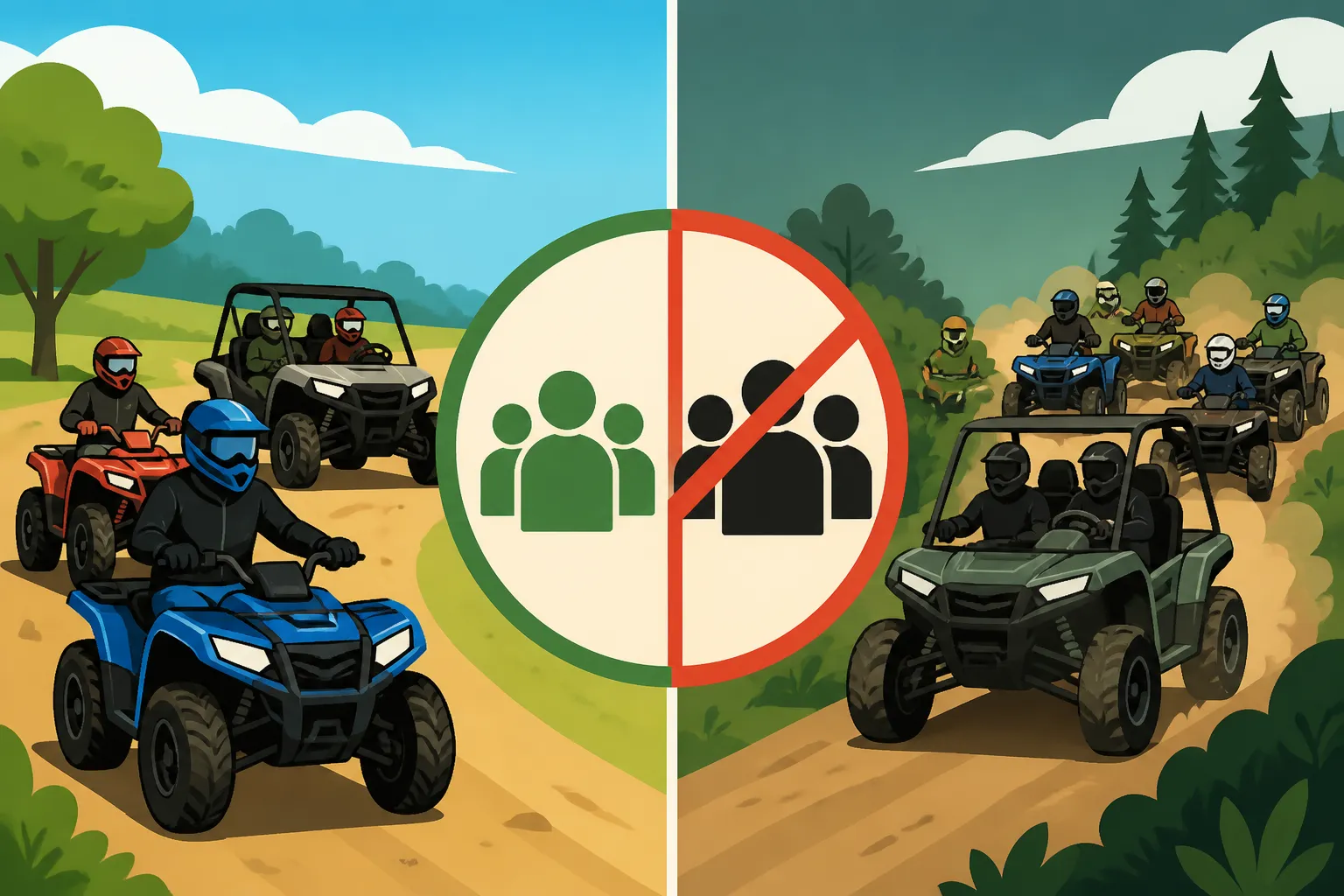
Holiday weekends can make a group ride harder to organize: a park may be busy, its rules may differ from the next park’s, and a visitor limit is not always the same as a trail-group limit. Kansas state park sources publish no general numerical cap for holiday-weekend visitors. The practical answer is to confirm the specific park’s rules before you travel.
Is there a published group size limit for a Kansas park?
Kansas state park sources do not list a specific numerical maximum group size for visitors on holiday weekends. The Kansas Department of Wildlife and Parks also says holiday camping reservations have mandatory minimum-stay requirements, but that does not establish a maximum size for a riding group. These are separate questions: how many people may visit together, how many may occupy a campsite, and how many may take part in an organized event.
The absence of a published statewide number does not mean every park accepts a group of any size. It means you should not assume there is one Kansas-wide cap to apply everywhere. A park operator may set its own limits, reservation conditions, or event rules. Check the rules for the exact place you plan to visit, and ask specifically about holiday weekends rather than relying on a general description of the park.
That distinction matters if your plans include several machines, a campsite, or a scheduled gathering. A group might be welcome to ride casually but still need to follow separate camping rules. A planned competition or gathering with an entrance fee may also be treated differently from friends meeting for a day ride.
For a private riding area, use the park’s own current visitor information. Private facilities set their own entry, riding, camping, and event conditions; do not assume a rule from one park applies at another. The site’s Kansas Private Park Waivers and Rules information is a useful reminder to check the facility’s terms before unloading. If rules are not clear online, contact the operator and ask for the conditions that apply to your group and travel dates.
For public state land, the first question is whether the land allows the kind of riding you have planned at all. According to the Kansas Department of Wildlife and Parks, Kansas state parks do not feature ATV or UTV trails, and off-road vehicle and ATV use is prohibited on state wildlife areas. So a group-size question will not solve the more basic problem of whether the intended riding is permitted. For context, see Kansas State Parks Have No OHV Trails.
State parks do allow a narrower kind of vehicle use: according to the Kansas Department of Wildlife and Parks, UTVs operating on allowed improved roads and parking areas within state parks need a specialized unconventional vehicle permit. That is not permission to ride off-road trails. A permit for those roads and parking areas does not create an exception to the park’s restrictions on off-road use.
Separate a casual group ride from an organized event
A casual group ride usually means people arrive, follow the park’s ordinary rules, and ride without setting up a formal activity for other visitors. But a large gathering can begin to look like an organized event when it includes competition, an entrance fee, or temporary structures. Kansas state park sources identify these types of activities as requiring special event permits.
According to the Kansas Department of Wildlife and Parks, special event permits are required for organized competitions, events involving entrance fees, or use of temporary structures. The published guidance does not give a numerical group-size threshold that automatically turns a casual gathering into a permitted event. If your plans involve any of those features, ask the park whether you need a permit before announcing the ride or collecting money.
A group does not necessarily need to be an event just because several friends ride together. At the same time, calling something a “group ride” does not settle how a park will classify it. The details matter: whether you are advertising to the public, charging participants, organizing a competition, setting up a registration area, or placing structures at the site.
Use this comparison to frame the conversation with the park:
| Plan | What to verify |
|---|---|
| Friends meet for an ordinary ride | Whether the facility permits the planned vehicles, group gathering, and holiday visit |
| Group uses a campsite | Reservation conditions, occupancy rules, and minimum-stay requirements |
| Ride includes a competition | Whether the activity needs a special event permit |
| Participants pay an entrance or event fee | Whether the fee makes the activity subject to event-permit rules |
| Group sets up temporary structures | Whether the park requires advance approval or a special event permit |
| UTV travel is planned inside a Kansas state park | Whether the route is an allowed improved road or parking area and which permits apply |
If the activity may qualify as an event, review Kansas Event Permits for a Ride and speak with the park before making commitments. A permit question is easier to resolve while the plan is still flexible than after participants have arrived.
Do not treat a campground reservation as permission to organize an event, either. A reserved site may address overnight use without covering a competition, public gathering, entrance fee, or temporary setup. Ask whether the reservation and the event approval are separate requirements.
What to ask before you bring a group on a holiday weekend
Contact the park directly, particularly if you expect a busy weekend or your gathering is larger than an ordinary outing. Ask for the rules that apply to the specific date, not just the general rules for the facility. If the park has separate offices or contacts for riding, camping, and events, make sure the answer covers each part of your plan.
Useful questions include:
- Does the park set a maximum size for a visiting group on this holiday weekend?
- Does the limit apply to people, machines, campsite occupants, or organized activities?
- Do you need a reservation, and are there holiday minimum-stay conditions?
- Does the planned activity count as an organized event?
- Would charging participants, running a competition, or setting up temporary structures require advance approval?
- Are all the machines in the group allowed on the intended routes?
- Are there separate permits for the planned vehicle use?
- Are there limits on parking, unloading, or staging a group?
- What happens if the group arrives in separate vehicles or at different times?
- Are any rules different for day visitors and campers?
Try to get the answer in writing, especially if the plan involves an event or several linked reservations. Save the park’s response with your reservation details and share the relevant rules with everyone attending. That gives the group one consistent understanding of where to meet, what activities are permitted, and what the park expects.
For a public state park, describe your route precisely. “We want to ride at the park” could mean using an allowed improved road, traveling to a parking area, or looking for off-road trails. Those are not interchangeable. According to the Kansas Department of Wildlife and Parks, UTVs need a specialized unconventional vehicle permit for allowed improved roads and parking areas in state parks, while Kansas state parks do not feature ATV or UTV trails. Review Kansas Unconventional Vehicle Permit and confirm the route with park staff before you load up.
If your group is visiting from outside Kansas, ask about permits for non-residents, too. Kansas does not operate a statewide OHV trail-pass system, but the Kansas Department of Wildlife and Parks says non-residents operating qualifying unconventional vehicles on improved roads and parking areas in state parks must purchase a state park vehicle permit and an unconventional vehicle permit. That requirement applies to the allowed state-park road and parking-area use described by the agency, not to off-road trail riding.
For a private park, ask the operator what counts as a group and whether the answer changes with reservations, camping, events, or holiday demand. Park rules can address practical details that a general group-size answer misses, such as how machines are staged or whether the group must check in together. Review Kansas Riding Areas That Take Reservations if you are comparing facilities, and check Kansas Private Park Camping Rules when overnight plans are part of the trip.
A practical plan for keeping the group together
Once you have confirmed the rules, make the logistics simple. Appoint one person to be the contact with the park and one person to coordinate the riders. Share the arrival plan, meeting location, route restrictions, and any permit or reservation conditions before the group sets out. A short written message helps prevent a late-arriving rider from heading to the wrong entrance or assuming a route is open.
Keep the group’s plan within the park’s rules rather than trying to negotiate at the gate. If the operator limits the gathering, follow the limit and ask whether splitting into separate visits or reservations is allowed. Do not assume that dividing one large group into smaller clusters avoids a rule; ask the park how it applies the condition.
Have each rider check the machine and required paperwork before departure. Kansas titles are handled separately from park access: according to the Kansas Department of Revenue, off-road vehicles such as ATVs receive nonhighway titles through the local county treasurer’s office under the state revenue department’s authority. A title is proof of ownership, not an entry permit or authorization to ride on a restricted route. For practical trip planning, Kansas Proof of Ownership on the Trail can help distinguish ownership documents from park requirements.
Carry the park’s instructions where the group can access them, along with reservation and permit details. A shared phone note or printed checklist can work; an Amazon clipboard or document pouch may be useful if one person is managing paper copies, but the park’s instructions matter more than the storage method. Avoid relying on one rider’s memory for rules that affect the whole group.
Plan a fallback if the park is full, the route is unavailable, or the operator says the gathering needs approval you do not have. Confirm another riding location before leaving home rather than treating a nearby public area as an automatic substitute. Kansas has specific restrictions on state-managed land, so check the alternative’s access rules first. Kansas Trail Conditions Before You Tow offers another useful planning angle: confirm that the destination is suitable and open before hauling machines there.
The safest answer to “How many people can our group bring?” is therefore not a number that applies across Kansas. State park sources publish no general numerical holiday-weekend cap, but a specific facility may have its own conditions, and certain organized activities require special event permits. Confirm the park, the permitted activity, the vehicle route, and any reservation conditions before the group travels.
Sources
- Kansas Department of Wildlife and Parks — Kansas State Park Entrance and Camping Fees (checked November 2, 2026)
Disclaimer
This article is for general informational purposes only and does not constitute professional advice. Laws, prices and regulations vary by location and change over time. Consult a qualified professional for guidance on your specific situation.