Kansas Private Park Quiet Hours
Kansas private riding parks set their own quiet-hour policies, so a rule that works at one campground may not apply at another. Before you unload or settle in for the night, find out when quiet hours begin, what noise restrictions cover and how staff handle complaints. A little planning can prevent a late-night dispute or a trip cut short.
How Quiet Hours Work at Kansas Private Parks
There is no single quiet-hour schedule that applies to every private ATV and UTV park in Kansas. Each park can set its own rules for camping areas, day-use grounds and riding zones. Local noise ordinances may also apply, but the park’s posted rules are the first place to check for its specific schedule and expectations.
That means you should not assume the hours from a previous visit, a nearby campground or another park carry over. Quiet hours might apply only to campsites, or they might cover the entire property. A park may also have separate restrictions for generators, music, engines, parties or other sources of noise.
When you book, ask for the current rules in writing if they are not available online. Rules can be updated, and a social media post or an old review may not reflect the policy in effect for your visit. If you arrive without a reservation, read the posted rules before setting up camp or starting a ride.
Quiet hours are also different from riding hours. A park may stop riding at a particular time but still allow normal campsite activity, subject to noise limits. The reverse can also be true: riders may be able to use trails during the day, while campsites have a defined period when noise must be kept down. Check each policy separately rather than treating “closed to riding” as the start of quiet hours.
| What to check | Why it matters | What to ask |
|---|---|---|
| Quiet-hour schedule | The time and duration vary by park | When do quiet hours start and end? |
| Area covered | Rules may differ between campsites and trails | Does the policy cover the whole property? |
| Engines and idling | A machine can disturb nearby campers even when it is not moving | Are there limits on starting, warming up or loading machines at night? |
| Generators | Parks may set limits on use, location or operating hours | Are generators allowed, and when must they be off? |
| Music and gatherings | Volume limits and group rules may be separate | Are speakers, fire-pit gatherings or late visitors restricted? |
| Enforcement | Staff may respond to complaints or repeated violations | Who should a guest contact about a noise problem? |
For a wider look at how private parks make and enforce guest policies, see Kansas Private Park Waivers and Rules. Quiet hours are one part of that larger set of conditions, not a substitute for checking age, helmet, alcohol, pet or camping requirements.
Noise Sources Riders Often Overlook
A loud machine is an obvious source of noise, but it is not the only one that can cause trouble at a campsite. The way you arrive, unload, maintain or store your equipment can matter just as much, particularly when campsites are close together.
Engines, loading and maintenance
Starting an ATV or UTV late at night can wake nearby guests, even if you are only moving it a short distance. Repeated starts, extended idling and revving are especially disruptive. If you arrive after dark, ask where you can park or unload without driving through occupied camping areas. When possible, unload before quiet hours and leave the machine parked until morning.
Avoid using quiet-hour periods for repairs that involve running the engine. A machine that needs troubleshooting can quickly turn into a prolonged disturbance. Plan maintenance for daytime and bring a way to move a disabled machine without repeatedly starting it, if that is practical for your trip.
Loading can be noisy too. Tailgates, ramps, tie-down hardware and trailer doors may clatter. Prepare straps and equipment before the late-night rush to leave, and use a designated staging or loading area if the park provides one.
Generators, music and campground activity
Generators can carry farther than expected at night. A park might prohibit them during quiet hours, restrict where they can run or permit only certain equipment. Do not assume a quiet inverter generator is automatically allowed; the operator’s rule still applies. If you rely on powered medical equipment or have another essential need, contact the park in advance to discuss arrangements rather than assuming an exception.
Keep music, televisions and portable speakers at a level that stays within your own campsite. Sound that seems modest inside an RV or vehicle may be much louder outside. Headphones are a considerate option when you want to listen late, but use them only when it is safe to do so and you can still hear important surroundings.
Gatherings can get noisy without anyone intending to cause a problem. Conversation, laughter, doors opening and closing, and people walking between sites all add up. Keep late-night visits small and quiet, and check whether the park has separate rules for visitors or group gatherings. If you are organizing a larger trip, review Kansas Group Size at a Park on a Holiday Weekend and confirm whether the operator requires advance arrangements.
Exhaust and machine condition
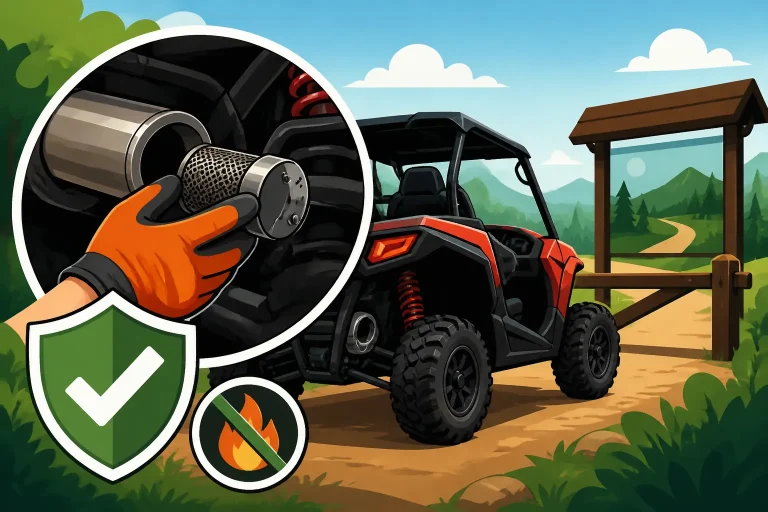
A damaged muffler or unusually loud exhaust can attract complaints even during normal riding hours. Do not assume that a machine is acceptable simply because it is allowed on a trail. Parks can set sound or equipment conditions at the entrance, and local requirements may also be relevant. Review Kansas Sound Limits at a Park and Spark Arrestor Checks Before You Enter a Park before towing a machine to a riding area.
A quiet-hours policy does not necessarily spell out an exact decibel limit. It may instead prohibit excessive noise or require guests to follow staff directions. If the wording is unclear, ask what the park considers acceptable rather than trying to judge from a phone app or a neighbor’s reaction.
How to Check the Rules Before You Go
A few direct questions before departure can save time at the gate and help you choose the right campsite. Use the park’s own website or contact its office, then confirm any uncertain points when you arrive.
- Ask for the current quiet-hour times. Get the start and end times rather than relying on a general phrase such as “be respectful at night.”
- Ask what the policy covers. Confirm whether it applies to camping areas only, or also to parking, staging areas and riding areas.
- Check generator and engine rules. Ask whether generators may run during quiet hours and whether machines can be started or moved after a certain time.
- Clarify how late arrivals work. Find out where to park, whether after-hours check-in is possible and how to avoid disturbing occupied sites.
- Read the posted rules at arrival. Check for signs, check-in materials and updated instructions. If the written policy differs from what you were told, ask staff which rule applies.
- Keep the policy accessible. Save the park’s rules or booking confirmation on your phone, especially if cell service may be limited.
It is also worth checking whether you need a reservation, where you may camp and what facilities are actually available. Kansas Riding Areas That Take Reservations and Kansas Riding Areas With RV Hookups can help you think through those logistics, but verify details directly with the park you plan to visit.
Do not confuse a Kansas permit or vehicle document with permission to ignore a private park’s conditions. A permit, where required for a particular use, does not cancel the operator’s rules on noise, camping or access. For background on the state permit picture, see Kansas Has No State OHV Permit. Private parks can still require guests to follow their own admission rules, sign a waiver or pay their own fees. Kansas Private Park Camping Rules explains why it is useful to treat overnight policies as a separate check from trail access.
What to Do if There Is a Noise Problem
If another guest is making noise during quiet hours, avoid confronting them in a way that could escalate the situation. Check the posted policy first, then contact park staff, a host or the number provided at check-in. Give a clear description of the location, the type of noise and when it is happening. Staff can decide how to address it under the park’s rules.
If staff are not available, move your own group away from the source if that is safe and practical. Do not retaliate by making more noise, and do not enter another guest’s campsite. If the situation involves a threat or immediate danger, prioritize safety and contact the appropriate emergency service.
If staff speak to you about a complaint, listen and ask what specific change is needed. Turning off a generator, lowering music or moving an activity may resolve the issue quickly. Continued violations can lead to consequences under the park’s rules, including being asked to leave. Review the relevant policies before arrival, including When a Park Can Send You Home Without a Refund, so you understand that admission does not guarantee an exception to posted conditions.
For a quiet trip, plan the noisy parts of the day: unload early, complete machine checks before evening, and agree on a time to stop music and group activity. If your party includes several campsites, make sure everyone knows the rules. One guest who starts a machine or runs a generator late can affect the whole group’s stay.
Quiet hours are ultimately a practical courtesy as well as a park policy. Following them makes it easier for other guests to rest, helps staff manage the property and reduces the chance that a preventable noise complaint disrupts your visit. The safest approach is simple: confirm the current rules with the operator, follow posted instructions and leave room for park-specific differences.
Disclaimer
This article is for general informational purposes only and does not constitute professional advice. Laws, prices and regulations vary by location and change over time. Consult a qualified professional for guidance on your specific situation.