Kansas Camping Permit Cost
Kansas camping costs can be confusing because a camping permit, campsite reservation, park entrance charge, and ATV or UTV permission may be separate things. The right budget depends on where you stay and how long you camp. Here’s how to sort the charges, check what a permit covers, and avoid paying for access you don’t need.
What a Kansas camping permit may cost
There isn’t one fee that covers every Kansas camping trip. The amount depends on the permit type, the campground, and the services at your site. Before booking, separate the costs into three questions: what permit you need, what the campsite costs, and whether you’ll pay extra for access or amenities.
Kansas state parks offer camping permit options that can include short-term and longer-term arrangements. Their terms and fees can change, so check the current information from the Kansas Department of Wildlife and Parks before making plans. The title Kansas Camping Permit Prices is a useful starting point for understanding the types of costs to look for.
| Cost item | What it generally relates to | What to verify before you book |
|---|---|---|
| Camping permit | Authorization or coverage for camping under a particular permit type | Eligible locations, duration, exclusions, and current fee |
| Campsite reservation or site charge | The specific site you reserve or occupy | Dates, cancellation terms, and whether the site has utilities |
| Park entrance or vehicle charge | Access to a park or its facilities, if charged | Whether it applies to your visit and how it is collected |
| Utilities and amenities | Services such as electrical hookups or other site features | Which services are included and which cost extra |
| Off-road vehicle permit | Limited vehicle use in places where a separate permit applies | Where it allows you to drive and whether it covers your machine |
| Private riding-area charge | Access to a privately operated park or campground | Day-use, camping, vehicle, and park-specific charges |
A camping permit should not be assumed to include a reserved campsite. A permit and a reservation can be different things: one may authorize camping under stated conditions, while the other holds a particular site for particular dates. Check the campground’s booking information to see what you must buy and whether a permit is included, required separately, or not relevant to that campground.
Likewise, a campsite fee may not include electricity, water, or other services. A basic site and a site with hookups can have different costs. Review the site description and the checkout total rather than relying on a general permit description. If you are staying at a private riding park, use that park’s rules and fee schedule; state-park permits do not set private park prices.
For a shorter stay, compare the terms of a short-term option with those of a longer-term permit. The eligibility, valid period, and included camping access matter as much as the fee. See Kansas Fourteen-Night Permit Cost for the short-term permit question, then confirm the current terms directly with the agency or campground.
If your trip includes several parks or multiple camping visits, a longer-term option may be worth comparing with separate reservations. Don’t assume it is automatically the cheaper choice. Add up the stays you expect to make, account for sites or services that may still be charged separately, and check whether the permit applies to the places you plan to visit.
What the permit covers and what it does not
Before paying, identify exactly what the permit provides. The word “permit” can refer to different kinds of authorization, and a camping permit is not interchangeable with an entrance permit, a campsite reservation, or permission to ride an off-road machine.
Start with the campground or park where you intend to stay. Check whether it is a Kansas state park, a Corps of Engineers area, or a privately operated recreation area. Each may have separate reservation systems, access rules, and charges. A state camping permit should not be treated as universal coverage for every public or private campground.
The same distinction applies to other park charges. An entrance permit and a camping permit can serve different purposes, and a particular park visit may involve one, both, or neither. Kansas Park Entrance Permits and What They Cover explains why it is important to check what an entrance permit actually covers rather than treating it as a camping pass.
For any permit, read the conditions for:
- The locations where it is accepted.
- The dates or duration it is valid.
- Whether a campsite must still be reserved separately.
- Whether utilities or additional services cost extra.
- Whether the permit is tied to a person, vehicle, site, or stay.
- Whether cancellation, transfer, or refund conditions apply.
These details can change the total more than the permit’s headline fee. For example, a longer-term permit may not cover every service at a campsite, while a short stay may require a separate site reservation. Confirm the exact terms before paying, especially if you are making plans around a holiday or a high-demand weekend.
Off-road vehicle permission is a separate issue. Kansas does not have a general statewide OHV trail permit that gives riders access to all trails. Kansas Has No State OHV Permit is useful context, but it does not mean every area is free to enter or that machines can be ridden wherever camping is allowed. The place you visit sets its own access rules.
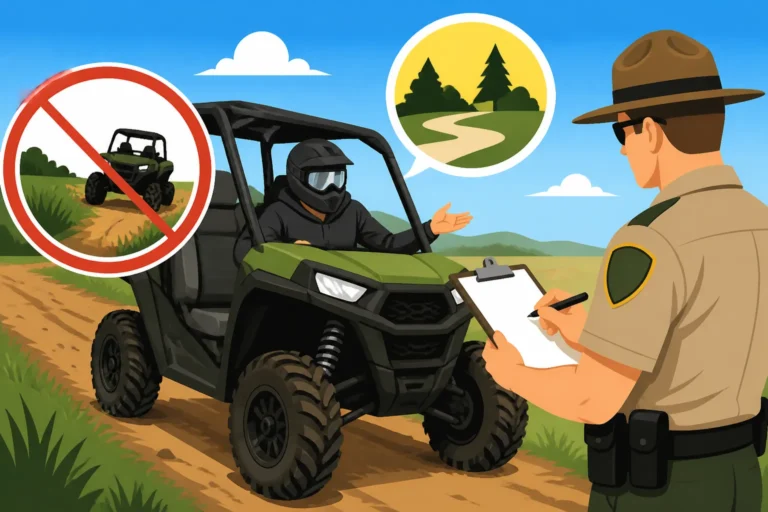
Kansas state parks are not a substitute for an OHV trail system. A permit that allows limited machine use on certain park roads does not create permission to ride trails or cross closed areas. Check Kansas State Parks Have No OHV Trails and Kansas Park Permit vs Trail Permit before planning a camping trip around riding. A permit’s name alone does not tell you where the machine may go.
If the route involves a state park road, confirm the permitted roads, hours, and vehicle conditions with the park. The rules for riding on park roads are not the same as permission to use an off-road trail. Kansas Park Road Use Sunrise to Sunset covers the road-use distinction; verify current requirements with the park before unloading your machine.
Camping with an ATV or UTV
If you plan to bring an ATV or UTV, budget for camping and riding separately. A campsite reservation does not automatically authorize riding, and an off-road vehicle permit does not automatically reserve a campsite. Check both sets of rules before you choose where to stay.
First, decide whether you need a place to camp near a riding area or a place where riding is allowed on site. These are different plans. A campground may welcome campers but prohibit riding from the site. A riding park may have its own camping area, vehicle rules, and charges. Ask whether you can unload at your campsite, ride between the campsite and the designated area, and use your machine on internal roads.
Kansas state park access for a machine is limited and should not be mistaken for trail access. Stay on roads or other areas where the park expressly allows use, and follow posted signs and directions from staff. If riding is the main reason for the trip, check the riding-area rules first, then select camping nearby. The list of Kansas Private Off-Road Parks can help you consider alternatives to state parks.
Some Corps areas are relevant to riders, but their rules and campground charges are not necessarily the same as those at a state park. A Corps riding area may not require a Kansas state park permit for riding, but that does not establish that camping is free or that every nearby site has the same fees. Confirm campground reservations and charges with the specific recreation area. Why Corps Riding Areas Need No Park Permit explains the distinction between a state park permit and other access arrangements.
When comparing destinations, ask the campground or riding area these practical questions:
- Can the ATV or UTV be parked at the campsite, or must it stay in a separate lot?
- Is riding allowed from the campsite to the riding area, or must the machine be trailered?
- Does the riding area require a separate day-use charge or vehicle registration?
- Are there limits on machine size, sound, age of rider, passengers, or operating hours?
- Are camping reservations handled by the same office as riding access?
- What happens if weather closes the riding area or changes the campground’s access?
These questions can prevent a costly mismatch: a campsite that works for tent camping may not work for a trailer and side-by-side, and an area that permits riding may not allow a machine on campground roads. Ask the operator to confirm the details rather than relying on a map symbol or an old booking description.
Also account for transport. A Kansas title is not a riding permit, and having a titled machine does not make it street legal. If you need to move the machine between a campground and riding area, find out whether the route is permitted or plan to haul it. The Park Permit That Covers Roads, Not Trails is a useful reminder that road access and trail access are separate.
How to budget and verify the current fee
The safest way to estimate a camping trip is to price each part separately. Start with the campground’s current rate and reservation terms, then add any permit the location requires. Add utilities, entrance charges, and riding-area costs only after checking that they apply to your specific trip.
Use this simple process:
- Choose the location. Confirm whether it is a state park, Corps area, or private campground.
- Check the camping rules. Find out whether a camping permit is required and whether it covers the intended dates and site.
- Price the campsite. Review the actual site type, reservation charge, and any utility or service costs.
- Check entrance requirements. Confirm whether park entry is charged separately from camping.
- Check vehicle access. Ask where an ATV or UTV may be driven, not just whether machines are allowed at the destination.
- Review the total before paying. Look for separate charges, restrictions, cancellation conditions, and the final amount due.
Use the official agency or campground information for the final figures. If you are booking through a reservation service, compare the checkout summary with the campground’s own permit and fee details. A general page may explain permit categories but omit site-specific services or charges.
For a trip that crosses several kinds of land, verify each location separately. A permit accepted at one campground may not be accepted at another, and a private park can set conditions that differ from state or federal recreation areas. Visitors should not assume that a permit from another state replaces a Kansas requirement. Confirm reciprocity, if relevant, with the authority that manages the destination.
Keep confirmation details accessible while traveling. Save the reservation receipt, permit confirmation, and any written information about vehicle access. These records won’t override posted rules, but they can help resolve questions about the site or stay. Keep in mind that a receipt for camping does not prove that riding is allowed on nearby roads or trails.
Finally, make the riding plan fit the camping plan. If the campsite is outside the permitted riding area, arrange transportation for the ATV or UTV. If riding access is limited to specific roads or hours, build that into the day rather than assuming the camping permit provides broader access. For area-specific machine rules, check Kansas Department Road Riding Rules and the park or campground directly before setting out.
Disclaimer
This article is for general informational purposes only and does not constitute professional advice. Laws, prices and regulations vary by location and change over time. Consult a qualified professional for guidance on your specific situation.