Sound Testing a Machine at the Entrance Gate
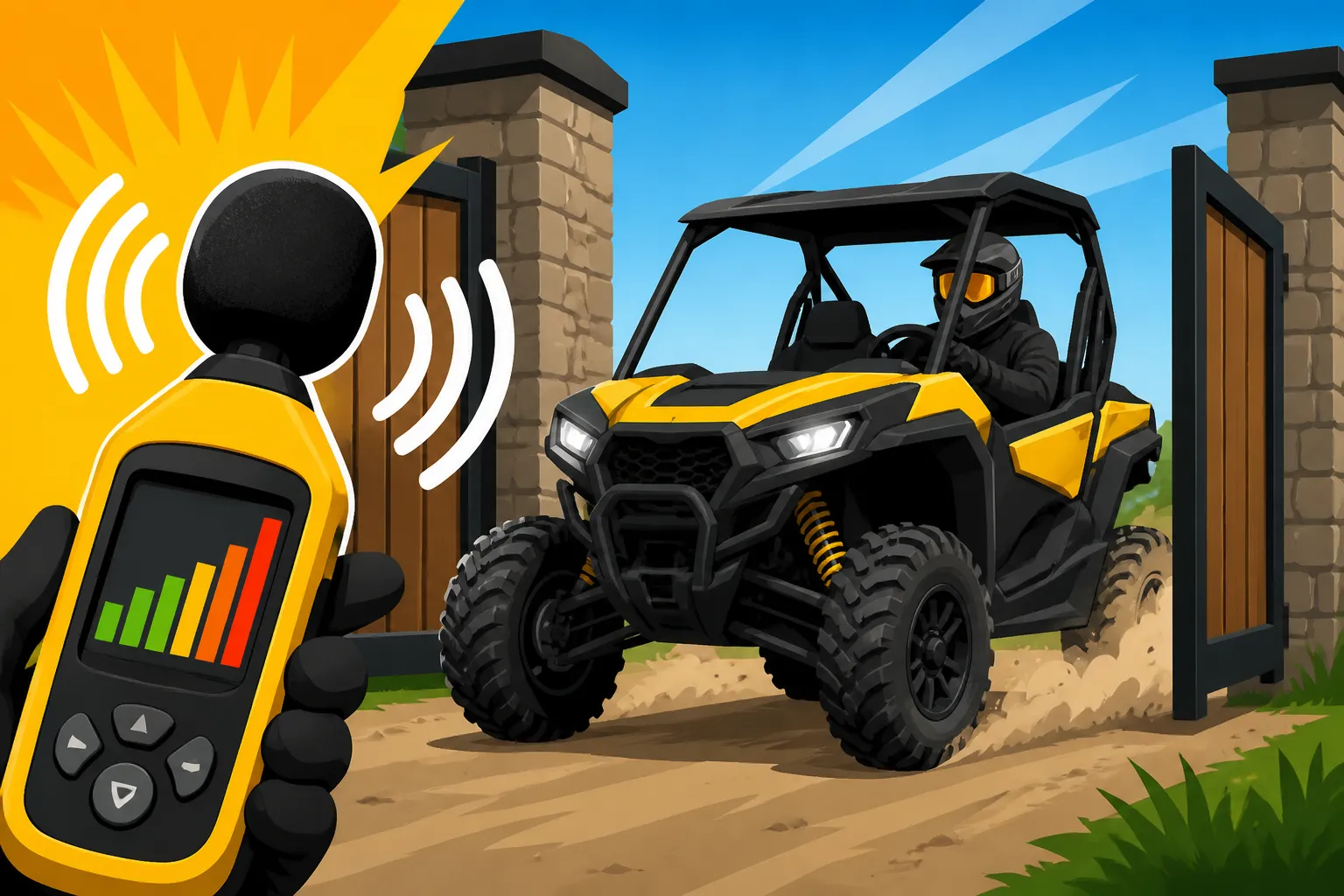
An entrance-gate sound check can catch an ATV or UTV owner off guard, especially after a muffler change or a long tow to the park. Kansas riding areas may set their own noise rules and testing procedures, so there is no one test method to prepare for everywhere. Knowing what can affect a reading—and what to ask before you unload—helps you avoid a preventable problem.
Why a riding park may sound-test your machine
A riding park may check noise to enforce its own rules, protect nearby neighbors, or reduce disturbance for other riders. The exact reason and policy depend on the property. A gate test is not automatically a statewide Kansas equipment inspection, and passing one park’s test does not guarantee acceptance at another.
Kansas has different kinds of places to ride, with different rules. Private parks set conditions for using their property, while public riding areas have their own access rules. If you’re deciding where to ride, start with Kansas ATV Trails: Where You Can Actually Ride and then check the specific property’s current requirements. For private facilities, Kansas Private Park Waivers and Rules explains why it’s important to review the rules before you arrive.
A sound limit, if a park uses one, may be written as a decibel threshold. The procedure matters just as much as the threshold: the distance from the machine, microphone position, engine speed, background noise, and meter settings can all affect the reading. Parks do not necessarily use the same equipment or the same process. Ask whether there is a posted limit and how staff apply it rather than relying on another rider’s account of a test at a different location.
| What to check | Why it matters | What to ask the park |
|---|---|---|
| Whether sound testing is in use | A park may have a noise rule without testing every machine at the gate | “Are machines tested when they arrive, or only after a complaint?” |
| The sound limit and test procedure | A reading depends on both the limit and how it is measured | “What limit and testing method do you use?” |
| Which machines are covered | A rule may apply to ATVs, UTVs, or all motorized machines | “Does the same rule apply to my machine?” |
| What happens if a machine fails | The result might affect admission or riding privileges | “Can I correct the problem and retest, and what happens to my admission?” |
| The current park rules | Procedures can vary by property and may change | “Where can I read the current rules before I travel?” |
If you’re considering Kansas Rocks Recreation Park or Syracuse Sand Dunes, review Kansas Rocks Park Rules for Riders or Kansas Syracuse Dunes Park Rules as well as any separate noise policy. A general overview of Kansas Sound Limits at a Park can help you understand what questions to ask, but the park itself is the source for its current entrance procedure.
What can change a sound reading
A loud reading does not always point to a major mechanical failure. It can reflect the exhaust system, the way the engine is running, or the conditions during the test. Conversely, a machine that sounds quiet from the seat may seem louder near the exhaust. Don’t try to predict a pass or fail by ear alone.
The exhaust and muffler are the first things to inspect. Look for a loose connection, a damaged or missing muffler component, or a part that has been changed from the machine’s original setup. A worn or altered system can make a machine noticeably louder. If the sound has changed recently, ask a qualified repair shop to inspect it before the trip.
Other factors can also matter:
- Engine speed: A test taken at a specified engine speed may produce a different reading from one taken at idle. Follow the park’s instructions; don’t rev the engine unless staff ask you to.
- Position and distance: The microphone’s location relative to the exhaust can change the result. Staff should conduct the check according to the park’s stated procedure.
- Surrounding noise: Nearby machines, traffic, wind, and other background sounds can affect a reading or make the test harder to interpret.
- Machine condition: A loose part or a change in the exhaust can create extra noise or rattling that was not present before.
- Modifications: An aftermarket exhaust or other modification may affect sound. Do not assume a part advertised as suitable for off-road use meets a particular park’s noise rule.
Sound is only one possible gate requirement. A park may also have rules about helmets, passengers, age, alcohol, spark arrestors, or other equipment. Read the full policy, not just the noise section. Spark Arrestor Checks Before You Enter a Park covers a separate requirement that riders may also need to consider.
How to prepare before hauling your machine
A little preparation can help identify a noise issue while you’re still at home, where you have time to make a repair or change plans. It cannot guarantee that a park’s meter will show the same result, but it can reduce the chance of arriving with an obvious exhaust problem.
- Check the specific park’s rules. Look for a sound policy, a stated test limit, and instructions for what happens if a machine does not meet the requirement. If the rules are unclear, contact the park before loading.
- Inspect the exhaust when the machine is cool. Check for visible damage, loose fittings, missing parts, or signs of an exhaust leak. Don’t put your hands near a hot muffler.
- Restore or repair questionable parts. If a recent modification has made the machine louder, ask the park whether it is acceptable. A repair shop can assess whether the exhaust system is damaged or improperly fitted.
- Avoid last-minute guesswork. Don’t remove parts, add improvised material, or make other changes that could damage the machine or create a safety issue. If you aren’t sure a repair is suitable, have it checked professionally.
- Call with the machine details. Describe whether it is an ATV or UTV and mention any exhaust modifications. Ask what the park tests, whether testing is routine, and what options exist if the machine fails.
- Save the rules and contact information. Having the current policy available can help resolve misunderstandings at the gate. It also helps you confirm whether you have the right property and entry information before you depart.
A handheld sound meter or phone app can give you a rough comparison between machines or help you notice a change over time. Some riders look for meters through retailers such as Amazon. Treat a personal reading as a screening tool, not proof that you will pass: consumer devices, placement, settings, and background conditions may differ from the park’s test. If a park publishes a measurement procedure, use that procedure as your reference rather than comparing readings taken another way.
If you’re choosing a place to ride based partly on machine restrictions, contact the property before making travel plans. Kansas Trail Conditions Before You Tow offers other useful pre-trip checks, but it cannot replace a park’s current sound policy. Likewise, a waiver or admission confirmation does not necessarily mean a machine has passed an equipment check. Review the park’s rules for both admission and on-site enforcement.
What to do if your machine fails
Stay calm and ask staff to explain the result. A useful conversation is specific: ask what limit applies, how the test was conducted, and whether the park allows a second test after the machine has been checked. Avoid arguing about how loud the machine sounds to you; a reading and a written policy are more useful than impressions.
If the test seems inconsistent, you can politely ask whether staff can repeat it under the park’s procedure. Background noise, positioning, or a change in engine speed may affect a result, but don’t assume that any one factor invalidates it. Follow staff instructions and avoid revving the engine or moving the machine while a test is underway.
The consequences depend on the property’s rules. Staff may ask you to correct a problem, restrict the machine, or deny riding access. Whether admission or other charges are refundable is also a park-specific question, so check the policy before you travel. Do not assume that a failed test automatically entitles you to a refund or that the park must offer an on-site repair.
If you cannot resolve the problem at the gate, the practical choice may be to leave the machine unloaded and contact the park about next steps. Do not ride somewhere else on the property if staff have told you the machine cannot be used. Before your next trip, have the exhaust inspected or changed as needed, then call the park to confirm its current requirements.
A sound check is only one part of deciding whether a machine is ready for a riding area. Confirm access rules, machine restrictions, and any other equipment requirements before you tow. That is particularly important when visiting a different facility: Kansas Private Park Waivers and Rules and the park-specific rules for Kansas Rocks or Syracuse Sand Dunes are better starting points than assuming every gate works the same way.
Disclaimer
This article is for general informational purposes only and does not constitute professional advice. Laws, prices and regulations vary by location and change over time. Consult a qualified professional for guidance on your specific situation.