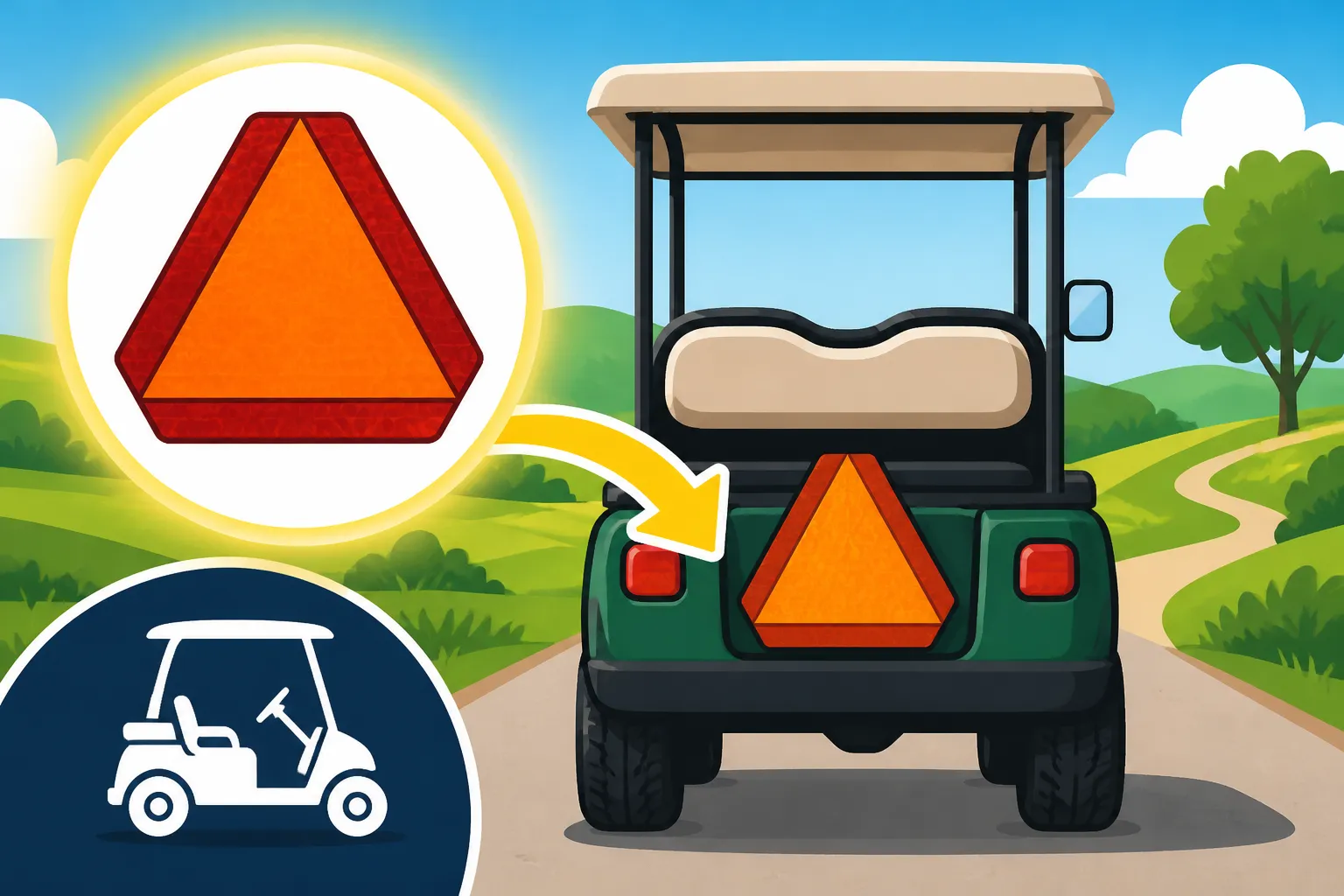
Why a Golf Cart Needs a Slow-Moving Vehicle Emblem
It’s a common sight across Kansas, especially in smaller towns, retirement communities, and around lake areas: golf carts puttering along. You might see them heading to the local grocery store, cruising to a fishing spot, or simply visiting a neighbor. But if you're a golf cart owner in the Sunflower State, you've likely wrestled with the question of what exactly you need to make your trusty cart legal for those quick jaunts on public roads. One of the most frequently asked questions revolves around that bright orange-red triangle: "Why does my golf cart need a slow-moving vehicle emblem?" This guide will break down the Kansas laws, shed light on the purpose of this crucial safety device, and help you understand when and why it's an absolute must for your golf cart.
The Foundational Kansas Law for Golf Carts
Navigating the rules for golf carts on public roads in Kansas can feel like trying to hit a moving target. Unlike ATVs or UTVs that have more defined state-level classifications for off-road use, golf carts exist in a slightly different legal gray area when it comes to street legality. The key is understanding that, by default, golf carts are generally not street legal in Kansas. However, there are very specific exceptions that allow for limited road use, and it's within these exceptions that the slow-moving vehicle (SMV) emblem becomes non-negotiable.
How Kansas Law Defines a Golf Cart
First, let’s get clear on what Kansas considers a golf cart. The state laws define a golf cart, generally speaking, as a motor vehicle that has at least three wheels, an unloaded weight of less than 1,300 pounds, is designed to be operated at not more than 20 miles per hour, and is designed to transport people and equipment for golfing purposes. This definition is critical because it separates golf carts from other types of low-speed vehicles or even micro utility trucks that might look similar but fall under different regulatory umbrellas. The important takeaway here is the speed limitation – under 20 mph is a significant factor in why certain safety equipment, like the SMV emblem, is required.
The Default Ban and City Ordinances
By default, Kansas state law prohibits golf carts from being operated on any highway, street, or public road. This is the baseline. If you simply own a golf cart and decide to take it for a spin down Main Street without any further legal considerations, you're likely breaking the law. However, Kansas law does provide a crucial avenue for local control: cities and counties have the authority to create ordinances that allow golf carts on certain public roads within their jurisdiction.
This means that while the state sets the general rule, your ability to legally drive your golf cart on a city street often hinges on what your local city council has decided. These ordinances typically come with a host of requirements, not just about where you can drive, but also how your golf cart must be equipped. This local control explains why you might see golf carts freely cruising in one Kansas town, but not another. It’s always important to check with your specific municipality. You can learn more by checking out our guide on [Kansas Golf Cart Road Rules].
Understanding the Slow-Moving Vehicle Emblem Requirement
So, your city has an ordinance allowing golf carts on specific streets – fantastic! But before you hit the road, you'll almost certainly need that distinctive orange-red triangle on the back of your cart. This isn't just a suggestion; it's a critical safety device mandated by Kansas law when your golf cart meets certain criteria for road use.
What is a Slow-Moving Vehicle Emblem?
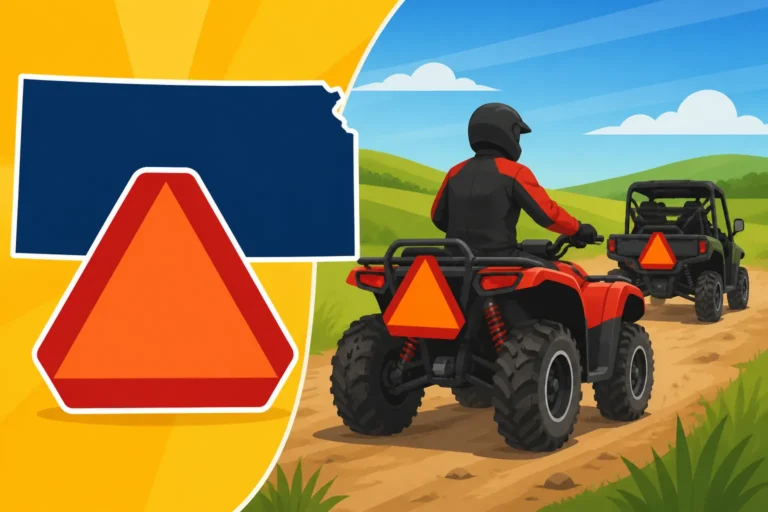
A slow-moving vehicle (SMV) emblem is a standardized safety device designed to visually alert other drivers to vehicles operating at speeds significantly lower than the flow of traffic. It's a reflective, fluorescent orange-red triangle with a red reflective border, typically mounted on the rear of the vehicle. The design and dimensions are usually specified by safety standards, ensuring that it's universally recognizable and effective. The bright color and reflective properties ensure maximum visibility during daylight hours and at night when illuminated by headlights. This emblem isn't just for golf carts; you'll also see them on farm tractors, horse-drawn buggies, and construction equipment – essentially, anything that travels considerably slower than the speed limit on a given road.
Why Kansas Mandates Them for Golf Carts
The core reason Kansas mandates SMV emblems for golf carts, when they are permitted on public roads, comes down to speed differential and safety. As we discussed, golf carts are designed to travel at no more than 20 miles per hour. Most urban and rural roads in Kansas have posted speed limits of 25 mph, 30 mph, 45 mph, or even higher. When a vehicle traveling at 15-20 mph shares a road with vehicles traveling at 45 mph, the risk of a rear-end collision skyrockets.
Kansas law recognizes this danger. The SMV emblem acts as an early warning system. It tells an approaching driver, "Hey, this vehicle ahead of you is moving much slower than you might expect, so be prepared to slow down or pass with caution." Without this distinct visual cue, a driver might not realize the speed disparity until it's too late, especially if they are distracted or if visibility is poor. It’s about managing expectations and preventing accidents. It's also specifically called out in laws concerning [Kansas Golf Carts and Slow-Moving Emblems]. Many aftermarket providers like SuperATV offer these emblems, along with other essential safety gear to ensure your golf cart is compliant and visible on the road.
Mounting and Visibility Best Practices
Simply having an SMV emblem isn't enough; it needs to be properly mounted to be effective. The emblem should be securely attached to the rear of the golf cart, as close to the center as possible, and positioned between 2 and 6 feet above the ground. It needs to be kept clean and unobstructed so that its reflective and fluorescent properties can do their job. Avoid placing anything over it, like a golf bag, a cooler, or any other cargo, that would reduce its visibility.
Consider the angles at which other drivers will approach your cart. It needs to be clearly visible from hundreds of feet away, giving drivers ample time to react. If your golf cart has a rear basket or cargo area, make sure the emblem is mounted above it or in a location where it won't be easily blocked. A properly mounted and clean SMV emblem is your first line of defense in ensuring other drivers recognize your golf cart as a slow-moving vehicle.
When and Where Your Golf Cart Needs the Emblem
Understanding the "why" is half the battle; the other half is knowing the "when and where." The need for an SMV emblem isn't universal for all golf cart use in Kansas, but it becomes critical as soon as you venture onto certain public thoroughfares.
Crossing a Highway: The Specific Exception
One of the most common and often misunderstood scenarios for golf cart use in Kansas involves crossing a highway. State law does allow for golf carts to cross a highway or street that has been designated for their use. This is typically limited to crossing at an intersection with a stop sign or traffic signal, and only if the road being crossed has a posted speed limit of 30 mph or less. Even for these brief crossings, if a local ordinance permits it, the SMV emblem is usually a required safety feature. It's a quick trip across, but the risk of collision remains, making that bright triangle essential for the few seconds you're in the travel lane. Be sure to understand [Kansas Golf Carts Crossing a 30 mph Road] to avoid any issues.
Riding on Approved City Streets
This is where local ordinances truly shine. Many Kansas cities, especially smaller communities or those with large retirement populations, have passed ordinances allowing golf carts on specific city streets. These ordinances will almost invariably require a slow-moving vehicle emblem. Often, these rules are part of a larger set of equipment requirements that might include headlights, taillights, turn signals, mirrors, and even a horn.
For example, a city might designate all residential streets with a speed limit of 25 mph or less as permissible for golf carts, provided the carts are properly equipped. In such a scenario, the SMV emblem is not just a good idea; it's a legal necessity. Without it, you could face fines even if your city generally allows golf carts. Knowing your specific city's ordinance is paramount. You can typically find this information on your city's official website or by contacting the city clerk's office. Remember, these ordinances vary widely, so what's legal in one town might not be in the next. Our article on [Kansas Golf Cart Ordinances by City] can offer more insights.
Agricultural and Private Property Use
It's also worth noting when an SMV emblem might not be required, purely for contrast and clarity. If you're using your golf cart exclusively on private property, such as a golf course, a large farm, a private hunting lease, or within the confines of a gated community that doesn't use public streets, then the state's SMV emblem requirement typically doesn't apply. In these settings, you're not sharing the road with faster public traffic, so the specific danger the emblem is designed to mitigate isn't present.
Similarly, if you're using a golf cart purely for agricultural purposes on your own land, or within a private ranch or feedlot, the emblem isn't legally mandated by state highway traffic laws. However, even in these private settings, common sense and safety dictate that enhancing visibility is always a good idea, especially if the cart might encounter other vehicles or equipment.
Ensuring Compliance and Safety on Kansas Roads
Getting your golf cart ready for road use isn't just about sticking on an emblem. It's about a holistic approach to safety and compliance that protects you and others on the road. Ignoring any part of the requirements can lead to citations, accidents, and a lot of frustration.
Beyond the Emblem: Other Essential Gear
While the SMV emblem is crucial, it's rarely the only piece of equipment required by Kansas cities that permit golf cart use. Most local ordinances will stipulate a range of other safety features to bring a golf cart closer to the standards of other low-speed vehicles. These often include:
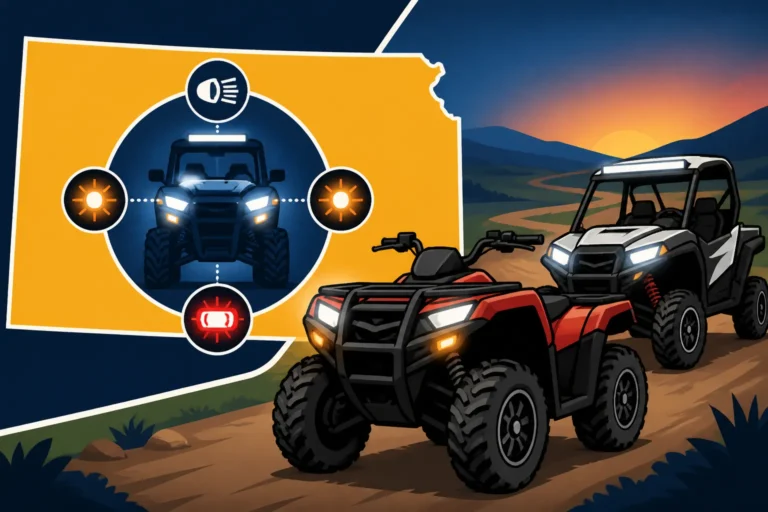
- Headlights and Taillights: Essential for visibility, especially during dawn, dusk, or nighttime hours. Many ordinances will require them to be functional and visible from specific distances.
- Turn Signals: To clearly indicate your intentions to other drivers, just like a car.
- Brake Lights: To show when you are slowing down or stopping.
- Rearview Mirrors: To allow you to see traffic approaching from behind.
- Horn: For audible warnings when needed.
- Seatbelts: For occupant safety, especially if you have passengers.
- Fenders: To prevent debris from being thrown by tires.
- Windshield: For driver protection from wind and small debris.
Checking these off your list, perhaps with quality aftermarket parts from brands like SuperATV, will ensure you meet all local requirements. Remember, when a deputy pulls you over, they'll be looking for all these items, not just the SMV emblem. These [Kansas Equipment Checks by Deputies] are a real thing, and being unprepared can cost you.
The Consequences of Skipping the Emblem
Operating a golf cart on a public road where an SMV emblem is required, but without one, can lead to various legal and financial consequences. You could face a traffic citation, which typically comes with a fine and potential court costs. While a golf cart violation might not carry the same weight as a speeding ticket in a car, it's still a mark on your record and an unnecessary expense.
More importantly, and far more severe, is the risk of an accident. If your golf cart is involved in a collision while operating illegally (e.g., without a required SMV emblem), you could be found at fault or partially at fault. This could affect insurance claims, liability, and potentially lead to significant financial burdens, not to mention physical injuries. The small cost of an SMV emblem pales in comparison to the potential costs of an accident or a legal battle. It's simply not worth the risk to skip this vital safety feature. Understanding [Kansas Penalties for Illegal Road Riding] is key to avoiding these situations.
Safety Tips for Sharing the Road
Even with all the required equipment, driving a golf cart on public roads requires a heightened sense of awareness and caution. You are operating a slow, smaller vehicle amidst larger, faster traffic, and this inherently puts you at a disadvantage.
- Stay Alert: Always be aware of your surroundings. Check your mirrors frequently and anticipate potential hazards.
- Be Predictable: Use turn signals well in advance, maintain a steady speed, and avoid sudden movements.
- Stay to the Right: Keep as far to the right of the road as safely possible to allow faster traffic to pass you.
- Avoid Busy Roads/Times: If possible, use golf carts on less-trafficked roads and avoid peak traffic hours.
- Don't Overload: Ensure your golf cart is not overloaded with passengers or cargo, which can affect its stability and braking.
- Educate Passengers: Make sure any passengers understand the safety rules and remain seated while the cart is in motion.
- Be Visible: In addition to the SMV emblem, consider wearing bright clothing, especially if you're out near dawn or dusk. Ensure all [Kansas Lighting Rules After Sunset] are adhered to.
By taking these precautions and ensuring your golf cart is fully compliant with all local ordinances, including the crucial slow-moving vehicle emblem, you can enjoy the convenience and fun of golf cart ownership safely and legally in Kansas.
Disclaimer
This article is for general informational purposes only and does not constitute professional advice. Laws, prices and regulations vary by location and change over time. Consult a qualified professional for guidance on your specific situation.