Kansas Title for a Side-by-Side
Many Kansas side-by-side owners find themselves scratching their heads when it comes to the title process. It’s not always as straightforward as titling a regular car, and the specific classification of your UTV can make a significant difference in how you approach the county treasurer’s office. This guide is here to cut through the confusion and walk you through everything you need to know about getting your side-by-side properly titled in the Sunflower State, ensuring you're squared away with the state's requirements.
Understanding Kansas's Side-by-Side Classifications
The first and often most confusing step in titling your side-by-side in Kansas is understanding how the state's motor vehicle laws categorize these machines. Unlike cars or trucks, side-by-sides don't always fit neatly into a single box, and Kansas has specific definitions that guide the titling process. Getting this right from the start can save you a lot of grief and extra trips to the county office.
The Nonhighway Vehicle Catch-All
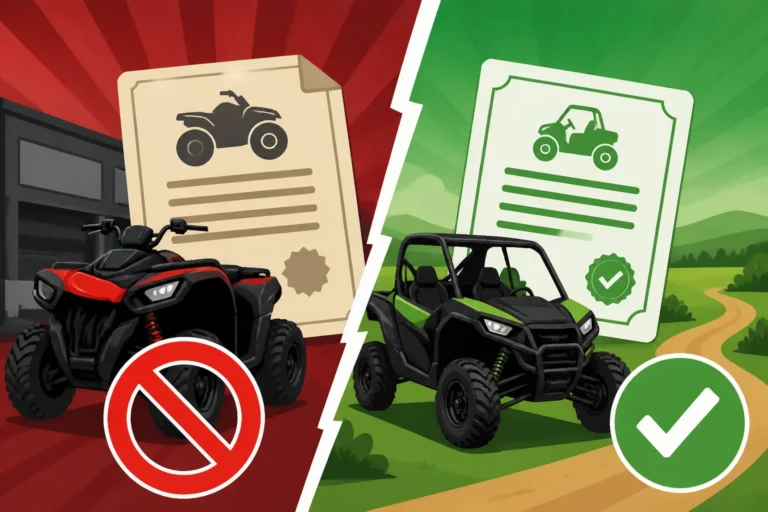
For the vast majority of recreational side-by-sides in Kansas, they will be classified as a "nonhighway vehicle." This term is exactly what it sounds like – a vehicle primarily designed for off-road use, not intended or equipped for continuous travel on public roads and highways. If your side-by-side is something you use for trail riding, hunting on your land, or general recreation, it's almost certainly going to fall into this category. The state essentially says, "We need a record of ownership, but we're not treating it like something you'd commute in."
This designation means a few key things right off the bat. First, it simplifies things because, as a nonhighway vehicle, your side-by-side won't be subject to annual registration fees or require a license plate. It's truly about proving ownership. Second, it encompasses a wide range of machines, from smaller utility models to high-performance sport UTVs. It’s the default category when your machine doesn’t meet the stricter criteria of another specialized class. You can learn more about this general classification in [Kansas Titles ATVs as Nonhighway Vehicles] or by understanding [How Kansas Law Defines a Nonhighway Vehicle].
When a Side-by-Side is a Work-Site Utility Vehicle (WSUV)
Now, here's where it gets a little more specific for certain types of side-by-sides. Kansas law has a unique classification for what it calls a "work-site utility vehicle," or WSUV. This isn't just a fancy name; it carries specific requirements that differentiate it from a standard nonhighway vehicle. For your side-by-side to be considered a WSUV, it must meet several criteria: it needs to be at least 48 inches wide, weigh more than 800 pounds unladen (empty), have side-by-side seating (like a bench or bucket seats), and be equipped with a steering wheel, not handlebars.
Think of those larger, heavy-duty utility side-by-sides often seen on construction sites, golf courses, farms, or in municipal parks. These machines are designed for tasks like hauling equipment, personnel transport on private property, or maintaining large areas. The distinction between a regular nonhighway vehicle and a WSUV primarily lies in these physical characteristics. If your machine fits this description, it will be titled as a WSUV. This specific class is explained further in [Kansas Work-Site Utility Vehicles Explained] and [What Makes a Side-by-Side a Work-Site Utility Vehicle]. The criteria regarding width and weight are critical, as discussed in [48 Inches and 800 Pounds], and the presence of [Why a Steering Wheel Changes Your Title Class] along with [Bench or Bucket Seating Side by Side] are definitive factors.
The Significance of Classification for Titling
Understanding whether your side-by-side is a general nonhighway vehicle or a WSUV is crucial because it affects the specific forms you'll fill out and how the county treasurer processes your title application. While the core process is similar, selecting the correct vehicle type on the paperwork ensures accuracy and prevents delays. The manufacturer's original intent and design specifications are typically what determine this classification. It's not something you get to choose; it's based on how the machine was built and presented by its maker.
The good news is that for the actual titling process, both classifications ultimately result in a "nonhighway" title. This means that, regardless of whether it's a recreational UTV or a heavy-duty WSUV, you're not getting a regular vehicle tag for street use. However, the WSUV classification does acknowledge the machine's utility design, which can sometimes play a role in very specific, limited road-use exceptions that local governments might enact, though this is a separate and complex topic in itself. Always refer to your county treasurer's office for clarification if you're unsure how your specific side-by-side will be classified; they are the ultimate authority in [Why the Manufacturer Decides Your Title Class].
The Titling Process for Your Kansas Side-by-Side
Once you understand how Kansas classifies your side-by-side, the actual titling process becomes much clearer. It's a fairly standardized procedure, primarily handled at your local county treasurer's office. This isn't a state-level affair, so you'll be working directly with the clerks in your community.
Gathering Your Essential Paperwork
Before you even think about heading to the county office, you need to ensure you have all your ducks in a row concerning documentation. Missing even one crucial piece of paper can lead to frustrating delays and extra trips. For a brand-new side-by-side, the most important document is the Manufacturer's Certificate of Origin, often abbreviated as MCO. This is essentially the birth certificate for your machine, proving it's new and has never been titled before. The dealer should provide this to you upon purchase.
If you're buying a used side-by-side, you'll need the previous owner's properly assigned title. This is vital for transferring ownership into your name. In addition to the MCO or previous title, you'll always need a bill of sale, especially for private party transactions. This document details the sale, the purchase price, the buyer and seller information, and the vehicle identification number (VIN). A clear, detailed bill of sale is critical for establishing the sales tax you'll pay. Finally, don't forget your valid photo identification, such as a driver's license, as the treasurer's office will need to verify your identity. All these documents are integral to [Kansas Title Paperwork Explained] and are necessary when [Taking an MCO to the County Treasurer's Window] or [Using a Handwritten Bill of Sale to Title a Quad].
Visiting Your County Treasurer's Office
Kansas state law dictates that all vehicle titling, including side-by-sides, is handled at the county level. This means you won't be mailing anything off to Topeka or visiting a state-run DMV. Instead, you'll go to the county treasurer's office in the county where you reside or where the machine will primarily be kept. It's always a good idea to call ahead or check your specific [Kansas County Treasurer Offices] website for their hours of operation and any specific requirements they might have. Some smaller offices might have limited hours for vehicle services, or they might recommend visiting during off-peak times to avoid long waits.
When you arrive, ensure you have all your gathered documents, your photo ID, and your method of payment ready. You'll be presenting these items to a clerk, who will guide you through the necessary forms. While the process is standardized statewide, individual county offices might have slight variations in their procedures, so don't hesitate to ask questions if something is unclear. Remember, the county treasurer's office is the specific entity tasked with processing these titles, as detailed in [Kansas County Treasurers Handle Titles], so don't be tempted to try going through the state directly; you'll only be redirected. You will [Title an ATV at the County Treasurer, Not the State].
What to Expect During the Titling Appointment
During your visit, a clerk will review all your submitted paperwork. They'll verify the VIN of your side-by-side against the MCO or previous title, check the bill of sale for accuracy, and ensure all necessary fields are completed. You'll then fill out a Kansas Title Application form (Form TR-212) where you provide your personal information and details about the side-by-side. This form is essential for establishing legal ownership.
You'll be required to pay the $10 title fee. This is a flat state fee for all nonhighway vehicle titles, including side-by-sides. Additionally, the county treasurer's office is responsible for collecting Kansas sales tax on the purchase price of your side-by-side. This includes both the state sales tax and any applicable local county and city sales taxes. Make sure you're prepared for this cost, as it can be a significant addition to your overall purchase price. Finally, be aware of the 60-day deadline: Kansas law requires you to apply for a title within [Sixty Days From the Assignment Date] of purchase or assignment, or you may face a late penalty. Once everything is processed and payments are made, the clerk will usually provide you with a temporary receipt, and your official title document will be mailed to you within a few weeks. Don't forget, [Kansas Charges $10 for a Title] and [Kansas Sales Tax Collected at Titling] will happen at this time, and you have [Kansas Gives You 60 Days to Apply]. You can expect your official title to arrive within the typical [Kansas Title Processing Time] for mailed documents.
Common Hurdles and How to Overcome Them
While the titling process is generally straightforward, real-world situations can throw a wrench into the works. Dealing with lost paperwork or private sales can create confusion, but understanding the solutions can help you navigate these challenges smoothly.
Lost or Missing Paperwork
One of the most common headaches for side-by-side owners, especially those buying used, is missing paperwork. If you're buying a brand-new machine and the dealer doesn't provide an MCO, that's a red flag; they are legally obligated to provide it. For used machines, it's more common to encounter situations where the original MCO is long gone, or the previous owner never properly titled the machine themselves, leaving you without a current title to transfer.
In situations where there's no MCO or a proper title from the seller, you'll typically need a very solid bill of sale. This document becomes paramount for proving your purchase and the agreed-upon price. Ensure the bill of sale includes the VIN, make, model, year, buyer and seller information, date of sale, and purchase price. Both parties should sign it. If a previous title simply doesn't exist or was lost, Kansas law provides for a "Nonhighway Affidavit" (Form TR-13). This affidavit can be used to attest to ownership and explain why a traditional title isn't available. It's often required in conjunction with a robust bill of sale. For those buying privately, taking the time to create a professional and comprehensive bill of sale, perhaps even using a service like LawDepot, can prevent many headaches down the line. It ensures all critical information is captured, providing a strong legal foundation for your title application. If you find yourself in this situation, refer to [Kansas Title Without a Bill of Sale] and consider using [Kansas Nonhighway Affidavits] or specifically [Using a TR-13 Affidavit When There Is No Title].
Titling a Used Side-by-Side
Buying a used side-by-side from a private seller introduces its own set of considerations. The most critical step is ensuring the seller has a clear title in their name and that they properly assign it to you at the time of sale. Always visually verify the VIN on the machine matches the VIN on the title. A quick check of the VIN against stolen vehicle databases can also save you from unwittingly purchasing a stolen machine. If the seller states they never titled it after buying it themselves, they should ideally obtain a title in their name first, then transfer it to you. If not, you'll be back to the "missing paperwork" scenario and potentially responsible for any accumulated late fees.
It's a good practice to meet the seller at the county treasurer's office to complete the title transfer on the spot. This ensures the title is properly assigned, sales tax is collected correctly, and you leave with a temporary receipt proving your ownership. If that's not possible, make sure you receive the physical, signed-over title, the MCO (if it was never titled), and a detailed bill of sale. Without these, titling can become a bureaucratic maze. This information is especially important when dealing with [Kansas Titles After a Private Sale] and for practical advice on [Buying From a Private Seller in Kansas]. Always take the extra step of [Checking a Used Quad Against Stolen Vehicle Records] before finalizing a purchase.
Navigating Sales Tax and Fees
Beyond the $10 title fee, the most significant cost you'll face at the county treasurer's office is sales tax. Kansas has a state sales tax rate, and most counties and cities add their own local sales taxes on top of that. The combined rate can vary significantly depending on where you live. This sales tax is calculated on the full purchase price of your side-by-side as stated on your bill of sale. If you traded in another machine, Kansas law allows the sales tax to be calculated on the "net difference"—meaning the price of your new machine minus the trade-in value—which can lead to substantial savings.
It's crucial to understand that sales tax collection is mandatory at the time of titling for all vehicles, including side-by-sides. This means you need to budget for this expense in addition to the machine's purchase price. Don't be surprised when the clerk asks for this payment. If you've purchased your side-by-side from an out-of-state dealer, you'll still be responsible for paying Kansas sales tax at your county treasurer's office when you title it in Kansas. Always clarify the exact sales tax rates for your specific county before heading to the office to avoid any surprises. For more details on these costs, refer to [Kansas ATV Sales Tax Rate], [Kansas Local Sales Tax on a Machine], [Kansas Tax on the Trade Difference], and understand that [Kansas Sales Tax at the Treasurer's Counter] is where this payment is made.
What a Kansas Side-by-Side Title Does (and Doesn't) Mean
It’s easy to assume that once your side-by-side is titled, it’s all set to go, but there's a crucial distinction to understand in Kansas. A title primarily establishes ownership. It's not the same as registering a car, and it certainly doesn't automatically grant you permission to ride on public roads.
A Title is Not a Registration or a License Plate
One of the most common misconceptions among new side-by-side owners in Kansas is that a title is akin to registration. It’s not. Because side-by-sides are classified as "nonhighway vehicles," Kansas explicitly does not require them to be registered annually, nor do they receive a license plate or tag. This is a significant difference from cars, trucks, and even motorcycles. You will not pay an annual renewal fee for your side-by-side's title.
The title simply serves as a legal document proving you are the rightful owner of the machine. It’s important for resale, insurance purposes, and preventing theft, but it doesn't give you any privileges to operate it on public thoroughfares. This is why you will never receive a traditional license plate or tag with your nonhighway title. This distinction is clearly laid out in [Kansas Has No OHV Registration], and it's key to understanding [Why a Kansas Nonhighway Title Never Comes With a Tag] and that [Kansas Has No Annual Tag Fee].
Road Legalities Remain Separate
Just because your side-by-side is titled doesn't mean it's street legal. In fact, by default, operating an ATV or UTV on public roads in Kansas is prohibited. The title confirms ownership, but the rules for road use are governed by an entirely separate set of state statutes and, critically, by local city and county ordinances. Many owners are surprised to learn that while their UTV is properly titled, they can still face significant penalties for riding it on public roads or streets.
There are specific, limited exceptions for agricultural purposes, and some Kansas cities have passed their own ordinances to allow UTVs on certain streets, usually with additional equipment requirements and a city-issued permit or tag. But these are exceptions to a general ban. Always research your local city and county laws before assuming you can ride your titled side-by-side on any public road. A title is the first step in legal ownership, but it's far from the last word on where you can legally ride. Keep in mind that [Having a Title Does Not Make an ATV Street Legal], and that [Kansas UTV Street Legal Rules by City] will provide more context on what you can and cannot do.
Here's a quick overview of the key distinctions between common side-by-side classifications for titling purposes in Kansas:
| Feature | Nonhighway Vehicle (Typical Recreational UTV) | Work-Site Utility Vehicle (WSUV) |
|---|---|---|
| Primary Design Intent | Recreational, off-road use, farm, hunting | Industrial, construction, agricultural, government work |
| Steering Mechanism | Can be handlebars or steering wheel | Must have a steering wheel |
| Seating Arrangement | Can be straddle (like ATV) or side-by-side | Must have side-by-side seating (bench or bucket) |
| Minimum Width | No specific minimum for classification | 48 inches or greater |
| Minimum Unladen Weight | No specific minimum for classification | Over 800 pounds |
| State Titling Fee | $10 | $10 |
| Annual Registration/Tags | Not required | Not required |
| Street Legal by Title | No | No |
Disclaimer
This article is for general informational purposes only and does not constitute professional advice. Laws, prices and regulations vary by location and change over time. Consult a qualified professional for guidance on your specific situation.