Sunrise to Sunset on Park Roads
Kansas’s sunrise-to-sunset rule can be easy to misread: a permit may let an eligible off-road machine use certain state park roads, but it does not open every route or allow riding at any hour. The key is to confirm where the permit applies, stay within the posted time window, and check local park instructions before unloading.
What sunrise to sunset means on Kansas park roads
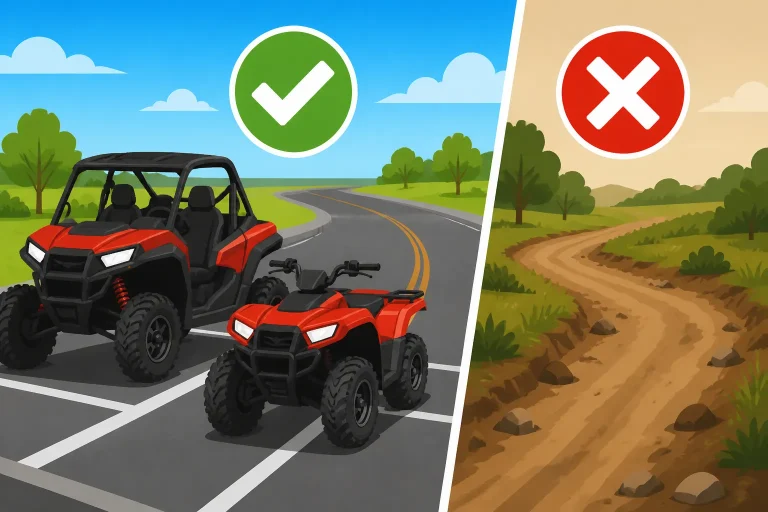
For eligible machines, a Kansas park permit may allow travel on designated roads and in parking areas within a state park. The ordinary operating window is from sunrise to sunset. It is a time restriction, not a general invitation to ride anywhere inside park boundaries.
In practical terms, plan to be on an authorized road only during daylight. A headlight, taillight, reflective gear, or a machine that is otherwise equipped for night travel does not, by itself, extend the permitted hours. If you expect a late return, arrange to finish riding and park the machine before sunset rather than relying on lights to make after-dark travel acceptable.
| Question | Practical answer |
|---|---|
| When may an eligible machine use an authorized park road? | During the permitted sunrise-to-sunset window |
| Does a park permit open trails? | No. Road and parking-area permission is not trail access |
| Can you ride after sunset if your machine has lights? | Do not assume so; equipment does not replace the park’s time rule |
| Does permission apply to every road in a park? | No. Follow signs and park-specific instructions |
| Can you ride from a campsite to a destination? | Only if the route is authorized and the trip stays within the operating window |
Sunrise and sunset shift throughout the year. Do not treat a familiar clock time as a safe cutoff for every visit. Check the day’s local sunrise and sunset times, allow a margin for parking and securing the machine, and follow any park instruction that is more restrictive.
The daylight limit matters even when the trip is short. A quick ride from a campsite to a boat ramp, parking lot, or another park area still needs to fit the permitted route and time. If sunset is close, walking or using a road-legal vehicle may be a better option than taking the off-road machine.
It also helps to separate the park rule from ordinary street rules. A state park permit does not make an ATV or UTV street legal outside the park, and it does not replace requirements that apply to public roads. For the broader distinction, see Kansas Park Permit vs Trail Permit and Having a Title Does Not Make an ATV Street Legal.
Where the permit allows you to ride
The permit is about limited access within a park, not general off-road riding. The safe assumption is that the machine must remain on roads and in parking areas open to that use. Trails, fields, shorelines, pedestrian paths, and closed or restricted areas are not automatically available just because they lie within the same park.
Signs and park instructions matter. A road may be open to ordinary traffic but posted against off-road machines; another route may have a specific restriction or access condition. Follow the signs at the entrance and along the route. If a sign is unclear, stop and ask park staff rather than guessing from the map or from what other visitors are doing.
A permit also does not grant access to roads beyond the park boundary. Once you leave park property, the rules may change by road type, local ordinance, and machine class. Before planning a route that connects park roads with public streets, review Kansas Rules for Riding a County Road and Kansas Rules for Riding a City Street. A city authorization, where one applies, is separate from park permission.
Roads and parking areas are not trails
Kansas does not sell a general state OHV trail pass that turns park land into an open riding network. State park road permission should not be confused with an off-road recreation area’s own access rules. A privately operated riding park can set its own trails, hours, fees, and equipment requirements; those rules do not carry over to state park property.
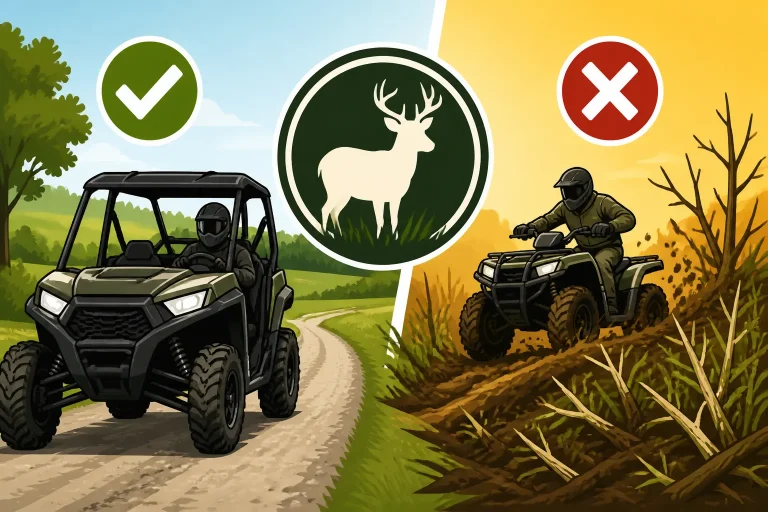
This distinction avoids a common planning mistake: seeing a road on a park map and assuming the nearby open space or trail is included. Stay on the route the park authorizes. Do not cut across grass, use a service track, or follow a path that appears to lead toward the lake unless the park permits that specific use.
For more context on the limited scope of park access, see Kansas Park Road Use Sunrise to Sunset, Machines Must Stay on Wildlife Department Roads, and Why Kansas Sells No Trail Pass at All. Wildlife-area road rules and state park rules are not interchangeable, so check the rules for the specific property you plan to visit.
A campsite-to-ramp trip still needs a route check
A short trip from a campsite to a boat ramp may seem like an obvious use for a UTV or golf cart, but the destination alone does not establish permission. Check whether the connecting road is open to the machine, whether signs limit access, and whether the trip will be completed before sunset. Do not use a pedestrian shortcut or shoreline route to avoid a longer road.
If staff have approved a particular route or a posted sign identifies an exception, stay within that exception. Approval for one road or purpose should not be read as permission to ride elsewhere in the park. For help thinking through this kind of trip, see Riding From Your Campsite to the Boat Ramp and Roads and Parking Areas Only.
How to plan a compliant park-road trip
A little checking before departure can prevent a frustrating conversation at the gate or a citation after the machine is unloaded. Use this sequence when planning a park-road trip:
- Identify the machine. Confirm whether it is an ATV, UTV, golf cart, or another type of vehicle. The class can affect which permit or park rule applies. A machine that looks similar to another may be treated differently under Kansas definitions. See Four Off-Road Classes Kansas Law Treats Differently if you are unsure how it is classified.
- Check the permit requirement and purchase process. Confirm whether your machine needs a park permit and how that park handles permits. Kansas park permits may be handled at park offices, and the process or current requirements should be confirmed with the park before travel. Buying an Unconventional Vehicle Permit at a Park Office explains what to ask.
- Ask which roads are open. Do not rely only on a general park map. Ask staff whether the intended road and destination are open to your vehicle type, and note any seasonal closures or posted restrictions.
- Check the daylight window. Look up local sunrise and sunset for the visit date. Set a turnaround time early enough to reach the parking area, secure the machine, and handle any delay before sunset.
- Plan a route that stays inside the rules. Keep to authorized roads and parking areas. Avoid shortcuts, trails, closed roads, and any route that would take the machine outside park property unless separate authorization applies.
- Carry proof and follow instructions. Keep the permit or other required documentation accessible. Obey posted speed limits, parking directions, and staff instructions. A permit is not a substitute for following other park rules.
Permit details, access conditions, and park operations can change. Confirm the current requirements directly with the park you intend to visit rather than relying on an old receipt, an online discussion, or another rider’s recollection. For a checklist of questions, see Calling a State Park Office Before You Load Up and Kansas Permit Questions Parks Hear.
Build in time for delays
The sunset cutoff is easiest to manage when it is part of the day’s plan rather than an afterthought. Allow time for slow traffic, a wrong turn, a stop at a crowded ramp, or a machine that needs attention. A route that is reasonable at midday can become a problem if the return leg begins near sunset.
For group rides, make sure everyone knows the planned turnaround time and the route back. A group can lose time waiting for a rider, helping with a mechanical issue, or gathering at a parking area. Keep the machine on an authorized road while regrouping; do not pull off onto grass or a trail simply because the group needs to stop.
A phone clock is useful, but it should not be the only planning tool. Cell service may be limited in some areas, and a phone battery can fail. Note the route and cutoff time before riding, and consider carrying an offline map or paper map. If you use a phone mount or navigation device, secure it so it does not distract the driver.
Choose visibility without confusing it with permission
A machine can still benefit from good visibility during daylight, especially on a shaded road, in dust, or near other vehicles. Use the machine’s required equipment and keep windshields, mirrors, and lights in working condition where fitted. Wear clothing that makes riders easy to see, and travel at a speed that leaves time to react to pedestrians, cyclists, and other park users.
Those precautions do not change the permitted operating hours. Lights and reflective clothing help others see you; they do not authorize after-dark travel. Likewise, possessing a permit does not override a closed-road sign or a staff direction to take another route.
Before taking a youth rider or passenger, check the rules for the machine and the park. A permit does not make an undersized machine suitable for a child, and it does not change passenger limits set by the manufacturer or applicable rules. See Kansas Rules for a Ten-Year-Old Rider and Kansas Rules for Passengers on a UTV for related considerations.
What to do when the rules are unclear
If the route, hours, or permit requirement is uncertain, pause before riding and ask park staff. Be specific: name the machine type, explain where you want to go, and ask which roads are authorized and what time you must be off them. A clear answer about a particular route is more useful than a general assumption that “park roads are open.”
If you encounter a sign that conflicts with what you understood, follow the sign and contact staff for clarification. Do not treat the absence of a sign as proof that a road is open. A permit is not a blanket exemption from closures, traffic controls, or property-specific restrictions.
If a trip cannot be completed within the permitted window, leave the machine parked and use another way to reach the destination. Do not continue after sunset simply because you are close to camp or because your machine has lights. A daylight rule is simplest to follow when the ride ends with time to spare.
For broader planning, What to Show at a Kansas State Park Gate covers what to check at entry, and Kansas Park Permit for a UTV addresses permit questions specific to that vehicle type. If you are visiting from outside Kansas, do not assume an out-of-state sticker or permit substitutes for Kansas requirements; confirm the park’s instructions before arrival.
Disclaimer
This article is for general informational purposes only and does not constitute professional advice. Laws, prices and regulations vary by location and change over time. Consult a qualified professional for guidance on your specific situation.