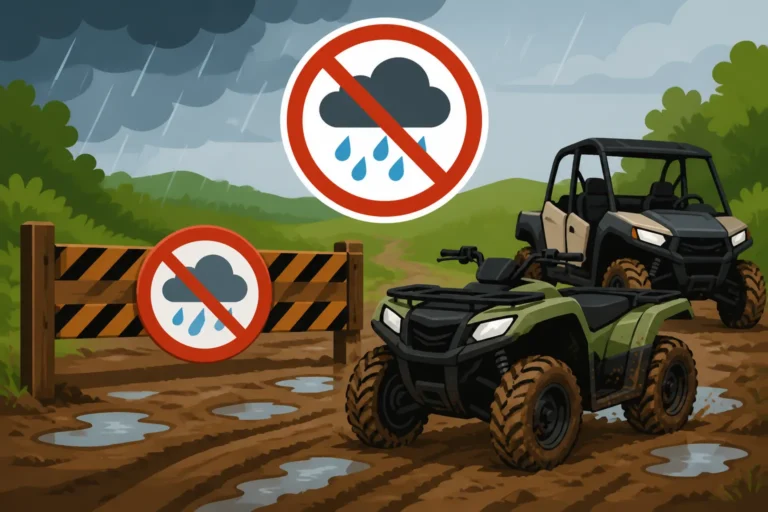
Perry Lake Spillway Riding Hours, Dawn to Dusk
Perry Lake Spillway riding is a daylight outing: plan to arrive after dawn and be off the trails by dusk. That sounds straightforward until you add the drive, unloading, changing weather, and a trail closure or muddy approach. This guide helps you plan a practical visit near Perry, Kansas, understand what “dawn to dusk” means for your day, and avoid common last-minute surprises.
What Dawn to Dusk Means at Perry Lake Spillway
Build your schedule around daylight
The riding window is tied to daylight, not to a convenient number of hours you can assume will stay the same throughout the year. Dawn comes earlier in summer and later in winter; dusk shifts in the opposite direction. So a ride that fits comfortably into a long summer day may need a much earlier start, or a shorter route, during a season with fewer daylight hours.
Treat the posted window as the time you need to be finished riding—not the time to start heading back toward the staging area. If you arrive near dusk, unload, gear up, and then set off, you may have little useful riding time left. Allow time to return, load your ATV or UTV, secure the trailer, and leave the area before dark.
A useful rule is to work backward from dusk. Decide when you want to be back at your vehicle, then subtract the time you expect to spend riding, taking breaks, and finding your way back. Add a cushion for slow sections, a wrong turn, or a machine that needs attention. That buffer matters more than squeezing in one extra loop.
Dawn and dusk change with the season
The phrase “dawn to dusk” does not give you a fixed opening and closing time for every visit. Before setting out, check the day’s sunrise and sunset for the Perry area and use them to shape your schedule. If your group is meeting from Topeka, Lawrence, or farther away, account for the drive too. An early departure can make a daylight ride feel relaxed; a late start can turn the whole day into a race against sunset.
The riding-area hours are also only one part of a trip plan. Weather, surface conditions, maintenance work, or a temporary closure may affect access. Confirm the latest information from the land manager before loading up, especially if you are making a long drive or planning a group ride. The page [Perry Lake Spillway Riding Hours, Dawn to Dusk] is a useful starting point for understanding the daylight schedule, but it should not replace checking for current site notices.
| Planning detail | What to do | Why it helps |
|---|---|---|
| Sunrise and sunset | Check the times for the day of your visit | The usable riding window changes by season |
| Arrival time | Aim to arrive well before your planned first ride | Unloading and gearing up take longer than expected |
| Return time | Set a time to be back at the staging area before dusk | You need daylight for the ride back and loading |
| Site status | Check for closures or access notices before leaving | Conditions and access can change |
| Group pace | Plan around the slowest rider and machine | A group naturally moves more slowly than a solo rider |
Planning the Ride and Choosing a Route
Pick a route that fits your group
Not every rider wants the same kind of day. A first-time rider, a family group, and an experienced crew may have very different ideas about what counts as an enjoyable loop. Choose a route that matches the least experienced rider in your party, the machines being used, and the daylight you actually have—not the daylight you wish you had.
For a gentler introduction, look into [The Beginner Loop at Perry Lake Spillway]. A beginner-friendly route can help a new rider practice turning, braking, and maintaining a comfortable pace without feeling pressured to keep up with a group that is eager to cover more ground. Even on an easier loop, riders should be prepared for uneven surfaces, changing traction, and other trail users.
Before you head out, agree on a simple group plan. Decide who leads, who rides at the back, where you will regroup, and what everyone should do if the group gets separated. If one person needs to stop, the group should have a predictable way to pause rather than continuing until the rider is out of sight. On a short ride, that conversation may feel unnecessary. When someone takes a wrong turn or has a mechanical problem, it can save considerable confusion.
Check route information without treating a map as permission
A digital map can help with orientation and trip planning. Some riders use onX Offroad to review mapped routes before leaving home and to keep track of their position while riding. Use it as a planning aid, not as proof that every mapped line is open, legal, or suitable for your machine on the day you visit. A line on a screen cannot tell you whether a trail has recently been closed, washed out, or posted with a new restriction.
Compare your route plan with information from the land manager and signs at the riding area. Follow posted directions even if a phone map suggests another way through. If your group’s cell service is unreliable, download what you need ahead of time and consider carrying a paper map or writing down the route and key landmarks. This is especially helpful when different riders have different phones, battery levels, or mapping apps.
For a broader look at riding areas managed by the U.S. Army Corps of Engineers, see [Kansas Corps of Engineers Riding Areas]. As you plan the drive and the ride, [Kansas Trail Conditions Before You Tow] can also help you think through the practical question that matters most before departure: are conditions likely to make the trip worthwhile and safe?
Getting Ready for a Smooth Day
Prepare the machine and your gear
A short outing still deserves a basic pre-ride check. Look over tires, brakes, controls, lights, and visible fluid levels. Make sure the machine is appropriate for the route you intend to ride and that the load is secured for the drive. If you are bringing a UTV, check that everyone has a seat and restraint available; on an ATV, do not carry a passenger unless the machine was designed for one.
Bring water, weather-appropriate layers, eye protection, and any personal protective equipment your group normally uses. Dust, wind, and changing temperatures can make a ride uncomfortable even when the forecast looks mild. A small first-aid kit, basic tools, and a charged phone are sensible additions. Keep essentials attached to the machine or packed securely so that a loose item cannot interfere with controls or become a trail hazard.
If you use onX Offroad, prepare the map before you arrive rather than relying on a strong connection at the trailhead. Check that your device is charged and that the app is set up for your trip. Then keep the phone secure while riding and stop in a safe place if you need to consult it. Navigation should never distract the operator or encourage anyone to leave a marked route.
Be realistic about access and parking
A plan can fall apart before the first trail if your vehicle and trailer do not have a workable place to park. Look for current information about access, parking, and any posted restrictions before you leave. Do not assume that a convenient-looking shoulder or nearby service road is available for staging. Follow signs and keep access clear for other visitors and authorized vehicles.
If you are bringing a group, coordinate arrival times and unloading so that everyone is not trying to use the same small space at once. Decide where to meet, who is carrying the basic tools, and who will confirm that all riders are present before the group leaves the staging area. A quick head count before departure and again at the end of the ride can prevent an avoidable search for a missing rider or vehicle.
For a wider view of what to check when planning a day trip, [Kansas Trailheads With Trailer Parking] is a useful related topic. Also consider reading [Kansas Trails for Beginners] if you are comparing Perry Lake Spillway with other options for newer riders. A route that looks easy on a map may still be a poor match if it is too long for your group’s experience or the day’s available daylight.
Riding Responsibly and Handling Changes
Stay on designated routes and respect other visitors
Use the marked routes and obey posted signs. Cutting around a muddy patch or taking an unofficial shortcut can damage the surface and create problems for other riders. Conditions may also vary within a short distance: a dry section can lead into loose soil, standing water, or a rough patch that takes longer to cross than expected.
Ride at a pace that gives you room to respond to other users and changing terrain. Keep enough distance to avoid dust and to see what the rider ahead is doing. When you stop, pull well out of the way rather than blocking the route. A little courtesy makes the area more enjoyable for everyone, including people who are moving more slowly or learning how their machine handles.
The practical advice in [Kansas Trail Etiquette Locals Expect] applies here: be predictable, leave room for others, and avoid turning a shared riding area into a race. If the surface has recently been soaked, do not assume that getting through a wet section is harmless. [Kansas Trail Closures After Rain] offers more context on why weather-related closures and trail conditions deserve attention before you ride.
Have a backup plan for weather, delays, and closures
A daylight schedule can be disrupted by a thunderstorm, a mechanical issue, a slower-than-expected group, or a trail that is not passable. Decide in advance what your group will do if you need to shorten the ride. Choose a turnaround point and agree that anyone can call for an earlier return if conditions feel unsafe or the schedule is slipping.
If a route is closed or a sign directs you away from your planned path, follow that instruction and use an authorized alternative. Do not try to work around a closure because you have already driven to the area or because your map still displays a route. If the closure leaves too little time for a worthwhile ride, consider making it a scouting trip or heading home rather than forcing the original plan.
When you return, allow enough time to load in daylight and check that everyone and everything is accounted for. Look over the machines for obvious damage, secure straps, and make sure loose gear is packed away before driving. Those few minutes are easy to overlook after a fun ride, but they help keep the trip from ending with a lost item, a loose load, or a rushed departure in the dark.
Perry Lake Spillway can make for a rewarding daylight ride when you plan around the actual dawn-to-dusk window, choose a route that suits your group, and check access and conditions before you go. Build in more time than you think you need, stay on designated routes, and be ready to change plans if the day does not unfold as expected.
Disclaimer
This article is for general informational purposes only and does not constitute professional advice. Laws, prices and regulations vary by location and change over time. Consult a qualified professional for guidance on your specific situation.