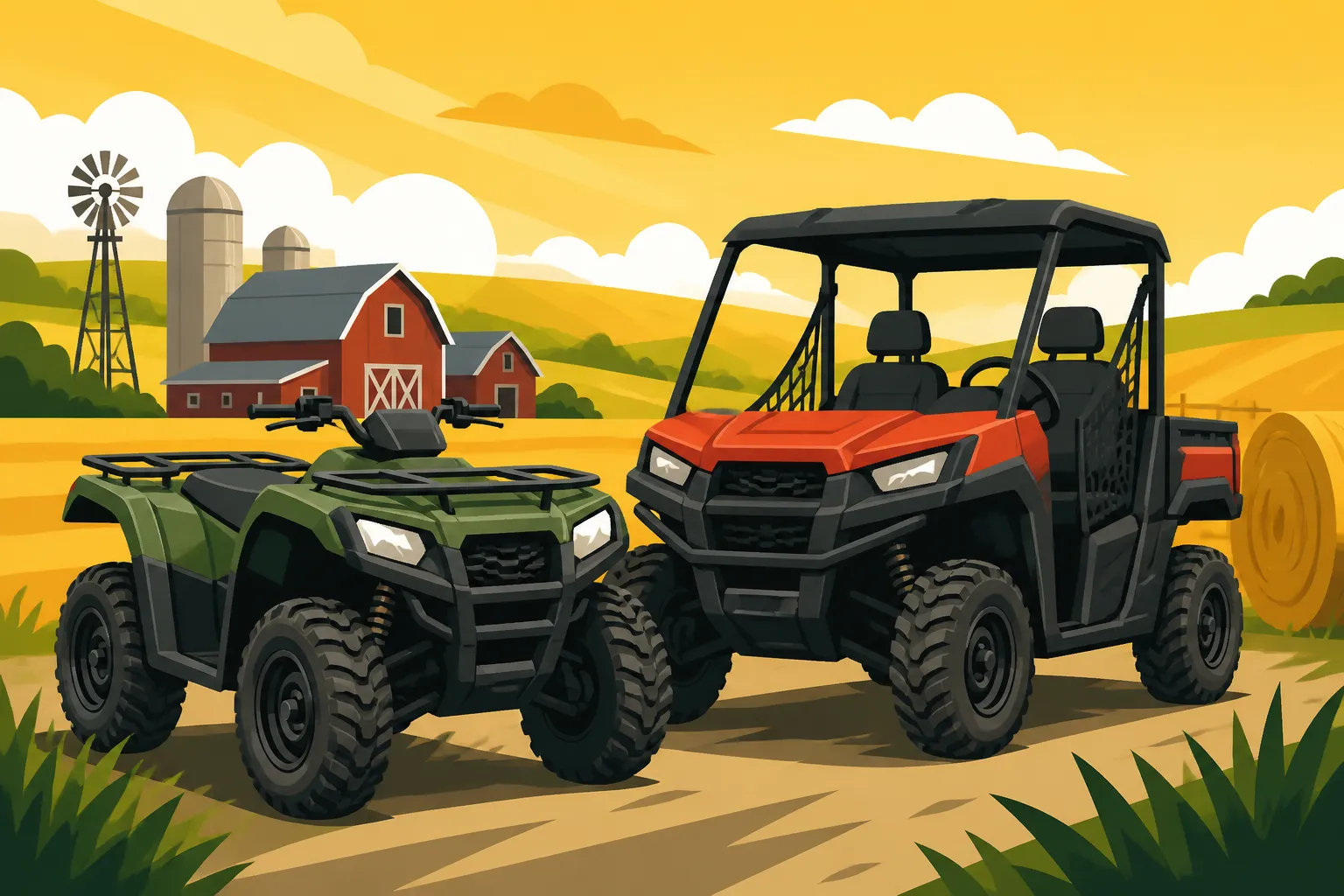
Kansas Machines Used Only on a Farm
Using an ATV or UTV on a Kansas farm or ranch often feels like it should be exempt from all the typical rules about titles and tags. After all, it's a tool, not a toy! But many folks are unsure about exactly what paperwork, if any, is actually needed for these workhorses, leading to confusion and potential issues down the line. This guide will clarify the specific requirements and exemptions for ATVs and UTVs used exclusively on a farm in Kansas, helping you understand what you truly need to know.
Understanding the "Farm Machine" Exemption in Kansas
Kansas law provides specific allowances for equipment used predominantly in agricultural operations, and ATVs and UTVs are no exception. It's not a blanket pass, though, so understanding the nuances is key.
What Exactly Qualifies as a Farm Machine?
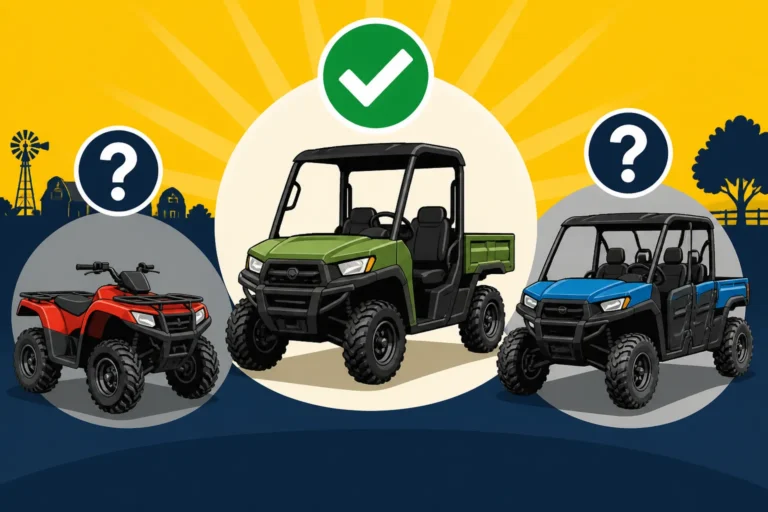
For an ATV or UTV to fall under the "farm machine" umbrella for exemption purposes, its primary use must be related to farming, ranching, or other recognized agricultural activities. This means the machine is predominantly used to support the farm's operations – think checking livestock, hauling tools or feed, spraying fields, or traveling across your property to manage crops or fences. It's about the function and intent, not just the location. If your side-by-side spends its days transporting supplies for planting, moving bales of hay, or inspecting irrigation systems across your fields, it typically qualifies.
However, if that same machine is regularly used for recreational trail riding with friends on weekends, even if those trails are on your private property, it might start blurring the lines. The "primarily used" aspect is important. The state acknowledges that these machines are vital tools for agricultural producers, and the exemptions aim to ease the burden on farmers who are using them as essential equipment for their livelihood. This distinction can save you time and money, but it requires an honest assessment of how your machine is truly utilized.
The Difference Between "Exempt" and "Untitled"
This is often where the biggest misunderstanding arises. When we talk about a farm ATV or UTV being "exempt" in Kansas, it primarily refers to its exemption from registration and, in many cases, from the requirement to obtain a state-issued nonhighway title if the machine never leaves private farm property. Kansas is unique in that [Kansas Has No OHV Registration] for any off-road vehicle, so that's a consistent factor across the board for all ATVs and UTVs.
The titling part is trickier. For machines used exclusively on your private farm land and never on public roads, Kansas law generally doesn't require a nonhighway title. You are exempt from the legal obligation to get one. This saves you a trip to the county treasurer's office and the associated [Kansas ATV Title Cost]. However, "exempt" does not mean "lacking any proof of ownership." You absolutely still need documents like a solid bill of sale or the Manufacturer's Certificate of Origin (MCO) to prove you own the machine. This documentation is your protection against theft and crucial for any future resale. Don't confuse the exemption from a state title with an exemption from all paperwork.
Why This Exemption Matters for Farmers
The farm machine exemption is a huge relief for agricultural operations. It acknowledges that requiring a title for every tractor, sprayer, and ATV used strictly as a tool on private land would create an unnecessary bureaucratic burden and financial strain on farmers. These machines are integral to daily operations, not primarily vehicles that interact with public roadways or are regularly bought and sold in typical consumer markets.
This exemption allows farmers to acquire and use their essential equipment without the additional administrative steps and fees associated with titling. It streamlines the process, letting you focus on the important work of farming and ranching. However, even with this exemption, retaining robust documentation of your ownership, like a detailed bill of sale or the original MCO, is a critical best practice. These documents are your legal proof of purchase and can be invaluable in case of theft or for substantiating ownership if you ever decide to sell the machine. For instance, a well-drafted bill of sale, perhaps using a template from a service like LawDepot, can provide peace of mind even when a state title isn't required.
Titling Considerations for Farm-Used Machines
While many farm-used ATVs and UTVs can operate without a state title, there are specific situations where obtaining one becomes necessary or highly advisable. Ignoring these could lead to headaches later on.
When a Farm Machine Might Still Need a Title
Despite the farm exemption, your ATV or UTV will need a title if it ever leaves your private farm property to operate on public roads. This isn't just about cruising into town; even crossing a county road to get to an adjacent field or driving a short distance down the shoulder to access another part of your property typically triggers the requirement for a [Kansas Nonhighway Title Explained]. The moment your machine touches a public right-of-way, even briefly, it usually falls under the same titling rules as recreational off-road vehicles.
Another common scenario is when you decide to sell the machine. While you may have used it for years on the farm without a title, a buyer, especially one who intends to use it recreationally or in a way that involves public roads, will almost certainly require a title. Trying to obtain a title for a machine that has never been titled, especially an older one, can be a complex and time-consuming process involving affidavits and additional scrutiny at the county treasurer's office. Having a clean, existing title in your name makes the sale much smoother and quicker, expanding your pool of potential buyers.
The Nonhighway Title for Farm Machines
If your farm machine does need a title, it will be a "nonhighway vehicle" title. This distinct classification is specifically for machines like ATVs and UTVs, establishing legal ownership without implying street legality. It clearly identifies your machine as an off-road vehicle, differentiating it from a car or truck that's intended for public road use. [Why an ATV Is Titled as a Nonhighway Vehicle] is a common question, and it's because the state wants to track ownership for these machines even if they aren't road-registered.
To get a nonhighway title, you'll visit your local [Kansas County Treasurer Offices]. You'll typically need the Manufacturer's Certificate of Origin (MCO) if it's a new purchase, or the properly assigned title from the previous owner if you bought it used. If you bought a used machine without a title, you might need to go through a more involved process, potentially submitting a [Kansas Nonhighway Affidavits] along with a detailed bill of sale to prove your ownership. While it can feel like an extra step, having a nonhighway title provides legal certainty, simplifies future sales, and helps recover your machine if it's stolen.
Paperwork You'll Need Even If Exempt
Even if your ATV or UTV is exclusively used on private farm land and doesn't require a nonhighway title, possessing crucial paperwork is paramount for your protection and peace of mind. The most vital document you need is a comprehensive bill of sale. This isn't just a casual receipt; it's your legal proof of purchase, documenting the transfer of ownership from the seller to you. It's essential for several reasons:
First, in the unfortunate event that your machine is stolen, law enforcement will need proof of ownership to help recover it and return it to you. Without a bill of sale, it can be incredibly difficult to prove the machine is yours. Second, if you ever decide to sell the machine, a clear bill of sale facilitates the transaction, especially if the new owner plans to title it. Third, it protects you from potential disputes with the previous owner and clarifies the terms of the sale.
If you purchased the machine new, carefully retain the Manufacturer's Certificate of Origin (MCO). This document is the "birth certificate" for your ATV or UTV and is essential if you ever decide to title it in the future. For any used purchase, ensure your bill of sale includes the Vehicle Identification Number (VIN), make, model, year, purchase price, date of sale, and the full names and contact information of both the buyer and seller. Creating a detailed and legally sound bill of sale, perhaps using a template from a trusted source like LawDepot, can prevent many potential headaches down the road. [Kansas Title Without a Bill of Sale] can be a major problem, so don't overlook this crucial piece of documentation.
Navigating Road Use for Farm ATVs and UTVs
While the primary use of farm machines is off-road, Kansas law does make specific provisions for agricultural vehicles to use public roadways under certain conditions. Understanding these rules is critical for compliance and safety.
Permitted Road Use for Agricultural Purposes
Kansas law specifically acknowledges the necessity for farmers to use ATVs and UTVs on public roads for bona fide agricultural purposes. This isn't a license for general road use, but rather a narrow allowance to facilitate farming operations. Typically, an ATV or UTV can be operated on a public road to transport agricultural products, machinery, or supplies to or from land that is part of a farming operation. This includes traveling short distances along roads to get from one field to another, or even crossing them. [Kansas Agricultural Trips on a 65 mph Road] describes how this applies to various road types.
However, these trips must be strictly for agricultural purposes. Using your farm machine to run into town for a non-farm errand or for recreational cruising would not fall under this exemption. Additionally, the operator must possess a valid driver's license. While [Kansas Machines Exempt From Registration], this exception doesn't negate the need for a driver's license when on public roads. It's important to remember that these allowances are designed to support farming, not to turn your ATV or UTV into a street-legal vehicle for general transport.
Crossing Highways vs. Riding Down Them
A crucial distinction for farmers in Kansas is the difference between crossing a public highway and riding down it. Kansas law generally allows ATVs and UTVs to cross a public highway, including state and federal routes, at approximately a 90-degree angle to access different parcels of land within a farming operation. This must be done safely, yielding to all oncoming traffic, and with due regard for visibility. [Crossing a State Highway in Kansas] explicitly addresses this common need for farmers.
However, traveling along a state or federal highway for any significant distance is typically prohibited, even for agricultural purposes, unless specifically allowed by a unique local ordinance (which is rare for state/federal roads) or if the machine qualifies as a Work-Site Utility Vehicle (WSUV), which has its own specific set of rules. For county and township roads, the agricultural exemption is usually more flexible, allowing for short stretches of travel along the roadway to connect fields. [Kansas Rules for Riding a County Road] are more lenient than state highways. Always exercise extreme caution, use appropriate lighting, and be highly visible when operating on any public roadway, regardless of the exemption.
Important Safety and Equipment Considerations
Even when operating under the agricultural exemption, safety on public roads is paramount. Your ATV or UTV should be equipped for maximum visibility, especially if you're out near dawn, dusk, or in adverse weather. This means having functioning headlights, taillights, and often a slow-moving vehicle (SMV) emblem mounted prominently on the rear if your speed is below 25 mph. While Kansas does not have a universal helmet law for ATVs, wearing a helmet and eye protection when operating on or near public roads is a very smart decision that could save your life. [Kansas Lighting Rules After Sunset] outlines the requirements for machines operating after dark.
Beyond lighting, ensure your machine is in good working order, with properly inflated tires suitable for both off-road and brief on-road use. It's also wise to carry your driver's license, proof of ownership (like your bill of sale or nonhighway title), and proof of insurance. While insurance for farm machines may not be universally mandated by the state, having liability coverage is a responsible choice that protects you financially in case of an accident involving another party on a public roadway. Check with your farm insurance provider to understand your coverage options for ATVs and UTVs used in agricultural operations.
Common Misconceptions and Best Practices
Navigating the rules for farm-used ATVs and UTVs in Kansas can be confusing, leading to common misconceptions. Understanding these and adopting best practices will save you time, money, and potential legal issues.
The Myth of "No Paperwork Needed"
One of the most persistent and potentially problematic myths surrounding farm ATVs and UTVs in Kansas is the belief that "no paperwork is needed" at all. While it's true that machines used exclusively on private farm property are often exempt from a state-issued nonhighway title and registration, this absolutely does not mean you can operate without any form of documentation. As discussed, a robust bill of sale is your primary proof of ownership.
Imagine this scenario: your ATV, which you've used for years on your farm without a title, is stolen. When you report it to the sheriff, they'll ask for proof of ownership. Without a bill of sale, it becomes incredibly difficult to prove it's yours, hindering recovery efforts. Furthermore, if you ever decide to sell the machine, a lack of documentation will deter buyers and significantly reduce its resale value. Even if you're simply using a handwritten bill of sale, ensure it includes all critical details: the Vehicle Identification Number (VIN), make, model, year, names and contact information of both buyer and seller, and the purchase price and date. For a more formal and legally sound document, considering a template from a service like LawDepot can provide an extra layer of protection. Don't fall for the "no paperwork" myth; it leaves you vulnerable.
Protecting Your Investment with Proper Documentation
Whether your farm machine has a nonhighway title or simply a bill of sale, treating these documents with the same care as your vehicle titles or property deeds is a crucial best practice. If you have an MCO for a newly purchased machine that you haven't titled (because it stays on the farm), keep it secured with other vital farm records. This document is the original proof of the machine's existence and ownership chain.
Beyond the initial proof of purchase, consider keeping meticulous records of all major maintenance, repairs, and any significant upgrades or accessories. These records not only help you track the machine's history and ensure timely servicing but also substantiate its condition and value. This can be incredibly beneficial in an insurance claim, during a potential sale, or if you ever need to prove the machine's operational status. A well-organized folder, whether physical or digital, containing all relevant paperwork for your farm ATV or UTV is a smart investment in protecting your asset and simplifying any future interactions involving the machine. This documentation is truly your peace of mind.
What to Do When Selling a Farm Machine
The process of selling a farm-used ATV or UTV in Kansas largely depends on its titling status. If your machine does have a nonhighway title, the process is quite straightforward. You, as the seller, will sign the title over to the new owner in the designated areas. This involves providing the odometer reading (if applicable, though less common for ATVs/UTVs), your signature, and the date of sale. The new owner will then take this assigned title to their local county treasurer's office to [Kansas Title Transfer After a Sale] into their name. This is the cleanest and most universally accepted way to transfer ownership.
If your farm machine has never been titled because it qualified for the exclusive farm-use exemption, the sale process relies heavily on a robust bill of sale. In this scenario, you will provide the buyer with a detailed bill of sale, clearly stating that the machine is being sold without a state-issued title due to its historical farm-use exemption. It's often advisable to use a comprehensive template for this, such as one available through LawDepot, to ensure all legalities are covered. It's also a good practice to be transparent with the buyer about the machine's titling status upfront. Encourage them to contact their county treasurer's office to understand what they will need to title the machine, especially if their intended use will require it. Being open and providing thorough documentation ensures a smooth transaction and prevents future misunderstandings or complications for both parties.
| Use Case | Title Required (Kansas) | Registration Required (Kansas) | Essential Documentation (Even If Exempt) |
|---|---|---|---|
| Exclusively on Private Farm Land | No (Generally) | No | Detailed Bill of Sale, Manufacturer's Certificate of Origin (MCO) if new |
| Road Use for Agricultural Trips | Yes (Nonhighway Title) | No | Nonhighway Title, Valid Driver's License |
| Recreational Use (Any Public Area) | Yes (Nonhighway Title) | No | Nonhighway Title |
| Selling a Machine (Untitled Farm Use) | Highly Recommended | No | Robust Bill of Sale (for seller & buyer), MCO (if buyer wants to title) |
| Selling a Machine (With Nonhighway Title) | Yes (for Transfer) | No | Properly Assigned Nonhighway Title (from seller to buyer) |
Disclaimer
This article is for general informational purposes only and does not constitute professional advice. Laws, prices and regulations vary by location and change over time. Consult a qualified professional for guidance on your specific situation.