Machines Under 50 Inches Only
A “50-inch limit” can sound simple until you are standing beside your ATV with a tape measure, wondering whether your machine qualifies—or whether a narrow UTV is allowed at all. This guide explains what the restriction means at School Creek ORV Area, how to check your machine before towing, and what to confirm before riding there.
What the 50-inch limit means at School Creek
Width is a gatekeeping requirement, not a trail suggestion
At School Creek ORV Area near Milford Lake, the under-50-inch restriction is a practical way to keep wider machines off trails designed for narrower off-highway vehicles. It is not merely a suggestion to take care on tight sections. If your machine does not meet the area’s posted requirements, you should not assume that careful driving or a low-speed approach will make it acceptable.
That distinction matters because people often interpret a width limit as a description of the trail rather than an eligibility rule. They may think, “My UTV can fit between the trees, so it should be fine.” But a trail that looks passable at the entrance can narrow, turn sharply, or become uneven farther along. The restriction helps protect both riders and the trail system from vehicles that are too wide for the route.
For details specific to the site, read [Kansas's 50-Inch Limit at School Creek] and [Why 50 Inches Keeps Wide Machines Out of School Creek]. Then check the posted information at the access point before unloading. Rules or access conditions can change, and a rider’s recollection from a previous visit is not a substitute for current signs.
A narrow UTV is not automatically an allowed machine
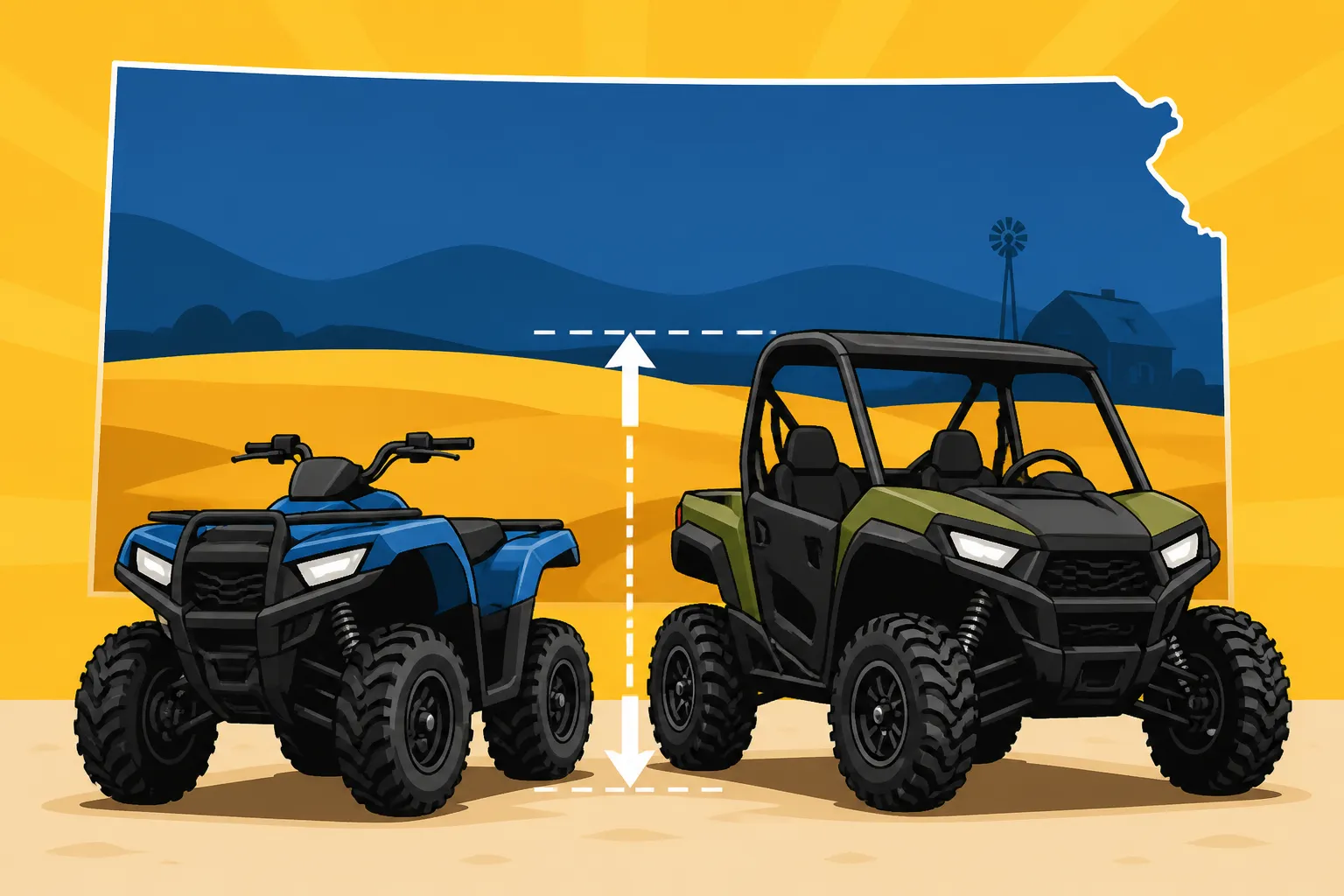
The width requirement is only one part of the question. School Creek is described as an area for dirt bikes and quads, so a side-by-side or UTV may not be permitted even if it measures under 50 inches. In other words, “under the width limit” does not necessarily mean “approved for this riding area.”
This catches some owners off guard, especially people with compact utility machines. A small UTV can look closer in size to a larger ATV than to a full-width side-by-side, but the park’s permitted vehicle categories still matter. Check both: whether your type of machine is allowed and whether it satisfies the width restriction.
If you are trying to determine how Kansas separates these machine types, [Kansas Trails That Allow Side-by-Sides] offers useful context for choosing a riding area that fits your vehicle. For School Creek specifically, compare your machine with the site’s posted eligibility rules rather than relying on the general name “ORV area.” [Dirt Bikes and Quads Only] is also relevant if you are deciding whether to bring a side-by-side.
| What to check | Why it matters | What to do before leaving home |
|---|---|---|
| Vehicle type | A machine can be narrow enough but still fall outside permitted categories | Confirm whether the area allows your specific type of ATV, dirt bike, or UTV |
| Overall width | The area’s restriction excludes machines that exceed its limit | Check the manufacturer’s specifications, then confirm how the site measures width |
| Current access rules | Signs, closures, and conditions can affect whether riding is allowed | Check official park or managing-agency information and posted notices |
| Trail and machine condition | Narrow, uneven routes can expose mechanical or handling problems | Inspect tires, steering, brakes, and protective equipment before unloading |
How to check your machine before you tow
Start with the exact model and the widest point
Find the manufacturer’s specifications for your exact model and year, not just a similar machine from the same product family. Model names can cover multiple trims, and accessories such as wider wheels, wheel spacers, aftermarket tires, or other modifications may affect the machine’s actual width. A specification for a stock model may not describe the ATV sitting in your garage.
Then look for the widest point on the machine. Depending on its setup, that may be the tires, fenders, or another component. Do not assume that a measurement from one side of the body to the other is the figure the riding area uses. If the posted rule does not explain its measurement method, call the managing office or ask at the entrance before riding.
A tape measure can help you spot an obvious issue, but avoid treating a quick driveway measurement as a final ruling. Measure on level ground, with the machine set up as you plan to ride it, and note any accessories that extend beyond the stock body. If your result is close to the limit, get clarification before making the trip. A small uncertainty is much easier to sort out at home than at a trailhead with a trailer full of equipment.
Check the machine category as carefully as the dimensions
Make a short pre-trip checklist with two separate questions: “Is this vehicle type permitted?” and “Does this machine meet the width requirement?” Keep the answers distinct. That makes it less likely that a favorable measurement will distract you from a category restriction.
For example, imagine a rider has a compact side-by-side listed at just under 50 inches wide. The machine may appear to meet the dimension requirement, but the rider still needs to verify whether side-by-sides are permitted at the area. Conversely, an ATV may be a permitted type but still be too wide because of its model, wheels, or modifications.
If the machine has been modified, bring the relevant model information and be ready to explain what has changed. You do not need to turn the gate conversation into a debate; the goal is to get a clear answer and avoid riding somewhere the machine is not allowed. When the answer is uncertain, the safer plan is to choose an area that explicitly allows your vehicle.
Planning a School Creek ride with fewer surprises
Confirm access, parking, and conditions before departure
Width is only one part of a successful trip. Before driving to School Creek, confirm that the riding area is open and that the route you intend to use is available. Weather can affect access and trail conditions, while temporary closures or site notices can change plans. A quick check before loading can save a long drive and the frustration of arriving to find that riding is not possible.
Think about the whole trip, not just the trail. Make sure your trailer and tow vehicle can handle the route, that your machine is secured properly, and that you have basic tools and supplies for the day. If you are riding with friends, have everyone confirm their vehicle type and width ahead of time. One ineligible machine can complicate the group’s plans after everyone has already arrived.
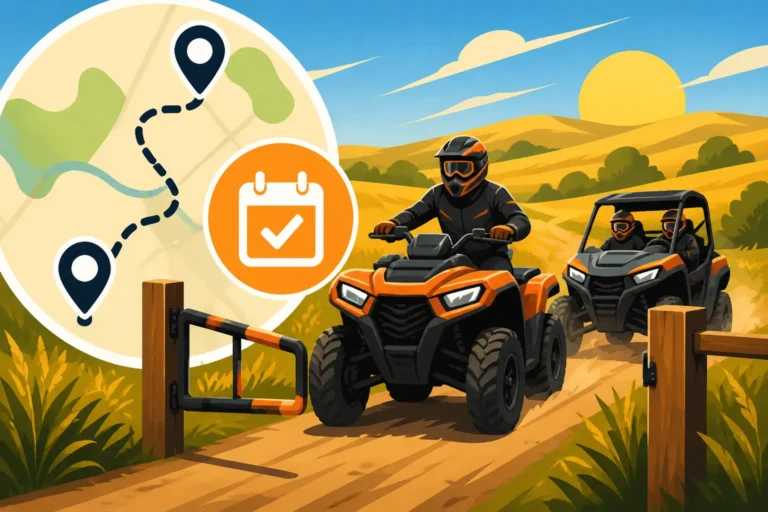
Digital maps can help with trip planning, but treat them as a navigation aid rather than proof that a particular road or trail is open to your vehicle. Riders may use onX Offroad to review mapped routes and orient themselves, then check official information and posted signs for access rules. A map line does not override a closure sign or a restriction on vehicle types.
Choose a backup area that fits your machine
A backup plan is especially helpful when you own a side-by-side or a modified ATV. If School Creek’s rules do not fit your machine, look for another Kansas riding area whose permitted vehicle types and size limits are clearly stated. [Kansas Trails That Allow Dirt Bikes] and [Kansas Trails Near Manhattan] can help you explore alternatives based on what you ride and where you are traveling from.
Compare more than the headline restriction. Check whether the area has routes suited to your experience level, whether it allows your machine’s width and type, and whether it offers the facilities you need for a day trip. A narrow ATV trail may be a poor fit for a wide UTV even if both areas are described broadly as off-road destinations.
onX Offroad can be useful as one part of that comparison when you are reviewing mapped areas and planning a route. Still, use the managing agency or riding area’s own information to confirm access, allowed vehicles, and current conditions. If you use an app, download or save what you need before you reach a spot with weak cell service. For more planning ideas, see [Kansas ATV Trails: Where You Can Actually Ride] and [Kansas Trail Conditions Before You Tow].
Common mistakes riders make about under-50-inch rules
Assuming the listed width settles every question
A manufacturer’s published width is a good starting point, but it may not answer how a site measures a modified machine. An ATV with aftermarket wheels or spacers can be wider than its original specification. A rider who checks only the product page could arrive with a machine that no longer matches the listed dimensions.
Another common mistake is measuring the tires but overlooking a wider accessory or body component. Because the exact measurement method may depend on the site’s rules, do not guess when your machine is near the limit. Ask the managing office how it interprets the rule and whether modifications affect eligibility.
It also helps to save the answer you receive, including the date and the person or office you contacted. This is not a substitute for posted rules, but it gives you a useful reference while planning. Reconfirm before the next trip rather than assuming the same conditions and rules will always apply.
Treating “ORV” as permission for every off-road vehicle
“ORV area” is a broad description, not a promise that every ATV, UTV, dirt bike, or other off-road machine can ride there. Restrictions can be based on vehicle type, width, trail design, or a combination of factors. That is why a narrow UTV and a similarly sized quad may not be treated the same way.
Before you invite a group, ask each rider for the machine’s exact type and model. If anyone has a side-by-side, confirm its eligibility directly instead of assuming it qualifies because it is compact. The same care applies to borrowed or rented machines: the person who owns it may know its model, but may not know the riding area’s rules.
If you are comparing destinations around Kansas, use the area’s own requirements as the deciding factor. onX Offroad may help you organize possible routes and locations, but the official site information is what you should rely on for machine eligibility. For broader trip planning and alternatives, [Best Kansas ATV Trails for Beginners] and [Kansas Trails That Allow Side-by-Sides] can help you continue your search.
Forgetting that trail fit and trail permission are different
A machine might physically fit down a trail and still not be allowed there. The reverse can also happen: an ATV may meet the vehicle rules but encounter a trail that is a poor match for its condition, its rider’s experience, or the day’s weather. Permission and suitability are related, but they are not interchangeable.
Before riding, look at the machine’s tires, brakes, steering, and protective equipment. Consider whether the route and terrain are appropriate for the least experienced rider in your group. If a trail is narrow, rocky, muddy, or unfamiliar, a slow and cautious approach is sensible—but it does not cancel a vehicle restriction.
A few minutes spent checking the machine category, measurement, access status, and trail conditions can prevent an expensive and disappointing trip. At School Creek, the safest assumption is straightforward: confirm that your vehicle type is allowed, verify how the under-50-inch rule applies to your machine, and follow the instructions posted at the riding area.
Disclaimer
This article is for general informational purposes only and does not constitute professional advice. Laws, prices and regulations vary by location and change over time. Consult a qualified professional for guidance on your specific situation.