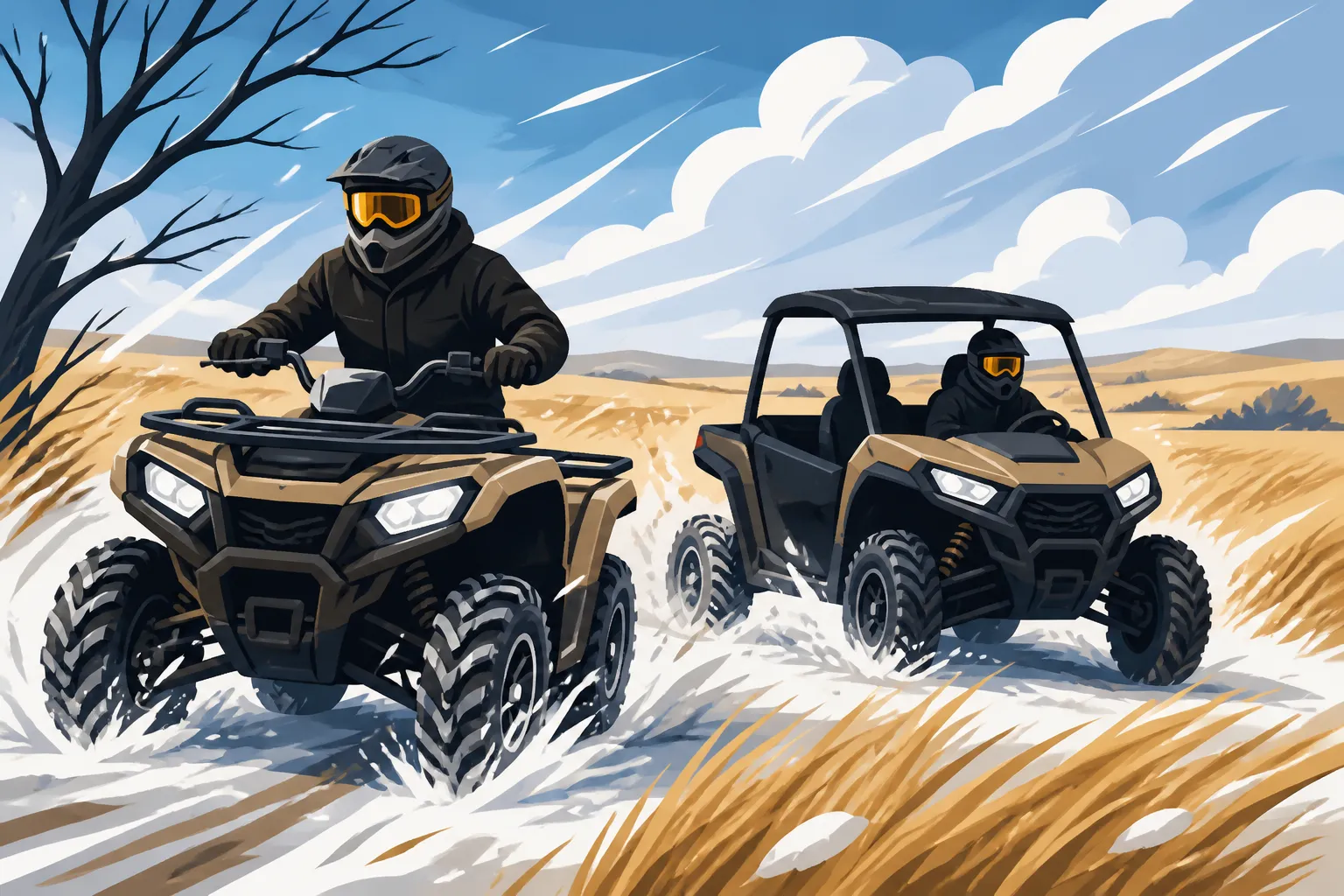
Kansas Riding in Winter Wind
A winter ride in Kansas can feel manageable at the trailhead and miserable an hour later, especially when open ground leaves you exposed to steady wind and blowing dust. This guide explains how to choose a suitable riding area, prepare your machine and group, and decide when the forecast makes staying home the smarter call.
How Kansas winter wind changes a ride
Wind affects more than comfort
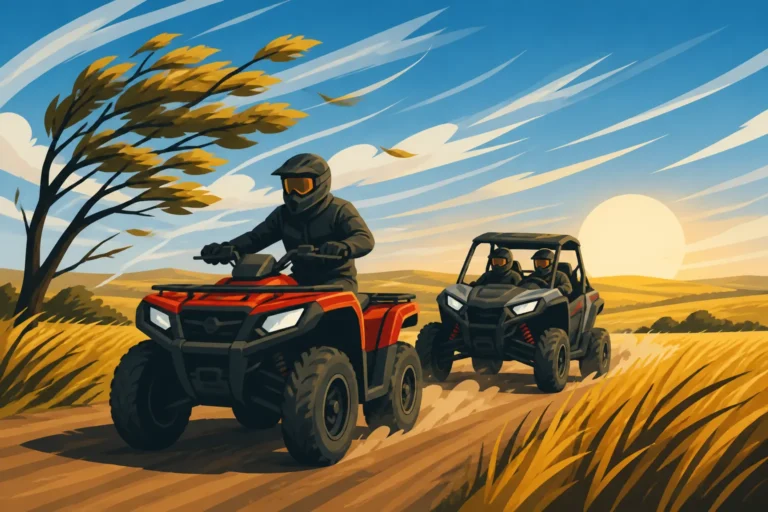
Cold air moving across your face and hands can make a ride feel much harsher than the thermometer suggests. Add the vibration and exposure of an ATV or UTV, and riders may become chilled faster than they expect. Cold hands can also make it harder to use controls, handle a phone, or manage a recovery strap if someone gets stuck.
Wind can affect the machine and the route, too. Dust may blow across exposed sections, branches can move or fall, and loose debris can obscure ruts or trail markers. After a dry spell, open stretches may be dusty; after precipitation, the same area may be muddy or slick. Conditions can vary considerably between a sheltered wooded trail and an exposed ridge or field edge.
The practical takeaway is to plan for the conditions you will experience while moving, not just the temperature you see before leaving home. If the ride involves long exposed stretches, build in warm-up breaks and make sure everyone has a way to signal the group if they need to stop.
Wind changes what makes a good riding area
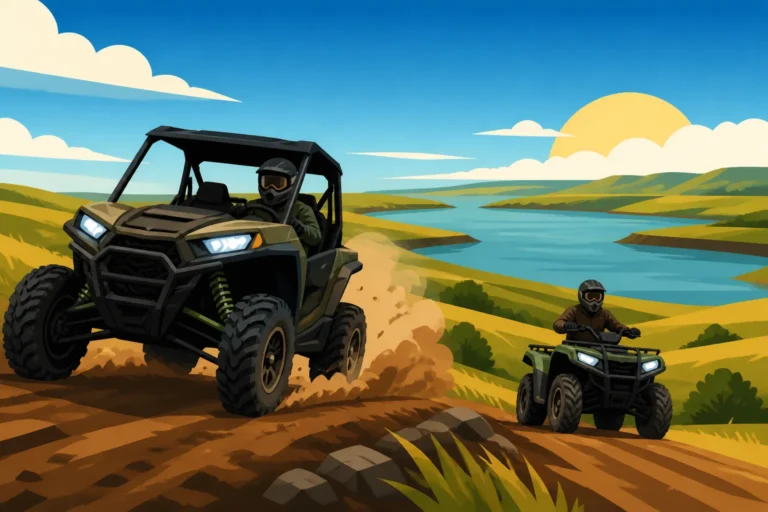
Kansas riding areas do not all offer the same shelter or exposure. A route with wooded sections may provide some protection from a strong crosswind, while broad open terrain can leave riders exposed for much of the day. Terrain, trail layout, vegetation, and recent weather all matter. A location that feels comfortable on a calm afternoon may be unpleasant in a stiff winter wind.
Before you load up, check whether the riding area is open and whether its trails are suitable for your machine and conditions. Areas such as Tuttle Creek ORV Area near Randolph, School Creek ORV Area, and Kansas Rocks Recreation Park have different terrain and rules. Do not assume that a familiar area will have the same access, trail conditions, or operating arrangements in winter. The guide to [Kansas Trail Conditions Before You Tow] can help you make a more informed go-or-no-go check.
A mapping app such as onX Offroad can help you review your planned route and identify where it may pass through open or more sheltered terrain. Treat any map as a planning aid rather than a guarantee that a route is open, passable, or appropriate that day. Confirm access and conditions with the riding area before driving a long distance.
Decide whether the forecast fits your group
There is no single wind number that makes every Kansas ride unsafe. The decision depends on temperature, gusts, exposure, the experience of the riders, and how far the group would be from shelter or help. A confident adult rider on a short, sheltered route may be comfortable in conditions that would be a poor fit for a child or a new rider on an exposed loop.
Use this simple planning table as a starting point, not a substitute for checking the local forecast and park rules:
| Conditions to consider | What they can mean on a ride | A sensible response |
|---|---|---|
| Low temperature with steady wind | Faster chilling and cold hands | Shorten exposed sections and schedule warm-up stops |
| Strong or unpredictable gusts | More difficulty controlling or loading a machine | Reconsider the trip, especially with a trailer or inexperienced riders |
| Blowing dust or loose debris | Reduced visibility and eye irritation | Use eye protection and avoid riding if you cannot see the route clearly |
| Recent rain, snow, or freeze-thaw conditions | Mud, slick spots, or changing traction | Check closures and avoid creating damage on vulnerable trails |
| Limited cell coverage | Harder to contact others if plans change | Share the itinerary and carry an offline map and backup plan |
If the forecast looks marginal, make a shorter ride the default rather than treating the planned route as something the group must finish. Agree before unloading that anyone can call for a turnaround without being pressured to keep going.
Prepare your machine and gear for a cold, windy day
Dress for stops as well as riding
It is easy to dress for the first few minutes and forget what happens when the group stops to regroup, clear a route, or help someone with a minor problem. Wear layers that let you adjust for movement and breaks. A wind-resistant outer layer, warm gloves, and eye protection can make a major difference on an exposed ride. Keep an additional dry layer in a bag or vehicle in case clothing gets damp.
Protect your eyes from dust, grit, and cold air. A helmet with a suitable shield or properly fitted goggles can help, but check that your chosen setup does not fog badly when you slow down. A neck covering can reduce exposure, provided it fits safely and does not interfere with your helmet or controls.
Children and newer riders may need more frequent checks. Ask whether their hands and feet are warm, whether they can comfortably operate the controls, and whether they want a break. Do not wait for someone to become visibly miserable before responding. For broader seasonal planning, [Kansas Riding Season Month by Month] offers context for thinking through how weather affects different times of year.
Check cold-weather basics before starting out
Cold conditions can make a machine feel different from the way it behaves on a mild day. Follow the owner’s manual for starting and operating procedures, and give the machine time to warm as directed. Before the ride, check tires, brakes, lights, steering, and fuel or battery condition. Look for loose cargo and make sure any windshield, handguards, or accessories are secured as intended.
A pre-ride inspection is particularly useful when the machine has been sitting through winter. Look for signs of damage, low tire pressure, leaks, or a weak battery. Confirm that your lights work even if you plan to return well before sunset; changing conditions or a delayed ride can make them important. Carry basic tools and recovery equipment appropriate to the machine and route, and make sure everyone knows where it is stored.
Avoid assuming that an accessory makes a machine safe in every condition. A windshield may reduce wind on the rider but can also change how the machine feels in gusts. A roof, cargo, or other equipment may affect exposure or handling. If the wind is strong enough that you are worried about keeping control, the safer answer is to postpone rather than rely on add-ons.
Plan for maps and communication
Winter weather is a good reason to make your route easy to explain. Tell someone who is not riding where you are going, which riding area you expect to use, and when you plan to check in. If your route or timing changes, update them when you have service.
Cell coverage can vary across rural Kansas, so do not depend on a live map alone. Download or otherwise prepare the route information you need before leaving service. onX Offroad may be useful for reviewing routes and keeping mapping information available offline, but it should sit alongside—not replace—posted signs, official area information, and local instructions. A paper map can be a useful backup where a phone battery runs down or coverage drops; see [Carrying a Paper Map Where Cell Service Drops] for more on that approach.
Before heading out, identify a meeting point and a simple regrouping plan. If riders become separated in wind or dust, having a clear plan is safer than expecting everyone to follow a phone signal or guess which turn the group took.
Plan the route, trailer trip, and group carefully
Choose a route that leaves room to turn around
A winter route should match the least experienced rider and the most exposed section, not just the most capable machine. Consider a shorter loop with easy exits rather than committing to a long route far from the parking area. If the wind picks up, someone feels chilled, or the trail becomes hard to see, you can return without turning the day into a difficult recovery.
Ask the riding area about current access, machine restrictions, and trail conditions before you go. Some areas may have limits on machine width or trail use, and not every riding area is open or suitable under every condition. [Kansas Trails Open Year-Round] is a useful topic to explore, but the phrase “year-round” should not be treated as a promise that every trail is open on a particular winter day.
A map can help you compare route options and estimate how exposed they might be, but it cannot tell you whether a gate is closed or a trail has changed after weather. Use onX Offroad or another planning tool to prepare your route, then confirm the details with the area itself. If you are unsure whether a section is passable, choose a route that keeps the group near a safe return point.
Take trailer travel seriously in crosswinds
The ride begins before the machines reach the trailhead. Crosswinds can make towing more demanding, especially on open stretches of highway where there is little shelter. Secure the machines and loose gear, check the trailer and hitch, and follow the towing vehicle and trailer manufacturers’ guidance. Do not let a tightly planned schedule push you into driving when conditions feel difficult to manage.
A trailer that is loaded unevenly or has poorly secured cargo can create extra stress when gusts hit. Check tie-downs before departure and again after a short initial drive. Leave additional time so you are not tempted to rush. If wind makes the trailer feel unstable, find a safe place to stop and reassess instead of trying to make up time.
This is especially worth considering on long drives across open parts of western Kansas, where a short local forecast may not reflect conditions along the whole route. For more trip-planning considerations, see [Hauling a Trailer Across Western Kansas in the Wind]. If the towing leg already feels unsafe, there is little benefit in continuing to a ride that may also be unpleasant.
Set group rules before the first mile
A group ride can become stressful when everyone has a different idea of what counts as “too windy” or how long to wait at a stop. Agree on a few basics before starting: the lead and sweep riders, the regrouping points, the expected ride length, and the signal for stopping or turning back. Keep the pace comfortable and leave enough space between machines to manage dust and sudden stops.
Make sure every rider knows how to communicate if they need assistance. A simple hand signal or a planned stop can work when everyone can see one another, but have a backup for reduced visibility or a separated group. The lead rider should avoid leaving a less experienced rider behind, and the group should stop somewhere safe rather than blocking a trail or access route.
Good group habits matter even more when riders are cold or tired. Take breaks before fatigue builds, check that everyone is still comfortable, and keep the route flexible. [Kansas Trail Etiquette Locals Expect] covers broader trail-sharing practices that are just as useful during a winter outing.
Make a clear go-or-no-go decision
Use a simple check before loading
A quick decision process can prevent a long drive to a ride that no one enjoys. Check the forecast for the riding area and the route there, confirm that the area is open, and consider the group’s experience and gear. Ask whether riders would still be comfortable if the wind increased or the temperature felt colder than expected. If the honest answer is no, shorten the plan or reschedule.
Also consider the return trip. Conditions can change during the day, and a late finish can mean colder temperatures and reduced daylight. Build a time buffer rather than planning to reach the trailhead just before closing or sunset. If the park or riding area has specific hours, check them directly before setting out.
Use the same caution after a storm or freeze-thaw cycle. Wind is not the only winter hazard: mud, ice, standing water, and damaged trails can change what is safe or permitted. Check [Kansas Trail Closures After Rain] and contact the area when conditions are unclear. Respect closures even if the trail appears rideable; using a closed or vulnerable route can damage it and create problems for other riders.
Know when staying home is the best plan
Postponing can feel disappointing, especially after preparing the machines and coordinating a group. But there is a meaningful difference between a brisk day that calls for extra layers and a day when wind, visibility, or trailer handling makes the trip unreasonable. If riders cannot stay warm, the route is hard to see, or the trailer feels difficult to control, do not treat determination as a safety plan.
You can still use the day productively. Check equipment, charge navigation devices, review the route, or make a shorter local outing another time when conditions are better. If you do ride, keep the plan modest, remain willing to turn around, and let the conditions—not the original itinerary—set the pace.
Winter riding in Kansas can be rewarding when the route, machine, and group fit the day. Prepare for wind at the trailhead and on the road, check access before you leave, and keep enough flexibility to call the ride early. The goal is not to finish every mile; it is to get everyone and every machine home safely.
Disclaimer
This article is for general informational purposes only and does not constitute professional advice. Laws, prices and regulations vary by location and change over time. Consult a qualified professional for guidance on your specific situation.