Kansas Cities That Authorize ATV Street Use
It's incredibly frustrating, isn't it? You buy an ATV or UTV with visions of enjoying the Kansas landscape, only to quickly realize that navigating the rules for riding on public roads feels like deciphering ancient hieroglyphs. Most people assume these machines are strictly for off-road fun, but what if you just want to run to the corner store, access a hunting spot, or even visit a neighbor down the street without loading your machine onto a trailer? This comprehensive guide will cut through the confusion and illuminate exactly which Kansas cities have opened their streets to ATVs and UTVs, and precisely what you need to do to ride legally within those specific city limits.
Understanding the Default Ban on Kansas Roads
Let's get one thing straight right from the start: Kansas state law generally frowns upon ATVs and UTVs on public roads. This isn't just a suggestion; it's the rule, and it's where much of the confusion and frustration for riders begins. You've invested in a machine, you see others on gravel roads, and you think, "Why can't I just take this to town?" The answer lies in the fundamental legal definitions and a cautious approach to public safety.
The Statewide Rule and Its Impact
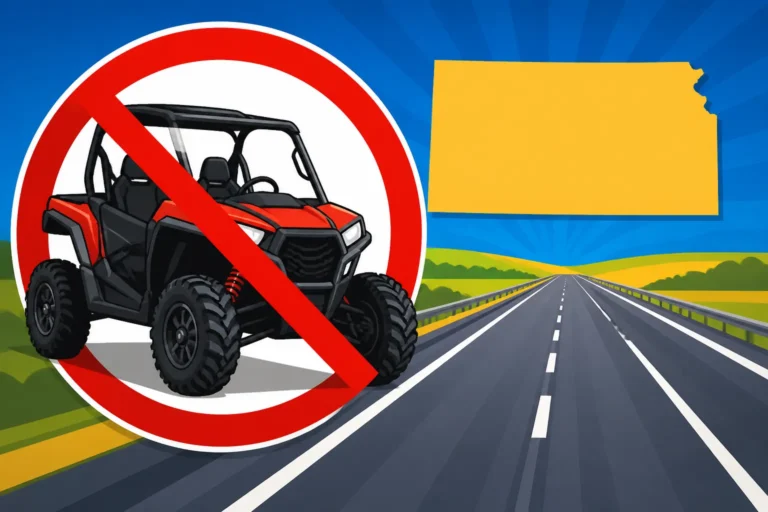
The default position in Kansas is that your all-terrain vehicle (ATV) or utility terrain vehicle (UTV) is not considered a road-legal vehicle. This means that, unless a very specific exception applies or a local ordinance states otherwise, you cannot legally operate your machine on state highways, county roads, or city streets. This blanket prohibition is rooted in the design of these vehicles. They are built for off-road performance, not for the rigors of paved roads, mixed traffic, and higher speeds. Their tires, suspension, and lack of certain safety features (like crumple zones or airbags) make them fundamentally different from cars or motorcycles.
The impact of this statewide ban is significant for most riders. If you live in a rural area, simply crossing a state highway to get to another property or riding along a county road to a nearby friend's house can put you at odds with the law. This can feel particularly restrictive when your machine is perfectly capable of these short trips, and sometimes, it's the most practical way to travel short distances without firing up a truck and trailer. It's a common lament among owners who feel their machines are unfairly categorized, but the law is the law until amended. For instance, [Kansas Bans ATVs on Interstates] and [Kansas Bans ATVs on Federal Highways] are clear, unequivocal prohibitions that apply across the board, regardless of local city ordinances. Even within city limits, the default is a ban. [Kansas Bans ATVs Inside City Limits by Default] unless an ordinance has been specifically passed to allow them. This is the crucial point many riders miss.
What "Nonhighway Vehicle" Really Means
When you title your ATV or UTV in Kansas, it’s most likely going to be designated as a "nonhighway vehicle." This classification is key to understanding why it's not street legal by default. The state defines a nonhighway vehicle as one primarily designed for off-road use, not for highway travel. This classification is explicitly stated when you apply for your title at the county treasurer's office. It tells the state that this machine isn't meant for traditional road use, and it's why you receive a title but no license plate or tag.
A nonhighway title confirms ownership and helps in tracking stolen vehicles, but it absolutely does not grant permission to drive on public roads. Many new owners, and even some seasoned ones, mistakenly believe that simply having a title means their machine is legitimate for some form of road use. This misunderstanding often leads to citations. [How Kansas Law Defines a Nonhighway Vehicle] is a critical piece of legislation that shapes this reality. It clarifies the vehicle's intended purpose, which, from the state's perspective, is not public road travel.
This distinction is important because [Why a Kansas Nonhighway Title Never Comes With a Tag] directly relates to its non-road-legal status. A tag signals road legality; a nonhighway title doesn't. Therefore, simply having your machine titled is not enough. You also need to understand that [Having a Title Does Not Make an ATV Street Legal]. While essential for proving ownership, the title alone doesn't equip your ATV or UTV with the legal standing to navigate city streets or county roads without explicit, separate authorization. This is where local ordinances become so incredibly important.
How Cities Opt-In to Allow Street Use
Despite the statewide default ban, there's a glimmer of hope for riders who want to legally use their ATVs and UTVs on city streets: local control. Kansas law empowers individual cities to create their own ordinances that can override the state's general prohibition within their specific municipal boundaries. This legislative flexibility allows communities to tailor rules that fit their unique needs and concerns, which is why you see such a patchwork of regulations across the state.
The Power of Local Ordinances
The mechanism for allowing ATVs and UTVs on city streets is a local ordinance. This means that a city council, after considering public input, safety concerns, and the needs of their residents, can vote to permit the use of these vehicles on most or all of their municipal roads. This is a significant deviation from the state's default stance and represents a deliberate decision by a local government to embrace these machines as a legitimate form of local transportation, albeit with specific conditions.
The process for a city to "opt-in" isn't always quick or simple. It often involves public meetings where residents can voice opinions, studies on traffic safety, and consultations with local law enforcement to determine enforcement capabilities. Sometimes, it's driven by a local need, such as facilitating access for farmers, ranchers, or small businesses, or simply acknowledging that many residents already own these machines and would benefit from legalizing their use for short trips. The result is a local law that applies only within that city's corporate limits. For example, [Kansas Cities That Opt In by Ordinance] highlights that this isn't a state mandate but a local choice. When a city council decides to [How a City Council Opens Its Streets to UTVs], they are essentially creating a carve-out within the broader state law, allowing their citizens a freedom that other towns might not enjoy. This localized approach is why you can legally ride a UTV down Main Street in one town, but face a citation for doing the same in another just a few miles away.
Common Elements of City Ordinances
While each city's ordinance will have its own unique flavor, there are several common requirements you'll likely encounter. These are put in place to ensure public safety and integrate ATVs/UTVs into the regular flow of traffic as smoothly as possible. Understanding these common elements is crucial for anyone considering street-legal modifications or planning to ride in an approved city.
One of the most universal requirements is insurance. While Kansas state law doesn't typically mandate insurance for off-road vehicles, cities that allow street use almost always require it, often mirroring the liability coverage requirements for passenger vehicles. This protects both the rider and other motorists in case of an accident. Another common element is a city-specific registration or tag. This isn't the state's nonhighway title; it's a separate permit issued by the city, often annually, that allows you to display a tag or sticker proving your compliance. [Kansas City Insurance Requirements] are usually non-negotiable, ensuring that if you're involved in a collision, there's financial recourse. Additionally, [Kansas City Tag Fees for a UTV] are common, covering the administrative costs of issuing and managing these permits.
Beyond insurance and registration, cities will almost certainly stipulate equipment requirements. We'll dive deeper into these later, but expect mandates for headlights, taillights, brake lights, turn signals, mirrors, and sometimes a horn or windshield. Finally, driver eligibility is always a factor. You'll almost certainly need a valid driver's license, and there may be age restrictions for operators and passengers. Local law enforcement often plays a direct role in enforcing these rules, sometimes even requiring a physical inspection of your machine before issuing a city tag. [Police Inspect a UTV Before a City Tag Issues] is a very practical step some cities take to ensure compliance with their equipment standards, ensuring your machine is safe for shared roads before you ever hit the pavement.
Cities Known for Allowing Street Legal ATVs/UTVs
While the general rule in Kansas is that ATVs and UTVs are not street legal, a growing number of cities have recognized the practical benefits and recreational desires of their residents by passing local ordinances. These cities offer a lifeline for riders who want to take their machines off the trailer and onto the pavement for local errands, short commutes, or simply enjoying their community. However, it's absolutely vital to remember that each city has its own specific set of rules, fees, and requirements.
Louisburg – A Case Study in UTV Friendliness
Louisburg, a charming city in Miami County, stands out as one of Kansas's most prominent examples of a UTV-friendly community. They have a well-established ordinance that allows residents to legally operate their side-by-sides on most city streets, provided they meet specific criteria. This community has truly embraced the utility and convenience these machines offer, integrating them into daily life in a way many other towns haven't.
If you're considering Louisburg for UTV use, you'll need to pay attention to their specific requirements. For instance, [Louisburg's UTV Tag Fees in Kansas] are a yearly cost you'll need to budget for. There's an initial fee for the first year, and then a slightly lower renewal fee each subsequent year. This tag, which you'll need to display, acts as your permission slip to ride. They also have a mandatory [Louisburg's Insurance Requirement in Kansas], ensuring that all UTVs operating on city streets carry adequate liability coverage. This is a non-negotiable safety measure to protect everyone on the road.
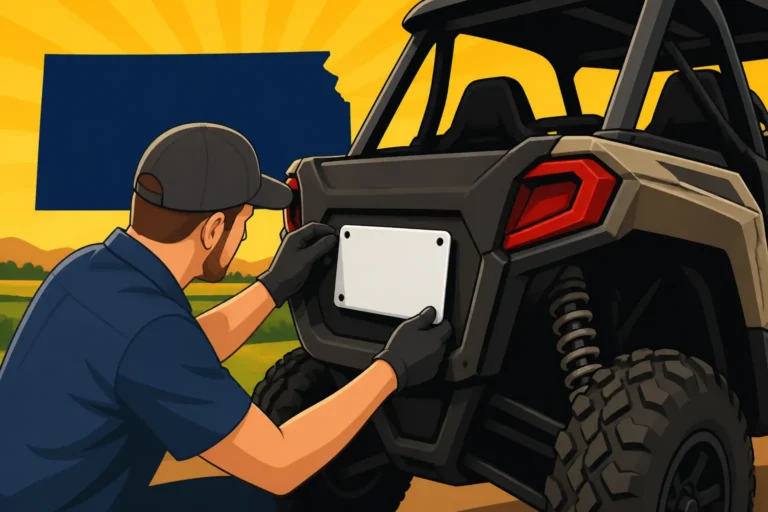
Beyond fees and insurance, Louisburg also sets speed limits for UTVs on its streets. [Louisburg's 45 mph Street Limit in Kansas] means you can't go full throttle everywhere, and this limit is clearly posted. The city also requires a physical inspection of your UTV to ensure it meets all the necessary safety equipment standards before a tag is issued. This inspection covers items like working headlights, taillights, brake lights, turn signals, mirrors, and a horn. Once approved, you'll receive a plate, and [Louisburg Puts the UTV Plate on the Left Rear Panel] is the designated spot for it, ensuring it's visible to law enforcement. This structured approach makes Louisburg a clear model for how a city can successfully integrate UTVs into its transportation fabric.
Other Notable Cities and Their Provisions
While Louisburg often gets a lot of attention, it's far from the only Kansas city that has adopted ordinances allowing ATV or UTV street use. Other communities across the state have also taken similar steps, each with its own specific regulations that riders must diligently research and follow. These cities often reflect a blend of rural and suburban needs, where these machines offer convenient transportation for short distances or agricultural access.
For example, [Scott City's Ordinance in Kansas] permits UTV use under its own set of rules, as does [De Soto's Ordinance in Kansas]. You might also find that [Andover's Ordinance in Kansas] allows UTVs, but again, the specifics will differ. These variations underscore the critical point: there is no universal "street legal" standard for ATVs/UTVs in Kansas; it's entirely dependent on the specific city. Some towns might have more relaxed equipment rules, while others might impose stricter curfews or restrict access to certain high-traffic streets. The key takeaway is that every city that allows these machines does so through its own unique ordinance.
If you're wondering about a specific city not mentioned here, your first step should always be to contact that city's clerk's office or visit their official municipal website. Look for codes or ordinances pertaining to "golf carts," "utility vehicles," "all-terrain vehicles," or "unconventional vehicles." The rules can be nuanced, so don't assume that if one city allows something, another will too. Always verify the current information directly from the source to avoid any legal missteps.
| City Example | Tag/Permit Fee (Approx. Annually) | Insurance Required | Max Speed Limit | Requires Inspection | Other Notes |
|---|---|---|---|---|---|
| Louisburg | $100 (1st year), $50 (renewal) | Yes | 45 mph | Yes | Plate mounted left rear. Valid driver's license required. |
| Scott City | Varies | Yes | Check Ordinance | Varies | Consult city for specific fee and rule details. |
| De Soto | Varies | Yes | Check Ordinance | Varies | Requirements for equipment, driver age, and roads may differ. |
| Andover | Varies | Yes | Check Ordinance | Varies | Always check the most current ordinance for full details. |
Note: Fees and rules are subject to change. Always verify with the specific city clerk's office for the most current information.
Equipment Requirements for Street Legal Machines
Making your ATV or UTV street legal in an authorized Kansas city isn't just about getting a permit; it's also about ensuring your machine is equipped to safely share the road with traditional vehicles. Most city ordinances will have a list of required equipment that mirrors, to some extent, what you'd find on a car or motorcycle. Ignoring these can lead to failing inspection, denied permits, or, worse, a citation on the road.
Essential Lighting and Signaling
Visibility is paramount when operating any vehicle on public roads, and it's especially critical for ATVs and UTVs, which can be smaller and less noticeable than cars. Therefore, robust lighting and signaling systems are almost universally required. This typically includes a full complement of lights designed to make your presence known to other drivers, day or night.
You'll definitely need functional headlights that are bright enough to illuminate the road ahead and make your machine visible to oncoming traffic. These usually need to be white or amber. Equally important are taillights, which must be visible from a significant distance to the rear, and brake lights, which must activate automatically when you apply the brakes. These are often red. Beyond basic illumination, turn signals are a must for communicating your intentions to other drivers. These are typically amber and located at the front and rear of your machine. When riding from [Kansas Sunset to Sunrise Lighting Rules] are especially strict, often requiring your machine to have its lights on regardless of how well-lit the area might seem.
Many riders find that their stock ATV or UTV lighting, while adequate for off-road trails, simply doesn't meet the standards for street legality. This is where aftermarket upgrades come into play. Companies like SuperATV offer a wide range of lighting solutions, from brighter LED headlights and taillights to complete turn signal kits designed specifically for off-road vehicles. These kits can transform your machine's visibility and help you meet local ordinance requirements. [Kansas Lighting Requirements on a Machine] will often stipulate color, brightness, and visibility distance. In some cases, the city's ordinance may even refer to standards similar to [Kansas Motorcycle Lighting Standards], which are quite specific, further emphasizing the need for proper lighting.
Safety Gear and Other Mandates
Beyond lights, there's a host of other safety equipment and features that cities typically require to ensure your ATV or UTV is roadworthy. These are designed to help you navigate traffic safely, be aware of your surroundings, and protect yourself in the event of an incident.
Mirrors are a fundamental requirement for situational awareness. You'll usually need at least one rearview mirror, and often two – one on each side – to give you a clear view of traffic behind and to your sides. Many cities also require seatbelts, especially for UTVs, to be worn by all occupants while the vehicle is in motion. This is a critical passive safety feature. A horn is also almost always on the list, providing a way to alert other drivers or pedestrians to your presence. Some ordinances may even specify the need for a windshield, particularly for UTVs, to protect occupants from road debris and weather, though this is less common for traditional ATVs.
Tires are another consideration. While your knobby off-road tires are perfect for mud and trails, some ordinances might have specific requirements for tires that are more suitable for paved surfaces. While not always explicitly stated, tires with a less aggressive tread pattern can offer better grip and quieter operation on asphalt. Finally, let's talk about helmets. This is a frequently asked question, and the answer in Kansas can be surprising. While many states have broad helmet laws for ATVs, [Does Kansas Have an ATV Helmet Law at All?] is a nuanced question. Generally, Kansas state law does not mandate helmets for ATV riders over a certain age. However, some individual city ordinances might require them for street use, especially for minors. It's crucial to check the specific city ordinance you plan to ride in, and regardless of the law, wearing a helmet is always a smart choice for personal safety. For example, [Who Has to Wear a Helmet on a Kansas ATV?] might be dictated more by the city you're in than by state law for off-road riding.
Driver and Machine Eligibility
Even if a Kansas city authorizes ATV or UTV street use and your machine is fully equipped, you're not ready to hit the road without meeting crucial driver and machine eligibility criteria. These requirements are in place to ensure that only competent, legally responsible individuals are operating these vehicles on public streets and that the machines themselves meet certain basic standards beyond just safety equipment.
Licensing and Age Restrictions
One of the most fundamental requirements for legally operating an ATV or UTV on city streets is possessing a valid driver's license. Just as you need a license to drive a car, you'll need one to operate your off-road machine in a street-legal capacity. This ensures that you have passed the state's driving examinations and possess the basic knowledge of traffic laws and safe driving practices. Many people ask, [Do You Need a License for an ATV in Kansas?] and for general off-road use, the answer is often no for adults. However, for street-legal use within an authorized city, a driver's license becomes a mandatory requirement.
Beyond simply holding a license, age restrictions are another common component of city ordinances. These can apply to both the operator and any passengers. For example, a city might stipulate that the driver must be 16 years or older with a full, unrestricted driver's license. There might also be rules about passengers, especially children. [Kansas ATV Age Requirements] are important to understand, and these can be stricter for street riding than for private property or designated off-road parks. For instance, [Kansas Rules for a Child Passenger] might specify that a child must be of a certain age, able to reach the footrests, or only ride in designated passenger seats on UTVs. If you only hold a restricted license (e.g., a learner's permit), it's highly unlikely that you would be permitted to operate an ATV or UTV on city streets, as these licenses typically come with significant limitations on unsupervised driving.
Insurance and Registration
As discussed earlier, while Kansas state law generally doesn't require insurance for off-road vehicles, this changes dramatically when you want to make your machine street legal in a city. Almost all cities that permit street use will mandate that your ATV or UTV carry a minimum amount of liability insurance. This is for the protection of everyone on the road and is a critical aspect of responsible vehicle operation.
The insurance requirements usually mirror those for standard automobiles, ensuring that if you are involved in an accident, there is coverage for property damage and bodily injury to others. [Kansas Insurance Comes From City Ordinances] means you can't rely on state guidelines; you must check what your specific city requires. Proof of this insurance will be required when you apply for your city's street-legal permit or tag. Without it, your application will likely be denied.
In addition to insurance, you'll need to obtain the city's specific registration or tag. This is separate from your state-issued nonhighway title. These city tags are typically issued annually and come with a fee. [Kansas Cities With UTV Tags] each have their own process, but it generally involves filling out an application, providing proof of ownership (your state title), proof of insurance, and paying the required fee. The tag needs to be prominently displayed on your machine, usually as a sticker or a small license plate issued by the city. You'll also need to be mindful of the ongoing costs. [Renewing a Louisburg UTV Tag Costs $50] annually, for example. Forgetting to renew could mean your machine is no longer street legal, leading to potential fines or other penalties.
Navigating Local Ordinances and Staying Compliant
The varied nature of street-legal ATV and UTV rules across Kansas can be a minefield for riders. You can't just assume what's okay in one town is okay in another. To avoid fines, impoundments, and general headaches, it's absolutely crucial to understand how to research local ordinances and ensure you remain compliant with every specific rule. This isn't just about avoiding trouble; it's about being a responsible member of the community.
Researching Specific City Rules
The first and most critical step in navigating this landscape is diligent research. Before you even think about driving your ATV or UTV on city streets, you must identify the specific ordinance for the city in question. Do not rely on hearsay, forum posts, or what a friend of a friend said. Laws change, and interpretations vary.
The best place to start your research is the city clerk's office or the city's official website. Most cities will have their municipal codes and ordinances published online. Look for sections related to "vehicles," "traffic," "off-road vehicles," "utility vehicles," or "golf carts." These documents will outline everything from required equipment and speed limits to insurance mandates and permissible hours of operation. It's a treasure trove of information, but it can be dense and legally phrased, so take your time. [Kansas Ordinance Lookups Before You Ride] should be your mantra. It's far better to spend an hour poring over a document than to face a hefty fine.
If you find the language confusing, or if the website isn't clear, do not hesitate to call the city clerk's office directly or even the local police department (non-emergency line). They are there to help residents understand local laws. Have a list of specific questions ready: What are the fees? Is an inspection required? What specific roads are off-limits? [Questions Worth Asking a Treasurer's Office] might also be helpful, as they handle the titling and sometimes the local registration process. Remember, rules can change. City councils periodically review and amend ordinances, so even if you knew the rules a few years ago, it's always wise to re-verify for the most current information.
Penalties and Enforcement
Unfortunately, if you choose to ignore the local ordinances or ride in a city where ATVs and UTVs are not permitted on the streets, there are consequences, and they can be quite severe. Law enforcement in Kansas takes these rules seriously, primarily due to safety concerns and managing public order.
The most common penalty for illegal road riding is a traffic citation, which typically comes with a fine. These fines can vary widely depending on the city and the specific violation, but they can quickly add up. Beyond the immediate financial hit, repeated violations could lead to more serious legal issues. In many cases, if you are caught riding illegally, law enforcement has the authority to impound your machine. [Kansas Penalties for Illegal Road Riding] can include not only fines but also the hassle and expense of retrieving your ATV or UTV from an impound lot. Getting a machine back after it's been impounded involves impound fees, storage fees, and often proof that you've rectified the reason for the impoundment (e.g., gotten the proper permits). [Getting a UTV Back After a City Impounds It] can be a costly and time-consuming ordeal.
If you do receive a citation, you'll likely have to appear in municipal court. This means taking time off work, preparing your case, and potentially facing additional court costs on top of the fine. [Fighting a UTV Ticket in Municipal Court] is an option, but it requires understanding the local ordinance and traffic laws. It's always best to be proactive, understand the rules, and ensure your machine and your driving practices are fully compliant before you ever put a tire on a public street. The peace of mind that comes with knowing you're riding legally is invaluable.
Important Exceptions and Considerations
While the general rule in Kansas leans heavily towards restricting ATV and UTV use on public roads, and city ordinances provide specific carve-outs, it's also important to be aware of certain statewide exceptions and common-sense considerations. These exceptions aren't dependent on local city councils but are built into state law, often to facilitate specific types of work or necessary travel.
Agricultural and Work-Site Exceptions
Kansas is a deeply agricultural state, and its laws reflect this reality. There are specific exceptions carved out for the use of ATVs and UTVs for agricultural purposes and for "work-site utility vehicles" (WSUVs). These are distinct from city street-legal ordinances and apply statewide, allowing for limited road use under very specific conditions.
For farmers and ranchers, [Kansas's Agricultural Exception for Road Use] is a crucial provision. This allows ATVs and UTVs to be operated on public roads for agricultural purposes, such as moving between fields, accessing farm equipment, or checking livestock. However, this isn't a blanket permission to ride recreationally. The use must be directly related to agricultural operations. This exception often applies even on state highways, though typically with speed limits and requirements for lights and slow-moving vehicle emblems. For example, [Kansas Agricultural Trips on a 65 mph Road] might be permitted, but you'll still need appropriate lighting and be mindful of traffic.
Separately, Kansas law defines a class of vehicle called a "work-site utility vehicle" (WSUV). [Kansas Work-Site Utility Vehicles Explained] are UTVs that meet specific criteria regarding width, weight, and seating. These machines are designed for tasks like hauling materials or personnel on construction sites, industrial campuses, or very large properties. WSUVs have their own set of rules for limited road use, often allowing them on roads adjacent to their primary work area, or to cross roads. [Kansas Work-Site Utility Vehicle Road Rules] outline these conditions, which are distinct from those for typical ATVs. Similarly, [Kansas Micro Utility Truck Road Rules] apply to another specific class of small, purpose-built utility vehicles, also with their own narrow exceptions for road use. It's crucial not to confuse these work-related exceptions with general recreational street legality. They serve a different purpose and come with different limitations.
Crossing Highways and Other Road Types
Beyond the agricultural and WSUV exceptions, there are general rules in Kansas regarding crossing certain types of roads, even if your machine isn't otherwise street legal. Understanding these can prevent a simple maneuver from becoming a legal problem.
One of the most common questions is about crossing state highways. Generally, [Crossing a State Highway in Kansas] is permitted even for non-street-legal ATVs and UTVs, provided it's done directly and safely at a right angle to the road. You can't ride along the highway, but you can cross it to get from one property to another. [Crossing at Any Point on a State Road] is usually allowed, but you must yield to all traffic and ensure the crossing can be completed safely and quickly. This is often the only legal way for rural residents to access land on the other side of a highway without trailering their machine.
The rules also differ between county roads and city streets. While city streets are governed by local ordinances, county roads might have a slightly different status. However, the default state ban still applies unless a county has a very specific, rare, and generally limited exception (which is not common). So, while you might find yourself on a county gravel road, legally, you're still bound by the state's nonhighway vehicle designation. [Kansas Rules for Riding a County Road] are generally more restrictive than many riders assume, often mirroring the state's default ban. In contrast, [Kansas Rules for Riding a City Street] are entirely dependent on whether that specific city has passed an ordinance. It's a key distinction. Regardless of any local permission, remember that high-speed, controlled-access roads like interstates and federal highways remain completely off-limits to ATVs and UTVs, without exception. Your machine is not permitted on these roadways under any circumstances.
Disclaimer
This article is for general informational purposes only and does not constitute professional advice. Laws, prices and regulations vary by location and change over time. Consult a qualified professional for guidance on your specific situation.