Kansas Private Park Minimum Ages
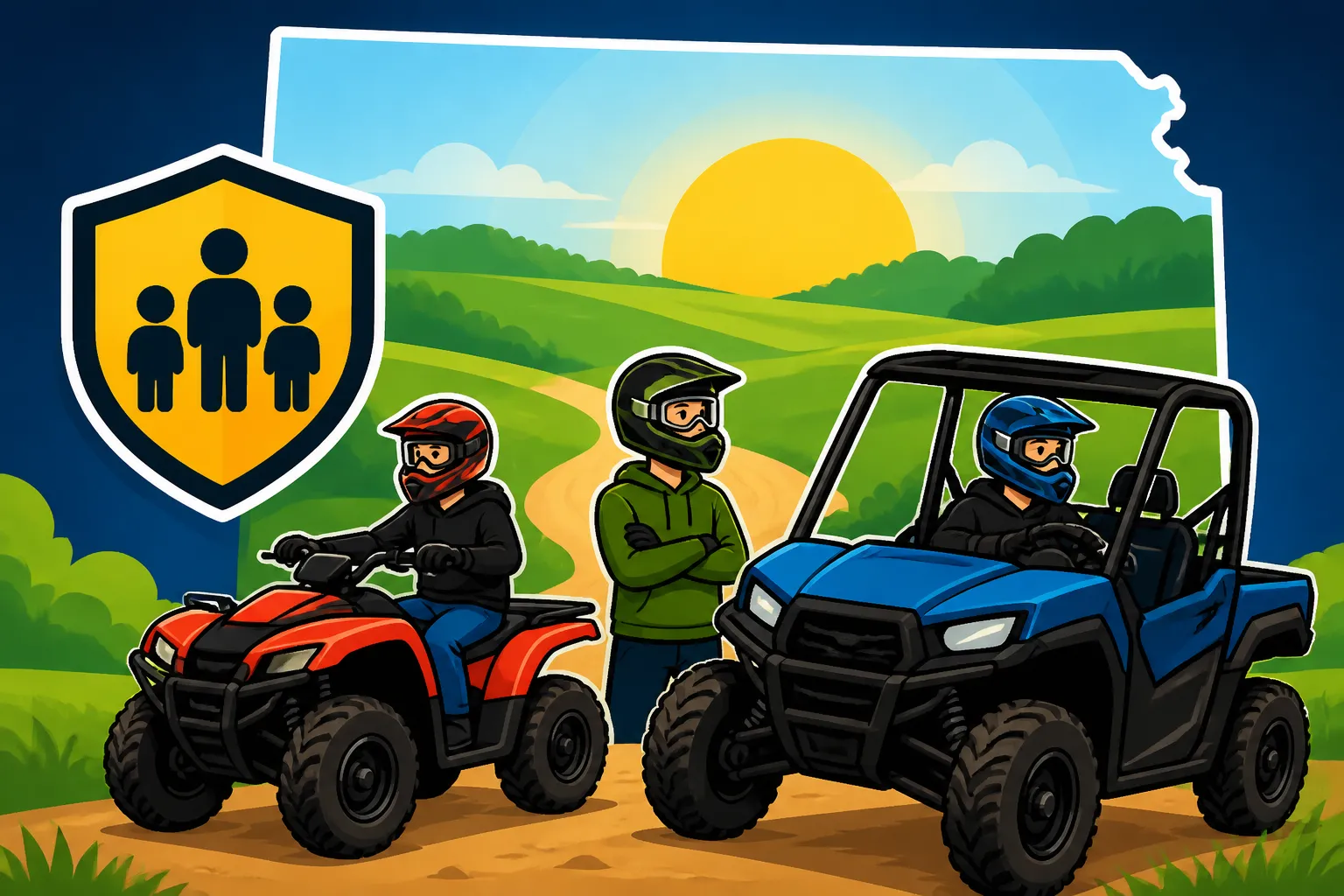
A child may be old enough to ride at home but still be turned away at a Kansas riding park. Private parks set their own admission and riding policies, and age rules can differ for drivers, passengers, and supervised minors. Before loading the machine, find out which rules apply to your child, vehicle, and planned ride.
Why age rules vary at private parks
There is no single age policy that you can assume applies to every private ATV or UTV park in Kansas. Each operator sets park rules, and a park may treat admission, driving, riding as a passenger, and adult supervision as separate questions. The answer can also depend on the machine and the area where you plan to ride.
A park may have one rule for who can enter and another for who can operate a vehicle. It may also distinguish between a child riding a youth-sized quad, a teen driving a larger machine, and a passenger in a side-by-side. A parent’s presence may be required in some circumstances, but supervision does not automatically override an age restriction. Only the park can tell you how its current policy applies.
These policies are not the same as state permits or reciprocity rules. A permit or sticker from another state does not necessarily make a rider eligible under a Kansas private park’s age policy, and a state permit does not replace the park’s own admission requirements. For the difference between state access rules and private-park policies, see Kansas Private Park Waivers and Rules and Kansas Requires No Sticker of Visitors.
Park rules can also cover issues beyond age, including helmets, passenger limits, insurance, machine size, and waivers. Check Kansas Private Park Helmet Rules before packing protective equipment, and confirm the park’s full policy rather than relying on a single age answer.
Which age questions to ask before you go
Ask about each person and each role in the group. “What is the minimum age?” can be too broad: the answer may differ for a rider who is driving, a passenger, or a child accompanying an adult.
| Ask the park about | Why it matters |
|---|---|
| Minimum age to enter | Admission rules may apply even when a child will not ride. |
| Minimum age to operate each vehicle type | The rule may differ for a youth quad, full-size ATV, or UTV. |
| Passenger age requirements | A passenger policy may be separate from the driver’s age rule. |
| Adult supervision | Ask whether a parent must be present, ride along, or remain nearby. |
| Youth-sized machines | Confirm whether the park allows them and where they may be ridden. |
| Required documents and waivers | Find out who must sign and whether a minor needs a parent or guardian. |
| Group or event rules | Organized rides may have additional participation requirements. |
Drivers
Ask the park for the minimum age to operate the exact kind of machine you plan to bring or rent. Avoid asking only whether “kids can ride.” A park might allow a young rider on a smaller machine but not on a full-size quad or UTV. It may also require a rider to demonstrate that they can control the machine, regardless of age.
Do not assume that a child who can reach the controls or has ridden before meets the park’s policy. Rules are set by the operator, and staff may enforce them at check-in or on the property. If a teen will use more than one vehicle during the visit, ask whether the age requirement changes between machines.
For more context on the difference between age and supervision requirements, see Kansas Supervision at a Private Park and Kansas Rules for a Teen Rider. Those topics can help you make a plan, but the park’s own current rules determine whether that rider can participate there.
Passengers
A child who is too young to drive may still be subject to a separate minimum age for riding as a passenger. Ask whether the park allows children as passengers, what vehicle types the rule covers, and whether the driver must be an adult.
Also verify that the vehicle is designed and equipped for the passenger. A seat, handhold, seat belt, or other restraint can affect whether a child can ride safely, but having the right equipment does not guarantee that the park will permit that passenger. The park may set a stricter policy. See Kansas Rules for a Child Passenger for related considerations, then confirm the park’s passenger rule directly.
Supervision and waivers
Ask what the park means by adult supervision. It could mean that a parent or guardian must be present on the property, accompany the minor, or stay close enough to supervise. Do not assume that dropping a child off with another adult meets the rule; ask whether the park requires a parent or legal guardian.
Waiver requirements are another separate issue. Find out who must sign for a minor, whether the adult signing must be the child’s parent or legal guardian, and whether each rider needs an individual form. If a group is attending an event, ask whether the event organizer collects forms or whether each participant handles them at the gate.
How to verify a park’s policy
A quick call or message before departure can prevent a wasted trip. Use the park’s official contact information and ask for the current written rules, especially if the group includes children or teens. Policies may be updated, and a social media post or an old review may not reflect the rules staff enforce now.
- Name the park and date of your visit. If your plans involve Kansas Rocks Recreation Park or Syracuse Sand Dunes, contact that specific operator. Do not assume the two parks use the same rules.
- Describe the riders. Give each rider’s age and say who will drive, who will ride as a passenger, and which adults will be present.
- Describe the vehicles. Include whether you plan to bring or rent a youth quad, full-size ATV, side-by-side, or another machine.
- Ask about exceptions and supervision. If a rider is near the minimum age, ask whether the park has any exception process. Do not count on an exception unless staff confirms it.
- Confirm forms and identification. Ask what the minor and accompanying adult need to bring, and whether forms can be completed before arrival.
- Save the answer. Keep a copy of the written policy or the park’s reply with your trip information. It can help resolve a misunderstanding at check-in.
When comparing destinations, look for rules that apply to the whole group, not just the youngest rider. Check whether the park allows your vehicle, whether the intended trail or riding area has restrictions, and whether the rules change for special events. Kansas Rocks Park Rules for Riders and Kansas Syracuse Dunes Park Rules are useful related topics, but confirm any age-specific detail with the operator before traveling.
If the park does not publish a clear minimum age, ask directly rather than interpreting silence as permission. Ask whether the rule applies to entering the property, riding anywhere, or operating only certain machines. If staff gives a verbal answer, request a written confirmation when practical.
Planning a ride with minors
A park’s minimum age is only one part of deciding whether a child should ride. A rider may meet the park’s eligibility rule and still need a machine that fits their size, skill, and experience. A parent or guardian should make a separate judgment about whether the child can control the machine and follow instructions, rather than treating the park’s minimum as a safety recommendation.
Choose the vehicle and riding area with the child’s abilities in mind. Check the manufacturer’s limits and instructions, including passenger capacity, and do not carry a passenger on a machine not designed for one. A child should know how to stop, steer, and respond to changing ground conditions before entering a busy or challenging area. Consider starting with an easier route and staying close enough to supervise.
Before unloading, review the park’s rules as a family. Explain where riders may go, what to do if separated, how to respond to staff instructions, and why riders must not switch machines without permission. Bring the protective equipment the park requires, and check that it fits the rider properly. The park’s policy may address helmets and other equipment separately from age; see Kansas Private Park Helmet Rules for related information.
Keep the trip flexible. If the park says a child cannot operate a particular vehicle, do not try to work around the restriction by having the child ride briefly, using another person’s wristband, or presenting a different age. Ask whether another machine or activity is permitted. If the answer is no, changing plans is safer than risking removal from the park or a more serious incident.
Finally, remember that private-park rules apply to the park’s property and are not a substitute for other applicable laws or safety practices. A rule that allows a child to ride at one destination does not establish permission everywhere in Kansas. Confirm the rules for each location, and check whether a planned route leaves private park land.
Disclaimer
This article is for general informational purposes only and does not constitute professional advice. Laws, prices and regulations vary by location and change over time. Consult a qualified professional for guidance on your specific situation.