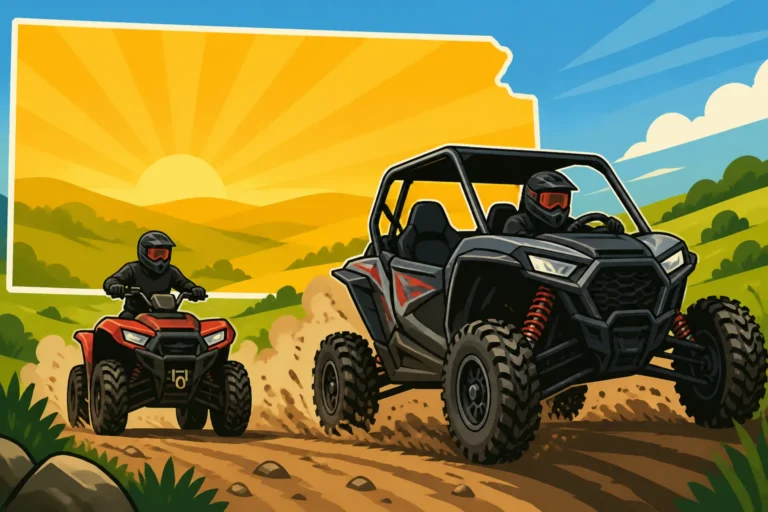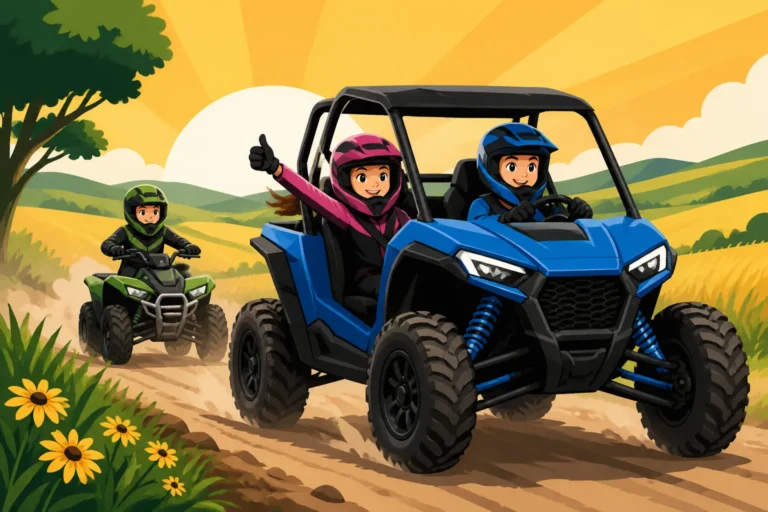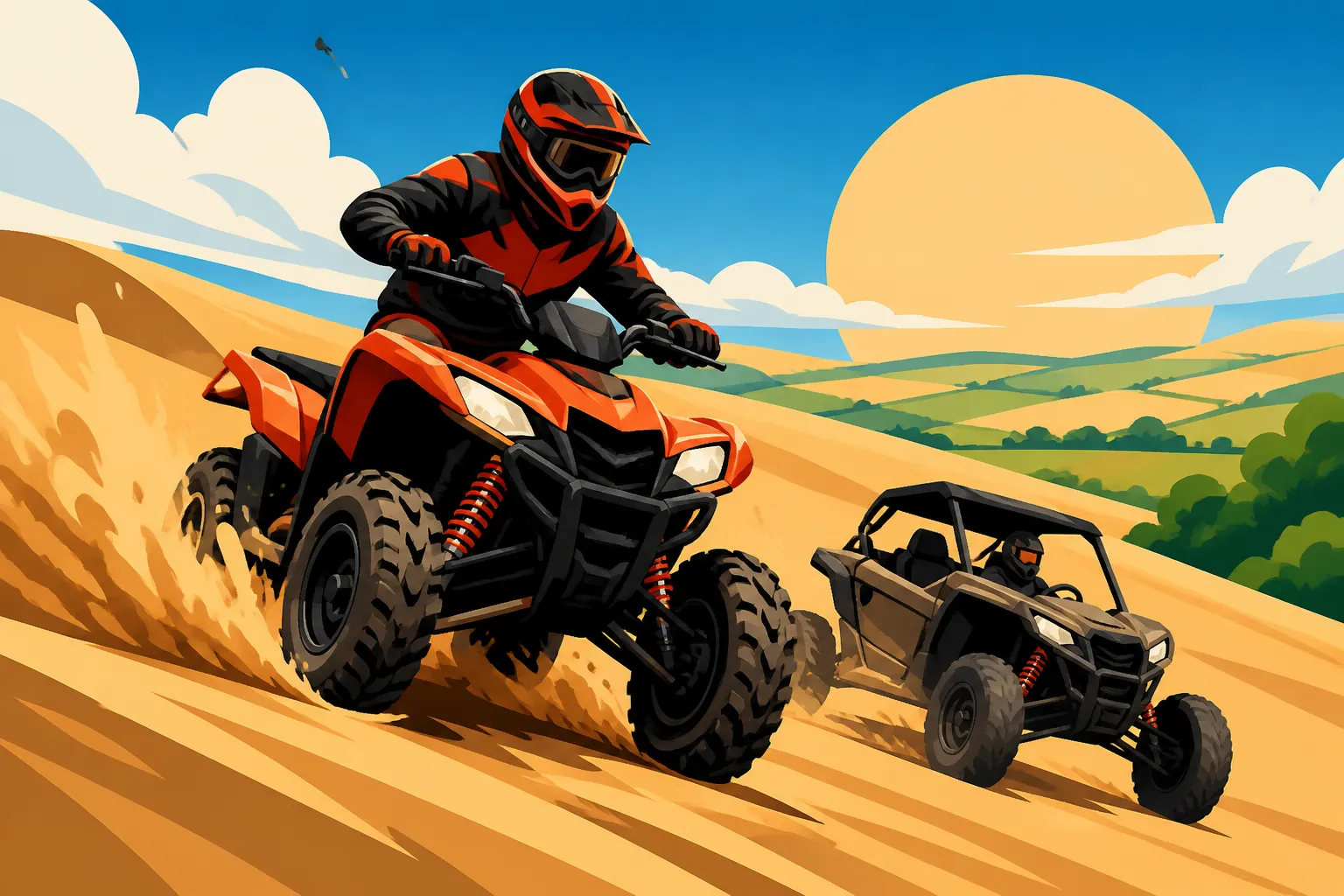
Kansas Dune Riding in Hamilton County
Riders heading to Hamilton County often picture open sand, then discover the real challenge is planning the whole trip: confirming the riding area is open, matching the machine and tires to the terrain, and hauling across a long stretch of southwest Kansas. This guide explains how to plan a safer, smoother visit to Syracuse Sand Dunes and what to check before unloading.
Where to Ride in Hamilton County
Syracuse Sand Dunes is the destination to plan around
For public-facing information about off-road riding in Hamilton County, Syracuse Sand Dunes is the place most riders will encounter. It is a privately managed riding area near Syracuse in southwest Kansas, rather than a broad network of public trails. That distinction matters: permission to ride comes from the park and its rules, not simply from the fact that a patch of land looks sandy or unoccupied.
Before you load up, confirm that the park is open for your planned visit and ask about its current entry process, access conditions, and any restrictions on vehicles or passengers. A park can change its schedule, close an area after weather, or set rules for particular events. This is especially important if you are making a long drive from Wichita, Garden City, Dodge City, or farther away. A quick check before departure can save a frustrating trip with a trailer.
The broader area is rural, and the journey itself deserves a little planning. Decide where you will fuel up, pick up food, and make any last-minute stops before reaching the riding area. In a small community such as Syracuse, do not assume every service will be available at the time you arrive. Build a practical buffer into your travel plan rather than counting on a last-minute shop run.
For an overview of the venue and what it offers, see [Syracuse Sand Dunes in Kansas]. The park is also associated with a sizable sand-riding area, but the usable terrain and access you encounter can depend on park operations and conditions. Treat a published acreage figure as context, not a guarantee that every section will be open on your visit.
Private park access is different from public land access
One of the most important planning points is that a private riding park is not interchangeable with nearby fields, roads, or open-looking ground. A trail app may show a road or track, but that does not establish that you have permission to ride it. Stay within the park boundaries and follow the route markers, barriers, and instructions provided by staff.
This is a common source of confusion for visitors who are used to riding extensive public trail systems elsewhere. In Kansas, public off-road riding opportunities are limited compared with some neighboring states, and private venues play an important role. That makes good visitor behavior especially valuable: follow access rules, respect neighboring property, and avoid creating problems that could affect future access.
When researching the trip, [Kansas Private Off-Road Parks] offers useful context about the role of privately operated riding areas. For this specific destination, use the park’s own information to confirm what is permitted. Maps can help you understand the drive and orient yourself, but they do not replace the park’s access rules.
Choosing a Machine and Preparing for Sand
Match your vehicle to the terrain and park rules
Sand puts different demands on an ATV or UTV than a hard-packed gravel road. A machine that feels steady on a farm lane may behave differently when the tires are moving over loose, shifting ground. Consider the vehicle’s clearance, tires, cooling system, and overall condition before committing to a dune-riding day.
If you are taking a side-by-side, confirm that it is allowed at the park and that its width fits the areas you expect to ride. Some Kansas riding areas have restrictions that exclude wider machines, so never assume that a venue’s rules match another park’s. [Kansas Trails That Allow Side-by-Sides] is a useful related topic when comparing possible destinations. For Syracuse Sand Dunes, verify the current vehicle rules directly before you tow.
A quad also needs a basic pre-ride inspection. Check tire condition and pressure, brakes, throttle return, steering, battery connections, and fluid levels. Look for loose fasteners and damaged guards, especially if the machine has recently been used for farm work or transported over rough roads. A small repair at home is usually easier than diagnosing a problem beside a trailer in a windy parking area.
Set up tires and recovery gear thoughtfully
Loose sand rewards steady momentum and smooth control. A sudden throttle jab, sharp turn, or hard brake can make a machine dig in or lose balance. Tire choice and pressure affect how the vehicle floats over the surface, but there is no single setup that suits every machine, rider, and sand condition. Follow the vehicle manufacturer’s guidance and make adjustments conservatively.
Some experienced dune riders use specialized tires for deeper sand, while others ride on a more versatile setup that works across mixed terrain. If you are new to the area, avoid making a major tire change based only on someone else’s setup. A tire that suits a lightweight sport quad may not be the right choice for a loaded utility machine. The guide [Airing Down for Deep Sand] explains why riders consider pressure adjustments, while [Paddle Tires on Dunes] covers a more specialized option.
Bring practical recovery equipment and know how to use it before you need it. Depending on your machine and group, that might include a tow strap, shovel, gloves, tire repair supplies, and a winch where appropriate. A winch is not a substitute for sensible line choice or a spotter. Keep people clear of a loaded strap or cable, and do not try to recover a machine in a way that risks rolling it or pulling someone into the vehicle’s path.
Dress for heat, dust, and changing conditions
Southwest Kansas can feel exposed, especially on open sand where shade is limited. Wear a properly fitted helmet, eye protection, gloves, sturdy clothing, and boots suited to operating your machine. Dust and sand can irritate eyes and skin, while sun and wind can make a comfortable morning ride feel draining by afternoon.
Carry more drinking water than you think you will need, and plan breaks before anyone feels overheated. Keep water accessible rather than buried under luggage. Sunscreen, a brimmed hat for breaks, and a way to cover exposed skin can make a long day much more comfortable. These basics matter for passengers as well as drivers.
Check the forecast and consider how wind or recent weather could affect comfort and visibility. A windy day can push dust across open areas and make it harder to communicate. If you are riding as a group, agree on a simple regrouping plan before starting: where to stop, what to do if someone loses sight of the group, and how to handle a mechanical issue. [Kansas Riding in Summer Heat] has more advice for preparing for high temperatures.
Planning the Drive and the Riding Day
Build a realistic trip plan before you leave
Hamilton County is a long way from many Kansas population centers. The drive can be an enjoyable part of a weekend, but it is still a towing trip across rural roads and open country. Confirm your route, check the trailer and hitch, and make sure the load is secured before leaving. Give yourself enough time to arrive without rushing through the final stretch.
If you are towing, inspect the trailer tires, lights, coupler, safety chains, and spare before departure. A side-by-side can be heavy and wide, so check that the trailer is appropriate for the load and that the machine is secured at proper tie-down points. Wind can be tiring when towing across western Kansas. Keep both hands available for driving, allow extra following distance, and take breaks if the trailer begins to feel unsettled. The article [Hauling a Trailer Across Western Kansas in the Wind] covers the special considerations of that kind of trip.
Download or save your route details before heading into areas where mobile service may be inconsistent. A navigation app such as onX Offroad can help you organize route information and keep useful map details available for trip planning. Still, use it as a navigation aid rather than proof of access. Confirm the destination and entrance instructions with the park, and do not follow an app’s track onto land where riding is not authorized.
Pack for the park, not just the drive
A well-packed machine and vehicle make it easier to focus on riding once you arrive. Bring the tools and spare parts that match your machine, plus drinking water, food, a first-aid kit, phone chargers, and protective gear. Keep important items secured against sand and dust. A dry bag or sealed container can protect paperwork, electronics, and spare clothing.
Think through the return trip, too. Sand can work its way into equipment, and a long ride can leave riders tired. Bring a brush or other basic cleaning supplies, and leave room in the vehicle for helmets and dusty gear. If you are staying overnight, confirm lodging or camping arrangements in advance rather than assuming that a place will be available when you roll into town.
For a broader packing and preparation checklist, see [Kansas Trail Conditions Before You Tow] and [Kansas Trails With Camping]. Those topics help with general trip planning, but confirm Syracuse’s own policies for overnight stays, parking, and facilities. The park may have specific options or restrictions that differ from other Kansas destinations.
Make the day manageable for the least experienced rider
A group’s pace is only as comfortable as its newest or least confident rider. If someone in your party is new to loose sand, start slowly in an appropriate area and let them practice smooth throttle and steering inputs before tackling more demanding terrain. Give riders space, avoid crowding, and establish a clear way to signal a stop or emergency.
Families should be especially deliberate about machine size, passenger capacity, and supervision. A child should ride only on a machine suited to their age, size, and skill, and should use properly fitted protective gear. Never carry a passenger on a vehicle that was not designed to carry one. For UTV passengers, use the belts and restraints provided, keep arms and legs inside the vehicle, and follow the manufacturer’s safety guidance.
Before the group starts, agree on a simple plan: who leads, who follows, where the group will regroup, and what everyone should do if separated. A quick briefing can prevent confusion when dust obscures the view or a rider stops unexpectedly. [Kansas Trail Etiquette Locals Expect] offers useful reminders about sharing a riding area respectfully.
Riding Safely on Sand
Use smooth inputs and leave room
Loose sand can change under your tires from one section to the next. Ride at a pace that leaves room to respond, keep your eyes ahead, and avoid abrupt steering or braking. If you need to slow down, do so progressively. On a quad, keep your weight balanced and adjust your body position in a controlled way; on a UTV, maintain a sensible speed and give yourself room to avoid ruts or other riders.
Do not follow another machine so closely that its dust blocks your view. Leave enough space to see the surface and react if the rider ahead slows or changes direction. In a group, staggered spacing can help riders maintain visibility, but everyone still needs enough room to make independent decisions.
Sand may hide ruts, soft patches, or abrupt transitions. Do not assume that a section is safe just because someone else crossed it. If you cannot see the ground clearly, slow down or stop somewhere safe to assess it. When crossing a slope or uneven area, avoid taking a line that could put the machine at risk of tipping or sliding into another rider.
Know when to stop, turn back, or ask for help
A successful ride is not measured by how far you push a machine. Stop if the vehicle begins to run poorly, a rider is tired, visibility becomes uncomfortable, or the group is uncertain about the route. Continuing because everyone else seems eager can turn a manageable problem into a breakdown or injury.
If a vehicle gets stuck, first make sure everyone is out of immediate danger. Avoid spinning the tires aggressively, which can dig the machine in farther and increase strain on the vehicle. Clear loose material around the tires, use a suitable recovery method, and keep bystanders well away from straps or cables. If you are unsure how to recover the machine safely, ask for help rather than improvising under pressure.
Know the park’s process for reporting an incident or requesting assistance. Save any contact information you are given before you start riding, and make sure someone in the group knows how to use it. In a remote area, clear communication and a charged phone are useful, but do not assume mobile coverage will be reliable everywhere.
Protect the riding area and other visitors
Stay on routes and areas that the park allows you to use. Do not cut across vegetation, private boundaries, or closed sections to create a shortcut. A shortcut can damage the property, create a hazard for another rider, or put access at risk for everyone.
Keep noise, speed, and group behavior in line with posted rules. Slow down near parking areas and other places where people may be walking. Do not ride while impaired, and do not mix alcohol with operating a machine. If the park has rules about helmets, flags, sound, passenger age, or vehicle equipment, follow them even if you have visited other venues with different requirements.
Leave the area as clean as you found it. Secure trash in your vehicle, avoid spilling fuel or fluids, and report hazards or damage through the park’s preferred process. Helpful conduct is part of keeping a private riding area welcoming to visitors and viable for the people who manage it.
A Practical Pre-Trip Checklist
Confirm the details that can change
A successful Hamilton County trip depends on details that should be checked close to departure. Verify that the park is open on your intended day, ask about entry and parking procedures, and confirm any restrictions on vehicle types or riding zones. If you are traveling with a large group, ask whether there are additional steps for arriving together or using the facilities.
Do not rely on an old social post, a past visit, or a map listing as the final word. Conditions, operating schedules, and rules can change. A quick call or check of the park’s official information is especially worthwhile after severe weather or during a busy event period.
Use the same approach for gear and route planning. Check the towing vehicle, trailer, machine, and protective equipment the day before leaving. A written checklist helps avoid the classic last-minute discovery that the helmet is in the garage, the tie-downs are worn, or the machine’s key is still on the workbench.
| Before the trip | What to confirm | Why it matters |
|---|---|---|
| Riding access | Opening status, entrance process, and park rules | Prevents a wasted drive or an access problem |
| Machine | Vehicle eligibility, condition, and passenger capacity | Helps match the machine to the venue and group |
| Trailer | Tires, lights, hitch, tie-downs, and load balance | Reduces risk during a long towing trip |
| Rider preparation | Helmet, eye protection, water, and weather-appropriate clothing | Supports comfort and safer riding |
| Navigation | Route, entrance location, and saved map information | Helps with travel where service may be limited |
| Group plan | Leader, regrouping points, and emergency steps | Reduces confusion if riders become separated |
Use maps as a planning tool, not permission
Navigation tools can make a rural trip easier to organize. onX Offroad may be useful for reviewing the general route, saving map details for later, and keeping trip notes together. It is still important to check the park’s official directions and follow its posted boundaries once you arrive.
An app’s displayed line should never be treated as permission to ride. Map layers may not show every gate, closure, private boundary, or temporary restriction. If the route shown on your phone conflicts with signs or park instructions, follow the signs and ask staff for clarification.
For the same reason, do not assume that a nearby road, field entrance, or sandy patch is part of the riding area. Get your access information from the park and stay within the area it authorizes. For more about the destination and its sand terrain, see [Kansas Trails With Sand] and [Syracuse Sand Dunes' 1,300 Acres in Kansas].
Leave time for cleanup and the drive home
Sand does not stay neatly on the trail. Before loading, check for loose gear and make sure the machine is secured safely. If the park provides wash or cleanup facilities, follow its instructions. Otherwise, use a careful cleanup plan at an appropriate location rather than washing debris into a storm drain, waterway, or sensitive area.
Sand can affect filters, belts, bearings, and other components, particularly after demanding riding. Check the owner’s manual for post-ride inspection and maintenance guidance. Clean or service parts as recommended instead of assuming that a quick rinse is enough. [Washing Sand Out of a Machine] offers more on the cleanup side of dune riding.
Finally, give yourself time to secure the load and take a break before towing home. Riders may feel fine while the group is moving, then realize they are tired once the machines are loaded. A short pause, water, and a final trailer check are small steps that make the return trip more manageable.
Disclaimer
This article is for general informational purposes only and does not constitute professional advice. Laws, prices and regulations vary by location and change over time. Consult a qualified professional for guidance on your specific situation.