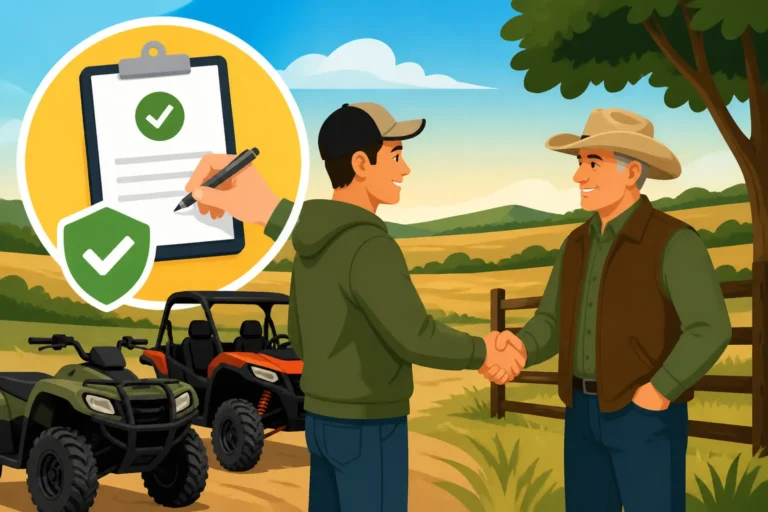
Kansas Noxious Weed Department Exception
It’s a tale as old as time for Kansas ATV and UTV owners: you're trying to get a job done on your property or for your business, and suddenly you hit a public road. You know there are strict rules about riding these machines on paved surfaces, and it can feel like you’re always just one wrong turn away from a ticket. This guide is here to shed some light on a very specific, and often misunderstood, exception to those rules: the Kansas Noxious Weed Department exception, helping you understand when and how you can legally use your off-road machine on public roads for crucial land management tasks.
Understanding Kansas's General Road Rules for ATVs and UTVs
Before we dive into the specifics of the noxious weed exception, it’s essential to grasp the general lay of the land regarding ATVs and UTVs on public roads in Kansas. Most folks assume these machines are simply banned everywhere, and while that’s largely true as a default, there are nuances that can be a real headache to sort out.
The Baseline Ban on City and State Roads
Let's be blunt: generally, your ATV or UTV isn't meant for cruising down Main Street or zipping along a state highway. Kansas law, specifically under [Kansas ATV Road Rules Under 8-15,100], starts with a pretty clear prohibition. These machines are built for dirt, fields, and trails, not for sharing asphalt with cars and trucks. This default ban can be incredibly frustrating, especially if your property is bisected by a county road or you need to move equipment a short distance between fields. You’re trying to be efficient, but the law often feels like it's throwing up roadblocks, forcing you to trailer your machine for even the shortest public road excursions. Many times, you just need to get across the street or down to the next section line, and the idea of loading and unloading a UTV for a quarter-mile trip feels utterly ridiculous. It's a common complaint among rural Kansans who use these machines as indispensable tools, not just recreational toys.
Limited Exceptions for Farm and Agricultural Use
Now, it’s not all doom and gloom. Kansas does offer some relief for agricultural operations. There's a specific [Kansas's Agricultural Exception for Road Use] that allows ATVs and UTVs to be operated on public roads for bona fide agricultural purposes. Think of a farmer needing to drive a side-by-side from one field to another to check crops, move fencing supplies, or even transport workers. This exception acknowledges the vital role these machines play in modern farming. However, it's not a free pass. The operation must be directly related to agricultural work, and you still have to abide by certain common-sense rules, like driving as near the right as practicable and [Kansas Riders Must Keep to the Right]. You might be able to cross a highway, but you can't just joyride down it. The distinction between "agricultural use" and "personal use" can sometimes feel like a blurry line to riders, making them hesitant to use the exception even when they qualify. For instance, hauling a cooler of drinks for a family picnic on your farm might not fall under "agricultural purposes," even if the picnic is on your land.
The Specifics of the Noxious Weed Department Exception
Here’s where it gets really interesting for those involved in land management and environmental control. Beyond the general agricultural exception, Kansas law carves out a very specific allowance for operations related to noxious weed control. This isn't just a minor tweak; it’s a recognition of the critical public service performed by those tackling invasive plants that threaten our ecosystems and agricultural output.
Who Qualifies for This Exception?
This exception isn't for just anyone who happens to be spraying thistles in their backyard. The law is quite particular about who can utilize it. Primarily, this exception extends to individuals and entities directly employed by or under contract with a Kansas Noxious Weed Department, or county weed department. This includes employees of the county itself, as well as private contractors hired to carry out official noxious weed control programs. So, if you’re a county employee driving a UTV equipped with a sprayer to eradicate sericea lespedeza, you're likely covered. Similarly, if you're a private contractor with a contract through the county to manage musk thistle along county ditches, you also fall under this protective umbrella.
It’s crucial to understand that merely owning a property with noxious weeds and deciding to spray them yourself generally doesn't automatically qualify you for this specific exception for road use. You would likely fall under the broader agricultural exception for operations on your own land, but the Noxious Weed Department exception is specifically tied to official, organized weed control efforts on behalf of or contracted by the government. This distinction is vital for avoiding misunderstandings with law enforcement. For example, a farmer spraying bindweed on their own fields would rely on [Kansas's Agricultural Exception for Road Use], but a contractor spraying that same bindweed along a public right-of-way, under a county contract, would be covered by the Noxious Weed Department exception for that specific task.
What Activities Does It Cover?
The scope of activities covered by this exception is narrowly defined and directly linked to the eradication and control of noxious weeds. This means operations such as spraying herbicides, surveying areas for weed infestations, or transporting equipment and personnel specifically for noxious weed control purposes. Imagine a county weed department crew, using their UTVs to access remote areas along ditch lines and section roads where invasive plants like kudzu or Johnson grass are taking hold. They might be carrying specialized spray equipment, herbicides, and safety gear. The key is that the activity must be a direct, necessary part of a noxious weed control program.
It doesn't, for example, cover using the UTV to run into town for lunch, even if you’re doing weed control work that day. The machine's presence on the road must be integral to the weed control task at hand. If you're driving your UTV to a site where you will then spray weeds, that's covered. If you finish spraying and need to drive a short distance down the road to another infested patch, that’s also covered. This exception provides specific permissions for official duties, acknowledging that these machines are often the most practical, and sometimes the only, way to reach certain areas effectively. For instance, traversing a water-logged ditch to apply herbicide to a patch of noxious weeds might be impossible for a full-size truck, making the UTV an indispensable tool that needs road access to get to the next section of ditch.
Where Can These Machines Operate Under the Exception?
This exception specifically permits operation on public roads and highways within the scope of the noxious weed control efforts. This often means county roads, section lines, and state highways where noxious weeds are commonly found in rights-of-way. These are areas that are often difficult, if not impossible, to access with larger vehicles or by foot. The law understands that these machines need to move efficiently from one infested area to another, even if those areas are separated by public roads.
Consider a situation where a contractor is responsible for spraying roadside ditches across several miles of county blacktop. This exception allows them to drive their UTV with the sprayer mounted, moving from one section of ditch to the next without having to load and unload their machine onto a trailer repeatedly. This greatly increases efficiency and reduces the time and labor required for these vital tasks. However, it's not an invitation to drive on interstates or through congested urban areas where the risk to public safety would be too high. The "where" is always tied to the "why"—wherever the noxious weed work needs to happen, and access via a public road is the most practical means. You might be able to drive along the shoulder of a state highway, but you're still expected to adhere to general road safety, [Kansas Sunset to Sunrise Lighting Rules], and visibility requirements.
Practical Implications for Landowners and Contractors
For anyone involved in land management, agriculture, or contracting for weed control in Kansas, understanding this exception is more than just academic. It can directly impact your operational efficiency, safety, and even your bottom line. Knowing how to leverage this provision legally and responsibly is key.
Equipment Considerations for Weed Control
When you're out there tackling noxious weeds, your machine isn't just for riding; it's a mobile workstation. Equipping it properly is paramount, both for efficiency and for meeting any safety expectations while operating on public roads. For instance, many contractors rely on UTVs with robust cargo beds to carry large spray tanks, pumps, and hoses. Companies like SuperATV offer a range of utility accessories, from heavy-duty cargo boxes to complete bed enclosures, that can be incredibly useful for these applications. These additions help secure your equipment, prevent spills, and often provide better protection for your gear from the elements.
Beyond cargo, consider specialized tires that can handle both the varied terrain of ditches and fields, as well as short stretches of asphalt without excessive wear. Skid plates are also a smart investment, as ditch work can often involve hidden obstacles that could damage the underside of your machine. When you're driving from one section to another on a public road, visibility is key. This might mean adding additional amber strobe lights, flags, or even a slow-moving vehicle emblem, even if not explicitly required by the letter of this specific law, they are generally good practices for machines used for work on roads. For example, a crew might add a 40-gallon sprayer to the bed of their UTV, along with a SuperATV heavy-duty bumper for added protection, ensuring their setup is robust for the demanding work.
Documentation and Best Practices
If you're operating under the noxious weed exception, it's always better to be prepared. Law enforcement officers, while generally understanding, might not be immediately familiar with every nuance of every exception in Kansas law. Therefore, carrying documentation that clearly states your purpose can save you a lot of hassle. This might include a copy of your contract with the county weed department, a letter from the department confirming your role, or even your employee ID if you work directly for the county.
Beyond documentation, adhering to best practices while on public roads is crucial. Drive defensively, maintain appropriate speeds for your machine and the road conditions, and ensure your machine is highly visible. This includes proper lighting, especially during dusk or dawn, as outlined in [Kansas Sunset to Sunrise Lighting Rules]. You’re still sharing the road with traffic, and safety should always be your top priority. A simple laminated copy of the relevant statute section in your glove box, alongside your contract and proof of insurance (if required by local ordinances, or as a good practice), can turn a potentially long conversation with a deputy into a quick nod of understanding.
Distinguishing From General Agricultural Use
It’s important to understand that while there's overlap, the noxious weed exception isn't merely a subset of the general agricultural exception. It's a distinct provision. The agricultural exception primarily covers activities directly related to farming or ranching on private land, with limited road use for transitions between fields. The noxious weed exception, however, focuses on a specific public service—controlling designated invasive plants—and allows for operation on public rights-of-way that might not be considered "farm ground."
For instance, a farmer using a UTV to mend fences on their own property would fall under the agricultural exception. But that same farmer, if contracted by the county to spray ditches along a public road for bindweed, would be operating under the noxious weed exception. The nature of the work, and the entity authorizing it, are key differentiators. This distinction is important because it broadens the scope of permissible road use for a very specific, environmentally critical purpose, even for those who might not be traditional "farmers" in the eyes of the law, such as specialized contractors. It allows operations on public land and rights-of-way specifically for a defined public good, which is a stronger justification than simply moving equipment between private fields.
Common Misunderstandings and How to Avoid Them
Even with specific legal provisions, confusion can arise. The complexities of ATV and UTV laws mean that riders, and sometimes even enforcement officers, can misinterpret the nuances. Being aware of these common pitfalls can help you avoid unwelcome encounters or citations.
Not a Blanket Pass for All Off-Road Machines
One of the biggest misunderstandings is treating the noxious weed exception as a "get out of jail free" card for any off-road machine engaged in any type of field work. It is absolutely not a blanket authorization for all utility vehicles on public roads. The exception is highly specific: it must be an ATV or UTV, and it must be actively engaged in official noxious weed control operations, either by a county department or a contractor on their behalf.
This means you can't, for example, use this exception to justify driving your recreational side-by-side to a fishing spot just because you happen to pass through a patch of weeds. Similarly, if you're using your UTV to haul firewood on your own property, and that property happens to have some noxious weeds, you cannot claim this exception to drive down a county road to get to another part of your property. The "purpose" and "who" parts of the exception are critical. The activity must be directly for noxious weed control, not merely incidental to it. If a deputy stops you and you're not visibly equipped for spraying or scouting weeds, and can't provide documentation of your official duty, you could still face penalties for illegal road riding under [Kansas Penalties for Illegal Road Riding].
Local Ordinances and Their Interaction
Kansas law allows individual cities and counties to pass ordinances that can either permit or restrict ATV and UTV use on their local roads. This creates a patchwork of rules across the state. The question then becomes: how do these local ordinances interact with a state-level exception like the noxious weed provision? Generally, state law exceptions, particularly those related to official duties or public services, will supersede local ordinances that might otherwise ban machines. However, local ordinances might still impose specific requirements, such as mandating certain lighting or a [Kansas City Insurance Requirements] for any machine operating on city streets, even if those streets are part of a weed control route.
It's always wise to check with the local county or city government if you're planning extensive operations within their jurisdiction. While the state exception provides a legal basis for road use, local authorities might have specific safety expectations or recommendations. For instance, while a city might normally ban UTVs entirely, their city manager might be aware of the county's weed control contract and simply ask that you display extra flashing lights for visibility. Knowing these local nuances helps ensure a smooth operation and good community relations. For example, [Louisburg's UTV Tag Fees in Kansas] and associated rules would typically apply to recreational riders, but official noxious weed operations might be exempt from some of these local fees, though not necessarily safety requirements.
Enforcement and Proving Your Exception
If you're stopped by law enforcement while operating under this exception, being able to clearly and quickly demonstrate your eligibility is vital. Deputies or state troopers are trained to enforce general road rules, and they might not immediately recognize the specific nuances of the noxious weed exception. This is where your preparedness comes in.
Having your official documentation readily available, such as your contract, a letter from the county weed supervisor, or your employee ID, is crucial. Be polite, explain your mission clearly, and show them the necessary paperwork. Your machine itself should also reflect your purpose—a sprayer mounted in the bed, specific tools for weed control, or official vehicle markings can all help confirm your story. For example, if you're hauling a SuperATV sprayer in the back of your UTV, filled with herbicide, and you have your county contract in hand, an officer is far more likely to understand your situation quickly. Proving your exception effectively often comes down to clear communication and undeniable evidence of your official duties.
Equipping Your Machine for Weed Control Operations
Operating a UTV or ATV for noxious weed control isn't just about legality; it's about functionality, safety, and efficiency. Your machine needs to be a reliable partner in the field, capable of handling the demands of the job while ensuring the safety of the operator and others on the road.
Essential Attachments and Accessories
For effective noxious weed control, your UTV or ATV often needs to be more than just a ride; it needs to be a mobile platform for specialized equipment. The most obvious attachment is a sprayer. These can range from small, electric-powered spot sprayers for ATVs to large, boom-equipped tank sprayers that take up the entire bed of a UTV. You'll need to consider tank capacity based on the acreage you're covering and the specific herbicides you're using. Beyond sprayers, consider cargo management solutions. Heavy-duty cargo boxes or bed liners can protect your machine and help organize tools, chemicals, and safety gear.
Many weed control operations take place in rugged terrain, along ditches, or through dense brush. Protecting your machine with things like brush guards, skid plates, and durable tires is a smart investment. For instance, if you're frequently driving through thorny areas to reach weed patches, upgraded tires with enhanced puncture resistance are invaluable. Think about how SuperATV heavy-duty axles and lift kits could provide the ground clearance and durability needed to navigate challenging off-road conditions while carrying a full sprayer. A winch can also be a lifesaver if you get stuck in a muddy ditch.
Safety Gear for Road and Field Work
While the primary focus of the noxious weed exception is allowing your machine on roads, safety should extend to all aspects of your work. For road travel, visibility is paramount. This means ensuring your machine has functioning headlights, taillights, and brake lights, and consider adding additional amber strobe lights or reflective tape, especially if you're operating during periods of low light or poor visibility. A bright orange flag mounted high on your machine can also make you more visible to passing motorists. [Kansas Lighting Requirements on a Machine] dictates certain standards that should be met.
Beyond machine-mounted safety, personal protective equipment (PPE) is critical when handling herbicides and working in potentially hazardous environments. This includes gloves, eye protection, long-sleeved shirts, pants, and often respirators or masks, depending on the chemicals being used. Even if you're just surveying, wearing appropriate work boots and comfortable, durable clothing can prevent injuries and make long days more tolerable. Don't forget a first-aid kit, easily accessible on your machine, for minor cuts or chemical exposure. For example, if you're operating near busy county roads, a high-visibility vest in addition to your machine's lighting package could significantly enhance your safety.
Maintenance for Demanding Applications
Using your ATV or UTV for demanding tasks like noxious weed control puts extra stress on the machine, necessitating a robust maintenance schedule. Regular oil changes are a given, but also pay close attention to air filters, especially when operating in dusty fields or dry ditches. Mud, chemicals, and frequent starting and stopping can take a toll. Inspect your tires frequently for punctures or excessive wear, as a flat tire in a remote location can cause significant delays.
Keep an eye on your suspension components, as carrying heavy loads like spray tanks can accelerate wear. Brakes should be checked regularly, as stopping a loaded UTV is more challenging than an empty one. And don't forget the sprayer itself—hoses, nozzles, and pumps need routine cleaning and inspection to ensure they're functioning correctly and not leaking hazardous chemicals. A well-maintained machine is not only safer but also more reliable, preventing costly breakdowns in the middle of a critical weed control operation. It also reduces the likelihood of issues during a [Kansas Equipment Checks by Deputies] stop, which often includes lights and basic machine functions.
| Exception Category | Primary Purpose | Permitted Road Use (General) | Key Conditions |
|---|---|---|---|
| Noxious Weed Exception | Official control/eradication of noxious weeds | County roads, section lines, state HWY | Must be for official county/contracted weed control purposes |
| Agricultural Exception | Bona fide farming/ranching activities | Crossing roads, short distances | Direct relation to agricultural work, drive on far right |
| Work-Site Utility Vehicle | Defined work-site tasks, specific dimensions | Designated roadways (city ordinance) | Width < 48", Weight > 800 lbs, Specific seating and steering |
| City Ordinance (General) | Recreational or utility use | Specific city streets only | Requires local ordinance, often city tag, insurance, equipment |
Disclaimer
This article is for general informational purposes only and does not constitute professional advice. Laws, prices and regulations vary by location and change over time. Consult a qualified professional for guidance on your specific situation.