Kansas Disability Permit Application
A disability access permit can help a Kansas resident with a disability use an off-road machine in places where access is otherwise limited, but it is not a general pass for every trail, road, or public property. Before applying, confirm who qualifies, which lands and machines the permit covers, and what documentation Kansas requires. That preparation can prevent a delay or an unusable permit.
What the Kansas disability access permit is for
Kansas has an annual disability access permit for certain off-road machine use. Its purpose is to provide an access option for a person with a disability, not to waive every rule that applies to a machine or to open all public land to motorized riding. The permit’s precise scope matters: permission may depend on the location, the route, the type of machine, and the permit’s conditions.
Start by distinguishing this permit from other approvals. It is not the same as a general state park entrance or camping permit, and it does not automatically authorize riding on private property, city streets, or roads closed to the public. Kansas does not offer a general OHV trail pass that grants access across riding areas. For an overview of what the state permit system covers, see Kansas Park Permit vs Trail Permit.
A disability access permit should also not be confused with a machine’s title or other paperwork. A title establishes ownership records; it does not make an ATV or UTV street legal or give it access to a restricted area. Likewise, a permit for disability access does not replace any title requirement that applies to the machine. Kansas Nonhighway Title Requirements explains the separate title issue.
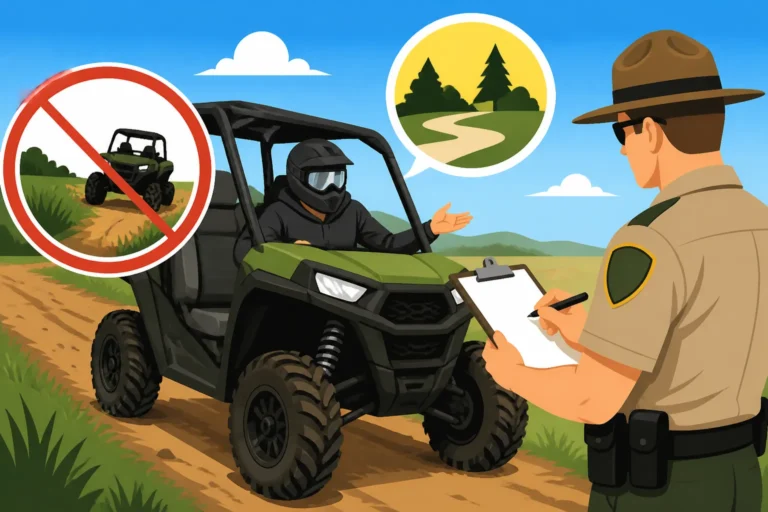
The rules for machines on Kansas Department of Wildlife and Parks property can be especially important. A general rule may limit machines to roads and parking areas, while a disability permit may provide a specific access allowance subject to conditions. Do not assume the permit lets you leave a designated road or enter a closed area. Read the current permit terms and check with the land manager about the exact place you plan to visit. Kansas Machines on Department Roads Only provides related context.
| Question | Why it matters before applying |
|---|---|
| Who is eligible? | The permit is intended for disability-related access, but the current eligibility standard and required evidence need to be confirmed. |
| Which locations accept it? | A permit for one type of land or access arrangement may not apply at another site. |
| Which machine can be used? | The approved machine type, configuration, or use may be limited by the permit conditions. |
| Is the permit annual? | Kansas has annual disability access permits, so ask how the validity period works and when renewal is needed. |
| Does it replace other permissions? | It should not be treated as a substitute for landowner permission, road authorization, or other required permits. |
If the permit is intended for a particular wildlife area or state park, contact that property’s office as well as the agency handling the application. The office can confirm whether the route is open, whether a particular machine can use it, and whether there are site-specific restrictions. These details can change independently of the application process.
How to apply and what to confirm first
The safest application process begins with a call or message to the Kansas Department of Wildlife and Parks, or the office identified on its current disability access permit materials. Ask for the current application and instructions rather than relying on an old form or a secondhand description. The department can confirm where to submit it, what supporting information is needed, and whether the permit is currently available for the access you want.
Use this sequence to keep the application focused:
- Identify the place you want to access. Write down the property name, the entrance or route if known, and the general purpose of the trip. A specific access question is easier to answer than a broad request to ride anywhere in Kansas.
- Describe the machine. Be ready to identify whether it is an ATV, UTV, or another type of off-road machine. Ask whether the permit applies to that class and whether it is associated with the person, the machine, or both.
- Request the current application. Confirm the current form, submission method, and any directions for completing it. Ask whether an electronic copy is acceptable or if an original is required.
- Check the eligibility and documentation rules. Ask what proof of disability is accepted, whether a health-care professional must complete part of the form, and whether the department has a particular standard for evaluating the request.
- Complete every required section. Follow the form’s instructions and make sure the applicant and any required professional have signed where indicated. If a question does not fit your situation, ask the issuing office how to answer it rather than leaving a required field blank.
- Submit the application as directed. Keep a copy of the completed form and any supporting records. If you submit by mail or electronically, retain confirmation that it was sent.
- Wait for written approval and read the conditions. Do not treat an application receipt or pending request as permission to ride. Confirm that the permit has been issued and that your planned location and use fall within its terms.
The application may require information about the applicant’s functional limitations or the type of access being requested. Do not send extra sensitive medical records unless the current instructions ask for them. If the form asks for a professional’s verification, follow the stated process and ask the issuing office whether a particular provider or form of documentation is acceptable.
If the permit process is unclear, ask the department direct, practical questions. For example: “Does this permit cover my planned route at this property?” is more useful than asking only whether the permit allows ATV use. Also ask whether you need to carry the permit, show it at an office or entrance, or present it to a property manager before riding. The current issuing instructions and permit itself should control.
Documents, land access, and limits to check
Gather information before starting the form, but avoid assuming that every applicant needs the same supporting documents. The current application will say what is required. Depending on the process, you may need applicant details, a description of the machine or requested access, and disability-related verification. Confirm the exact requirements with the issuing office before paying for appointments or collecting records.
It is useful to keep these items together while preparing:
- The current application and its instructions
- The applicant’s contact details
- The name of the property or access route in question
- Basic information about the machine
- Any supporting documentation specifically requested
- Contact details for the office that will review the application
- A copy of the submitted materials and the eventual approval
A permit does not grant permission to cross private land to reach public property. It also does not override closures, posted restrictions, unsafe conditions, or a property manager’s instructions. If the route crosses private ground, obtain permission from the owner. If you are visiting a privately operated riding park, check that park’s own accessibility, machine, and entry rules. Kansas private parks set their own conditions, and a state-issued permit should not be assumed to override them.
The permit also does not automatically make a machine legal on public roads. Street use is governed by separate state and local rules, and a city may have its own requirements. A disability access permit for a public-land route does not substitute for an ordinance or a city tag where one is required. See Kansas UTV Street Legal Rules by City for the separate street-use issue.
Similarly, an access permit does not necessarily replace a park or property entrance permit. Ask whether the location requires a separate entrance, camping, or other permit. If you intend to use a machine on a state park road, confirm whether that road is open to the machine and whether the disability permit changes the usual restrictions. The permit’s exact wording and the site’s rules are more reliable than assumptions based on the word “access.”
Before a trip, confirm these details with the land manager:
- The exact area and route where the permit is accepted
- Whether the route is open on your planned date
- Whether the machine type and any passengers are allowed
- Any speed, time-of-day, equipment, or operating restrictions
- Where to display or present the permit
- Whether advance notice or a separate site approval is needed
- What to do if weather, construction, or a closure affects the route
This check is worthwhile even after approval. A permit may remain valid while a specific route is temporarily closed or altered. If a staff member gives you access instructions, write down the name of the office and the date of the conversation so you can follow up if anything is unclear.
After approval, renewals, and common delays
Once approved, read the entire permit and keep a copy accessible while using it. The document may specify the approved activity, machine, property, route, or other conditions. If anything on it differs from what you requested, contact the issuing office before riding. Do not assume that a general approval covers a new property or a different machine.
Kansas disability access permits are annual, so ask the issuing office how the permit period is calculated and when to submit a renewal. Do not guess the expiration date or assume that an old permit remains valid while a renewal is pending. The procedure may require updated information or a fresh application. For renewal considerations, see Renewing a Disability Access Permit Each Year.
A few common problems can slow an application or leave the permit’s scope uncertain:
- Using an outdated form. Confirm that the form and instructions are current before completing them.
- Providing incomplete verification. Check that all required sections and signatures are present.
- Applying without identifying a location. A specific property or route helps the office explain what the permit will and will not authorize.
- Assuming the permit covers every machine. Ask whether it is tied to the applicant, a particular machine, or both.
- Treating a pending application as approval. Wait for the actual permit and read its conditions.
- Confusing access permission with road legality. Road use, title paperwork, and property access are separate questions.
- Relying on verbal assumptions about a site. Confirm route access with the property office, particularly if the trip is planned well in advance.
If an application is denied or the approval does not cover the access you need, ask the reviewing office to explain the decision and whether it accepts additional information or a revised request. Be clear about the practical barrier you are trying to address and the specific location involved. A site manager may be able to explain alternate routes or access arrangements, but an informal suggestion is not the same as written authorization.
For a smooth trip, carry the permit or the proof of approval in the way the issuing office recommends, along with any separate documents the site requires. Keep the property’s contact information available. If access conditions or your intended route change, check again before riding rather than extending the permit’s scope on your own.
Disclaimer
This article is for general informational purposes only and does not constitute professional advice. Laws, prices and regulations vary by location and change over time. Consult a qualified professional for guidance on your specific situation.