Where an Electric UTV Fits in Kansas’s Classes
Kansas law classifies electric UTVs into four core off-road vehicle categories based on vehicle design rather than power source.
Start here, or nothing else is legal.
Resident registration, titling and renewal, and public-use versus private-land fees — plus the age and safety-course rules that decide who may ride.

Kansas law classifies electric UTVs into four core off-road vehicle categories based on vehicle design rather than power source.
Kansas law classifies ATVs and UTVs as nonhighway vehicles, requiring titles and ownership proof without annual registration tags.
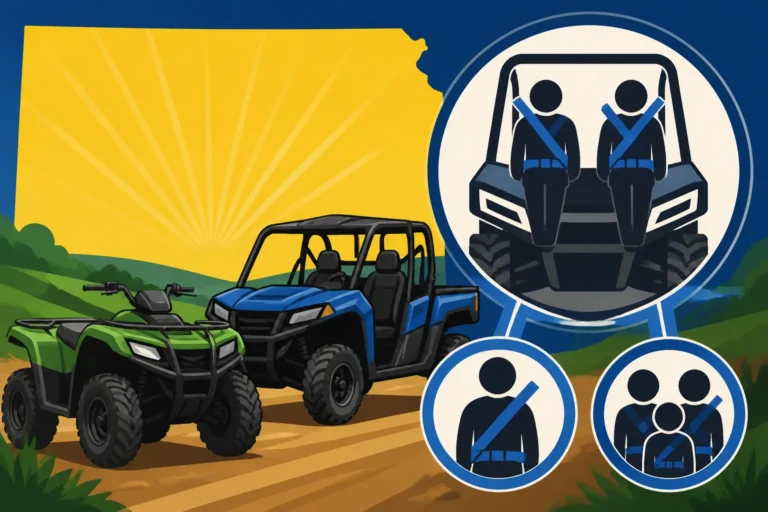
Kansas Work-Site Utility Vehicle seating laws require bench or bucket seats for legal titling and vehicle classification.

Kansas Work-Site Utility Vehicle weight rules explain the over eight hundred pounds requirement for titling side-by-sides.
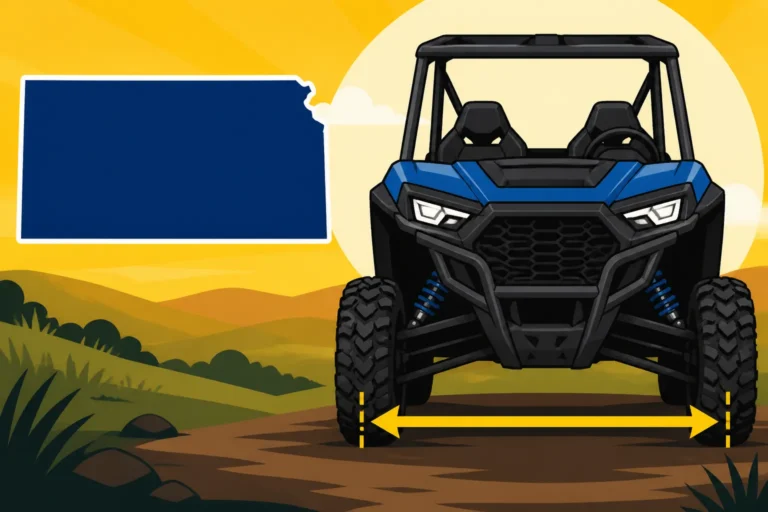
Kansas work-site utility vehicle rules explain the forty-eight inch width requirement and legal classifications for off-road machines.

Kansas nonhighway affidavits and form TR-13 let owners legally title untitled off-road vehicles through county treasurer offices.
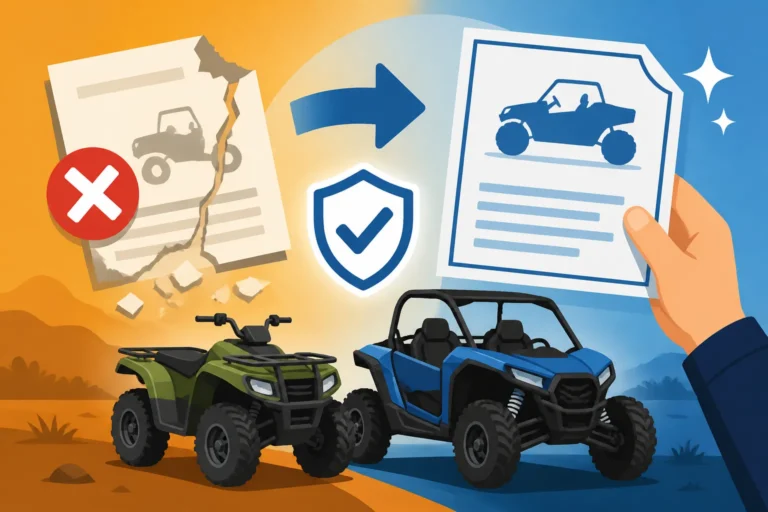
Replacing a lost Kansas nonhighway title requires submitting form TR 212 to your local county treasurer office.

Kansas county treasurer offices process initial title applications, handle transfers, and collect sales tax for off-road vehicles.

Kansas vehicle laws require new ATV and UTV owners to apply for a title at the county treasurer office within sixty days.

Kansas off-road vehicle owners pay a ten dollar fee to establish legal ownership and official documentation for ATVs and UTVs.