Kansas WSUV Seating Requirements
Navigating the specific classifications for off-road machines in Kansas can feel like trying to solve a puzzle with missing pieces, especially when you’re just trying to figure out what kind of machine you actually own or are planning to buy. One of the trickiest parts for many folks revolves around the unique "Work-Site Utility Vehicle," or WSUV, and its very particular seating requirements. This guide will cut through the confusion, explaining exactly what kind of seating Kansas law expects for a WSUV and why it matters for titling your machine.
Understanding the Kansas Work-Site Utility Vehicle (WSUV) Definition
Kansas has a knack for doing things a little differently, and its classification of off-road machines is a prime example. While many states might group everything under "UTV" or "OHV," Kansas breaks it down further, giving us the distinct category of the Work-Site Utility Vehicle. This isn't just bureaucratic jargon; it directly impacts how you title your machine and, in some rare cases, how it might be used.
What Makes a WSUV Unique in Kansas Law
Imagine you're out on a sprawling Kansas farm or a large industrial complex, and you see a side-by-side machine zipping around, hauling tools or supplies. Chances are, that machine might fall under the WSUV umbrella. The state defines these vehicles with a very specific purpose in mind: work. They're built for utilitarian tasks, often at lower speeds, designed for reliability and carrying capacity rather than high-performance trail riding. Unlike ATVs, which are built for a single rider to straddle, WSUVs typically offer a more car-like experience. This distinct classification sets it apart from other common off-road machines, and honestly, it’s a class that you won't find in many other states. If you've ever crossed into Missouri or Oklahoma with your machine, you've likely noticed that the rules and definitions change, underscoring how unique this Kansas category truly is. We're talking about [The Work-Site Utility Vehicle Class No Neighbor State Has].
The Critical Role of Seating in WSUV Classification
Now, let's get down to brass tacks: seating isn't just a comfort feature for a WSUV; it's a fundamental part of its legal identity in Kansas. For a machine to officially qualify as a Work-Site Utility Vehicle, its seating arrangement must meet certain criteria. This is where it profoundly diverges from an All-Terrain Vehicle (ATV). An ATV, by definition, is designed for a rider to straddle the engine, much like a motorcycle. Think about the classic four-wheeler you see bouncing across pastures – that's a straddle-style seat. But a WSUV, due to its work-focused nature and broader definition, requires a different setup entirely. If your machine doesn't have the right kind of seating, it simply won't be titled as a WSUV, potentially pushing it into another category or even making it untitlable if it doesn't fit another niche. This distinction is crucial for anyone looking to get a [Kansas Work-Site Utility Vehicles Explained] title for their machine.
Dissecting WSUV Seating Requirements
When you're dealing with Kansas law, the devil is often in the details, and WSUV seating is no exception. It's not enough to just have "seats"; they have to be the right kind of seats, arranged in a specific way. This often trips up new owners or those buying a machine from out of state where such granular definitions might not exist.
The "Bench or Bucket Seating" Standard
For a machine to truly be a Kansas Work-Site Utility Vehicle, it must be equipped with "bench or bucket seating." Let's break down what that actually means. A bench seat is exactly what it sounds like: a continuous, flat, or slightly contoured seat designed to accommodate multiple passengers side-by-side, much like the front seat of an older pickup truck. You often see these in two-seater UTVs or even larger crew-cab versions, where the entire seating area is one contiguous piece. Bucket seats, on the other hand, are individual, contoured seats, usually with separate backs and bases, designed for a single occupant. Think of typical car seats – those are bucket seats.
The key here is that both bench and bucket seating provide a more traditional, seated-in posture for the operator and passengers, as opposed to the straddling position of an ATV. This design is inherently more stable for carrying tools, equipment, or multiple passengers who aren't actively shifting their weight for off-road maneuvers in the same way an ATV rider would. This distinction is paramount and is one of the first things a county treasurer's office will look for when you bring in your paperwork for a title.
Side-by-Side Passenger Configuration
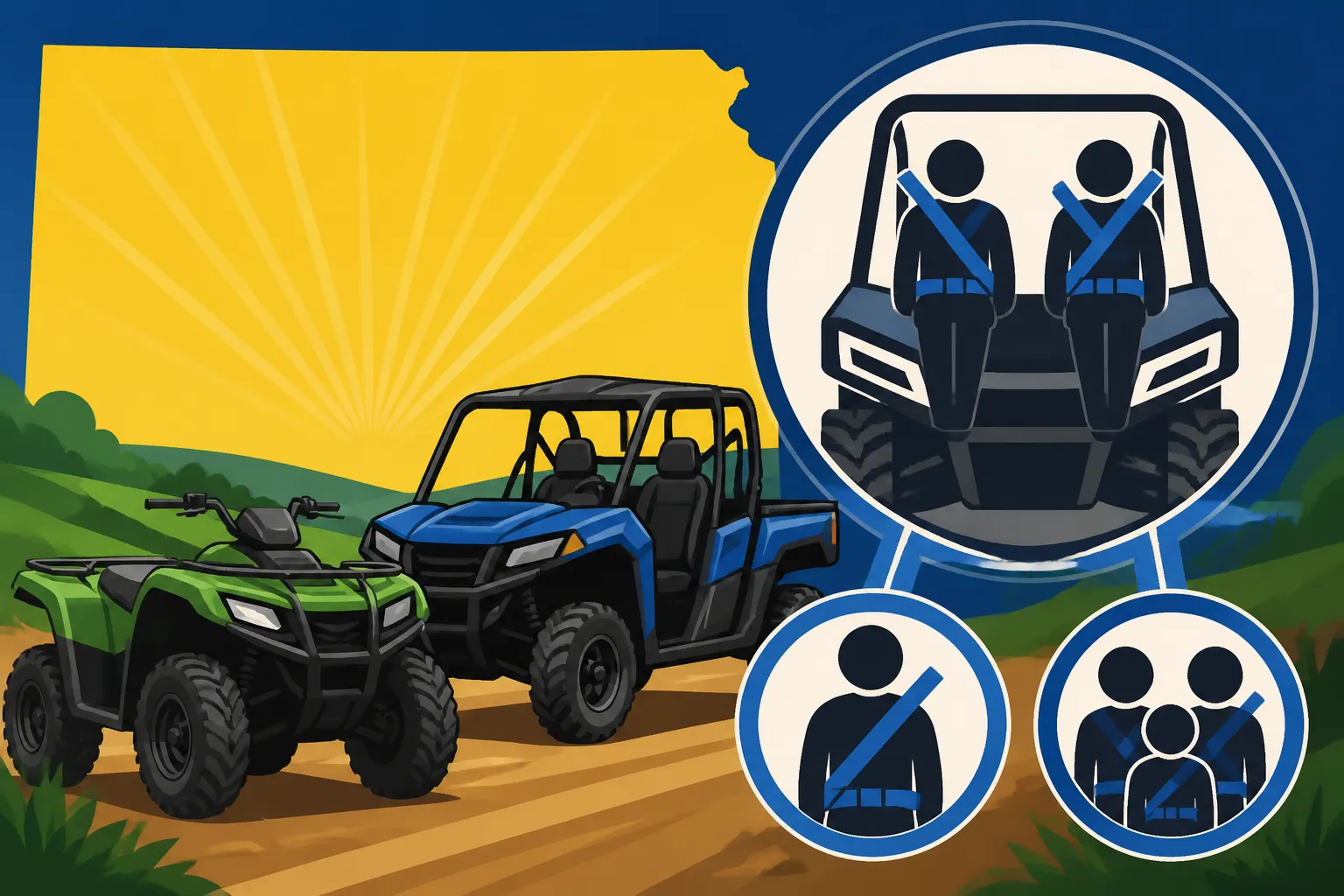
Hand-in-hand with the bench or bucket seating requirement is the "side-by-side" passenger configuration. This means that the operator and any passengers sit next to each other, side by side, rather than one behind the other in a single file or straddling the machine. This is the hallmark of a utility vehicle versus an ATV. The legal language is pretty clear: it needs to be "designed to carry one or more passengers side-by-side." So, if you're looking at a machine where passengers would sit directly behind you, tandem style, it's probably not going to qualify as a WSUV based on its seating.
This particular configuration is fundamental to the very concept of a side-by-side utility vehicle, as the name implies. It's about shared space and a different kind of operational stability compared to a quad. Understanding that it requires [Bench or Bucket Seating Side by Side] is key to correctly identifying and titling your machine in Kansas. This is part of what makes [What Makes a Side-by-Side a Work-Site Utility Vehicle] specific to the Sunflower State's laws.
Beyond Seating: Other WSUV Defining Characteristics
While seating is a crucial piece of the puzzle, it's important to remember that it's just one part of a multi-faceted definition for a Kansas WSUV. These machines are defined by a combination of features that, when taken together, paint a clear picture of their intended use and classification. Overlooking any one of these details could lead to issues when it comes time to title your machine.
Width and Weight Restrictions
Beyond the specific seating arrangements, Kansas law also imposes strict limitations on the physical dimensions of a WSUV. For instance, the machine's width is carefully measured. To qualify as a WSUV, it must be no more than 48 inches wide. This narrow profile is often indicative of older, more compact utility vehicles or those specifically designed for tight spaces on a work site. There's also a weight requirement: the machine must weigh more than 800 pounds unladen (meaning without any cargo or passengers). So, if you're eyeing a machine that's wider than 48 inches or weighs less than 800 pounds, even if it has perfect bench seating, it won't be titled as a WSUV. These two metrics, along with seating, form the trifecta of a WSUV's basic definition. It’s important to understand these specific measures, as detailed in [48 Inches and 800 Pounds] and [800 Pounds Unladen for a Work-Site Vehicle], and to know precisely [48 Inches Measured How].
Four or More Nonhighway Tires and Steering Wheel
Further differentiating WSUVs from other off-road vehicles are their tire and control specifications. A WSUV must have "four or more nonhighway tires." This pretty much covers most modern side-by-sides, which typically have four wheels. The "nonhighway" part simply means the tires aren't designed or rated for sustained use on public paved roads, fitting with the off-road, work-site intent.
Perhaps even more telling is the requirement for a steering wheel. This seems obvious for a vehicle with side-by-side seating, but it's a critical legal point that separates it from ATVs. ATVs are controlled with handlebars, much like a motorcycle. A WSUV, conversely, operates with a steering wheel, providing a more intuitive and familiar control scheme for someone accustomed to driving a car or truck. This distinction, [Why a Steering Wheel Changes Your Title Class], is fundamental in how the state categorizes these machines and impacts everything from titling to potential road use permissions, however rare those might be.
Titling Implications of WSUV Seating
Understanding the nuances of WSUV seating isn't just for trivia night; it has very real, practical implications when it comes to legally owning and operating your machine in Kansas. The state's classification system is designed to ensure that vehicles are titled correctly, which in turn affects everything from sales tax collection to potential use restrictions.
Ensuring Proper Classification for Titling
When you head to your local county treasurer's office to title your new-to-you WSUV, the clerks aren't just rubber-stamping paperwork. They're verifying that the machine you're presenting actually fits the legal definition for the title you're requesting. This is where the seating requirements, along with width, weight, and steering, come into sharp focus. If your machine doesn't clearly meet the "bench or bucket seating" and "side-by-side" criteria, it could cause delays or even rejection of your WSUV title application. They might ask questions, or if it's a used machine, they might want to see documentation from the previous owner.
The process for getting a title for any machine in Kansas involves carefully reviewing the vehicle's characteristics against state law. Your [Kansas County Treasurers Handle Titles], and they're trained to spot discrepancies. It's not uncommon for folks to think they have a WSUV, only to find out it's technically an ATV or another "nonhighway vehicle" due to a subtle difference in its features. This is why having your ducks in a row with the correct classification before you walk through their door can save you a lot of headache. Remember, getting your machine properly titled is a non-negotiable step for legal ownership in Kansas. While [Kansas Machines Exempt From Registration] are common, titling is still required.
The Impact of Modifications on WSUV Classification
What if you're a tinkerer, someone who loves to customize their machine? Or maybe you bought a used WSUV that someone else had already modified. This is where things can get particularly sticky regarding classification. If you alter the seating of your machine – say, you remove the bench seat and replace it with a single straddle seat (a highly unlikely, but hypothetical, scenario for a WSUV), or you add a third row of seats in a configuration that no longer aligns with the "side-by-side" design – you could inadvertently change its legal classification.
Suddenly, your WSUV might no longer meet the definition. This could lead to issues if you ever try to sell it, as the new owner might struggle to title it correctly, or if law enforcement ever questions its classification. If you've made significant modifications to a machine's seating, it's wise to document these changes thoroughly. In situations where original paperwork might not fully reflect the current state of the machine, or if you're dealing with a private sale where the previous owner didn't provide complete documentation, creating clear, notarized affidavits can be incredibly helpful. Resources like LawDepot can provide templates for bills of sale or affidavits that explicitly detail the machine's features, including its seating, and any modifications made, ensuring you have a clear paper trail should questions arise. This type of detailed documentation is critical, especially when dealing with unique situations that might require [Kansas Nonhighway Affidavits] to clarify a machine's features or chain of ownership.
Practical Considerations for WSUV Owners
Beyond the legal definitions and titling procedures, there are everyday realities for WSUV owners in Kansas. From the initial purchase to how you use your machine, understanding the seating requirements has practical implications that can affect your experience and safety.
Purchasing a WSUV: What to Look For
If you're in the market for a Work-Site Utility Vehicle, especially if you're buying it from a private seller, paying close attention to the seating is paramount. Don't just assume it's a WSUV because the seller says it is, or because it looks like one. Take the time to physically inspect the machine. Does it have bench or bucket seating? Are the passengers clearly intended to sit side-by-side with the operator? Does it meet the width and weight requirements? These are all critical questions to ask and verify before money changes hands.
Always insist on complete paperwork. A clear bill of sale is essential for titling, especially when buying a used machine. If the seller doesn't have a formal bill of sale, or if you want to ensure all the machine's features are accurately described for future reference, consider using a service like LawDepot to draft a comprehensive bill of sale. This document can explicitly state the machine's make, model, VIN, and importantly, its seating configuration, providing you with solid proof for the county treasurer's office. This due diligence during the purchase process can prevent a lot of headaches down the line when you attempt to title it. For more on this, check out [Buying From a Private Seller in Kansas].
Passenger Safety and Legal Riding
While WSUVs are generally considered nonhighway vehicles and are not typically street-legal by default in Kansas, how you utilize their seating impacts safety and adherence to manufacturer guidelines. Always make sure you're only carrying the number of passengers the WSUV was designed to accommodate. Overloading a machine, regardless of its seating type, can compromise stability, handling, and braking, leading to dangerous situations. The design of WSUV seating – bench or bucket, side-by-side – is intended to keep passengers secure within the vehicle's frame, offering a measure of protection that an ATV simply cannot with its straddle-style seating.
Even though WSUVs are meant for work sites, farms, or private property, if you do find yourself on a permitted county road (which is a very limited scenario and often requires specific local ordinances), ensuring all passengers are properly seated and belted, if the machine is equipped with restraints, is crucial. While Kansas doesn't have statewide universal helmet laws for ATVs or UTVs, common sense and safety dictate that proper protective gear should always be worn, especially by children. It’s also wise to review general guidelines like [Kansas Rules for Passengers on a UTV] even if WSUVs are a distinct class, as many safety principles overlap. Ultimately, the seating of your WSUV is there to provide a safe, stable platform for your work tasks and recreational enjoyment on appropriate terrain, so respecting its design is paramount.
Here's a quick comparison of seating characteristics across different Kansas machine types:
| Feature | ATV (All-Terrain Vehicle) | WSUV (Work-Site Utility Vehicle) | Golf Cart |
|---|---|---|---|
| Seating Type | Straddle (motorcycle-style) | Bench or bucket seating | Bench seating (usually two or four-seater) |
| Passenger Configuration | Single rider straddles; some models allow a passenger directly behind | Side-by-side with operator | Side-by-side with operator |
| Control Interface | Handlebars | Steering wheel | Steering wheel |
| Purpose | Recreational, sport, utility work (straddle-style) | Work-site specific, utility tasks | Recreational, short-distance transport (low speed) |
| Kansas Registration | [Kansas Has No OHV Registration] | None, but [Kansas Nonhighway Title Requirements] applies | None, but titling may be required if used on roads often |
| Common Use Location | Trails, off-road, private land | Private land, construction sites, large properties | Golf courses, private communities, city streets (with ordinance) |
Understanding these distinctions is essential for navigating the world of off-road machines in Kansas, ensuring your vehicle is titled correctly and used safely.
Disclaimer
This article is for general informational purposes only and does not constitute professional advice. Laws, prices and regulations vary by location and change over time. Consult a qualified professional for guidance on your specific situation.