How Kansas Law Defines a Nonhighway Vehicle
One of the biggest headaches for folks diving into the world of ATVs and UTVs in Kansas is figuring out what exactly their machine is in the eyes of the law. It’s easy to get confused by terms like "nonhighway vehicle" or "work-site utility vehicle," and this guide is here to untangle those definitions, helping you understand where your quad or side-by-side fits in the Kansas legal landscape and why those distinctions matter for everything from titling to where you can actually ride.
Understanding the Foundation of Nonhighway Vehicles in Kansas
When you first bring home an ATV or UTV, the immediate question often revolves around riding it. But before you even think about hitting the trails or cruising a county road, you need to understand how Kansas law classifies your machine. This isn't just bureaucratic red tape; it's the very foundation for how you'll title it, what taxes you'll pay, and where you're legally allowed to operate it. Ignoring these initial definitions can lead to a world of frustration down the line, from unexpected fines to issues with proving ownership.
What "Nonhighway" Really Means to the State
The term "nonhighway vehicle" is where a lot of the initial confusion crops up. Many people hear "nonhighway" and immediately think "no paperwork," which couldn't be further from the truth. In Kansas, a nonhighway vehicle simply means it's not primarily designed for use on public roads and highways. This classification is crucial because it dictates that while your machine needs a title, it does not require an annual registration tag like a car or truck. This exemption from annual registration is a relief to many owners, but it absolutely does not mean the state doesn't track it.
The state requires a title to establish legal ownership, much like any other significant asset. So, even though you won't be slapping a license plate on your quad, you'll still be making a trip to your local county treasurer's office to get the proper documentation. It's a key distinction that sometimes gets lost in translation, leading new owners to mistakenly believe their machine exists in a legal gray area. Don't fall into that trap; a title is your proof of ownership, and it's essential. This is why [Kansas Titles ATVs as Nonhighway Vehicles] is such an important concept to grasp from day one. You'll find that understanding this core difference saves you a lot of guesswork later on.
The Broad Umbrella of Chapter 8
To really get to the bottom of how Kansas defines these machines, you have to look at Chapter 8 of the Kansas Statutes. This is the big book where all the rules for motor vehicles, nonhighway vehicles, and everything in between are laid out. Chapter 8 serves as the guiding force, creating distinct categories for different types of machines. It’s here that the state systematically groups various vehicles, drawing clear lines between what constitutes a "motor vehicle"—designed and intended for street use—and what falls under the "nonhighway" classification.
This chapter meticulously details the physical characteristics and design intentions that place a machine into its proper category. It differentiates between a traditional car, a motorcycle, and then, separately, the various types of off-road machines. It's a comprehensive framework that ensures consistency in how these vehicles are treated legally across the state. Understanding that these definitions are enshrined in Chapter 8 helps clarify why certain machines have specific requirements and restrictions. For instance, the specific characteristics that define an ATV as such are clearly detailed in [An ATV Defined in Chapter 8], making it easier for owners and authorities alike to categorize these machines correctly.
Key Characteristics of an All-Terrain Vehicle (ATV)
When we talk about ATVs, most of us have a pretty good mental picture: a quad, designed for rugged terrain, with an engine that lets you blast across fields and trails. But the law has a more precise definition, one that zeros in on specific features that differentiate it from other off-road machines and certainly from anything you'd legally drive on a paved highway. It’s these specific points that determine its nonhighway vehicle status and, consequently, its titling requirements.
Engine, Seating, and Handlebars
The classic ATV, as defined by Kansas law, has a few signature characteristics that set it apart. First and foremost, it's designed to be ridden by an operator who straddles the seat. Think of a saddle, like on a horse or a dirt bike, where the rider sits on the machine, not in it. This is a fundamental difference from a side-by-side or a car, where you sit in a bucket or bench seat. Secondly, ATVs are steered with handlebars, not a steering wheel. This handlebar control provides a distinct riding experience and is a critical part of its legal definition.
These features—the straddled seat and handlebar steering—are central to its classification as an ATV. While some larger ATVs might be factory-designed to accommodate a passenger, the primary design intent is for a single operator. These specific design choices not only influence how the machine is operated but also how it's legally viewed and titled in Kansas. It's why [Why an ATV Is Titled as a Nonhighway Vehicle] as it is, separate from other types of machines. If your machine fits this description, you’re almost certainly dealing with an ATV in the eyes of the state.
Four or More Low-Pressure Tires
Another defining characteristic that Kansas law highlights for an ATV is its tire setup. An ATV must have four or more low-pressure tires. The "low-pressure" aspect is key here. These are not your typical car tires, inflated to 30-40 PSI. Instead, they’re designed to run at much lower pressures, often 5-10 PSI, which allows them to flex and grip uneven terrain better, providing flotation over soft surfaces like sand or mud. This design choice is fundamental to the ATV's off-road capability and its legal classification.
The requirement of "four or more" tires also plays a role in differentiating ATVs from two-wheeled dirt bikes. A quad, by definition, has four wheels, meeting this criterion. Some older or specialized ATVs might even have six wheels, which would still fall under this definition. This specific tire configuration is integral to how the machine functions off-road and is a clear indicator for legal classification. It highlights the machine's intended use and distinguishes it from other vehicles. For a deeper dive into this, check out [Four or More Nonhighway Tires]. These tire characteristics are not just for performance; they are legislative touchstones.
The Nuances of a Utility Vehicle (UTV) as a Nonhighway Vehicle
While ATVs are generally understood as a single category, Utility Vehicles (UTVs), also known as side-by-sides, introduce a bit more complexity into the Kansas nonhighway vehicle definition. They share the off-road capability but differ significantly in design and, sometimes, in their specific legal classifications, particularly for the Work-Site Utility Vehicle category. It’s vital to understand these distinctions because they can influence where and how you’re permitted to operate your machine.
Side-by-Side Seating and a Steering Wheel
The most obvious difference when comparing a UTV to an ATV is the seating arrangement and steering mechanism. UTVs feature side-by-side seating, meaning the driver and any passengers sit next to each other, similar to how you would in a car or truck. This arrangement typically allows for multiple passengers, ranging from two to six or even more, depending on the model. Furthermore, UTVs are equipped with a steering wheel, providing a more car-like driving experience compared to the handlebars of an ATV. These two characteristics are fundamental to their legal definition and are what immediately distinguish them.
These design choices are not just about comfort; they are critical in how Kansas law categorizes these machines. For instance, the presence of a steering wheel is a significant factor in determining its classification, especially when considering if it might qualify as a Work-Site Utility Vehicle (WSUV). The law specifically looks for these features to place the machine into the correct category. For more on this, you might be interested in [Why a Steering Wheel Changes Your Title Class] and [Bench or Bucket Seating Side by Side]. These features directly influence the paperwork you'll file and the rules that apply to your machine.
Weight, Width, and Designated Use
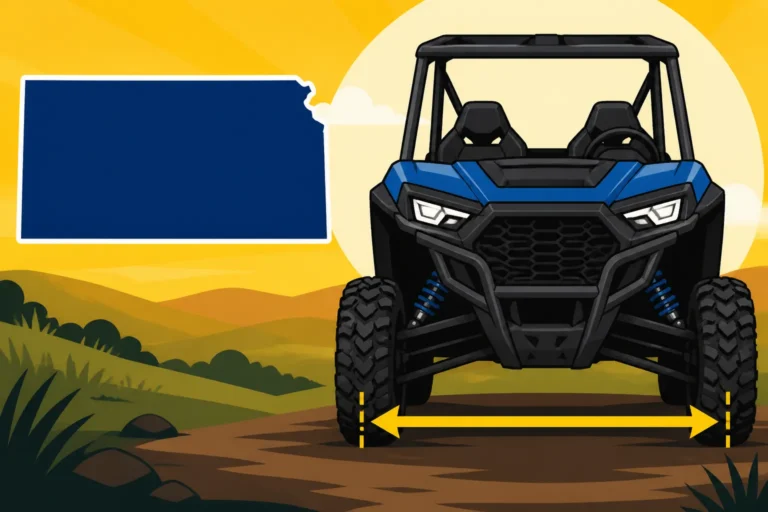
Beyond seating and steering, the legal definition of a Work-Site Utility Vehicle (WSUV) in Kansas also zeroes in on specific physical dimensions: its unladen weight and overall width. For a UTV to be classified as a WSUV, it must typically have an unladen dry weight of over 800 pounds and be 48 inches or more in width. These specifications aren't arbitrary; they're designed to categorize larger, more robust utility-focused machines separately from smaller, recreational ATVs. The intent is to differentiate serious workhorses from lighter recreational vehicles.
Additionally, while not explicitly part of the "nonhighway" definition, the designated use of a UTV often plays a role in how owners perceive its classification, especially if they are using it for specific tasks on a farm, ranch, or construction site. While the physical characteristics are paramount for its initial titling, the common usage can sometimes blur the lines for owners. However, the law prioritizes those measurable dimensions. It's really the combination of these factors – the side-by-side seating, steering wheel, weight, and width – that firmly places a UTV into its specific legal box. For those with larger utility machines, delving into [What Makes a Side-by-Side a Work-Site Utility Vehicle] and [48 Inches and 800 Pounds] will provide crucial clarity on how your machine is classified.
Other Machines Classified as Nonhighway Vehicles
The nonhighway vehicle category in Kansas isn't exclusive to ATVs and UTVs. There are other common machines that, despite their varied appearances and uses, also fall under this same umbrella. Understanding their specific definitions is just as important, especially if you own or are considering purchasing one of these vehicles. Their classification dictates similar titling requirements and road-use restrictions, often with specific local exceptions.
Golf Carts and Micro Utility Trucks
Golf carts are a familiar sight, often seen cruising around golf courses, retirement communities, or even small towns that have adopted ordinances to allow their limited street use. In Kansas, a golf cart is typically defined as a low-speed, four-wheeled vehicle specifically designed and manufactured for operation on a golf course for sporting or recreational purposes. Their top speed is usually quite limited, and their design clearly points to a leisurely, short-distance use rather than robust transportation.
Micro Utility Trucks, on the other hand, are a bit less common but are still defined under the nonhighway umbrella. These are generally small, four-wheeled vehicles, often resembling miniature trucks with an open bed for hauling light loads. They are designed for utility tasks, often found on large properties, campuses, or within industrial parks. Both golf carts and micro utility trucks are by default nonhighway vehicles, meaning they require a title but no annual registration. However, it's particularly with these two categories that local ordinances often come into play, potentially allowing their use on certain city streets under specific conditions. You can find more specific legal definitions in [What the Law Counts as a Golf Cart] and [What Counts as a Micro Utility Truck].
The Importance of Manufacturer's Designation
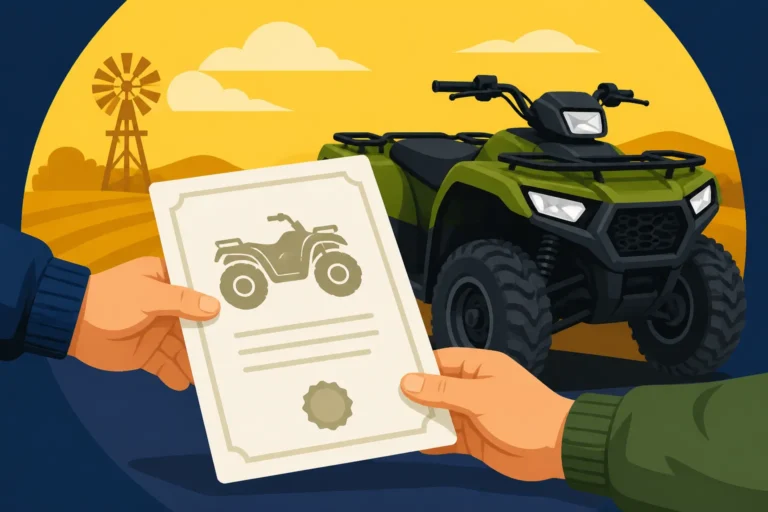
When you purchase a new ATV, UTV, golf cart, or micro utility truck, the very first piece of legal documentation you receive is the Manufacturer's Certificate of Origin (MCO). This document is absolutely critical because it contains the manufacturer's official designation of what kind of vehicle it is. In Kansas, the MCO plays a huge role in the initial classification and titling of your machine. What the manufacturer says it is—whether an ATV, a UTV, or a WSUV—heavily influences how the state's county treasurers will process your title application.
Think of the MCO as the vehicle's birth certificate. It provides the initial, authoritative statement of its design and intended purpose. When you take this MCO to the county treasurer's office to apply for your title, the clerks will use this document as the primary source for determining the machine's legal class. This is why it’s so important to keep your MCO safe and intact. It simplifies the titling process by providing a clear and undisputed classification from the start. For further details on this crucial document, you might want to read [Why the Manufacturer Decides Your Title Class] and [Taking an MCO to the County Treasurer's Window]. This initial designation is the cornerstone of your machine's legal identity in Kansas.
Implications of Nonhighway Classification
Understanding that your machine is a "nonhighway vehicle" isn't just an academic exercise; it has very real, tangible consequences for you as an owner. From the paperwork you need to file to where you can actually take your machine, this classification shapes your entire ownership experience in Kansas. Misinterpreting these implications can lead to legal issues, so it’s essential to be clear on what this status means for you.
Titling Requirements vs. Registration Exemption
This is perhaps the most common point of confusion for new ATV and UTV owners in Kansas: the difference between titling and registration. As a nonhighway vehicle, your machine is explicitly exempt from annual state registration fees and the need for a license plate. This means you won't get an annual tag to renew, nor will you have to worry about displaying a plate on your quad or side-by-side. Many owners breathe a sigh of relief at this, as it eliminates one annual expense and piece of paperwork. You can read more about this exemption in [Kansas Has No OHV Registration].
However, this exemption from registration does not mean your machine is exempt from titling. A title is still absolutely mandatory. The title is your proof of legal ownership, establishing a clear chain of custody for the machine. It's vital for buying, selling, or even claiming your machine if it's ever stolen. Without a title, proving you own your ATV or UTV becomes incredibly difficult. So, while you're free from annual tags, that trip to the county treasurer's office to get your [Kansas's Nonhighway Title Explained] is a non-negotiable step. There is a nominal fee for this title, as detailed in [Kansas Charges $10 for a Title], making it an affordable but critical piece of your ownership puzzle.
Road Use Restrictions and Local Ordinances
Perhaps the most significant implication of a nonhighway vehicle classification is its impact on where you can legally ride. By default, a nonhighway vehicle, including ATVs and most UTVs, is generally restricted from use on public roads, highways, and most city streets in Kansas. The very term "nonhighway" indicates its intended use is off the paved public thoroughfares. This blanket restriction often surprises new owners who might assume their machine can be driven anywhere a car can go.
However, Kansas law provides an important caveat: local municipalities have the authority to pass their own ordinances to allow limited road use for certain types of nonhighway vehicles within their city limits. This is particularly common for UTVs and golf carts. So, while [Kansas Bans ATVs on City Limits by Default], a city like Louisburg or Andover might have an ordinance allowing UTVs on specific streets, usually with conditions like a city-issued permit, insurance, and speed limits. These ordinances vary wildly from town to town, so it is absolutely critical to check the specific rules for any city you plan to ride in. Many riders find it helpful to look up these local ordinances using resources like LawDepot for general templates or forms if they need to create specific affidavits for title transfers related to unique circumstances. Otherwise, a call to the city clerk's office is your best bet. Always investigate the local rules before you ride on a road, as penalties for illegal road riding can be steep. You can explore this further by checking out [Kansas UTV Street Legal Rules by City] to see how varied these local rules can be.
Nonhighway Vehicle Classification Summary
To help clarify the differences between common nonhighway vehicles in Kansas, here's a table summarizing their key defining characteristics and their general legal status. This can be a handy reference when you're trying to figure out where your machine fits or if you're considering a new purchase.
| Characteristic | All-Terrain Vehicle (ATV) | Utility Vehicle (UTV) / Work-Site Utility Vehicle (WSUV) | Golf Cart | Micro Utility Truck |
|---|---|---|---|---|
| Seating | Straddled seat (operator sits on machine) | Side-by-side seating (operator sits in machine) | Bench or bucket seating | Bench or bucket seating |
| Steering | Handlebars | Steering wheel | Steering wheel | Steering wheel |
| Tires | Four or more low-pressure tires | Four or more low-pressure tires | Four wheels, typically small, street-style tires | Four wheels, typically small, utility-style tires |
| Primary Use | Recreational off-road, sport, light utility | Utility, recreation, work (heavy-duty off-road) | Golf courses, short-distance transport | Utility, light hauling, campus/industrial use |
| Weight/Width (WSUV) | No specific minimum for ATV | Often over 800 lbs unladen & 48+ inches wide for WSUV status | No specific minimum | No specific minimum |
| State Registration | No annual registration/tag required | No annual registration/tag required | No annual registration/tag required | No annual registration/tag required |
| State Titling | Required | Required | Required | Required |
| Road Use (Default) | Generally prohibited on public roads | Generally prohibited on public roads | Generally prohibited on public roads | Generally prohibited on public roads |
| Local Road Use | Rarely permitted, some agricultural exceptions | Often permitted by city ordinance (local rules vary widely) | Often permitted by city ordinance (local rules vary widely) | Occasionally permitted by city ordinance (local rules vary) |
Navigating the world of ATVs and UTVs in Kansas doesn't have to be a bewildering experience. By understanding these core definitions and how the state classifies your machine, you're empowered to make informed decisions about titling, riding locations, and legal compliance. It all starts with knowing what you own in the eyes of the law, setting you up for countless hours of enjoyable and worry-free riding across the Sunflower State.
Disclaimer
This article is for general informational purposes only and does not constitute professional advice. Laws, prices and regulations vary by location and change over time. Consult a qualified professional for guidance on your specific situation.