Kansas Commercial Guiding Rules
Kansas commercial ATV and UTV guiding depends on landowner approval, route rules, and separate business and insurance checks before customers ride.
Your sticker stops at the state line.
Non-resident permits, what they cost and how long they last, and which states honor each other’s — or, increasingly, none at all.
Kansas commercial ATV and UTV guiding depends on landowner approval, route rules, and separate business and insurance checks before customers ride.
Kansas filming permits on public land depend on the manager, shoot type, and vehicle access; confirm each approval before filming an ATV or UTV ride.
Kansas ride event permits depend on the venue: get written land approval and confirm rider rules; a park pass is not event permission.
Kansas fire restrictions vary by county, park, and landowner; check active orders before riding, camping, or lighting anything during dry weather.
Kansas sound limits vary by riding area, so check the park’s current testing method and exhaust rules before towing your ATV or UTV.
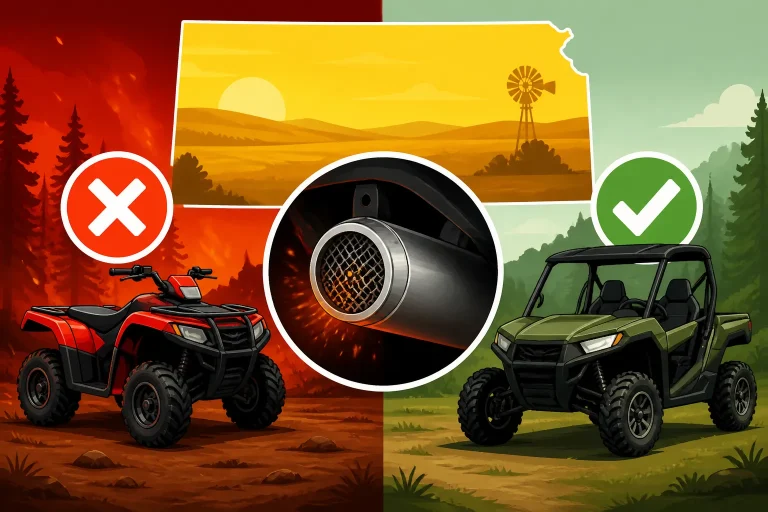
Spark arrester rules vary by Kansas ATV and UTV riding area. Check the facility’s current requirements and confirm your exhaust setup before towing.
Kansas ATV and UTV riders should carry practical ownership records, but a title is not a trail permit or permission to ride; check park rules before unloading.
Colorado ATV and UTV visitors generally need no Kansas state OHV sticker, but riding areas and roads can impose separate permits and rules.
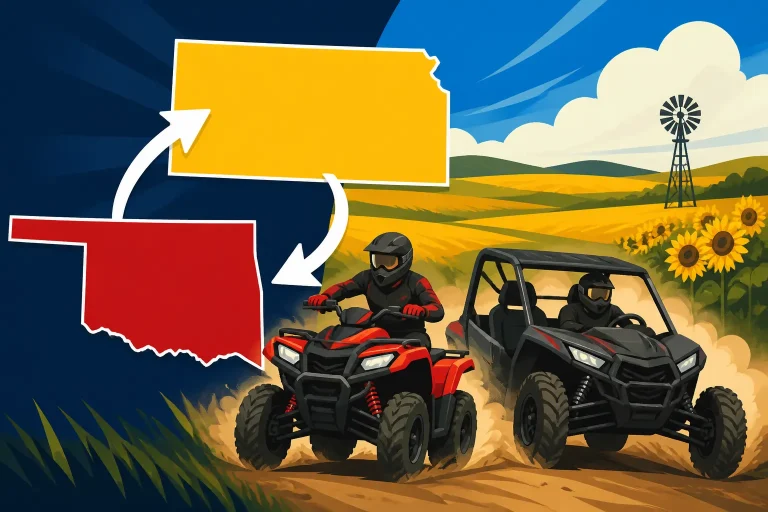
Kansas visitors from Oklahoma do not need a statewide OHV sticker, but must check Kansas riding-site permits, local rules, and road access before riding.
Nebraska ATV and UTV visitors generally need no Kansas statewide trail sticker, but park, private-land and road rules still determine where they can ride.