Bringing a Dog to a Kansas Riding Park
Taking a dog to a Kansas ATV or UTV park takes more planning than packing a leash. A park may allow pets at a campsite but restrict them near trails, staging areas or events. Check the rules with the specific park before loading up, then plan how to keep your dog safe around moving machines, noise and other visitors.
Check the park’s pet rules before you go
Kansas riding parks do not all have the same rules. Private parks set their own policies, and the rules can differ between riding areas, campgrounds and special events. A dog being allowed at a park does not necessarily mean it can go on the trails or stay loose near machines.
Start with the park’s official rules, then call or message the operator if anything is unclear. The park’s Kansas Private Park Pet Rules can help you know what to ask, but confirm details directly with the place you plan to visit. Ask about dogs in each part of the property, not just whether pets are allowed.
Useful questions include:
- Are dogs allowed on riding trails, or only in campgrounds and other non-riding areas?
- Must dogs be leashed at all times? Are there leash-length or enclosure requirements?
- Can a dog stay at a campsite while its owners ride?
- Are dogs allowed in spectator areas, staging zones or event spaces?
- Are there rules about barking, waste cleanup or leaving a dog unattended?
- Are there restrictions during busy weekends or organized rides?
- Does the park require proof of vaccinations or other documents?
- Are there designated areas for walking dogs?
Get the answer for your actual visit dates. A park might handle an ordinary weekend differently from a crowded event, and rules can change. If the information online is brief or old, contact the operator rather than relying on a social media comment or another rider’s memory.
| Question | Why it matters | What to confirm |
|---|---|---|
| Can dogs enter the park? | Pet access may be limited to certain areas. | Whether the rule covers the trails, campground and staging area |
| Can a dog ride on an ATV or UTV? | Permission and safety are separate issues. | Whether the park allows it, and whether the machine is designed for an animal passenger |
| Can the dog stay at camp? | You may be away from the site for hours. | Supervision, restraint and noise rules |
| Are there event-day restrictions? | Crowds and machine traffic can make the setting less suitable. | Any temporary limits or designated pet areas |
If the park does not allow dogs on trails, do not assume that carrying the dog in a UTV makes it acceptable. Ask specifically. A dog in a vehicle can still be exposed to noise, dust and sudden movement, and the park may treat the machine as part of the riding area.
The same check applies to camping. Some riding destinations have camping close to trails, while others have separate sites or limited facilities. If you are choosing a place partly because you want to bring your dog, compare the park’s pet policy with the camping details in Kansas OHV Camping With Trail Access and Kansas Private Park Camping Rules. Confirm both before making the trip.
Decide whether the ride suits your dog
Even when a park permits dogs, the day may not be right for every dog. Riding areas can be loud and dusty, with unfamiliar people, engines, trailers and other animals nearby. A dog that is comfortable on quiet walks may be frightened by a busy staging area or unsettled by a long stretch of engine noise.
Consider your dog’s behavior and health before deciding. Can it remain calm around machinery? Does it reliably respond to you when there are distractions? Is it comfortable being close to other dogs and people? Can it handle the weather and the time away from home? If the answer is uncertain, a day at a riding park may be stressful for the dog and distracting for you.
A dog should not be loose around ATVs, UTVs or trailers. Drivers may have limited visibility, especially when backing, turning or moving through a crowded staging area. A dog can also dart toward a trail or react suddenly to a passing machine. Keep your dog under control and well away from vehicle movement, following the park’s rules.
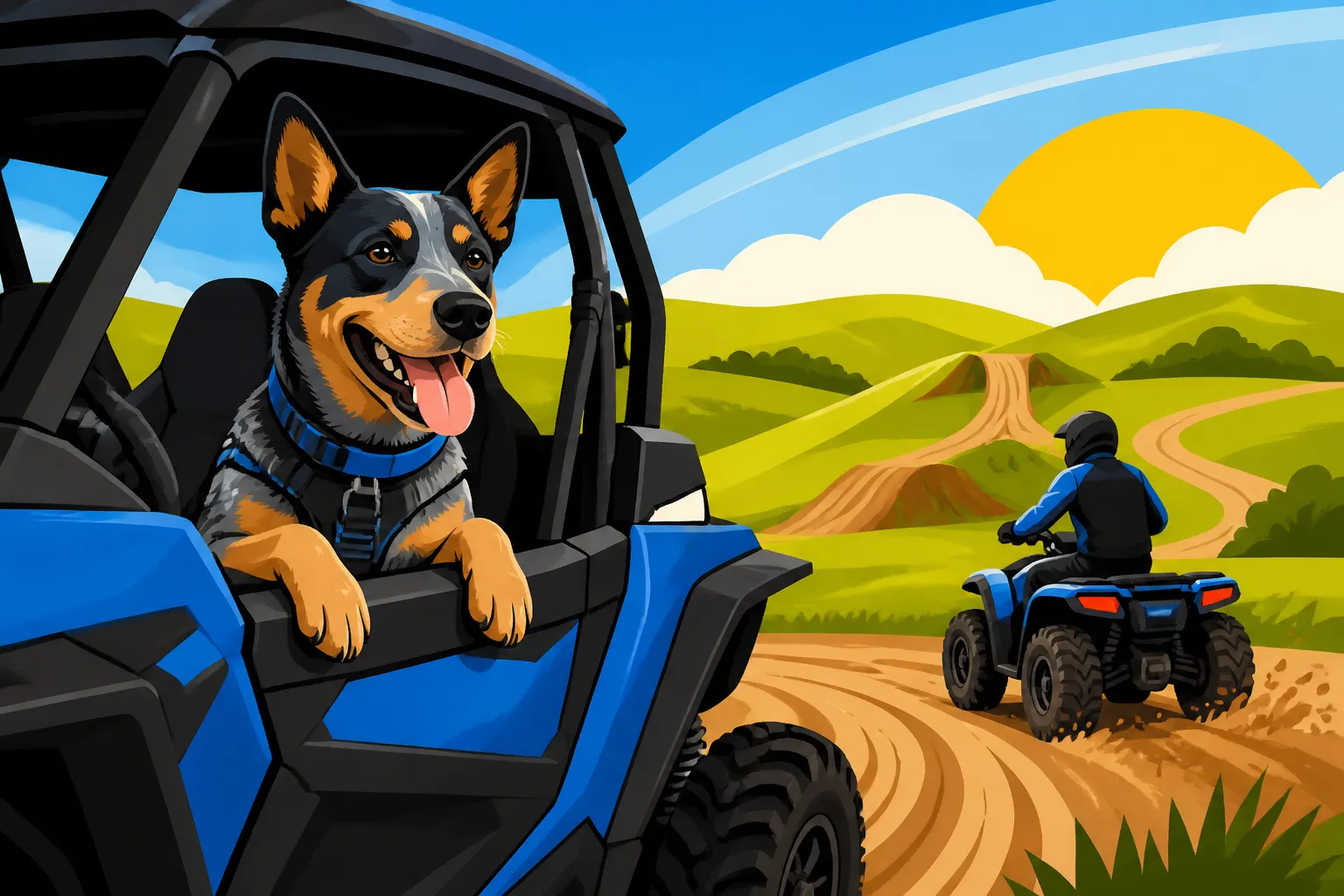
Do not assume a dog can safely ride as a passenger. A typical ATV seat is made for the rider and, where designed for one, a human passenger—not a dog. A dog can shift its weight, be startled or lose its footing. On a UTV, an open cab does not automatically make a ride safe for an animal. Before considering any transport, check with the park and your veterinarian, and do not put the dog in a position where it could fall, interfere with driving or be exposed to moving parts.
If the dog is not riding, arrange care that does not leave it exposed or unattended. A parked vehicle can become dangerously hot, even when the weather feels mild. A tied dog may be within reach of moving machines, other dogs or people, and a tether can tangle. Ask the park whether a supervised campsite or another safe arrangement is allowed. If you cannot provide one, leaving the dog at home with a trusted caregiver may be the better plan.
Think about your riding schedule, too. A full day on the trails can leave little time to supervise a dog. If one person stays with the dog while others ride, agree on that plan before arriving. Do not count on being able to return quickly if the dog needs attention; trail access, distance and conditions can make a quick trip back impractical.
Pack for a controlled, comfortable visit
Once you have confirmed that your dog can come and know where it may go, pack for both the dog and the park setting. A normal walk kit may not cover the needs of a long, dusty day around machines.
Bring:
- A sturdy leash and a properly fitted collar or harness
- Identification with current contact information
- Water and a bowl that will not be easily knocked over
- Food, if you will be away long enough to need it
- Waste bags and a way to carry used bags until you find a bin
- Shade or another approved way to keep the dog comfortable at camp
- A towel and basic cleanup supplies
- Any medication your dog normally needs
- A familiar mat or crate, if permitted and useful for settling down
If you buy supplies through Amazon, check that any leash, harness or travel restraint fits your dog and suits the setting before the trip. Do not treat a product listing as proof that equipment is appropriate for riding or that a park will allow its use.
Keep the dog’s gear separate from riding equipment so you can find it without rummaging around a trailer or vehicle near active traffic. Store water where it is easy to reach, and do not leave food open where it could attract wildlife or other animals. Follow the park’s instructions for waste disposal; if there is no suitable bin nearby, take the waste with you.
Keep your dog leashed wherever the park requires it, and use a leash even where the rules allow more freedom if the surroundings are busy or unfamiliar. A long line can create hazards near tires, people and other dogs, so it is not a substitute for close supervision. Do not leave a dog tied where it can reach a trail, road, hot machine or neighboring campsite.
Watch the dog throughout the visit. Take a break from the noise if it is trembling, panting heavily, hiding, pulling persistently or unable to settle. Provide water and shade, and leave if the dog cannot calm down or seems unwell. Dogs can overheat or become distressed before an owner realizes how much the surroundings are affecting them.
For a longer outing, make a simple plan before you arrive: who is responsible for the dog, where it can rest, where you will walk it and what you will do if the area is too busy. This is especially helpful for group trips. The broader planning advice in Kansas Group Ride Planning and Kansas Trail Conditions Before You Tow can help you prepare for the people, machines and logistics of the day.
Make a backup plan and confirm before unloading
A phone call to the park can prevent a frustrating arrival, but it is still sensible to have another option. A dog-friendly rule may not mean the dog can access the exact area you expected, and an event or unusually crowded day may make the setting unsuitable. Before leaving home, know what you will do if the dog cannot come into the riding area.
Possible alternatives include having another person stay with the dog at a permitted campsite, arranging care at home or choosing a different outing. Do not leave the dog in a parked vehicle while you ride, and do not leave it unattended at a campsite unless the park explicitly allows that arrangement and you can keep it safe and comfortable.
When you arrive, check in with the operator and follow any instructions about where to walk or settle the dog. Keep the dog away from trail entrances and staging traffic unless staff say those areas are appropriate. Clean up promptly, keep noise under control and give other visitors space. A dog that is calm and supervised is less likely to create a problem for riders, staff or other animals.
For destinations such as Kansas Rocks Recreation Park or Syracuse Sand Dunes, check the park’s current rules directly rather than assuming that one park’s policy applies to another. Park access, camping and riding conditions are separate questions; Kansas Private Park Rules for Riders is useful background, but the operator is the right place to confirm the pet policy for your visit.
A good decision can be as simple as asking whether your dog will be welcome, safe and adequately supervised for the whole day. If any of those answers is no, leave the dog with a caregiver and enjoy the ride without putting it in a stressful or risky situation.
Disclaimer
This article is for general informational purposes only and does not constitute professional advice. Laws, prices and regulations vary by location and change over time. Consult a qualified professional for guidance on your specific situation.