Kansas Syracuse Dunes Park Rules
Syracuse Sand Dunes is a private riding destination, so a Kansas permit—or an out-of-state sticker—doesn’t automatically grant access. The practical question is which park admission, machine paperwork and safety rules apply to your visit. Here’s how to sort out the state-versus-park requirements, prepare your machine and riders, and avoid arriving at the gate with the wrong expectations.
Know which rules apply
Syracuse Sand Dunes is a private off-road riding park in Hamilton County. That matters because park access is governed by the park’s own admission process and operating rules, alongside any applicable state or local laws. A state permit, title or registration document does not, by itself, give you permission to ride there.
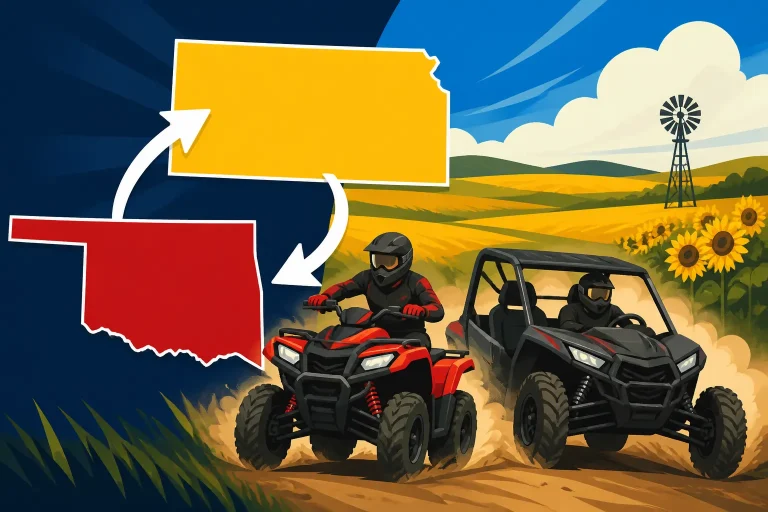
Kansas does not issue a general OHV trail permit for riding at private parks. That does not mean riding at Syracuse is free or unregulated: the park may charge admission, require a park pass or machine credential, and set conditions for entering and riding. The distinction between a state permit and a private park’s access rules is explained in Kansas Has No State OHV Permit and Kansas Private Park Waivers and Rules.
Likewise, a permit or registration sticker from another state should not be treated as a substitute for Syracuse’s own requirements. Reciprocity is not the right assumption when you visit a private riding area. Ask the park what it accepts for entry, what it requires for each machine, and whether any pass you already hold has a role in its system. The park’s current policy—not a sticker from home—determines whether you meet its entry conditions.
Keep these separate:
| Requirement | What it covers | What to confirm with Syracuse |
|---|---|---|
| Kansas rules | State or local requirements that apply to your machine and conduct | Whether any specific law affects your planned ride |
| Park admission | Permission to enter the facility for a visit | Current admission options, operating hours and payment methods |
| Machine credential | A park-specific record, sticker or pass, if required | Whether it applies per machine, how long it lasts and what documents are needed |
| Park safety rules | Conditions for riding inside the property | Required equipment, age limits, passenger rules and restricted areas |
| Camping access | Overnight use of park facilities, if available | Whether a separate reservation or fee is required and which sites are open |
Do not assume that a title, bill of sale, state registration, insurance card or trail pass meets every park requirement. These documents serve different purposes. If you want a better picture of what parks may ask riders to show, see Kansas Proof of Ownership on the Trail. For Syracuse, ask the office directly which documents are necessary to enter and ride.
The same distinction applies to road use. Permission to ride on private park property does not make an ATV or UTV legal on nearby public roads. A park pass is not a road-use permit, and a machine’s title does not make it street legal. If your route includes any public road, check the rules for that road and the city or county involved before riding.
Syracuse is a destination for sand riding, but park conditions and policies can change. Its acreage, facilities, hours, admission arrangements and access to particular areas should all be confirmed before travel. A page about Syracuse Sand Dunes’ 1,300 Acres in Kansas can help with general planning, but it should not replace a direct check of current operating details.
Confirm entry and machine requirements before you travel
The smoothest visit starts with a quick check of current requirements. Park rules can distinguish between a rider’s admission, a vehicle or machine credential, and access to camping or other facilities. Ask about each separately rather than asking only, “Do I need a permit?” That question can mean different things to a state agency and a private park.
Before you load the trailer, contact Syracuse or check its current official information for:
- Operating status and hours. Confirm the park is open on your intended day, when gates open and close, and whether weather or maintenance has affected access.
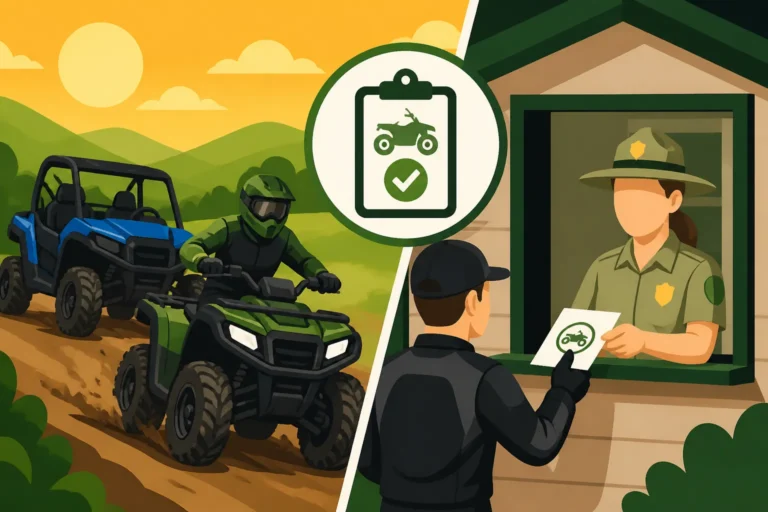
- Admission options. Ask what types of day or repeat-visit access are available, whether every rider needs a separate admission, and what payment methods are accepted.
- Machine credentials. Ask whether the park requires a machine-specific sticker, registration or other record, and whether the requirement differs for registered and unregistered machines.
- Required documents. Find out whether you need proof of ownership, a title, a bill of sale, a driver’s license, insurance evidence, or something else. Do not bring one document expecting it to cover every requirement.
- Eligible vehicles. Confirm that your ATV, side-by-side, dirt bike or other machine is allowed. Ask about width, passenger capacity and any vehicle-specific limits.
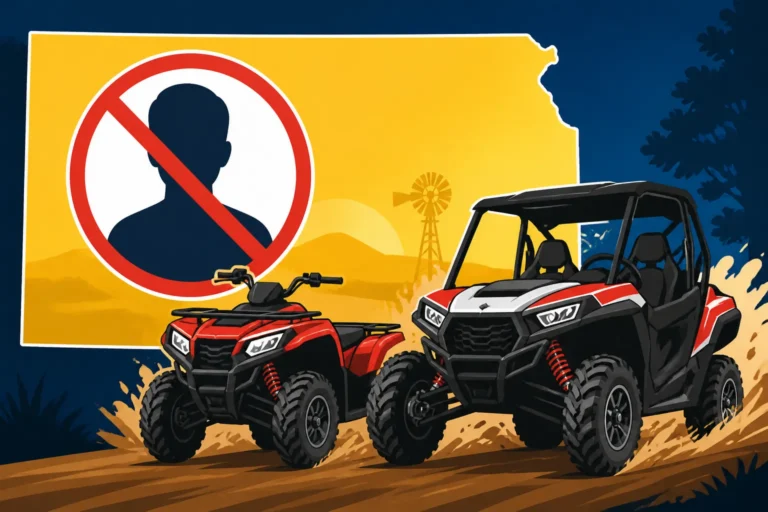
- Rider and passenger rules. Ask about minimum ages, supervision, passenger eligibility and helmets. Rules may differ by machine, rider age or park policy.
- Equipment checks. Ask whether flags, lighting, spark arrestors, sound limits or other equipment requirements apply.
- Camping and amenities. If you plan to stay overnight, confirm campsite availability, reservations, check-in procedures and any separate facility rules.
A park pass or registration is not necessarily transferable between machines or riders. If you share a machine with someone else, travel with several vehicles, or are bringing a guest who will ride a separate machine, clarify how admission and credentials work for each one. Don’t assume one pass covers a whole group simply because the group is arriving together.
If you are buying an annual or repeat-visit option, make sure you understand who it covers, which machines it applies to, how it is displayed and when it expires. Syracuse’s own pass arrangements are separate from a Kansas state trail permit; the details of a park pass can be reviewed in Syracuse Sand Dunes Annual Pass Costs $100. Check directly with the park for current terms and figures before budgeting or purchasing.
Out-of-state visitors should ask the same questions as Kansas visitors. A home-state OHV sticker may be useful evidence of a machine’s status in that state, but it does not automatically meet a private park’s entry requirements. Conversely, not having a state OHV sticker does not, by itself, answer whether you can ride at Syracuse. Confirm what the park asks for and what laws apply to the trip.
If you are unsure whether a machine’s paperwork is in order, resolve that before departure. A machine that has no title or has a hard-to-read identification number may raise separate ownership questions. A park’s entry decision and a state title matter are not interchangeable. For a Kansas title question, use the relevant process rather than relying on a park credential to prove ownership.
Ride the dunes with the right equipment and judgment
Sand riding demands different preparation from a short ride on packed dirt. Loose, shifting terrain can change how a machine steers, brakes and climbs. A route that looks easy from the parking area may feel very different once you are moving across a dune or sharing a slope with other riders.
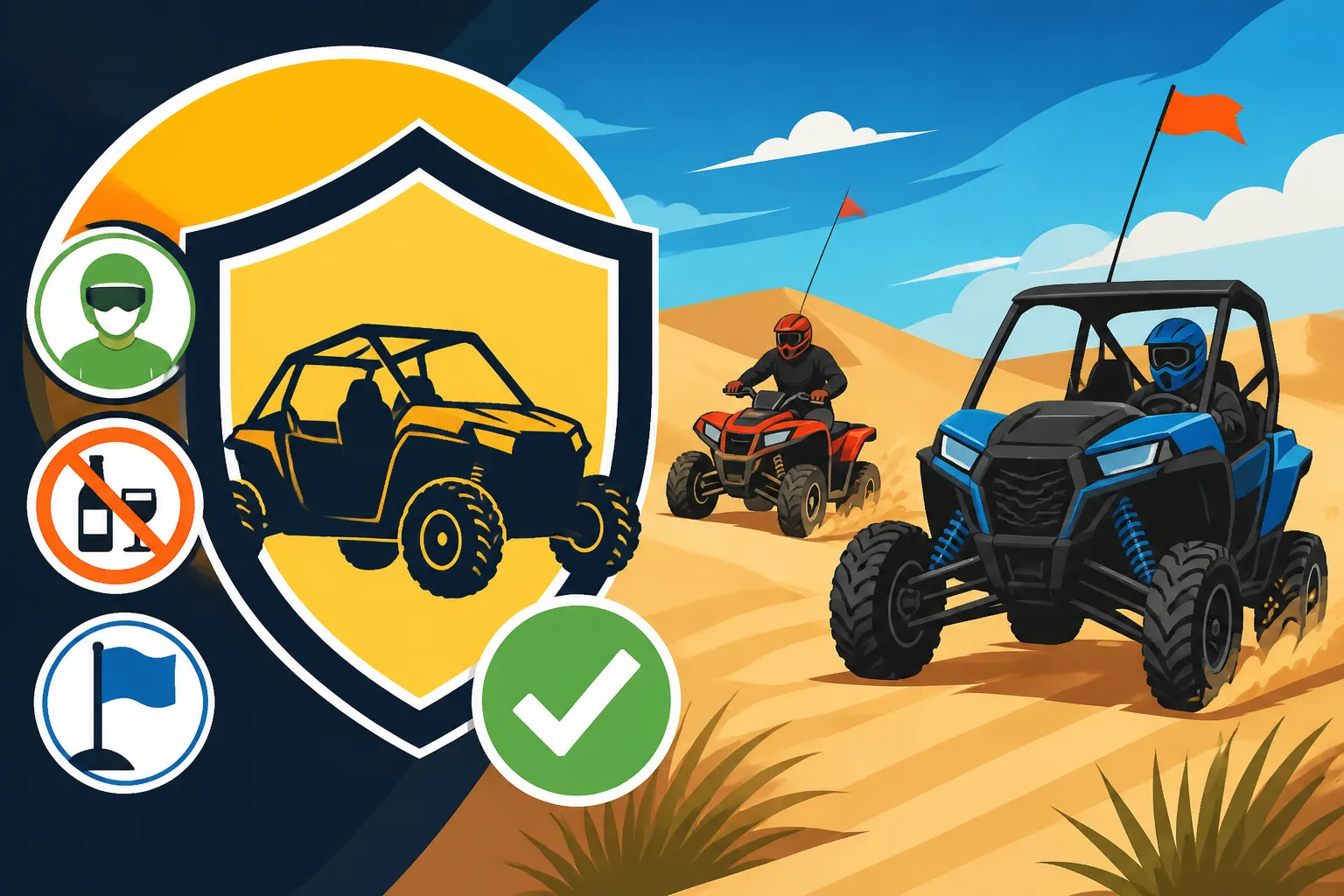
The clearest Syracuse-specific equipment point to verify is the whip flag requirement. A visible flag can help riders see one another over dune crests, where the terrain blocks sight lines. Ask the park what type, height or mounting position it accepts, and whether the requirement applies to every machine. Do not assume a small decorative flag is adequate. If you buy a flag online through Amazon or another retailer, match it to the park’s current specifications before installing it.
A flag helps with visibility; it does not make blind crossings safe. Approach dune crests cautiously, avoid charging over the top without knowing what is beyond it, and leave room for another rider to emerge from the opposite side. Keep to marked or permitted areas, and follow any one-way patterns, closures or route guidance posted by the park. If the park’s staff gives instructions that differ from your assumptions, follow the park’s direction.
Before riding, check that your machine is suited to the terrain and in safe operating condition. Pay particular attention to:
- Tire condition and pressure appropriate for the manufacturer’s guidance and the conditions.
- Brakes, throttle, steering and controls.
- A secure helmet and any other protective equipment required by the park.
- A properly mounted flag if required.
- Working lights if you may need them for low-light conditions or travel around the property.
- Secure cargo and tools that will not fall off over rough ground.
- Fuel range and a plan for returning to the staging area.
Avoid making major changes to tire pressure or equipment based only on advice meant for a different machine or rider. Sand conditions vary, and tires that work well for one vehicle may not be right for another. Follow the manufacturer’s instructions and the park’s rules. If you are new to dunes, ask the park about beginner-appropriate areas and whether staff can recommend a conservative route.
Group rides need a little extra coordination. Agree on a meeting point, keep the group’s pace suitable for its least experienced rider and do not leave anyone behind without a plan. If a rider gets separated, having a prearranged place to regroup is more reliable than assuming phones will work everywhere. Give faster riders room to pass only where it is safe and permitted.
Passengers should ride only in a machine designed and equipped to carry them. A passenger needs a proper seat and a way to hold on; riding on a cargo area, fender or improvised perch can be dangerous and may violate park rules. Confirm whether Syracuse has age or passenger restrictions before bringing children or planning to carry an extra rider. The general questions to ask are covered in Kansas Rules for Passengers on a UTV, but the park’s own requirements still need to be checked.
Helmets and protective equipment deserve attention even if you are uncertain about a legal requirement. A riding park may set a policy that is stricter than the minimum law that applies elsewhere. Confirm Syracuse’s current helmet rules for every rider and machine rather than relying on what is permitted on a public road or in another state. For background on park-level policies, see Kansas Private Park Helmet Rules.
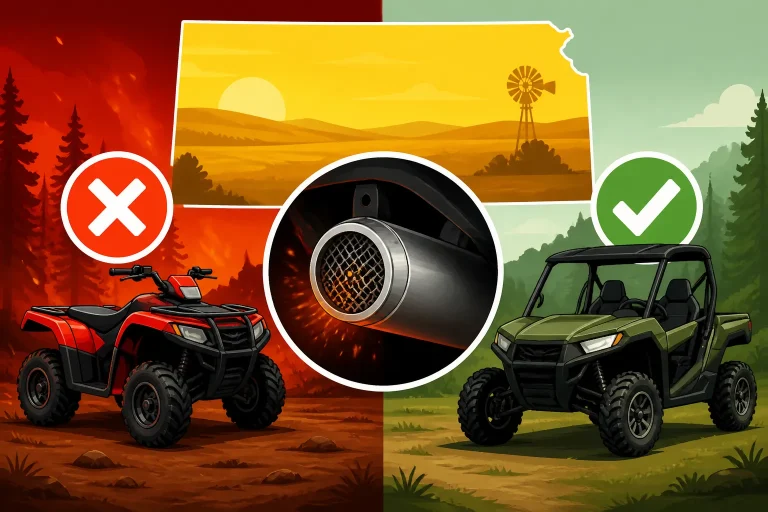
Sound and fire safety also matter in a busy riding area. Ask whether the park enforces sound limits or checks for spark arrestors. A machine that seems quiet at home can be disruptive in a shared recreation area, while a poorly maintained exhaust can create a safety concern. Park rules on these subjects can be stricter than a rider expects; Kansas Sound Limits at a Park offers useful context about why a park may set its own standard.
Stay within designated riding areas and obey signs, barriers and staff directions. Do not treat an open-looking track as permission to cross a closed section, private boundary or sensitive area. Avoid disturbing wildlife, damaging vegetation or leaving rubbish behind. If the park closes an area due to weather or surface conditions, take the closure seriously. A short-term restriction can protect riders as well as the property.
Plan for camping, conduct and shared facilities
A riding visit may include more than time on the machine. Syracuse has camping and other facilities, but access and rules can depend on what is open and what you have arranged. Do not assume that an admission pass includes a campsite, that a campsite booking includes every rider’s admission, or that all amenities are available during every visit.
If you want to camp, ask about reservations, site types, check-in and check-out, vehicle limits and any rules for tents, trailers or generators. Confirm whether facilities such as restrooms, showers, water or electrical hookups are open during your planned stay. Conditions can vary, so bring a backup plan for basic needs rather than assuming an amenity will be available.
Ask about fire rules before bringing firewood, a grill or a portable fire pit. Dry or windy conditions may lead to restrictions, and a park may prohibit fires in places where a visitor expects them to be allowed. Use only designated areas and follow current staff instructions. Never leave a flame unattended, and fully extinguish it when required.
Quiet hours are another detail to check, especially if you are camping near other visitors. The park may set limits on generators, music or vehicle operation at night. Keep noise within posted rules and consider the effect of repeated engine starts or late-night loading on nearby campers.
Pets may be allowed under specific conditions, but do not assume they can accompany you everywhere. Ask whether pets are permitted, whether they need to be leashed and where they are prohibited. Keep dogs away from moving machines and crowded staging areas. A pet that is comfortable at home may be stressed by engine noise, unfamiliar animals and heavy traffic.
Follow any check-in and wristband or vehicle-identification procedures the park uses. If staff require a waiver, read it before signing so you understand the conditions for entry and the responsibilities you accept. A waiver does not cancel the need to obey park rules or use safe judgment. For more on how private facilities set their own conditions, see Kansas Private Park Waivers and Rules.
Think through cleanup before you leave. Sand can collect in vents, bearings, brakes and other parts of a machine, and leaving it packed in place can contribute to wear. If the park has a wash area, confirm whether it is open and what rules apply. Otherwise, plan to clean the machine at a suitable location without washing sediment into a storm drain or sensitive area. Kansas Riding Areas With Wash Stations can help with broader trip planning, but check Syracuse’s own facilities rather than assuming it has a wash station ready for use.
A short pre-trip checklist helps prevent common surprises:
- Confirm the park is open and verify the current admission and machine requirements.
- Ask whether your vehicle type, width and passenger setup are allowed.
- Check the flag, helmet, sound and other equipment rules.
- Bring the documents the park specifically asks for.
- Make a separate plan for camping, food, water and fuel.
- Secure the trailer and machine, and check straps again before leaving.
- Save the park’s contact details and directions before entering an area with limited cell service.
- Tell your group where to meet if riders become separated.
- Recheck weather and any temporary closures before departure.
These steps are especially useful for visitors traveling a long distance. The park’s own website or office is the best place to confirm current operating details. A third-party listing, old social media post or another rider’s memory may describe a previous policy rather than the one in force for your visit.
Frequently Asked Questions
Does Kansas require a state OHV permit to ride at Syracuse Sand Dunes?
Kansas does not issue a general OHV trail permit for private park riding. Syracuse may still require its own admission, machine credential or other documentation. Confirm current requirements with the park before you go.
Does an out-of-state OHV sticker give me access to Syracuse?
Not automatically. A sticker from another state does not replace the park’s admission process or necessarily satisfy its machine rules. Ask Syracuse what it accepts for entry.
Do I need a whip flag at Syracuse Sand Dunes?
Flag requirements are an important safety point to confirm before riding. Ask the park about the required type, height and mounting position, and whether every vehicle needs one. Do not assume any flag will meet its standard.
Can I camp at the park with my riding pass?
Do not assume that riding admission includes overnight camping. Confirm whether camping is available for your dates, whether a reservation or separate charge applies, and which facilities and rules are in effect.
Disclaimer
This article is for general informational purposes only and does not constitute professional advice. Laws, prices and regulations vary by location and change over time. Consult a qualified professional for guidance on your specific situation.