Flags Required on Dunes
A dune flag can feel like one more thing to remember when you’re already loading helmets, tie-downs and gear. But on a busy sand riding area, a tall, visible flag helps other riders spot your ATV or UTV near a crest. This guide explains how to prepare for dune riding in Kansas, what to check before you unload, and how to make the flag part of a safer ride.
Why flags matter on Kansas dunes
Sand crests can hide approaching riders
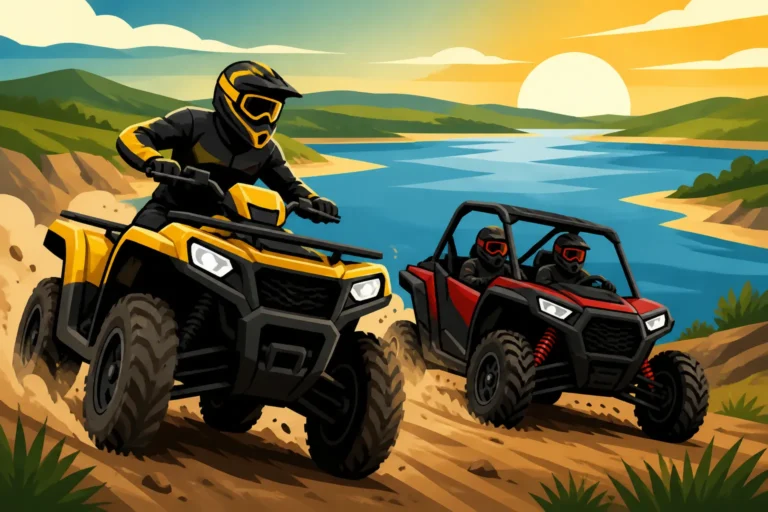
Dunes are different from a flat gravel road or an open field. A ridge can block your view of a rider coming from the other side, and the same ridge can hide you from them. That leaves little time to react if two machines approach a crest from opposite directions.
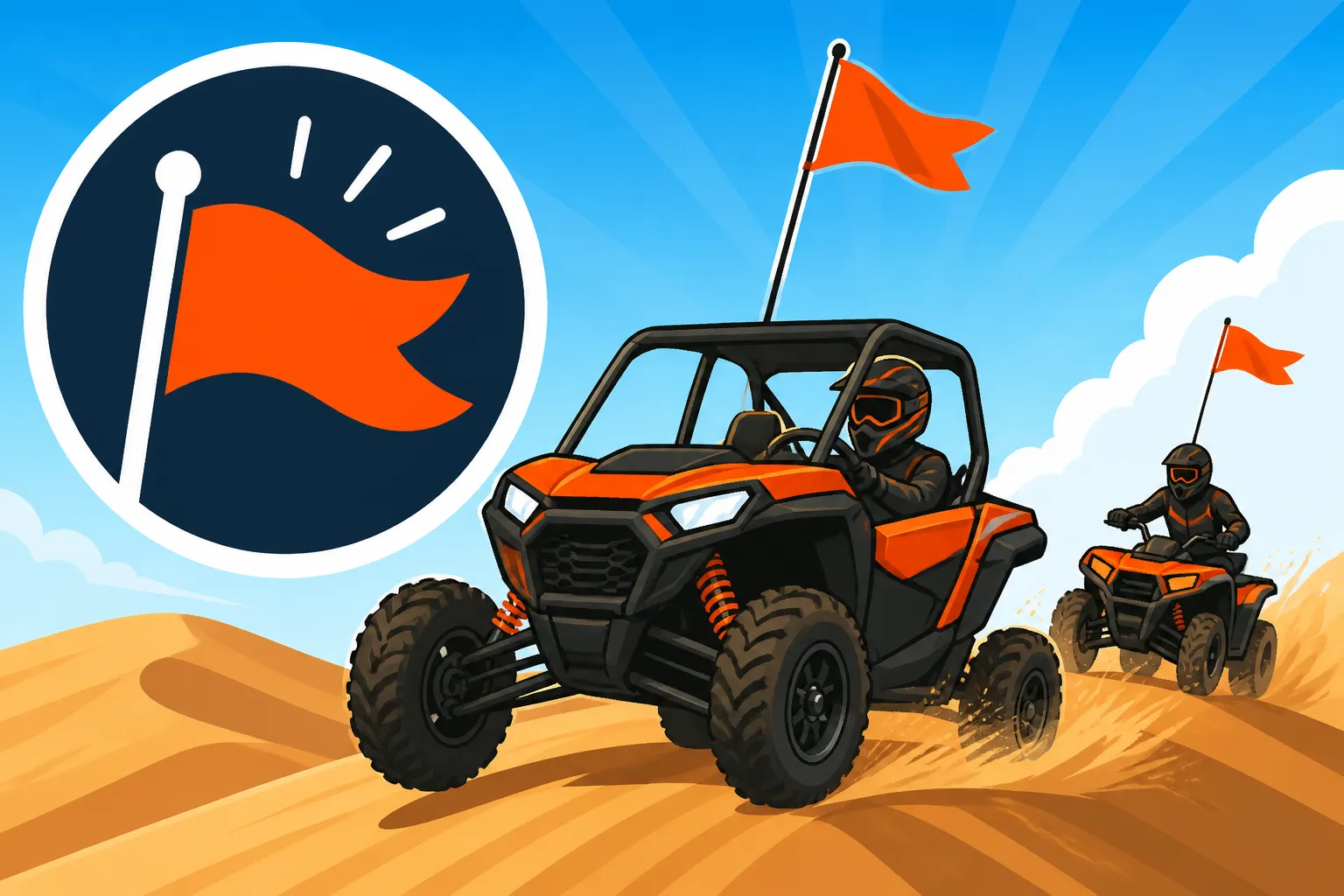
A bright flag mounted high on a whip or other approved support makes your machine easier to notice above the sand. It does not guarantee that another rider will see you, and it does not make a blind crest safe to cross at speed. Think of it as an added visibility measure—not permission to ride aggressively or assume you have the right of way.
This matters especially when several groups are riding the same area. A smaller ATV may be harder to spot behind a dune than a taller side-by-side, and dust can make an already limited view worse. A flag can help distinguish where a machine is, but riders still need to slow down, look before crossing a ridge, and leave room to stop.
A dune flag is not the same as a road tag
A safety flag helps other riders see you in an off-road setting. It is not a license plate, registration sticker, city permit, or proof that your machine is legal to operate on a public road. Those requirements are separate from a private riding area’s rules.
Likewise, having a Kansas title does not mean your machine is street legal. Dune riding and public-road use are different situations with different rules. If you’re sorting out titles and road use, see Having a Title Does Not Make an ATV Street Legal and Kansas Rules for Riding a City Street.
A flag also doesn’t replace the park’s entry requirements. A riding area may have its own rules for equipment, passengers, helmets, sound, age, waivers, or permitted machine types. Review those rules before leaving home, not after you’ve made the drive and unloaded. The general overview in Kansas Syracuse Dunes Park Rules is a useful starting point for understanding that park rules matter in addition to state requirements.
A flag helps, but riding choices matter more
Visibility equipment is only one part of avoiding a collision. Keep your speed appropriate for the terrain, approach the top of a dune cautiously, and avoid stopping where another rider may come over the crest without seeing you. If you need to pause, move to a visible, stable area well away from the main line of travel.
Avoid following another machine so closely that you can’t react if it slows or stops. In a group, leave extra space in dusty conditions and agree on simple signals before the ride. A flag may make your machine easier to see, but it cannot tell other riders what you plan to do.
Preparing your machine and checking park rules
Confirm the exact flag requirement before you travel
“Bring a flag” sounds simple, but the details can matter. A park may specify requirements such as a minimum height, a certain kind of flag, or how it must be attached. Those details can change, and requirements may differ among riding areas. Don’t assume a flag that was accepted at one park will automatically satisfy another park’s rules.
Before you head to Syracuse Sand Dunes Park in Kansas, check the park’s own current visitor information or contact the operator directly. Ask whether the flag needs to meet a particular height, color, or mounting standard, and whether the same rule applies to both ATVs and UTVs. If you’re going with a group, share the answer with everyone so nobody arrives with an unsuitable setup.
It’s also worth checking requirements for passenger machines, youth riders, and any vehicle you plan to rent or borrow. A flag supplied with one machine may be missing, damaged, or attached in a way that doesn’t meet the park’s expectations. Confirm rather than relying on what a seller or previous owner remembers.
Check the mounting point and condition
A flag is only useful if it stays upright and visible while you ride. Before loading, inspect the whip or mount for cracks, loose hardware, bent sections, and worn attachment points. Give it a gentle hand check to make sure it isn’t likely to loosen during transport or on rough sand.
Look at the flag itself, too. A torn or folded flag may be less visible, and a flag that has wrapped around its support may not be doing much good. Make sure the setup doesn’t interfere with the rider, passenger, roll cage, controls, or anything you need to access. If the machine is transported with the flag removed, pack the parts together so the mount and fasteners don’t get left behind.
A quick pre-ride checklist can keep a small oversight from becoming an irritating delay at the entrance:
- Confirm the park’s exact flag specification.
- Check that the flag, support, and mount are all present.
- Tighten the mount and inspect it for damage.
- Make sure the flag is visible from a distance and isn’t obstructed.
- Recheck the setup after unloading and before entering the riding area.
Pack for sand, not just the drive
A machine that works well on a farm lane may behave differently in loose sand. Review your tires, controls, and recovery equipment before the trip, and learn how your machine handles before committing to steep or unfamiliar terrain. Sand can make steering and braking feel different, especially when the surface is soft or churned up.
Some riders adjust tire pressure for deep sand, but the right choice depends on the machine, tire, load, and manufacturer guidance. Don’t copy a number from someone else’s setup without checking whether it is appropriate for yours. For a broader look at this decision, read Airing Down for Deep Sand.
Bring basic supplies for the ride and the weather, including water, appropriate protective gear, and anything needed for a minor repair or recovery. If your group is unfamiliar with the area, agree on a meeting point and a plan for what to do if someone gets separated. The flag improves visibility on the machine; a plan helps the people riding with you stay connected.
Planning a ride at Syracuse Sand Dunes
Check the route and the riding area before towing
A long drive with a trailer is a frustrating time to discover that you’ve missed a rule, the entrance is not where you expected, or the conditions aren’t right for your group. Confirm the park’s access details, operating information, machine rules, and any notices before you leave. The Kansas Trail Conditions Before You Tow checklist can help you think through the practical details that are easy to overlook.
Navigation tools can help you plan the drive and keep track of where you are, but don’t treat a third-party map as permission to ride anywhere. onX Offroad may be useful for preparing a route or reviewing mapped information, while the park’s own directions and rules should guide your visit. Check that your route actually leads to the riding area entrance and not onto private land or a road where your machine cannot legally ride.
If you’re comparing riding options, Kansas ATV Trails: Where You Can Actually Ride gives useful context about the difference between public land, managed areas, and private off-road parks. Kansas riders shouldn’t assume every patch of open-looking ground is available for riding. The dunes are a specific riding destination, not an invitation to cross surrounding property.
Match the plan to your group’s experience
A first dune trip can be exciting and a little intimidating. If some riders are new to sand, start conservatively, stay together, and avoid following experienced riders into terrain that feels beyond your comfort level. A steep dune or deep, soft section can become challenging quickly, especially for a smaller machine or a rider who hasn’t practiced in sand.
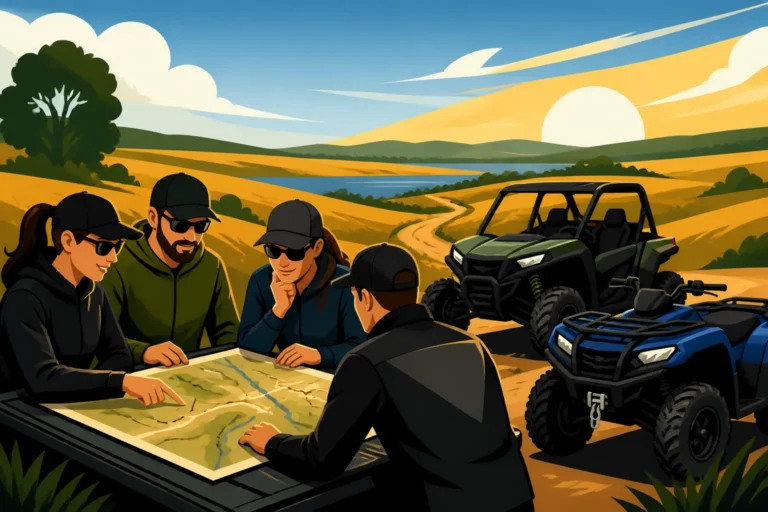
Before entering the riding area, make sure everyone understands where to stop, how to regroup, and what to do if visibility drops. Talk through basic hand signals and agree that riders will wait at a visible, safe location rather than stopping just over a crest. Keep children and less experienced riders within a manageable distance, with supervision suited to their ability and the terrain.
onX Offroad can help a group discuss a general route before arriving, but keep the plan flexible. Conditions, closures, and park-specific boundaries take precedence over a route line on a screen. If phone service is unreliable, save the information you need beforehand and carry a backup plan for meeting up. A map is helpful; a simple agreed meeting point is often even more useful.
Use this pre-ride check at the dunes
A final check at the staging area gives you a chance to catch problems before the group spreads out. Use the table as a quick reminder, then follow the park’s own directions and staff instructions.
| Check | What to confirm | Why it helps |
|---|---|---|
| Flag | The flag and mount meet the park’s stated requirements | Avoids an equipment issue at entry and improves visibility |
| Machine | The ATV or UTV is in working condition and appropriate for the ride | Reduces the chance of a preventable breakdown |
| Protective gear | Riders have suitable helmets and other needed gear | Helps prepare for falls, sand, and changing conditions |
| Group plan | Riders know the route, meeting point, and regrouping plan | Makes it easier to respond if someone gets separated |
| Park information | Access, rules, and notices have been checked | Helps prevent surprises after a long tow |
| Sand setup | Tire and recovery choices suit the machine and terrain | Supports better handling in loose sand |
If you’re riding in Hamilton County, read Kansas Dune Riding in Hamilton County as part of your planning. It can help frame the trip around the local riding destination, while the park remains the authority on its specific entry and equipment requirements. For a wider comparison of private riding options, Kansas Private Off-Road Parks can help you explore other places to ride without assuming they follow the same rules.
What to do if your flag is missing or damaged
Don’t assume you can ride without it
If you discover the flag is broken at the staging area, pause before entering. Ask park staff whether a replacement is available or whether you need to repair the setup. A missing flag may mean you can’t ride until the issue is resolved, depending on the park’s requirements. Continuing without checking can put your group in conflict with the rules and reduce your visibility around blind dunes.
If the flag becomes loose or damaged during the ride, move to a safe place where other riders can see you. Avoid stopping just beyond a crest or in a narrow path. Let your group know what happened and return to the staging area or another approved spot to address the problem. Don’t try to fix equipment in the middle of a busy line of travel.
Carry a small repair kit and a backup plan
A few simple spares can save a trip: the correct fasteners for your mount, basic hand tools, and a compatible replacement component if your setup uses a part that could easily fail. Keep those items secure and accessible rather than buried beneath other cargo. Before departing, check that the repair kit matches your flag mount; a generic bolt or clamp may not fit.
If you’re travelling with several machines, have each rider check their own setup instead of assuming one person has inspected the whole group. A second flag may be useful as a spare, but it still needs to meet the park’s requirements. Confirm with the operator before relying on a substitute design.
Most importantly, don’t let the effort of getting to the dunes pressure you into riding when the machine or required equipment isn’t ready. Taking a break, making a repair, or changing the plan is inconvenient. A preventable collision or a ride-ending equipment problem is worse.
Disclaimer
This article is for general informational purposes only and does not constitute professional advice. Laws, prices and regulations vary by location and change over time. Consult a qualified professional for guidance on your specific situation.