Kansas Weekend Riding Itineraries
A Kansas ATV or UTV weekend can take more planning than expected: riding areas are spread across the state, and a lake or public campground does not automatically mean there are trails for off-road machines. This guide helps you match a destination to your group, plan a practical two-day itinerary, and check the details that can derail a trip before you load the trailer.
Choose a Kansas riding area that fits your weekend
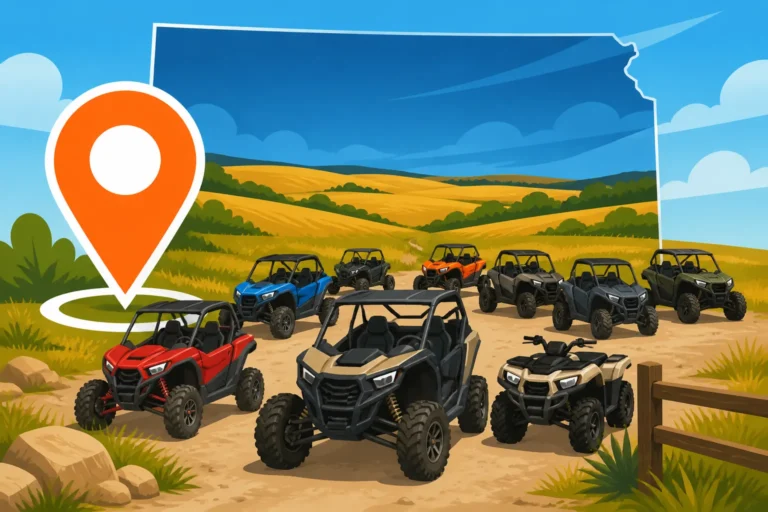
Kansas has several kinds of riding opportunities, but they are not interchangeable. Some are dedicated off-road areas, some are private parks with their own admission and operating rules, and many public lands restrict machines to designated roads or access areas. Check the rules for the specific place you plan to visit rather than assuming that permission to camp or fish includes permission to ride.
| Riding area | Region and riding character | Best fit for a weekend |
|---|---|---|
| Tuttle Creek ORV Area | Near Randolph in northeast Kansas; a reservoir-side riding area | A practical choice for a day of riding paired with camping or lake activities |
| School Creek ORV Area | Near Milford Lake; a more limited option for machine size | Riders whose machines meet the area’s restrictions |
| Perry Lake Spillway | North of Topeka; a compact area with a mix of riding experience levels | A short trip or a weekend with a flexible, low-pressure schedule |
| Kansas Rocks Recreation Park | Near Mapleton in southeast Kansas; known for rocky terrain | Riders looking for technical sections and a private-park experience |
| Syracuse Sand Dunes | In Hamilton County in southwest Kansas; open sand riding | Riders prepared for a longer drive and a different setup than rocky or clay trails |
Use [Kansas ATV Trails: Where You Can Actually Ride] as a starting point if you are still choosing a destination. For a broader look at which types of trails suit different machines, [Kansas Trails That Allow Side-by-Sides] can help narrow the options. Before committing, confirm whether your machine is allowed, whether the riding area is open, and what the access rules require.
Tuttle Creek for a northeast Kansas weekend
Tuttle Creek ORV Area, near Randolph, can work well if your group wants a dedicated place to ride without making the whole weekend revolve around a single long riding session. One workable plan is to arrive Friday, set up camp nearby, ride on Saturday, and keep Sunday open for another shorter session or a relaxed pack-up. That leaves some room for weather, mechanical delays, and the inevitable “we need one more stop” moment on the way home.
Do not assume that every road or open-looking patch around the reservoir is part of the ORV area. Stay within the riding boundaries and follow posted signs. If you want to add a lake visit or other public-land activity, check its separate rules; a recreation area may have different restrictions from the designated ORV site. [Tuttle Creek ORV Area in Kansas] and [Kansas Corps of Engineers Riding Areas] offer useful context as you compare the riding area with nearby recreation options.
Tuttle Creek is also a sensible choice for a mixed-experience group because the weekend does not have to be packed with difficult riding. Agree on a meeting point before splitting up, and make sure everyone knows how to regroup if someone stops to check a tire or take a break. On a first visit, a map app such as onX Offroad can help you keep track of your route and location, but it is still smart to carry an offline map or another backup for poor reception.
Perry Lake or School Creek for a shorter trip
Perry Lake Spillway is worth considering if you want a relatively straightforward weekend plan or are coming from the Topeka area. A two-day trip does not need a complicated itinerary: arrive with enough daylight to get settled, ride during the posted operating window, and leave time to inspect the machine and trailer before heading home. For first-timers, a shorter visit can be a useful way to learn what gear, tools, and snacks your group actually needs.
School Creek can suit riders with machines that meet the area’s limits. Confirm the width and machine-type rules before towing there; a side-by-side that works at another Kansas riding area may not be eligible. The restriction is not something to guess at in the parking area. [Kansas's 50-Inch Limit at School Creek] and [Kansas Trails That Allow Dirt Bikes] are useful starting points when checking whether a particular machine is a fit.
For either destination, make the itinerary flexible instead of planning every hour around riding. A sudden rain, a mechanical issue, or a busy trailhead can change the day. Check the area’s current conditions and access instructions before leaving home, and save the relevant information where you can reach it without cell service. If you use onX Offroad to prepare, download what you need ahead of time rather than relying on a live connection at the trailhead.
Plan a two-day trip around the kind of riding you want
A good weekend itinerary balances ride time with the unglamorous parts: unloading, safety checks, meals, rest, and getting home without rushing. The best plan is usually the one that leaves breathing room. A schedule that assumes everyone can ride from gate opening until closing may fall apart as soon as a belt needs attention or a child is ready for a break.
A Tuttle Creek weekend for a mixed group
Friday: Arrive before dark if possible. Set up camp, unload only what you need, and check the machine over while there is still enough light to spot a loose strap, soft tire, or leaking fluid. Keep the first evening simple; a late-night repair session is not a fun way to start a weekend.
Saturday: Make the main ride day. Start with a group check-in and agree on a turnaround time, a regrouping point, and what to do if someone becomes separated. Keep the first ride modest while everyone gets familiar with the area. If your group includes riders with different experience levels, avoid letting the fastest rider set the pace for everyone else.
Sunday: Choose a shorter ride or skip riding and pack up without rushing. A shorter second day gives you time to clean mud and debris from the machine, secure the trailer, and get home before fatigue sets in. If your group wants a longer final ride, decide that before the weekend rather than extending it spontaneously when everyone is already tired.
The route should be based on what the area allows, not just on a line that looks appealing on a screen. A map can help with orientation, but posted signs and park rules take priority. onX Offroad may be useful for planning and keeping track of your position, especially when several riders are coordinating, but it should complement—not replace—local instructions and an offline backup.
A Kansas Rocks weekend for rocky terrain
Kansas Rocks Recreation Park near Mapleton is a better match for a group specifically seeking rocky riding than for someone hoping to spend a casual afternoon cruising broad, smooth trails. Build in extra time for careful line choices, breaks, and checking under the machine after a demanding section. A first visit is not the moment to assume that a route will feel like the gravel roads or farm tracks you ride at home.
For a two-day visit, consider keeping Saturday as the main exploration day and using Sunday to revisit sections the group enjoyed or take a shorter ride. Ask your group to agree in advance on how they will handle obstacles: riders should be comfortable waiting, spotting when appropriate, and turning around if a section is beyond their ability or machine setup. [Kansas Rocks Recreation Park] and [Kansas Trails With Rock Sections] can help you prepare for the terrain and park style.
Private parks set their own entry conditions and may have rules covering age, helmets, passengers, sound, alcohol, and camping. Confirm those directly before you travel. Pack gloves, eye protection, water, and basic recovery gear, and do not count on a riding area to have the parts or tools your machine needs. A smaller tool kit chosen for your own machine is more useful than a large collection of tools that do not fit its fasteners.
A Syracuse Sand Dunes weekend for a longer haul
Syracuse Sand Dunes in Hamilton County is a distinct trip, particularly for riders coming from eastern Kansas. Plan around the drive as well as the riding. If you arrive tired after towing for hours, it may be wiser to set up camp and ride the next day rather than unload in a hurry and try to squeeze in a session before dark.
Sand riding can be hard on both riders and machines. Keep water accessible, take breaks before the heat or fatigue catches up, and check the machine during the day for sand buildup and changes in handling. Follow the park’s requirements for flags and other equipment, and ask about current riding conditions before heading out. [Kansas Trails With Sand] and [Kansas Riding Areas With RV Hookups] can help you think through the terrain and overnight logistics.
A simple itinerary is to arrive Friday, ride Saturday, and leave Sunday after a short morning session or a relaxed pack-up. If you are traveling with a large group, set a clear meeting place and time before anyone unloads. Use onX Offroad or another navigation tool as one layer of trip preparation, but save the park’s directions and contact details offline too. Never assume the route shown in an app is an authorized riding route.
Prepare the details before you tow
The difference between a smooth weekend and a frustrating one often comes down to checks made at home. Confirm access, machine eligibility, camping arrangements, and the towing setup before packing. If you are bringing a UTV, make sure the trailer is suitable for its width and weight, and check that your tie-down points and straps are in good condition.
Confirm access, rules, and conditions
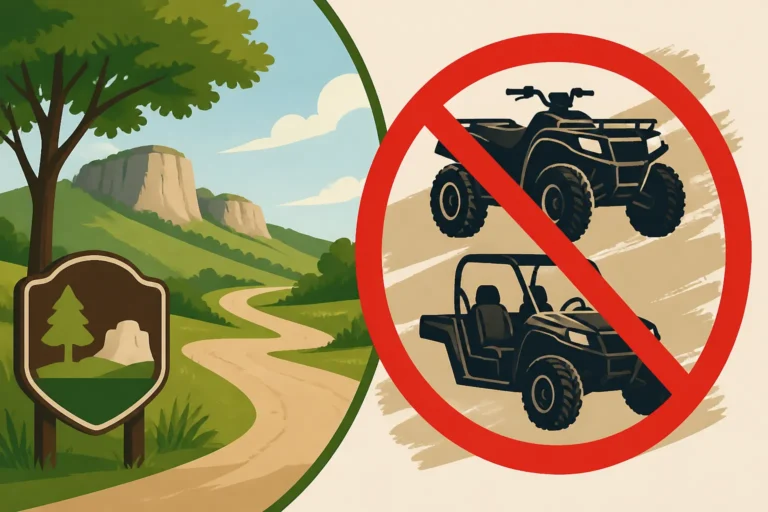
Check the riding area’s official information before you leave, including operating status, hours, closures, admission process, and any machine restrictions. Rules can differ between a public riding area and a private park, and nearby roads may have separate limits. A state park, lake, or public recreation site is not automatically an OHV trail destination; [Kansas State Parks Have No OHV Trails] explains why checking the exact riding location matters.
Look for requirements that could affect your whole group: age limits, passenger rules, helmets, sound restrictions, flags, insurance, and whether reservations are needed. If you are visiting a private park, read its waiver and entry rules before arrival. Bring any required paperwork and keep it somewhere accessible rather than buried under camping gear.
Weather deserves its own check. Rain can affect access and trail conditions, while heat, wind, and dust can make a long ride uncomfortable. If rain is forecast, do not assume a trail will remain open or safe; call or check the park’s posted updates. For more help building a weather-aware plan, see [Kansas Trail Closures After Rain] and [Kansas Trail Conditions Before You Tow].
Pack for riding and the trip home
Pack for the ride you are actually taking. A rocky park calls for attention to protective gear and recovery planning; a sand destination calls for extra water and a plan for cleaning sand from the machine. For any trip, bring a basic first-aid kit, eye protection, gloves, water, a tire repair option suited to your machine, and tools that match its fasteners. Carry a phone charger or power bank, but do not rely on a phone signal being available everywhere.
The trailer deserves a careful check too. Confirm the hitch connection, safety chains, lights, tire condition, and load balance. Secure each machine at appropriate tie-down points, and stop after the first stretch of driving to check that nothing has shifted. Keep straps and tools out of the way so they do not become loose cargo during the trip.
A useful packing list can be divided into three groups:
- Machine: fuel, spare key, basic tools, tire repair supplies, and any model-specific recovery equipment.
- Riders: helmet where required or appropriate, eye protection, gloves, sturdy clothing, water, and first aid.
- Camp and travel: sleeping gear, food, lights, chargers, trash bags, and the information needed to find the riding area if navigation service drops.
Make the weekend safer and easier for the whole group
A plan is only useful if everyone understands it. Before the first ride, set expectations about speed, passing, stopping, and what to do if a machine has a problem. Agree that no one rides beyond the group’s agreed limits just to keep up. This matters especially when experienced adults ride with newer riders or children.
Set a simple group plan
Choose a lead rider and a sweep rider when the group is large enough to need them. The lead should know the planned route and the sweep should make sure nobody is left behind. Pick a regrouping place before setting out, and make clear that a rider who stops should wait somewhere safe rather than trying to catch up alone.
For families, build in rest stops and keep young riders on machines suitable for their experience and size. Make passenger arrangements only where the machine is designed and permitted to carry a passenger. A child riding in a UTV also needs to be properly seated and secured according to the machine’s design. The relevant rules may vary by activity and location, so confirm them before the trip rather than trying to resolve a disagreement at the staging area.
If someone is new to off-road riding, choose a manageable route and make the first session a learning ride. Talk through throttle control, braking, spacing, hand signals, and how to respond if the machine tips or becomes stuck. For additional preparation, [Kansas Trail Etiquette Locals Expect] covers the kind of considerate behavior that helps keep shared riding areas enjoyable.
Have a backup plan for closures and breakdowns
A weekend can change quickly when a riding area closes, weather turns, or a machine develops a problem. Decide in advance what your group will do if the main destination is unavailable. That may mean delaying the trip, switching to a confirmed alternative, or turning the weekend into a camping trip without riding. Do not substitute an unapproved road or public-land area just because it is nearby.
Before leaving, tell someone outside the group where you are going and when you expect to return. Keep the riding area’s contact information, your lodging details, and the route home available offline. If you use onX Offroad for navigation, download the relevant map information before you lose reception and carry a separate backup plan. A digital map is helpful, but it cannot tell you that a gate has closed unless you have checked the park’s current notices.
When a machine breaks down, prioritize the people first. Move the group to a safe place, account for every rider, and avoid attempting a difficult recovery without the right equipment or experience. Carrying a tow strap does not make every recovery safe. If the repair cannot be made confidently, arrange help rather than turning a manageable delay into an injury or a damaged machine.
Disclaimer
This article is for general informational purposes only and does not constitute professional advice. Laws, prices and regulations vary by location and change over time. Consult a qualified professional for guidance on your specific situation.