Who to Notify After an ATV Crash in Kansas
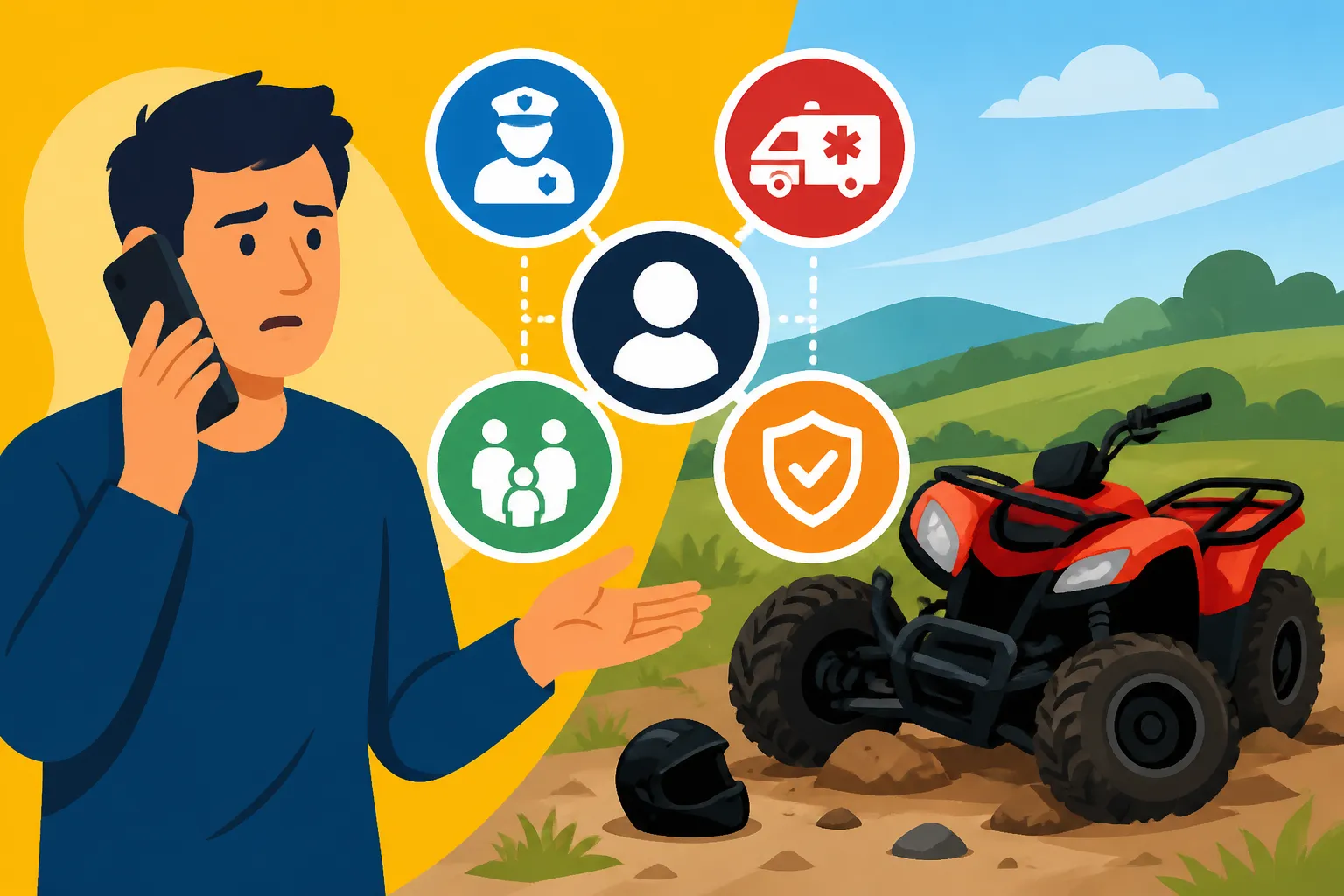
It's an awful feeling. One minute you're enjoying the freedom of the Kansas landscape on your ATV or UTV, and the next, something goes wrong. Whether it's a tumble on a dusty trail, a fender-bender with another machine, or something more serious, the immediate aftermath of an ATV crash can be disorienting and stressful. Your mind races: Is everyone okay? Is the machine ruined? And then comes the big question – who exactly do you need to notify? This guide is here to cut through that confusion, walking you through the critical steps and contacts after an off-road incident in Kansas.
First Things First: Ensuring Safety and Assessing the Scene
Before you even think about picking up the phone, your absolute priority has to be safety. In the chaos of a crash, it's easy to overlook crucial immediate actions, but these first few minutes can make all the difference. Take a deep breath.
Checking for Injuries and Securing the Area
The very first thing you need to do is check on yourself and anyone else involved. Even if you feel fine initially, bumps and bruises can hide more serious issues. Ask everyone if they're hurt. If anyone has serious injuries, or if there's any doubt about their well-being, call 911 immediately. Don't try to move someone with a suspected neck or back injury unless they are in immediate danger, like from fire or oncoming traffic. Getting professional medical help on the way is far more important than anything else.
Once you've assessed for injuries, you need to make the scene safe. If your machine is blocking a trail or a private road, try to move it to the side if it's safe to do so. If it's leaking fuel or fluids, be aware of potential hazards. Use any warning triangles, flares, or even brightly colored clothing to alert other riders or vehicles to your presence, especially if visibility is poor or you're near a blind corner. You don't want a second accident compounding the first. Remember, even if you’re out in the middle of nowhere, another rider could come along.
Gathering Initial Information
Once the immediate safety concerns are addressed, it's time to start gathering information. This might seem like a lot to do while you're still shaken up, but these details are vital for insurance claims and any official reports later. Start with the basics:
- Date and Time: Exactly when did the crash happen?
- Location: Be as precise as possible. Use landmarks, GPS coordinates, or mile markers if available. "Near the old oak tree on the north side of the [Tuttle Creek ORV Area in Kansas] trail system" is much better than "somewhere in the park."
- Weather Conditions: Was it raining, dusty, sunny, windy? How might this have contributed?
- Witnesses: Did anyone see what happened? Get their names and contact information. Their impartial account could be very valuable.
- Other Parties Involved: If another machine or person was involved, get their name, contact information, insurance details, and machine information (make, model, VIN).
Take photos or videos with your phone. Capture the scene from multiple angles, damage to your machine, damage to other machines or property, skid marks, trail conditions, and any injuries. The more visual evidence you have, the better. Memories fade, but photos are concrete. Even if you think the damage is minor, document it thoroughly. You'd be surprised what a repair shop might find later.
Who Absolutely Needs to Know: Official Notifications
Now that you’ve dealt with the immediate aftermath and gathered some initial details, it’s time to start making calls. These are the people or entities that absolutely must be informed, as they directly impact legal and financial aspects of the crash.
When to Call Law Enforcement
This is a big one, and often a source of confusion for off-road riders. Many assume that because ATVs and UTVs aren't typically street legal, the police aren't involved in off-road incidents. That's not always true. Here’s a breakdown of when you should always call law enforcement in Kansas:
- Injuries: If anyone involved in the crash sustained injuries that require medical attention, you should call the police or sheriff's department. This includes yourself, passengers, or other riders. Many jurisdictions require an accident report for any incident involving personal injury.
- Significant Property Damage: If the crash resulted in substantial damage to your machine, another machine, or any other property (like fences, structures, or public property), contact law enforcement. What constitutes "significant" can be subjective, but if repairs are going to be expensive, a police report provides an official record for insurance purposes.
- Hit and Run: If another rider caused the crash and then fled the scene, you absolutely need to call the police. Provide them with any details you managed to gather, like descriptions of the machine or rider.
- Public Land Incidents: If the crash occurred on public land, like a Corps of Engineers riding area or a county-maintained trail, it's often wise to inform the local authorities or the land management agency. They may have specific [Kansas Accident Reporting for an ATV Crash] requirements.
- Disputes: If there's any disagreement about who was at fault or what happened, a law enforcement officer can document the scene and gather statements, which can be invaluable in preventing future headaches.
It’s important to remember that a police report is an official, unbiased account of the incident. Even if you think it's a minor scrape, having a report can save you significant trouble down the line, especially when dealing with insurance companies.
Here’s a quick guide for deciding when to call the authorities:
| Situation | Call Law Enforcement? | Why? |
|---|---|---|
| Any Injuries (Minor to Severe) | Yes | Required for medical attention, official record, and potential insurance claims. |
| Significant Property Damage | Yes | Creates official record for insurance, establishes fault if disputed, protects against future claims. |
| Hit and Run | Yes | Essential for investigation, identifying responsible parties, and potential recovery of damages. |
| Crash on Public Land | Recommended | Land management may have reporting requirements; local law enforcement can provide an official record. |
| Dispute Over Fault | Yes | Officer provides objective documentation, witnesses, and assessment, which aids in resolution. |
| Minor Damage, No Injuries, Private Land | No | Typically not required by law, but still gather information and inform landowner/insurance. |
| Solo Incident, No Injuries/Damage | No | Not legally mandated, but personal safety and mechanical checks are crucial. |
Notifying Your Insurance Provider
Once you’ve addressed immediate safety and made any necessary calls to law enforcement, your next critical step is to contact your insurance provider. This should be done as soon as reasonably possible, ideally within 24-48 hours of the incident, even if you're still processing everything. Delaying notification could complicate your claim or even lead to denial.
Many Kansas ATV owners incorrectly assume they don't need insurance because [Kansas Has No OHV Registration] or state-mandated insurance for off-road use. While it's true that statewide [Do You Need ATV Insurance in Kansas?] is often not required, many cities that allow UTVs on their streets do require insurance, and private parks often require proof of insurance before you can ride. More importantly, comprehensive insurance protects you financially.
When you call your insurance company, be prepared to provide all the information you gathered at the scene: date, time, location, details of what happened, names of other parties and witnesses, and the police report number if one was filed. Be factual and honest. Don't speculate or admit fault. Stick to the facts as you observed them. Your insurance company will guide you through the claims process, which might involve sending an adjuster to assess the damage to your machine. If you've got aftermarket components, perhaps some heavy-duty axles or a winch from SuperATV, make sure you mention these, as specialized coverage might apply. They will need to know about any injuries, even minor ones, that required medical attention, as well as property damage.
Other Important People and Places to Contact
Beyond law enforcement and your insurance provider, there are other individuals and entities that might need to be notified, depending on where and how the crash occurred. These might not be legally mandated, but they are crucial for practical reasons and maintaining good relationships.
Inform the Landowner or Property Manager
This is a huge one, especially in Kansas, where so much riding happens on private land, farms, or leased hunting grounds. If your crash occurred on private property that you do not own, you must inform the landowner or property manager as soon as possible. This is not only a matter of courtesy but also a legal and ethical responsibility.
Imagine you're riding on a friend's ranch, and you take out a fence post or damage a gate. Your friend needs to know so they can secure their livestock or property. They might also have specific procedures for reporting accidents on their land. If you're on a leased property, the lease agreement might have clauses about accident reporting. Failure to inform the landowner could lead to strained relationships, liability issues, or even trespassing charges if they feel you've intentionally hidden damage. Be honest and upfront about what happened. Offer to cover any damages not covered by your insurance. This gesture goes a long way in maintaining access for future rides.
Contacting Your Dealer or Repair Shop
Whether your machine has minor scrapes or significant structural damage, getting it professionally inspected is often a smart move. Even if you're handy with tools and consider yourself a DIY pro, an ATV or UTV crash can cause unseen damage that a trained technician can spot. Frame cracks, bent suspension components, or internal engine damage might not be immediately obvious.
Reach out to your trusted dealer or a reputable off-road repair shop. Describe the incident and the visible damage. They can advise you on whether to bring it in for an assessment and can help you understand the repair process. This is especially important if your machine is still under warranty, as certain types of damage could void it. If you're looking for replacement parts, perhaps you need new A-arms or a heavy-duty bumper, asking your dealer or checking reliable aftermarket suppliers like SuperATV can help you get your machine back in top shape. Don't try to ride a damaged machine if you suspect critical components like steering, brakes, or suspension are compromised. [Kansas Title Mistakes Kansas Owners Make Most Often] sometimes involve selling machines with hidden damage, so always get a professional opinion.
Talking to Your Riding Group or Family
While not an official notification, informing your riding buddies and family is incredibly important for emotional support and practical help. After a crash, you might be shaken, injured, or simply need an extra set of hands.
Your riding group can offer invaluable support. They might have experience with similar situations, know local resources, or even be able to help you recover your machine from a remote location. They can also help spread the word to others who might be concerned if you're delayed or uncontactable. If you rode with someone, or were headed to meet others, letting them know what happened ensures they aren't worried when you don't show up. Similarly, informing your family is crucial. Even if they weren't with you, they'll want to know you're safe and can provide a calming presence or help coordinate next steps, especially if you need medical care or your machine needs to be transported. [Kansas Title Questions Treasurers Hear] sometimes relate to unusual circumstances, but personal support systems are key after an incident.
Understanding Potential Consequences and Next Steps
Once the notifications are made and the dust has settled, you'll need to navigate the aftermath. This phase involves understanding any legal or financial repercussions and planning for your machine's recovery.
Legal Ramifications and Reporting Requirements
Depending on the severity of the crash and whether law enforcement was involved, there could be legal consequences. If you were found at fault for the crash, you might be liable for damages to other vehicles or property, as well as any medical expenses for injured parties. Your insurance company will typically handle these claims, but understanding your responsibility is important.
In Kansas, while there isn't a state-level requirement for accident reports for all ATV crashes, certain situations absolutely trigger reporting. As discussed, injury accidents or those involving significant property damage usually require a police report. If the crash happened on public land managed by the Kansas Department of Wildlife, Parks and Tourism (KDWP), they might have specific incident reporting procedures for [Kansas KDWP Land Rules for Machines], even if a police report wasn't filed. Always comply with any requests for information from law enforcement or land management agencies. Failure to do so could lead to citations or other penalties. This also applies if you're riding a Work-Site Utility Vehicle (WSUV) and get into an incident on a county road where [Kansas Work-Site Utility Vehicle Road Rules] apply.
Repair or Replacement Considerations
After the initial shock, the practical question becomes: what about my machine? Your insurance company will typically work with you and your chosen repair shop to assess the damage and determine the cost of repairs. If the cost of repairs exceeds a certain percentage of the machine's value (often 70-80%), it might be declared a total loss, and your insurance company will pay you the fair market value.
When it comes to repairs, be thorough. Get itemized estimates from reputable shops. If you're replacing parts, consider whether you want to stick with OEM parts or explore aftermarket options. Many riders choose aftermarket components, like those offered by SuperATV, for increased durability or performance, especially if they're frequently on rough terrain. For instance, heavy-duty suspension components or a robust skid plate can offer better protection in the future. Make sure any repairs are done to a high standard to ensure the safety and longevity of your ATV or UTV. If your machine is a total loss, you'll be looking at replacing it. This often involves navigating sales tax collection at the county treasurer's office when you title your new machine, as discussed in [Kansas Sales Tax Collected at Titling].
Disclaimer
This article is for general informational purposes only and does not constitute professional advice. Laws, prices and regulations vary by location and change over time. Consult a qualified professional for guidance on your specific situation.