Paying a City Fine for Riding an Unregistered UTV
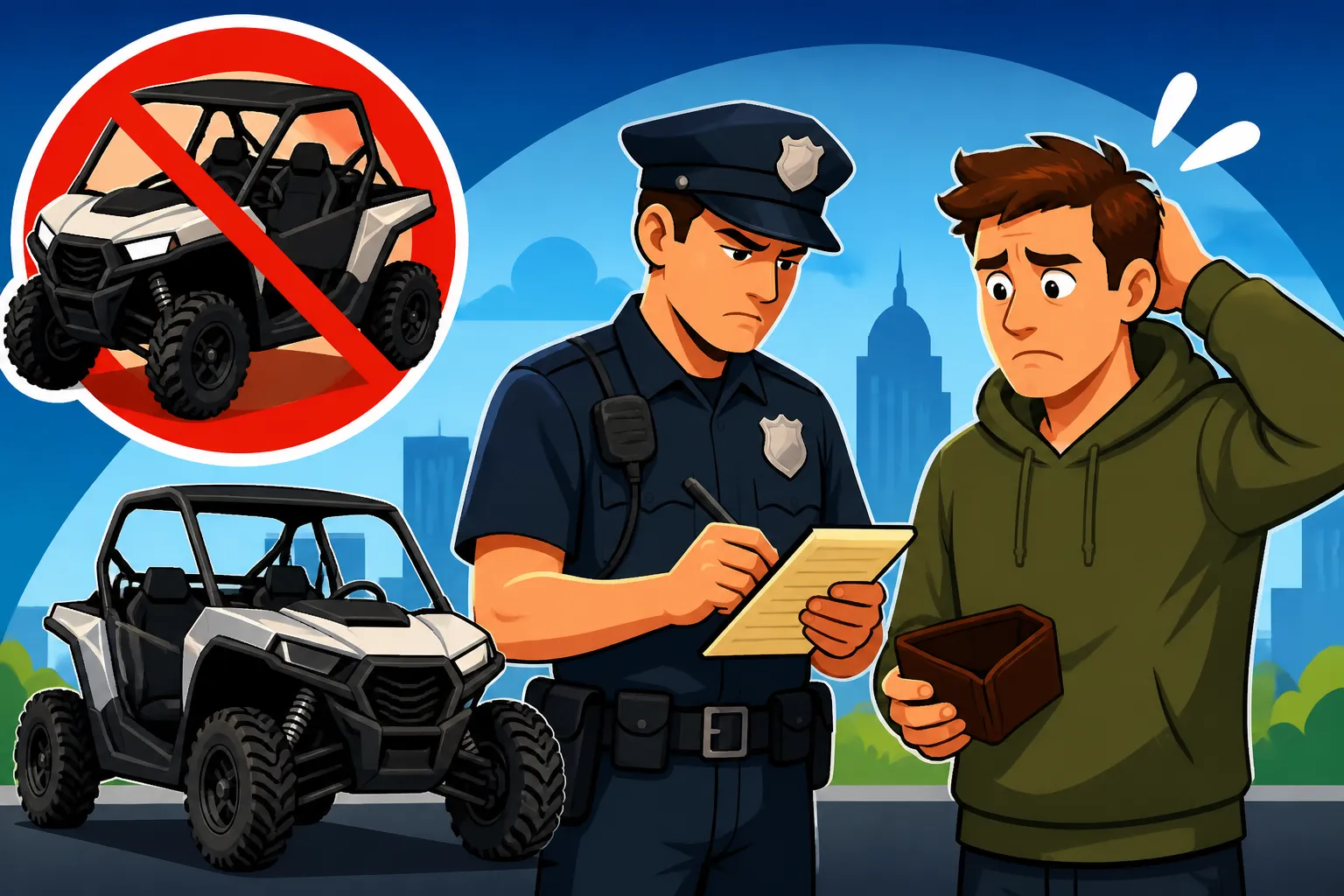
It's incredibly frustrating, isn't it? You've got your UTV, you love hitting the trails or using it around your property, and then you hear about or even worse, receive a ticket for riding it on city streets. What was just a quick trip to the corner store or a short cut across town suddenly turns into a legal headache and a fine. This guide is here to walk you through what it means to be cited for riding an "unregistered" UTV in a Kansas city, how to handle that fine, and more importantly, how to avoid similar situations in the future.
The Reality of City Fines for Unregistered UTVs in Kansas
Let's be real: Kansas state law about off-road vehicles can feel like a tangled mess, and city ordinances just add another layer of confusion. Many UTV owners operate under the assumption that if their machine isn't explicitly forbidden on a certain road, it's fair game. Unfortunately, cities have a lot more power than you might think when it comes to regulating what rolls on their pavement, and that's where the term "unregistered" often comes into play.
Why Your UTV Might Be "Unregistered" in a City's Eyes
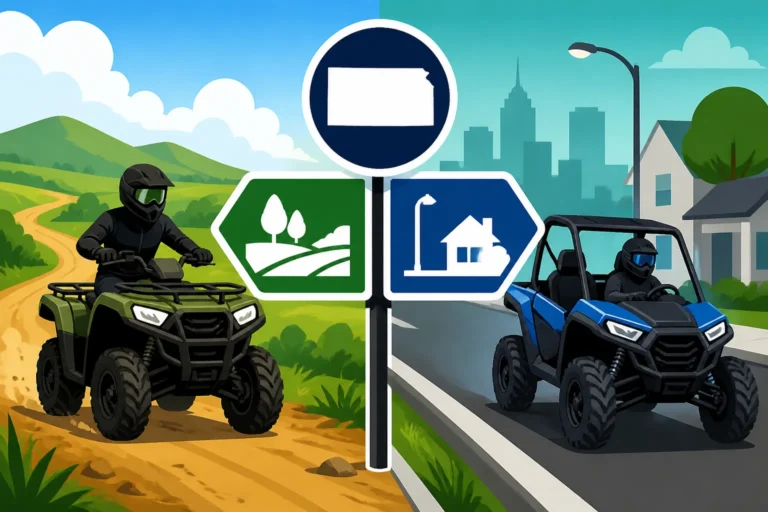
Here's the kicker: [Kansas Has No OHV Registration] at the state level. You don't get a license plate or an annual tag from the State of Kansas for your ATV or UTV just because you own it. This often leads people to believe that if the state doesn't require it, then no one does. But cities are a different beast entirely. Many Kansas cities, exercising their local authority, have passed ordinances that do require a special permit or tag for UTVs to be driven on public streets within their jurisdiction. If you're caught driving your UTV in one of these cities without having gone through their specific local process, you're essentially operating an "unregistered" vehicle in their municipal system. It's not unregistered with the state, because the state doesn't register them for road use, but it's unregistered with the city, which is what matters when a local police officer pulls you over.
Think about it this way: the state governs broad strokes, but your local city council gets down to the nitty-gritty of what happens on Main Street. They have concerns about safety, traffic flow, and noise, and they address those through their own rules. So, while your UTV might be perfectly legal to use on your private land or even on some county roads, the moment those tires touch city pavement without the proper local permit, you could be in violation. It's a common trap many owners fall into, and it's completely understandable given the fragmented nature of the laws.
Common Scenarios Leading to a Ticket
Tickets for unregistered UTVs in Kansas cities often stem from a few recurring situations. Maybe you just bought a new machine, perhaps from SuperATV, and you're excited to try it out, taking it for a spin around the block. Or perhaps you've moved to a new town and didn't realize that the rules in your old community don't apply here.
- The "Quick Trip" Mistake: You just need to run to the gas station a few blocks away, or you're taking the kids for a short ride to a friend's house. You figure it's only a minute on city streets, what's the harm? An officer sees you, knows the city's ordinance, and issues a citation. These short, seemingly innocent trips are some of the most common reasons for fines.
- Misunderstanding Local Boundaries: Sometimes, a rider will be on a county road, blissfully unaware they've crossed an unmarked city limit line. One minute you're on a gravel road that's legal for UTVs, the next you're on a paved street within city limits where permits are required. It's easy to miss these transitions, especially in rural areas where towns seemingly blend into the landscape.
- New Resident Confusion: You've just moved to a new Kansas town, and you're used to your UTV being street legal (or at least tolerated) in your previous community. You pull it out to run an errand, completely unaware that this new city has its own specific set of rules and a mandatory permit system. This is where researching [Kansas UTV Street Legal Rules by City] becomes crucial.
- Assuming General Legality: Some owners mistakenly believe that because ATVs and UTVs are titled as nonhighway vehicles in Kansas, that means they can be driven anywhere a regular car can't, including city streets. The reality is much more nuanced, and local ordinances often restrict this assumption heavily.
It's a frustrating situation because often, there's no malicious intent. Just a simple misunderstanding of local jurisdiction and the specific requirements some cities impose.
Navigating the Fine: Your Options After a Ticket
So, the worst has happened: you've been handed a citation for operating an unregistered UTV in a Kansas city. Don't panic. This isn't the end of the world, but it does require your attention. You generally have a couple of paths you can take, and understanding them is key to making the best decision for your situation.
Understanding the Citation and What It Means
First things first, take a deep breath and carefully read the ticket. It's not just a piece of paper; it's a legal document. Look for:
- The Issuing Agency: This will almost certainly be the municipal police department of the city you were in.
- The Ordinance Violated: This is critical. It will list the specific city ordinance number that you are accused of breaking. You can often look this up on the city's website or by calling the city clerk.
- The Date, Time, and Location of the Incident: These details are important if you plan to contest the ticket.
- Your Information: Ensure your name, address, and any vehicle information are correct.
- The Fine Amount: This will likely be stated on the ticket. Be aware that [Kansas Penalties for Illegal Road Riding] can vary significantly from one city to another.
- The Court Date or Payment Deadline: This is the most crucial piece of information. It tells you when you need to act. Failure to respond by this date can lead to additional penalties, or even a warrant for your arrest in some extreme cases.
- Instructions for Payment or Appearance: The ticket will typically tell you how to pay the fine or how to appear in court.
Most of these tickets are handled in municipal court, not district court. Municipal courts deal with violations of city ordinances, which are often considered minor infractions or misdemeanors. This is generally a less formal setting than a state district court, but it's still a serious legal proceeding.
Option 1: Paying the Fine Outright
For many people, the simplest and quickest solution is to just pay the fine. It's not fun to part with your hard-earned cash, but it resolves the issue without needing to take time off work for court or dealing with the stress of legal proceedings.
- How to Pay: Your ticket should outline the payment methods. Common options include:
- Online: Many cities offer online payment portals.
- By Mail: You might be able to mail a check or money order.
- In Person: You can often pay at the city clerk's office or the municipal court clerk's window during business hours.
- What Happens Next: Once you pay the fine, the case is typically closed. You're acknowledging guilt, but the matter is resolved. For municipal infractions, paying the fine generally does not result in points on your state driver's license, nor does it typically impact your state driving record. However, it will be a matter of public record with the city itself.
- Pros: It's fast, convenient, and avoids further court appearances. You can put the incident behind you quickly.
- Cons: You're admitting guilt, and you're out the money. Depending on the city, the fine could be substantial. You also miss the opportunity to potentially get the fine reduced or dismissed. Remember that [Kansas City Tag Fees for a UTV] might be an ongoing cost, and a fine is usually a one-time penalty for non-compliance.
Before you just pay, consider the amount. If it's a small fee, it might be worth it for the peace of mind. If it's a significant amount, it might be worth exploring your options.
Option 2: Contesting the Ticket in Municipal Court
If you believe you were wrongly cited, or if there are extenuating circumstances, you have the right to contest the ticket in municipal court. This means you will appear before a judge and present your case.
- When to Fight: You might consider fighting the ticket if:
- You genuinely weren't in city limits: Perhaps the officer made a mistake about the boundary. Photographic evidence or GPS data could be useful here.
- You had a valid permit: You had gone through the proper channels, and the officer either missed your permit/tag or made an error. Make sure you have proof of your permit, like what's needed for [Louisburg's UTV Tag Fees in Kansas].
- Mistaken Identity: It wasn't your UTV, or you weren't the driver.
- Emergency Situation: You were on city streets due to a legitimate emergency (e.g., transporting someone injured, avoiding a sudden hazard).
- The Ordinance is Unclear or Ambiguous: While rare, sometimes city ordinances can be poorly worded or difficult to interpret.
- What to Expect: Municipal court is usually less formal than other courts, but it's still serious. You'll likely meet with a city prosecutor first, who might offer a plea bargain (e.g., pay a reduced fine, or agree to get the permit within a certain timeframe). If you don't reach an agreement, you'll go before the judge.
- The Prosecutor: Their job is to represent the city and prove you violated the ordinance.
- The Judge: They will listen to both sides and make a ruling.
- Your Role: You'll explain your side of the story and present any evidence.
- Preparing Your Case:
- Gather Evidence: This could include photographs of the location, a copy of your city permit (if applicable), witness statements, or anything that supports your claim.
- Understand the Ordinance: Look up the specific city ordinance you were cited for. Knowing what you're accused of violating is half the battle.
- Practice Your Statement: Clearly and concisely explain what happened. Avoid getting emotional.
- Be Polite and Respectful: Even if you're frustrated, always show respect to the judge, prosecutor, and officers.
- Consider Legal Advice: For more complex situations, or if the fine is very high, you might consider consulting an attorney who specializes in traffic or municipal law. They can advise you on your rights and help present your case. This is where understanding [Kansas Court Costs for a Citation] might influence your decision to get legal help.
Remember, the goal in contesting a ticket is either to have it dismissed entirely or to have the penalty reduced. It's not always successful, but if you have a strong case, it's certainly worth considering.
| Feature | Paying the Fine Outright | Contesting the Ticket in Court |
|---|---|---|
| Outcome | Case closed, fine paid, guilt acknowledged | Potential dismissal, reduction, or full fine |
| Time Commitment | Minimal (online/mail/in-person payment) | Requires court appearance(s), preparation |
| Cost | Face value of the fine | Fine (potentially reduced), possible court costs, legal fees |
| Stress Level | Low, quick resolution | Higher, involves legal process |
| Record Impact | City record of violation (not state driving record) | City record (if found guilty), potential for no record (if dismissed) |
| Best For | Minor offenses, quick resolution, clear guilt | Believed innocence, extenuating circumstances, high fines |
Preventing Future Fines and Riding Legally in Kansas Cities
Getting a ticket for an unregistered UTV is a bummer, but it can also be a wake-up call. The best defense is a good offense: understanding the rules before you ride. With a little homework, you can ensure your next ride is worry-free.
Researching Local Ordinances Before You Ride
This is perhaps the single most important step you can take. Kansas is a patchwork of local rules when it comes to UTVs on city streets. What's perfectly fine in one town might get you a ticket in the next. You need to know the specific regulations for every city you plan to ride in or even through.
- Start with the City Clerk's Office: This is your best resource. A quick phone call or visit to the city clerk's office can usually get you the information you need. They can tell you if their city has an ordinance for UTVs, what it requires, and where to find a copy of the ordinance.
- Check City Websites: Most Kansas cities have official websites. Look for sections on "ordinances," "municipal code," "police department," or "vehicle regulations." Use search terms like "UTV ordinance," "golf cart rules," or "off-road vehicle street legal" within their site. This is often where you can find specifics like those covered in [Kansas Cities That Authorize ATV Street Use].
- Ask Local Law Enforcement (Politically): You can call the non-emergency line for the city's police department and politely ask about UTV regulations. Be prepared that their primary job is enforcement, so they might not have every nuance of the ordinance memorized, but they can usually point you in the right direction.
- Don't Assume: Never assume that because a neighboring town allows UTVs, your town does too. Each city council has to pass its own ordinance. For instance, [Louisburg's UTV Tag Fees in Kansas] are specific to Louisburg and won't apply to, say, Andover unless Andover has a similar ordinance.
Taking 15-20 minutes to do this research can save you hundreds of dollars in fines and countless hours of frustration.
Applying for a City UTV Permit or Tag
If your city does allow UTVs on its streets (a big "if" for many Kansas towns!), then you'll likely need to obtain a local permit or tag. The process usually involves a few steps:
- Application Form: This will typically be available at the city clerk's office or on the city's website. It will ask for your personal information, vehicle details (make, model, VIN), and sometimes proof of ownership.
- Proof of Insurance: [Kansas City Insurance Requirements] almost always mandate liability insurance for any vehicle driven on public roads. You'll need to show proof of an active policy that covers your UTV for road use. Your regular off-road policy might not extend to city streets, so double-check with your insurance provider. For example, [Carrying Proof of Insurance on a Tagged UTV] is essential during an inspection or if you're pulled over.
- Valid Driver's License: You'll need to demonstrate you have a valid driver's license. Some cities might have age restrictions as well.
- Vehicle Inspection: Many cities require an inspection to ensure your UTV meets minimum safety standards for street use. This might happen at the police department or a designated inspection station. They'll check things like lights, mirrors, and brakes, which leads us to the next point…
- Paying the Fee: There will almost certainly be an application or permit fee. [Kansas City Tag Fees for a UTV] vary widely. Louisburg, for example, has an initial fee and then a lower annual renewal fee.
- Displaying the Tag: Once approved, you'll receive a tag or sticker that must be displayed prominently on your UTV, usually on the rear.
Complying with these requirements allows you to enjoy your UTV on city streets without the constant worry of a fine. Remember that [How a City Council Opens Its Streets to UTVs] is a local political process, so the rules can change.
Equipment and Safety Considerations
For your UTV to pass a city inspection and be considered road-legal in an ordinance-friendly Kansas city, it will almost certainly need specific safety equipment that might not be standard on an off-road model. This is where aftermarket parts, like those offered by SuperATV, often come in handy.
Here's a table comparing common state-level expectations for non-highway vehicles versus typical city requirements for street-legal UTVs:
| Feature | Kansas State "Nonhighway Vehicle" Status (General) | Common Kansas City "Street Legal UTV" Requirements (If Permitted) |
|---|---|---|
| Registration/Permit | Not required for state-level road use | Mandatory city-specific permit/tag for street use |
| License Plate | Not issued by the state | Some cities issue a local "plate" or decal |
| Headlights | Often standard, but not strictly regulated for road use | Required, must meet specific visibility standards |
| Taillights/Brake Lights | Often standard | Required, must be functional and visible |
| Turn Signals | Not required | Almost always required (front & rear) |
| Horn | Not required | Required |
| Mirrors | Not required | Rearview mirror and often side mirrors required |
| Windshield | Not required | Often required |
| Seatbelts | Standard on UTVs, but not always a state "road" requirement | Required for all occupants |
| Tires | Off-road specific | May require DOT-approved tires (not just aggressive off-road) |
| Spark Arrestor | Recommended for fire prevention | May be checked during inspection |
| Insurance | Not state-mandated for off-road use | Required liability insurance for street operation |
If your UTV lacks things like turn signals, a horn, or mirrors, you'll need to install them. Companies like SuperATV offer a wide range of accessories specifically designed to help UTV owners meet these road-legal requirements. Investing in these upgrades isn't just about avoiding a fine; it's about increasing your safety and visibility when sharing the road with other vehicles. Always ensure your equipment meets the specific local standards, as [Kansas Lighting Requirements on a Machine] can vary.
By taking the time to understand the local nuances, apply for the necessary permits, and equip your machine properly, you can avoid the frustration of city fines and enjoy your UTV responsibly on Kansas's diverse roads and trails.
Disclaimer
This article is for general informational purposes only and does not constitute professional advice. Laws, prices and regulations vary by location and change over time. Consult a qualified professional for guidance on your specific situation.