Why Road Rules Change With the Machine You Ride
It's incredibly frustrating when you're just trying to enjoy your ATV or UTV, but the rules for where you can actually ride on a road feel like a constantly shifting puzzle. One minute you think you understand it, the next you hear about a different machine having completely different permissions, and suddenly you're back to square one, worried about getting a ticket. This guide is here to untangle that confusion, explaining why Kansas road rules change dramatically depending on the specific type of machine you're riding.
The Core of the Confusion: Kansas's Vehicle Classifications
One of the biggest sources of head-scratching for off-road enthusiasts in Kansas is simply understanding how the state categorizes these machines. It’s not just "off-road vehicle" versus "street-legal." Kansas law actually creates distinct classes, and each class comes with its own set of privileges and restrictions when it comes to roads. If you've ever wondered why your neighbor's UTV seems to have more options for road use than your ATV, it almost certainly boils down to these classifications.
What Defines Each Machine Type
Kansas Statutes Chapter 8 lays out these definitions, and they're crucial. An All-Terrain Vehicle (ATV) is specifically defined, often by handlebar steering and a straddle seat, designed for off-highway use. Then you have Utility Terrain Vehicles (UTVs), which are side-by-sides, typically with a steering wheel and side-by-side seating, but still primarily off-road capable. Beyond these, Kansas has unique classes like Work-Site Utility Vehicles (WSUVs), golf carts, and micro utility trucks. The distinctions might seem subtle, but they have monumental impacts on where you can legally drive them. For instance, the very definition determines if a machine is considered a [Nonhighway Vehicle].
Knowing the specific language the state uses is your first line of defense against misunderstanding the rules. You can't just assume all four-wheelers are treated the same. A machine that looks like a UTV to you might be classified as a WSUV by the state if it meets certain criteria, like being under a specific width and over a certain weight. That distinction alone could mean the difference between lawful road use in certain areas and a hefty fine.
Why Classifications Matter for Road Use
The reason these classifications are so critical is that Kansas law starts with a general prohibition against using off-road vehicles on public roads. However, it then carves out specific exceptions based on the vehicle's classification. So, if your machine doesn't fit into an exception, you're generally out of luck for road use. This is why you need to understand [How Kansas Law Defines a Nonhighway Vehicle].
Think about it like this: an ATV is largely seen as a recreational off-road vehicle, and its road use is severely restricted. A Work-Site Utility Vehicle, on the other hand, is recognized as having a practical purpose, and the law provides more avenues for its use on certain roads, especially in rural or designated areas. Without these specific definitions, there would be chaos, or worse, no clear pathway for anyone to use these machines for anything beyond pure trail riding. It’s a delicate balance the state tries to strike between public safety and allowing utility and recreation.
ATVs on Kansas Roads: Strictly Limited Access
For many ATV owners, the dream of cruising down a scenic country road on their quad is just that – a dream. Kansas law is particularly strict when it comes to ATVs, recognizing their design primarily for off-highway terrain. This is where a lot of riders get confused or frustrated, especially if they're used to different rules in other states.
General Prohibition and Key Exceptions
Let's be blunt: [Can You Drive an ATV on the Road in Kansas]? The general answer is no. Kansas Statute 8-15,100 explicitly states that ATVs are not to be operated on public highways. This broad ban is the starting point for all ATV road use discussions in the state. It's not about what your ATV can do, or how many aftermarket parts from SuperATV you've bolted on; it's about its fundamental legal classification.
However, the law does offer very narrow exceptions, primarily for agricultural purposes or for crossing. You might see a farmer driving their ATV on a short stretch of road to get from one field to another, and this is generally allowed under the [Kansas's Agricultural Exception for Road Use]. These exceptions are not a free pass for joyriding down the highway. They are for specific, task-oriented travel, and often come with requirements like driving as far to the right as practicable, having proper lighting for nighttime use, and often, even then, only on lower-speed roads. You’ll also find explicit rules regarding [Kansas Bans ATVs on Interstates] and [Kansas Bans ATVs on Federal Highways]. Understanding these narrow allowances is crucial to avoiding a ticket.
Why ATVs Are Treated Differently
The reasoning behind the strict rules for ATVs often boils down to safety and vehicle design. ATVs, with their straddle seating and handlebar steering, are designed for dynamic, off-road maneuvers, not for predictable, high-speed road travel. Their suspension, tire design, and lack of features like seatbelts or roll cages make them less suitable for shared roadways, especially with larger, faster vehicles.
It's a tough pill to swallow for riders who feel their ATV is perfectly capable, but the law prioritizes safety based on the general characteristics of the machine. This is also why [Kansas Has No OHV Registration] that would allow for road use, unlike traditional motor vehicles. The state's primary concern is ensuring that vehicles on public roads meet certain safety and operational standards, and ATVs generally don't fit that bill for routine highway use.
UTVs and Side-by-Sides: A Different Set of Rules (and Opportunities)
Now, this is where things get interesting and a bit more hopeful for many off-road enthusiasts. UTVs and side-by-sides, while still generally considered off-highway vehicles, have a more nuanced relationship with Kansas roads, thanks in part to different classifications and the possibility of local ordinances.
The Rise of Local Ordinances for UTVs
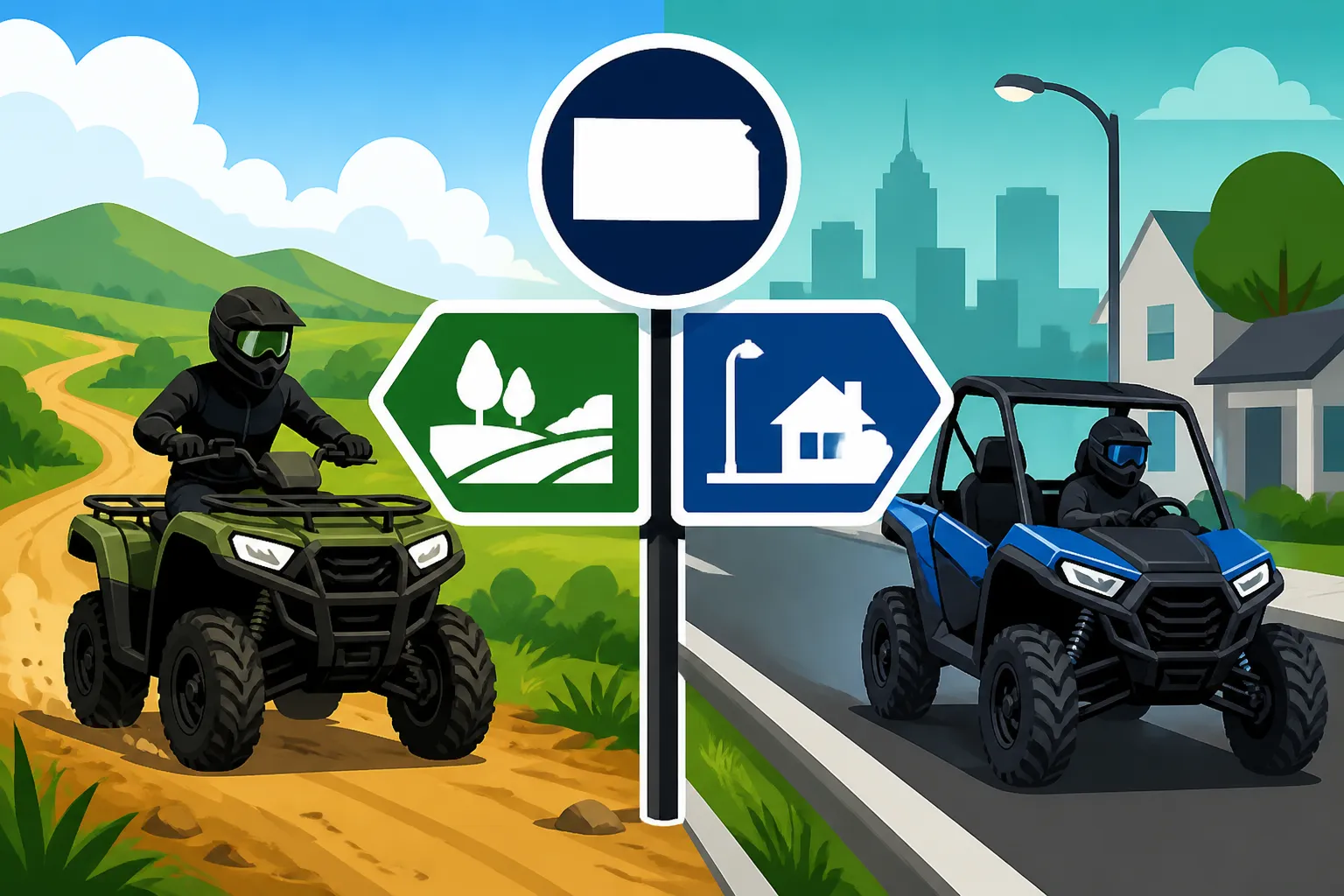
Unlike ATVs, many Kansas cities and counties have the authority to create ordinances that allow UTVs (and sometimes golf carts) on specific public roads within their jurisdiction. This is why you might drive through one small town and see UTVs legally cruising the streets, and then cross into the next town where it's strictly prohibited. Each city council decides whether to open its streets, and under what conditions. [Kansas Cities That Authorize ATV Street Use] are referring primarily to UTVs, as ATVs are very rarely, if ever, included in these allowances.
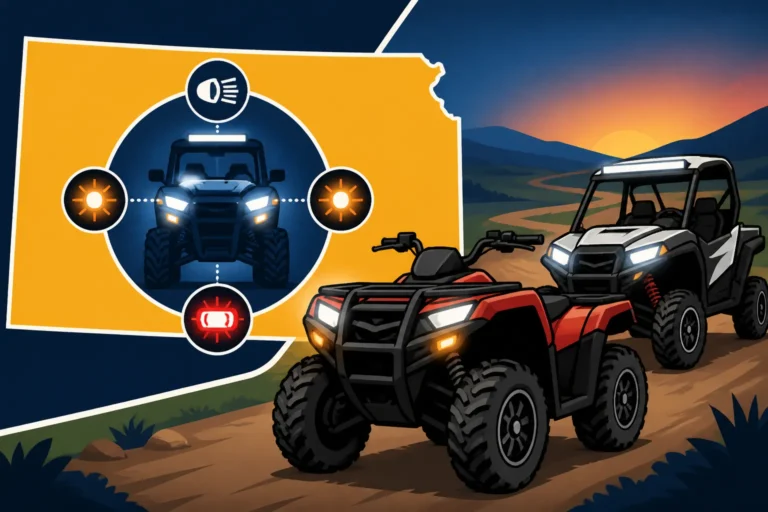
These ordinances often come with a laundry list of requirements: specific equipment like turn signals, headlights, taillights, brake lights, mirrors, a horn, and even a slow-moving vehicle emblem. You’ll often need to carry proof of insurance, pay a city tag fee, and some cities might even require a safety inspection. It's a completely different ballgame than ATV rules, offering conditional street access, but demanding more from the owner to meet road-legal standards. For instance, you might be looking at adding an aftermarket windshield or a full soft cab enclosure from SuperATV to make your machine more road-friendly in these areas.
Work-Site Utility Vehicles (WSUVs): A Unique Kansas Classification
Kansas has a specific classification for Work-Site Utility Vehicles (WSUVs), which are a type of side-by-side that meets particular dimensional and weight criteria. This class is unique to Kansas and offers distinct road use permissions. To qualify as a WSUV, a machine typically needs to be 48 inches or less in width, and weigh over 800 pounds unladen. You can learn more about [Kansas WSUV Width of 48 Inches] and [Kansas WSUV Weight Over 800 Pounds].
WSUVs are primarily intended for work-related purposes and often have broader allowances for road use in rural areas or within designated work zones, even without a specific city ordinance. They are generally permitted on county and township roads, and sometimes can cross state highways, primarily for business or agricultural activities. The logic here is similar to the agricultural exception for ATVs, but expanded due to the WSUV's design for utility and the often heavier, more stable build. Understanding [What Makes a Side-by-Side a Work-Site Utility Vehicle] is key if you think your machine might fit this category. It provides a level of flexibility that standard UTVs often don't have outside of a specific city ordinance.
Table: Kansas Off-Road Vehicle Road Use at a Glance
To help you visualize the differences, here’s a quick overview of how the main off-road vehicle types are generally treated on Kansas roads. Remember, local city ordinances can add layers of complexity, especially for UTVs and golf carts.
| Machine Type | Primary Legal Classification | General Road Use in Kansas | Key Road Use Conditions/Exceptions | Typical Equipment for Road Use (if allowed) |
|---|---|---|---|---|
| ATV | All-Terrain Vehicle (Nonhighway) | Generally prohibited on public roads | Limited exceptions for agricultural purposes, crossing roads, emergency. | Headlights, taillights, brake lights, SMV (agricultural) |
| UTV/Side-by-Side | Utility Terrain Vehicle (Nonhighway) | Generally prohibited on public roads; may be allowed by city ordinance | Allowed if specific city ordinance exists, often requires registration & equipment. | Headlights, taillights, brake lights, turn signals, horn, mirrors, insurance, city tag, often a specific VIN from the manufacturer. SuperATV has some kits that can help with this. |
| WSUV | Work-Site Utility Vehicle | Generally allowed on county/township roads for work purposes | Must meet specific width (≤ 48") and weight (> 800 lbs) criteria. Primarily for utility. | Headlights, taillights, brake lights, slow-moving vehicle emblem (SMV). |
| Golf Cart | Golf Cart (Unconventional Vehicle) | Generally prohibited; may be allowed by city ordinance | Allowed if specific city ordinance exists, often restricted to lower speed roads. | Headlights, taillights, brake lights, turn signals, horn, mirrors, SMV. |
| Micro Utility Truck | Micro Utility Truck (Unconventional Vehicle) | Generally allowed on roads under 65 mph | Must meet specific design standards, often imported. Can be titled like a regular vehicle. | Standard vehicle lighting, seatbelts, VIN. |
Beyond ATVs and UTVs: Golf Carts and Micro Utility Trucks
While ATVs and UTVs capture much of the attention in the off-road world, Kansas law also categorizes other unconventional vehicles with their own distinct road rules. Understanding these can further illustrate why the "machine you ride" is so pivotal.
Golf Cart Rules: Hyper-Local Control
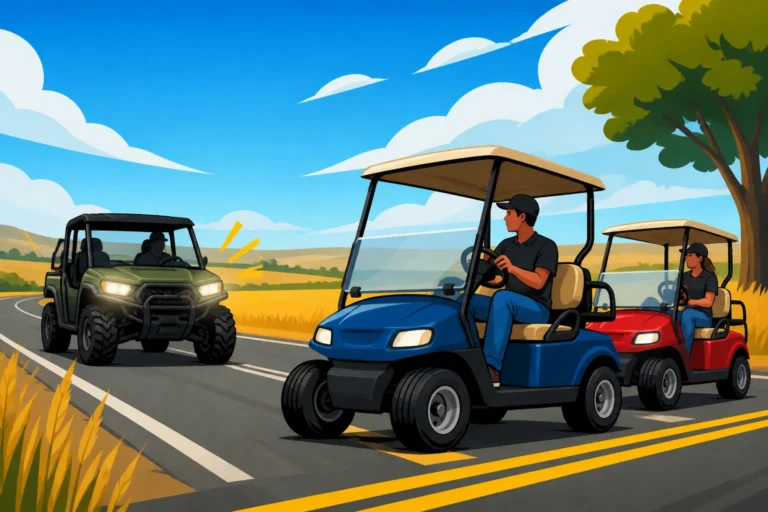
Golf carts are another category where Kansas law gives significant control to local municipalities. Just like with many UTVs, a golf cart is generally not street legal by default in Kansas. However, many cities have passed ordinances allowing golf carts on specific public roads, usually those with lower speed limits, like 25 mph or 30 mph zones. This is why you'll see [Kansas Golf Cart Road Rules] vary wildly from town to town.
These ordinances are typically driven by the desire to provide residents with alternative transportation within a community, often for short trips to local businesses or amenities. The requirements are similar to those for UTVs in cities: lights, mirrors, turn signals, and often a slow-moving vehicle emblem are common stipulations. It’s all about fitting the machine into a framework that ensures some level of safety for other road users.
Micro Utility Trucks: A Step Closer to Traditional Vehicles
Micro utility trucks are an interesting classification that, in some ways, bridges the gap between off-road utility vehicles and traditional street-legal vehicles. These are often small, imported trucks, sometimes referred to as "mini trucks," that meet certain criteria to be titled and registered for road use in Kansas. Their road use is often less restricted than UTVs or golf carts, especially if they can be titled as a low-speed vehicle or a traditional motor vehicle, depending on their specifications.
The key distinction here is that these vehicles are designed with more robust safety features, often including standard automotive components like crumple zones (though small), full lighting systems, and seatbelts that are more akin to what you'd find in a car or truck. This design, combined with their classification, gives them a wider range of legal road access, usually up to roads with a 65 mph speed limit, similar to a regular passenger car. Their ability to meet certain safety and emissions standards often allows them to bypass the strict "off-highway" limitations that plague ATVs and many UTVs.
Navigating the Nuances: Key Takeaways for Kansas Riders
The complexity of Kansas's road rules for off-road machines can feel overwhelming, but a clear understanding is your best defense against fines and frustrations. It truly boils down to the specific classification of your machine and the local ordinances in play.
Always Know Your Machine's Classification
Before you even think about hitting a public road, take the time to understand exactly how Kansas law classifies your machine. Is it an ATV, a UTV, a WSUV, a golf cart, or something else? This isn't always immediately obvious, and the manufacturer's intent or even how it's labeled might not align perfectly with Kansas definitions. Consulting the Kansas Statutes (specifically Chapter 8, Article 15) or talking with your [Kansas County Treasurers Handle Titles] office can clarify this. They are the ones who process titles, and if you're getting a [Kansas Nonhighway Title Explained], they can guide you through the specifics.
Don't assume. Just because it has a steering wheel doesn't make it a WSUV, and just because it's a quad doesn't mean it's an ATV in every legal context. Some larger, heavier UTVs may even skirt the edge of what's considered an "unconventional vehicle" versus something else entirely, depending on its specific build.
Research Local Ordinances Meticulously
If you own a UTV or a golf cart, your riding opportunities on public roads depend almost entirely on where you live or where you plan to ride. Never assume a town allows road use just because you saw someone else doing it. Laws can change, and enforcement can vary. Always check with the city clerk or police department in the specific municipality where you intend to ride. They can provide copies of current ordinances, outline required equipment, and detail any fees or permits needed. [Kansas UTV Street Legal Rules by City] are diverse and require diligent research.
Even if an ordinance exists, it might limit you to certain roads, specific times of day, or require you to display a city-issued tag (which might be the only "tag" you ever get for a nonhighway vehicle since [Kansas Has No Annual Tag Fee] for ATVs). For example, a city might allow you to drive on roads posted 35 mph or less, but prohibit use on state highways that pass through town. These details matter immensely.
Safety First, Always
Regardless of what the law allows, always prioritize safety. Equipping your machine with robust aftermarket accessories like bright LED lighting from SuperATV can significantly increase your visibility to other motorists, even if it's not strictly required by law for an agricultural exemption. Wearing appropriate safety gear, like a helmet (even if [Does Kansas Have an ATV Helmet Law at All?] isn't mandatory for adults), eye protection, and sturdy clothing, is always a good idea when operating any off-road machine, especially when sharing space with cars and trucks.
The constantly changing nature of road rules, combined with the inherent risks of riding, means that a cautious and informed rider is always a safer rider. Don't let the frustration of differing rules lead to a lapse in judgment or safety.
Disclaimer
This article is for general informational purposes only and does not constitute professional advice. Laws, prices and regulations vary by location and change over time. Consult a qualified professional for guidance on your specific situation.