Never Touching an Interstate
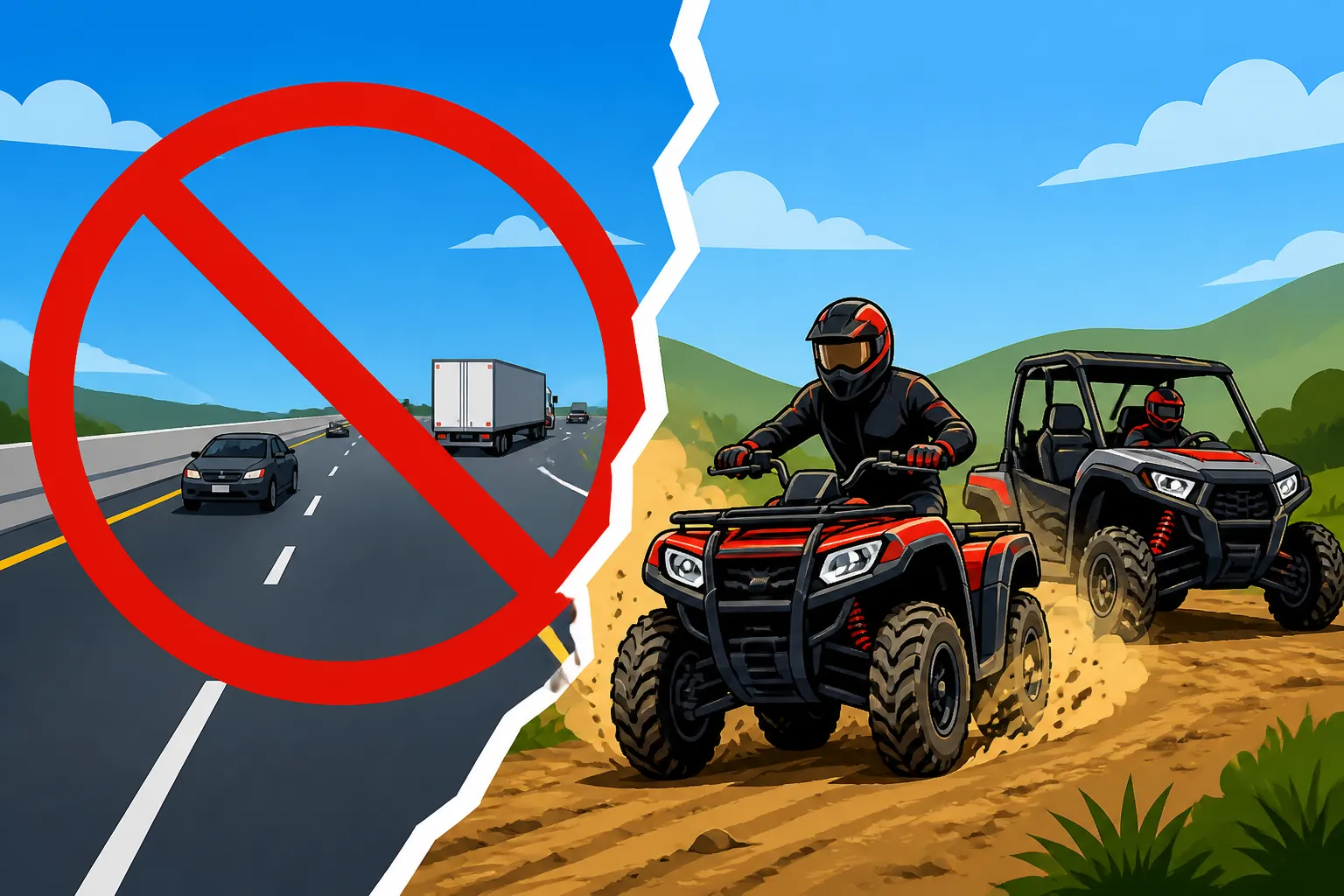
You've just invested in a powerful new side-by-side or perhaps your trusty old quad is still roaring strong after years of loyal service. It's only natural to eye the open highway, specifically the interstate, and wonder if you could just zip down a few exits to get to that prime hunting spot or a different section of trails. The thought is tempting, a shortcut to adventure, but here in Kansas, when it comes to ATVs and UTVs, the answer to touching an interstate is a definitive and absolute "no." This isn't just a suggestion; it's a crucial legal and safety mandate that every rider in the Sunflower State needs to understand deeply.
The Ironclad Interstate Ban for ATVs and UTVs in Kansas
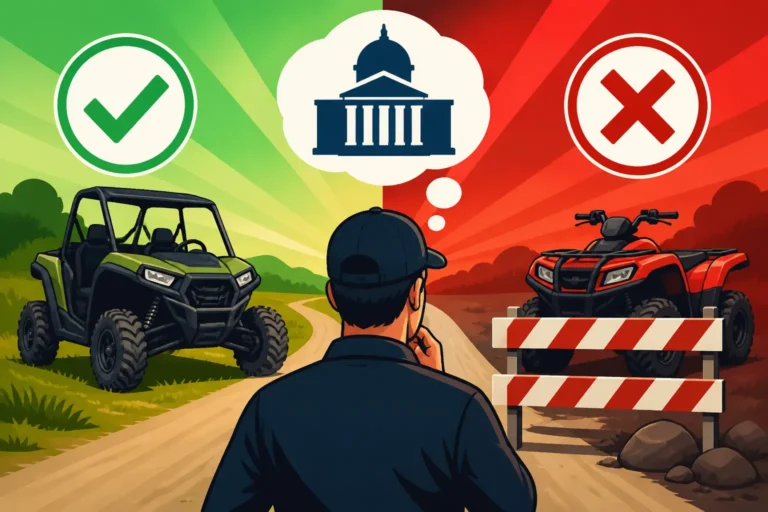
The rules of the road can sometimes feel like a tangled web, especially when you're dealing with specialized vehicles like ATVs and UTVs. While some roads might offer a glimmer of possibility for your off-road machine, interstates are, without exception, completely off-limits. It's a hard truth that can be frustrating, especially if you're looking at a long detour to get where you need to go. However, this isn't an arbitrary rule; it's deeply rooted in the very fabric of how our roads are designed and regulated, prioritizing the safety of everyone sharing the pavement.
Why Interstates Are Different by Law
Interstates, by their very nature, are fundamentally different from other public roads. They are high-speed, controlled-access highways built for sustained, rapid travel by vehicles specifically designed for such conditions. Think about the average car or truck: they have extensive safety features, turn signals, brake lights, mirrors, and stability at speeds upwards of 70-80 miles per hour. Your ATV, even if it's a robust utility model or a nimble sport quad, simply isn't engineered for that kind of environment.
Kansas law, like that of many states, makes a clear distinction. It classifies ATVs and UTVs as "nonhighway vehicles" or other specific categories that inherently exclude them from these high-speed, limited-access roads. This classification isn't just a label; it defines where these machines can legally and safely operate. Attempting to integrate an off-road machine into interstate traffic creates an immediate and severe safety hazard, not only for the ATV rider but for every other driver on the road. The sheer speed differential and the lack of robust safety features on an ATV in a collision with a semi-truck or even a passenger car are devastating. For a detailed look at the broad restrictions, you can learn more about [Kansas Bans ATVs on Interstates] and [Kansas Bans ATVs on Federal Highways]. No amount of aftermarket modifications, even high-quality parts from a company like SuperATV designed to enhance performance or durability, will ever make an ATV or UTV legal or safe for interstate travel.
The Legal Basis: Kansas Statutes Chapter 8
The foundation for this prohibition lies squarely within Kansas statutes, particularly Chapter 8, which governs automobiles and other vehicles. This chapter meticulously defines various vehicle types and outlines where they are permitted to operate. ATVs are generally defined in a way that places them outside the class of vehicles allowed on interstates. This isn't some vague guideline open to interpretation; it is a clear, written law. The legislative intent behind these laws is unequivocally to ensure public safety, recognizing the distinct operational characteristics and limitations of off-road vehicles.
These statutes prioritize the safety of all road users. The significant speed differences between ATVs and typical interstate traffic, coupled with the lack of appropriate lighting (specifically for interstate standards), turn signals, and the general design of off-road machines, make them profoundly incompatible with the demands of interstate travel. It's a matter of physics and practical safety. For a broader understanding of how your machine is classified and its general road rules, exploring [Kansas ATV Road Rules Under 8-15,100] can be helpful, but always remember that interstates remain a separate, stricter category.
What "Never Touching" Really Means: No Exceptions, No Shortcuts
It's easy to think, "What's the harm in just one exit?" or "I'll just hop on for a mile or two." This kind of thinking, however, is precisely where riders can get into serious trouble. The phrase "never touching an interstate" is meant to be taken literally, with no room for exceptions or perceived shortcuts.
Not Even for a Single Exit or Short Stretch
One of the most common misconceptions among ATV and UTV owners is that a brief jaunt down the interstate, perhaps just one exit or a short connecting stretch, might be permissible. Let me be absolutely clear: this is not the case. "Never touching" means exactly that – zero travel on an interstate, regardless of how short the distance. The moment your wheels make contact with the interstate pavement, you are in violation of Kansas law. A county sheriff or highway patrol officer will not be swayed by arguments of convenience or ignorance; the act itself constitutes the offense.
Imagine you're trying to reach a friend's property just across town, and the fastest route appears to be a quick hop onto the interstate. The temptation to save time can be immense, but it's a risk you absolutely should not take. Even if your machine is equipped with rugged SuperATV tires that handle diverse terrain beautifully, they won't make your presence on an interstate legal or safe. The penalties for such a violation can be significant, ranging from substantial fines to the impoundment of your machine, turning a seemingly innocent shortcut into a costly and infuriating ordeal. To understand more about the potential repercussions, you should look into [Kansas Penalties for Illegal Road Riding].
The Distinction Between Interstates and Other Highways
It's crucial to understand that interstates stand apart from other types of highways. While some Kansas highways, such as state routes or U.S. routes, might permit specific types of UTVs or ATVs under very particular conditions (for example, with an agricultural exemption or within city limits that have specific ordinances), interstates operate under an entirely different set of rules. They are characterized as "controlled-access" highways, meaning there's no direct property access, entry and exit points are strictly limited, and speed limits are significantly higher than on most other roads. These design features are what contribute to the blanket ban for off-road vehicles.
The legal framework is designed to protect the integrity of the interstate system, ensuring it functions safely and efficiently for the vehicles it was built for. Trying to navigate these environments on an ATV or UTV introduces unpredictable elements that compromise the safety of everyone. To get a better sense of where your machine might be allowed, understanding [Kansas Rules for Riding a County Road] and [Kansas Rules for Crossing a Highway] can help you differentiate, but remember that interstates are always excluded from these conditional allowances.
Ramifications of Violating the Interstate Ban
The desire to save time or explore can sometimes lead to overlooking critical rules, but when it comes to interstates and off-road vehicles, the consequences of a momentary lapse can be severe. It's not just about getting a ticket; it's about significant financial strain, legal entanglements, and, most importantly, extreme personal danger.
Immediate Risks and Legal Consequences
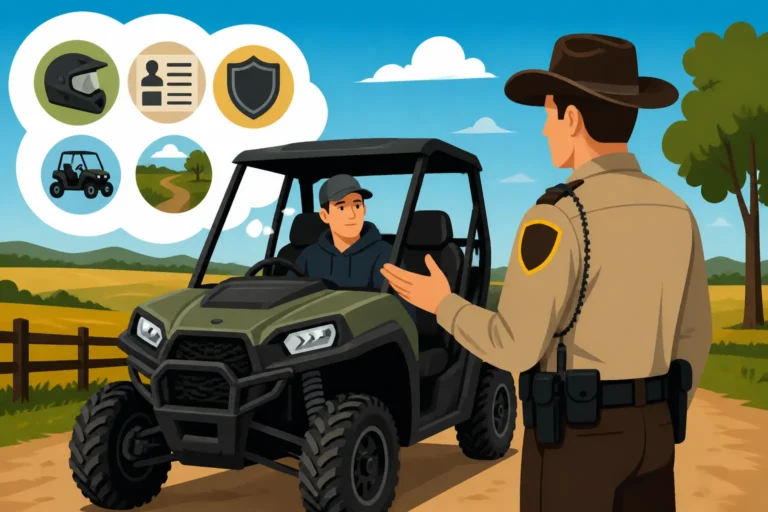
Let's not sugarcoat it: getting caught riding your ATV or UTV on a Kansas interstate will likely result in immediate and serious repercussions. You're looking at potential fines that can quickly add up, court costs, and the very real possibility of your machine being impounded. This isn't a minor infraction that gets a lenient warning; it's considered a serious safety violation that law enforcement officers will address firmly. The financial burden alone can be substantial, turning a recreational outing into a major headache and a dent in your savings. When a deputy asks [What a County Sheriff Can Ask a Rider to Show], being on an interstate will be a clear-cut violation with little room for debate.
Beyond the immediate legal penalties, there's the profound physical risk. Even if you manage to avoid a law enforcement encounter, simply being on an interstate with an ATV or UTV puts you in an incredibly vulnerable position. These roads are designed for vehicles traveling at high speeds, and the size and maneuverability of an off-road machine are no match for typical highway traffic. The risk of a severe accident, with potentially catastrophic outcomes, is astronomical.
Insurance Implications and Safety Hazards
One often-overlooked consequence of illegally riding on an interstate is the impact on your insurance. Most ATV and UTV insurance policies are specifically crafted for off-road use or very limited, ordinance-approved road use. Driving your machine onto an interstate will almost certainly void your policy's coverage for any incident that occurs there. If you were to be involved in an accident, your insurance company would very likely deny your claim, leaving you personally responsible for all damages, medical bills for any injuries, and potential legal fees.
Understanding [Kansas Insurance Comes From City Ordinances] highlights how specific and limited coverage can be; it certainly doesn't extend to illegal interstate activities. The dangers on an interstate are amplified by the environment itself: the massive speed differential with other vehicles, the blind spots of large commercial trucks, and the general lack of visibility for a small ATV or UTV in fast-moving traffic. Even if you've outfitted your machine with the brightest accessory lights from SuperATV, you're still a tiny target in a high-speed environment where drivers often aren't looking for vehicles of your type. This is a risk that simply isn't worth taking.
Smart Alternatives: Navigating Kansas Roads Legally
So, if interstates are completely off-limits, how can you legally get your ATV or UTV around Kansas? The good news is that there are many safe and legal avenues available, it just requires a bit more planning and a thorough understanding of local regulations.
Utilizing County Roads and City Ordinances
Kansas boasts an extensive network of county and section-line roads that are far more accommodating to ATVs and UTVs. These are often gravel, dirt, or less-traveled asphalt roads, which can be ideal for your off-road machine, provided that local ordinances or state statutes permit such use. Many cities and towns across Kansas have recognized the utility of UTVs, in particular, and have passed specific ordinances allowing them on city streets, opening up a range of possibilities for local travel. This is a far safer and more legal option than risking an interstate.
However, the key here is to "check local laws." What's perfectly legal in one county or city might be strictly prohibited just across the border. It's crucial to do your homework before you ride. For instance, [Kansas Rules for Riding a Section Line] provides guidance on some of these less-traveled paths, and a deeper dive into [Kansas Cities That Authorize ATV Street Use] can reveal opportunities in specific municipalities. Always assume restrictions unless you've confirmed explicit permission.
Agricultural Exemptions and Safe Hauling
For those involved in farming and ranching, Kansas law provides specific agricultural exemptions that allow the use of ATVs and UTVs on certain public roads for legitimate farm-related travel. This can be a huge benefit for moving between fields or checking livestock, but it's vital to understand that this exemption absolutely does not extend to interstates. There are also specific requirements that must be met for this exemption to apply, so don't assume it's a blanket permission to ride anywhere. You can learn more about these specific allowances by researching [Kansas Agricultural Trips on a 65 mph Road].
For longer distances, or when your journey absolutely requires crossing an interstate (or simply covers too much ground for slow, local roads), the safest and only legal option is to load your machine onto a trailer. Hauling your ATV or UTV with a street-legal truck or car protects not only your machine and your wallet but, most importantly, your life and the lives of others on the road. This method eliminates all legal and safety risks associated with riding on prohibited highways. You might even consider upgrading your trailer setup or tie-downs with robust accessories from SuperATV to ensure your machine is securely transported every time.
Here's a quick reference to help clarify road types in Kansas:
| Road Type | Allowed for ATVs/UTVs? | Conditions/Notes |
|---|---|---|
| Interstate | No | Absolutely banned by Kansas law, extreme safety hazard. |
| Federal Highway (non-interstate) | No | Generally banned; check specific local ordinances for UTVs in rare cases. |
| State Highway | Conditional | Possible with agricultural exemption or specific city ordinance (mainly UTVs). |
| County Road | Conditional | Most common legal use; always check local county ordinances and signs. |
| City Street | Conditional | Requires a specific city ordinance to be passed by local government. |
| Private Property | Yes | With the landowner's explicit permission. |
| Designated Off-Road Park | Yes | Follow all specific park rules and regulations. |
The thrill of riding an ATV or UTV in Kansas comes from exploring the vast, beautiful landscapes, tackling challenging trails, or efficiently managing farm tasks, not from risking your safety, legal standing, and finances on an interstate. By understanding and respecting these crucial laws, you can ensure that your off-road adventures remain safe, legal, and truly enjoyable.
Disclaimer
This article is for general informational purposes only and does not constitute professional advice. Laws, prices and regulations vary by location and change over time. Consult a qualified professional for guidance on your specific situation.