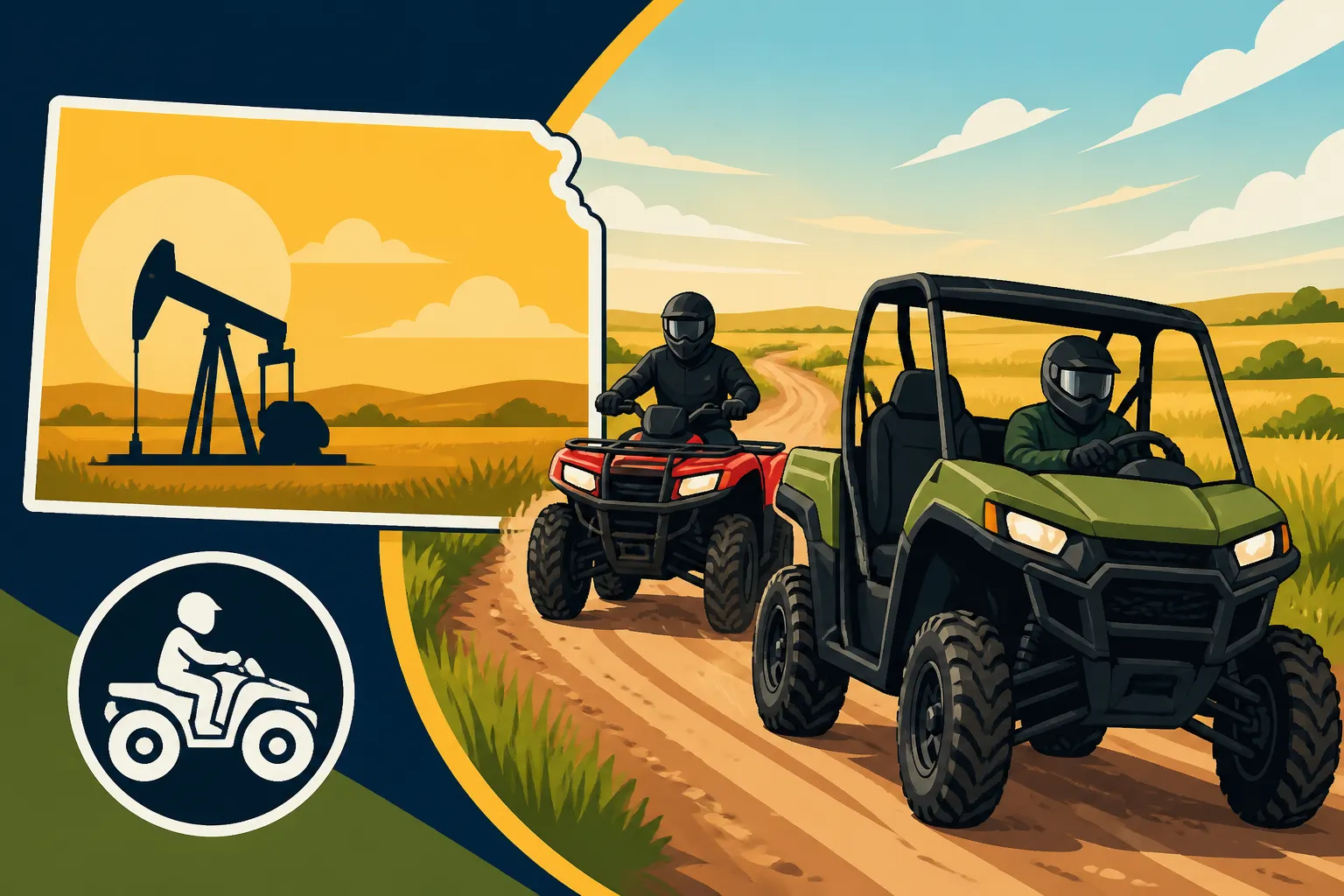
Kansas Rules for Riding an Oil Lease Road
Riding an ATV or UTV across the vast expanses of Kansas often means encountering the spiderweb of oil lease roads that crisscross private and public lands. Many riders, whether working or just looking for a new path, wonder if they can legally take their machine down these roads without running into trouble. The truth is, it's not always straightforward, and jumping on these routes without understanding the rules can lead to serious headaches. This guide will clarify the ins and outs of riding your ATV or UTV on Kansas oil lease roads, ensuring you stay within legal boundaries and maintain good relationships with landowners.
Understanding Oil Lease Roads in Kansas
Oil lease roads are a common sight in many parts of Kansas, particularly in the western and central regions where petroleum extraction is a significant industry. They're often seen as convenient shortcuts or intriguing paths, but their legal status for recreational or even non-lease-related travel can be a real head-scratcher.
What Exactly Is an Oil Lease Road?
At its core, an oil lease road is a private access road built and maintained by an oil and gas company to reach their drilling sites, wellheads, pump jacks, and other operational equipment. These roads are typically on private property, meaning land owned by farmers, ranchers, or other private citizens, where the oil company has obtained a lease for subsurface mineral rights and surface access. They're not built for public thoroughfare. You'll often find them gravel, sometimes barely more than a packed dirt track, and they can range from well-maintained to quite rugged, depending on the frequency of use and the company's maintenance schedule. They serve a very specific purpose: facilitating the operations of the oil and gas industry, and that's their primary, often exclusive, function.
The Grey Area of "Private" vs. "Public" Access
This is where the confusion often comes in. While many oil lease roads look like any other rural gravel road, they are distinctly private. They are not county roads, township roads, or state highways. This means the general public does not have an inherent right to use them. The landowner retains ownership of the surface, and the oil company has a legal easement for their specific operations. This creates a perceived "grey area" for many riders who might assume that because they're not gated or marked every few feet, they're fair game. This assumption can lead to serious legal issues, primarily trespassing. Unlike public roads where [Kansas ATV Road Rules Under 8-15,100] might apply, these private roads have their own set of access limitations.
Why Riders Are Drawn to These Roads
There's no denying the appeal of oil lease roads for ATV and UTV riders. For those who live and work in agricultural or oil-producing areas, these roads can offer the most direct route between fields, pastures, or even different parts of their own property. They might connect to a main road, cutting down travel time significantly. For recreational riders, the sheer number of these roads presents an enticing network for exploration, often leading to scenic or less-traveled areas. They can offer diverse terrain compared to simple dirt tracks, sometimes winding through rolling hills or dense brush. Plus, for many, it's just a matter of convenience – a path that appears open and unused seems like an easy option.
Legal Status of ATVs and UTVs on Oil Lease Roads
When it comes to riding your ATV or UTV on an oil lease road in Kansas, the fundamental legal principle is quite simple: you must have permission. This isn't just a suggestion; it's a critical legal requirement that underpins all access to private land.
Landowner Permission: The Golden Rule
This cannot be stressed enough: you absolutely must have explicit permission from the landowner or the oil lease operator to ride on an oil lease road. These roads are on private property, and even if they don't have "No Trespassing" signs every hundred feet, the law assumes that access is restricted unless permission has been granted. Think of it this way: just because a farmer leaves their gate open doesn't mean you can drive your pickup truck through their pasture. The same principle applies here. Without permission, you are trespassing, plain and simple. It's best to get [Getting Written Permission From a Landowner Before You Ride] to avoid any misunderstandings.
Trespassing Laws and Consequences
Kansas has clear laws regarding trespassing. If you are found riding on an oil lease road without permission, you could face legal consequences ranging from a warning to significant fines, especially if damage occurs or if it's a repeated offense. A landowner or lease operator has every right to ask you to leave, and if you refuse, law enforcement can be called. Beyond legal penalties, there's the risk of damaging your reputation, losing access to other private lands in the future, and even having your machine impounded. It's a risk simply not worth taking. Understanding [Kansas Trespass Law for Riders] is crucial for any off-road enthusiast.
Commercial Use vs. Recreational Use
It's important to distinguish between commercial use and recreational use of these roads. If you are an employee or contractor of the oil and gas company, or if you are working for the landowner (e.g., ranching, farming, surveying) and the oil lease road is the necessary access to your work site, your access is typically covered under the terms of the lease agreement or your employment/contract. In these cases, your use is considered "commercial" or work-related, and permission is implicitly or explicitly granted through your work relationship. This often means you can use specialized equipment, like heavy-duty UTVs equipped with SuperATV accessories for hauling tools or supplies, as part of your job.
For recreational riders, however, there is no inherent right to access. Just wanting to explore or find a shortcut doesn't grant you permission. Any recreational use still requires specific, explicit permission from the landowner. Don't assume that because others might be working on the road, you can also just cruise through for fun.
Navigating Permission and Access
So, you've identified an oil lease road that you'd like to use. What's the best way to go about it legally and respectfully? The process involves communication and understanding.
How to Obtain Landowner Permission
The first step is always to identify the landowner. This can sometimes be challenging, but typically local county treasurers or appraiser's offices can help you identify property owners if you have the legal description or even just a good map reference of the area. Once you have the landowner's contact information, approach them directly.
Here are some tips for asking for permission:
- Be Polite and Respectful: Introduce yourself, explain why you're interested in using their road (e.g., access to a hunting spot, transit between your own properties, or simply a desire to explore responsibly).
- Be Specific: Indicate exactly which road you want to use, for what purpose, and during what times.
- Offer Reassurance: Let them know you understand it's private property and that you will respect their land, stay on the road, leave no trash, and minimize any disturbance.
- Ask for Written Permission: This is highly recommended. A simple written note, signed by the landowner, stating the permission granted (e.g., specific dates, times, or routes) can prevent future misunderstandings. It's similar to the process for [Getting Written Permission From a Landowner Before You Ride] for any other private land.
- Respect "No": If the landowner says no, accept it gracefully. Their land, their rules.
Sometimes, the oil lease operator might be a point of contact if the landowner is difficult to reach, but ultimately, the surface rights belong to the landowner, so their permission is paramount.
What to Carry When Riding
If you've successfully obtained permission, especially written permission, make sure you carry it with you every time you ride that particular oil lease road.
Here's a checklist of what to have on hand:
- Written Permission: The most important document. Keep it in a waterproof bag or a secure pocket.
- Identification: Your driver's license or other valid ID.
- Proof of Ownership/Registration: While ATVs often don't require registration in Kansas, having proof of ownership (like your [Kansas Title Paperwork Explained] if you have one, or a bill of sale) can be helpful if questions arise.
- Proof of Insurance: Even if not legally required for off-road riding in Kansas, carrying proof of liability insurance is a smart move. It shows responsibility and can be critical in the event of an accident. [Do You Need ATV Insurance in Kansas?] is a common question, and even when not mandatory, it's wise.
- Contact Information: For the landowner, the oil lease operator, and emergency services.
Having these documents readily available can smooth over any inquiries from landowners, lease operators, or even law enforcement if they are called to the area.
Special Considerations for Operators and Contractors
For those whose work requires them to be on oil lease roads, the situation is different. Your access is typically established by contract or employment. However, it's still crucial to:
- Understand Your Scope: Know the boundaries of your authorized access. Don't venture off the lease roads or onto areas not covered by your work duties.
- Carry Work Credentials: Have your company ID, work order, or any other documentation that clearly identifies your purpose and authorization to be on the lease.
- Communicate: If you anticipate unusual movements or prolonged presence, a quick call to the landowner or lease foreman can prevent alarm.
- Safety First: Remember that these are active industrial sites. Be aware of heavy equipment, open pits, and potential hazards. Safety gear like helmets and appropriate clothing are non-negotiable.
Equipment, Safety, and Respecting the Environment
Riding on oil lease roads, even with permission, requires more than just legal compliance; it demands responsibility. The environment, the operational integrity of the lease, and your own safety are all paramount.
Essential Gear for Oil Lease Riding
Depending on the condition of the oil lease road, you might encounter everything from smooth gravel to deeply rutted mud, or loose rock. Equipping your ATV or UTV appropriately can make a huge difference.
- Tires: Knobby off-road tires provide better traction in mud, loose dirt, or rocky sections you might find. Consider beefier tires from SuperATV if you frequently encounter rough terrain.
- Winch: A winch can be a lifesaver if you get stuck in a muddy section or need to move a fallen branch. It's a common accessory for utility-focused machines.
- Skid Plates: Protecting the underside of your machine from rocks, ruts, and debris is always a good idea.
- Proper Lighting: Even if you plan to ride only during the day, unexpected delays or weather changes can leave you out after dark. Ensure your headlights and taillights are fully functional, and consider adding auxiliary lights for better visibility.
- Helmet and Protective Gear: While [Does Kansas Have an ATV Helmet Law at All?] is often debated, safety gear is a personal choice that should always lean towards protection. A good helmet, eye protection, gloves, sturdy boots, and long-sleeved clothing are highly recommended. An SuperATV helmet could be a great choice for your rides.
- First-Aid Kit: Basic first aid supplies are essential for any off-road adventure.
- Communication Device: Cell service can be spotty in rural Kansas, so consider a satellite communicator or two-way radio if you're in a remote area.
Minimizing Impact and Practicing Good Etiquette
When riding on private land, especially working oil leases, showing respect for the property and operations is vital for maintaining good relationships and future access.
- Stay on Designated Paths: Do not venture off the oil lease roads into pastures, fields, or sensitive natural areas unless explicitly permitted. This is critical to avoid damaging crops, disturbing livestock, or causing environmental harm.
- Observe Operations: If you encounter oil field workers or heavy machinery, give them a wide berth. Yield the right-of-way, slow down, and be ready to stop if necessary. Your recreational ride should never interfere with their work.
- Leave No Trace: Pack out everything you pack in. This means no trash, no discarded items, and no leaving behind any evidence of your presence beyond tire tracks on the road itself.
- Respect Gates and Fences: If you open a gate to pass through, close it securely behind you. This is crucial for livestock management and property security. Never cut fences or damage property.
- Control Noise: While ATVs and UTVs aren't silent, be mindful of excessive noise, especially near homes, livestock, or during early morning or late evening hours.
- Watch for Livestock: Be aware that cattle or other animals may be present on or near lease roads. Slow down, give them space, and avoid spooking them.
Insurance and Liability Concerns
Even with permission, accidents can happen. If you're involved in an accident on private land, understanding your insurance and liability is critical.
- Personal Responsibility: You are personally responsible for any damage you cause to property (fences, equipment, crops) or injury to others.
- Liability Insurance: Your general liability insurance (if you have an ATV/UTV specific policy) may cover damages or injuries you cause. It’s important to review your policy to understand what is covered when riding on private land. Many personal auto policies do not cover off-road incidents.
- Accident Reporting: In the event of an accident, especially if there's significant damage or injury, you should always notify the landowner, and if serious enough, law enforcement. Understanding [Kansas Accident Reporting for an ATV Crash] is important, even for private land.
Being proactive with your insurance coverage is a small investment that can save you immense trouble and cost down the line.
Oil Lease Road Riding: Dos and Don'ts
To summarize the key points for responsible riding on Kansas oil lease roads:
| DO | DON'T |
|---|---|
| Obtain explicit landowner permission | Ride without permission (it's trespassing) |
| Carry written permission and ID | Assume an open gate means public access |
| Stay on the established lease road | Create new trails or venture off-road |
| Close all gates behind you | Leave gates open or damage fences |
| Yield to oil field workers and machinery | Interfere with oil and gas operations |
| Pack out all trash and debris | Litter or leave anything behind |
| Ride responsibly and at a safe speed | Ride recklessly, create excessive dust or noise |
| Equip your machine for the terrain | Neglect safety gear (helmet, eye protection) |
| Understand your insurance coverage | Assume your auto insurance covers off-road accidents |
| Communicate with landowners/operators | Ignore requests from landowners or lease operators |
Riding ATVs and UTVs on oil lease roads in Kansas can be a fantastic way to experience the landscape, whether for work or recreation. However, it's absolutely crucial to remember that these are private lands. The "golden rule" of securing explicit permission from the landowner or lease operator is the only way to avoid legal troubles and maintain good relationships within the community. Ride smart, ride safe, and always ride with respect for the land and those who manage it.
Disclaimer
This article is for general informational purposes only and does not constitute professional advice. Laws, prices and regulations vary by location and change over time. Consult a qualified professional for guidance on your specific situation.