Kansas Lighting Requirements on a Machine
It can feel like navigating a dense thicket of regulations when you're just trying to figure out what lights your ATV or UTV needs here in Kansas. You're not alone in that frustration; the rules aren't always crystal clear, especially when you consider all the different ways we use these machines, from hitting the trails to helping out on the farm or even zipping around town where allowed. This guide is here to shed some light (pun intended!) on the essential lighting requirements, helping you understand what's legally necessary and what's just plain smart for safe riding across the Sunflower State.
Navigating the Murky Waters of Kansas ATV/UTV Lighting
When it comes to ATVs and UTVs in Kansas, the question of "what lights do I need?" is far from a simple yes or no answer. It’s like trying to hit a moving target, because what's required often depends on where and how you're riding your machine. This variability is a huge source of confusion for many owners, and it's totally understandable.
Why Lighting Rules Feel So Confusing (It's Not Just You!)
Let's be real: Kansas law doesn't have one big, shiny rulebook that clearly lays out every single lighting detail for every off-road vehicle in every scenario. Instead, the requirements often depend on how your specific machine is classified (is it an ATV, a UTV, a Work-Site Utility Vehicle, or even a golf cart?) and, more importantly, where you're operating it. A quad used exclusively on private farm land has different expectations than a side-by-side that a city has permitted for street use.
This patchwork approach means that the factory-installed lights on your brand-new ATV, while perfectly adequate for ripping around the back forty, might fall woefully short of what's needed to legally cross a county road after dusk. The frustration comes from trying to piece together regulations that seem to apply to cars or motorcycles, and then figuring out how those might or might not trickle down to your off-road machine. It makes you wonder why there isn't a straightforward list, doesn't it?
The Core Principle: When You're Off-Road (Most of the Time)
For the vast majority of ATV and UTV use in Kansas – that is, when you're strictly on private property, designated off-road riding parks like Tuttle Creek ORV Area, or unpaved private trails – the lighting situation is generally pretty straightforward. In these scenarios, the factory-installed headlights and taillights that came with your machine are usually considered sufficient. There isn't typically a state mandate for specific lumen outputs, additional brake lights, or turn signals when you're solely off-pavement.
However, "sufficient" for legal purposes doesn't always mean "optimal" for safety. Even when not legally mandated, having fully functional and bright lights is crucial for your own safety and the safety of others, especially during group rides, in dusty conditions, or when navigating challenging terrain. Imagine hitting a deep rut or a hidden obstacle because your headlight isn't cutting through the twilight gloom, or a fellow rider not seeing you slow down because your taillight is caked in mud. Common sense, good maintenance, and a proactive approach to visibility often go a long way beyond just meeting the bare minimum for off-road fun.
Lighting for Limited Road Use: When Your Wheels Touch Asphalt
This is where things get truly interesting – and often, truly complicated. The moment your ATV or UTV's tires touch a public road, even for a brief moment, the lighting requirements can change dramatically. Kansas law makes some very specific allowances for certain types of machines and certain types of activities, and with those allowances come particular responsibilities regarding illumination.
Agricultural Exceptions and What They Mean for Lights
Kansas law, understanding the practical needs of our agricultural communities, provides a specific exception that allows ATVs and UTVs to operate on public roads for agricultural purposes. This is a lifeline for farmers needing to move equipment between fields or check fence lines. However, it's not a free pass to drive anywhere, anytime, without proper lighting. In fact, if you're using your machine for an agricultural trip on a highway, specific lighting rules kick in, particularly when visibility is low or it's after dark. You can learn more about this in [Kansas Agricultural Trips on a 65 mph Road].
The general rule here is that if you're operating your ATV or UTV on a public road during the period from a half-hour after sunset to a half-hour before sunrise, or at any other time when visibility is limited (think heavy fog or rain), your machine must have functioning headlights, taillights, and often reflectors. The law often references "motorcycle lighting standards," which means you need at least one functioning headlamp capable of illuminating the road for a certain distance, a red taillight visible from the rear, and often a red reflector on the rear. While turn signals aren't always explicitly required for these quick, agriculturally-exempt road crossings, having visible brake lights is always a good idea for safety. Many farmers will add extra reflective tape to their machines to increase visibility, going above and beyond the minimum legal requirements, which is a smart move given the speeds of other vehicles on rural roads.
Work-Site Utility Vehicles (WSUVs) and Their Unique Lighting Demands
The Work-Site Utility Vehicle, or WSUV, is a special class of machine in Kansas, distinct from a typical ATV or UTV. These are typically side-by-sides designed for work applications, often exceeding specific width and weight limits. Because they are designed for commercial or utility purposes and may operate on certain public roads under strict conditions, their lighting requirements are more rigorous than a standard ATV. You might find a WSUV at a large industrial park, a university campus, or a construction site, often moving between different parts of the property via public roads. For a deeper dive into their road rules, check out [Kansas Work-Site Utility Vehicle Road Rules].
To be legally operated on public roads when allowed, a WSUV must often meet lighting standards that closely mirror those of a traditional motor vehicle. This typically includes:
- Headlights: With both high and low beam capabilities.
- Taillights: Clearly visible from the rear.
- Brake Lights: That illuminate when the brakes are applied.
- Turn Signals: Both front and rear, to clearly indicate turns or lane changes.
- Reflectors: Often amber to the front and side, and red to the rear and side.
- A Slow-Moving Vehicle Emblem: When traveling at speeds below 25 mph.
These requirements are in place to ensure that WSUVs are highly visible and can communicate their intentions to other drivers, minimizing collision risks. If you're planning to operate a WSUV on public roads, it's absolutely crucial to ensure all these lighting components are installed, fully functional, and regularly maintained.
City Ordinances: The Wild Card for UTV Street Legality and Lights
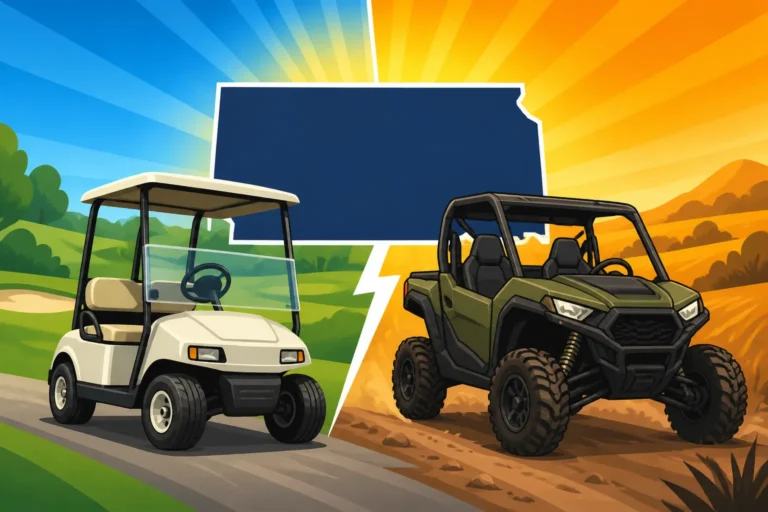
This is perhaps the biggest variable in Kansas: city ordinances. While state law generally restricts ATVs and UTVs from public roads, individual cities and towns across Kansas have the authority to pass their own ordinances that permit the use of UTVs (and sometimes golf carts) on their municipal streets. This is fantastic for residents who want to use their UTVs to run errands, visit neighbors, or get around town. However, these local ordinances always come with a comprehensive list of equipment requirements, and lighting is almost always at the top of that list. For more specific city rules, refer to [Kansas UTV Street Legal Rules by City].
If your town has passed such an ordinance, expect the lighting requirements for your UTV to be quite similar to, if not identical to, those of a standard passenger vehicle. This typically includes:
- Headlights: Legally required to have both high and low beam functions, properly aimed.
- Taillights: Two red taillights, clearly visible from the rear.
- Brake Lights: Two red brake lights, signaling when you apply the brakes.
- Turn Signals: Front and rear, amber or white in front, red or amber in the rear.
- Reflectors: Usually front (amber) and rear (red).
- Hazard Lights: Flashing turn signals for emergency stops.
- License Plate Light: To illuminate your city-issued UTV tag after dark.
- Rearview Mirrors: At least one, but often two (side mirrors).
Before you even think about putting your UTV on city streets, you must check your specific city's ordinance. What's legal in Louisburg might not be legal in Scott City. Many cities require an inspection by local law enforcement to ensure your UTV meets all these equipment standards before they'll issue you a city tag. This is not the place to guess or assume; a quick call to your city hall or police department can save you a ticket and a headache. Companies like SuperATV offer ready-to-install turn signal kits and accessory lights that can help bring your UTV up to these stringent city standards.
Essential Lighting Components and Why They Matter
No matter where you're riding your ATV or UTV in Kansas, certain lighting components are fundamental for safety and, in many cases, for legal compliance. Understanding what each light does and why it's important can help you make informed decisions about your machine's setup.
Headlights: Seeing and Being Seen
Your headlights are your primary source of illumination when the sun goes down or visibility drops. Their function is twofold: to help you see the path ahead and to help others see you coming. For purely off-road riding, the factory headlights are usually enough to light up the trail in front of you. However, for any type of road use – whether an agricultural crossing or city street driving – headlights take on a much more critical role.
Legally compliant headlights for road use must be bright enough to illuminate objects for a certain distance (often 100 to 200 feet for low beam and 350 feet or more for high beam). They must also be properly aimed so they don't blind oncoming traffic. Many modern ATVs and UTVs come with bright LED headlights, which are fantastic for off-road visibility. While auxiliary lights like powerful LED light bars are incredible for trail riding at night, remember that these are almost universally illegal to use on public roads. They are too bright and can temporarily blind other drivers, creating a significant hazard. Always switch off your light bar before hitting any public pavement, even for a brief crossing.
Taillights and Brake Lights: Your Rear View Safety Net
While headlights are about what's in front, taillights and brake lights are all about what's behind you. These are your machine's way of communicating your presence and intentions to anyone approaching from the rear.
Taillights are typically red and illuminate whenever your headlights are on. Their purpose is simple: to make your machine visible from behind, especially after dark, at dusk, or in inclement weather. Imagine driving a county road after sunset without taillights – you'd be virtually invisible, a recipe for disaster. [Kansas Lighting Rules After Sunset] emphasizes the need for proper illumination.
Brake lights are equally, if not more, critical. These lights are also red, but they illuminate specifically when you apply the brakes, signaling to following vehicles or riders that you are slowing down or stopping. For any machine that sees road use, brake lights are a non-negotiable safety feature and almost always a legal requirement. Even on trails, well-functioning brake lights prevent rear-end collisions, especially during group rides or on dusty paths where visibility might be compromised. Keeping these lights clean and ensuring bulbs or LEDs are functioning correctly should be part of your regular pre-ride check.
Turn Signals and Reflectors: Communicating Your Intentions
When you're sharing the road with other vehicles, clear communication of your intentions is paramount. This is where turn signals come in.
Turn signals, typically amber in color (though sometimes white in front or red in the rear), flash to indicate that you intend to turn or change lanes. For WSUVs operating on specific roads and UTVs authorized for city streets, functioning turn signals are almost always a legal requirement. Without them, you're left to hand signals, which can be awkward and less visible, especially with the bulk of a side-by-side. If your UTV didn't come with turn signals but your local ordinance requires them, many aftermarket kits are available that can be integrated into your machine. SuperATV, for example, offers comprehensive turn signal kits specifically designed for UTVs, making it easier to meet city requirements.
Reflectors are passive safety devices that don't produce their own light but reflect light from other sources, like headlights. While not as effective as active lights, they significantly enhance your visibility, especially from the sides or when your active lights might fail. Red reflectors are commonly required on the rear of machines, and amber reflectors on the front and sides, particularly for road-legal vehicles. Even if not strictly mandated for your specific off-road use, adding reflective tape to the sides and rear of your ATV or UTV is a low-cost, high-impact safety upgrade that makes you much easier to spot by other vehicles, especially on rural roads or dimly lit trails.
Beyond the Law: Practical Considerations for Visibility and Safety
Meeting the legal minimum for lighting is one thing; ensuring maximum safety and enjoyment on your Kansas ATV or UTV is another. Often, going above and beyond what the law strictly requires is just plain smart.
Riding After Sunset: Don't Skimp on Visibility
Riding your ATV or UTV after sunset, even in areas where it's technically allowed (like on your own land or designated parks), presents unique challenges. The world becomes a completely different place when the light fades, and peripheral vision diminishes rapidly. This is why we often advocate for exceeding minimum legal requirements when you're riding in low light or darkness.
Consider adding accent lights to your UTV's interior for better visibility of controls, or small pod lights for illuminating specific work areas. If you're riding with a group, a whip light on your UTV can be a fantastic way to ensure you're seen by others, especially in dusty conditions or over varied terrain. Don't forget that your own personal safety gear can also include reflective elements. A reflective vest or helmet can make a huge difference in how easily you're spotted by others, whether they're in another off-road vehicle or a passing car on a county road. The key takeaway here is that the darker it gets, the more illumination you need, not just to see but to be seen.
Maintenance Matters: Keeping Your Lights Bright
Even the most advanced lighting system is useless if it's not working. Regular maintenance of your ATV or UTV's lighting components is absolutely crucial. This isn't just about avoiding a ticket; it's about preventing accidents and ensuring your machine is always ready for safe operation.
Here's what to keep in mind:
- Bulb and LED Checks: Before every ride, quickly check that all your headlights, taillights, and brake lights are functioning. Flick your turn signals on. It only takes a second.
- Fuse Box: Know where your fuse box is and carry spare fuses for your lighting circuits. A blown fuse can plunge you into darkness unexpectedly.
- Wiring: Regularly inspect wiring for fraying, pinches, or loose connections, especially after rides through heavy brush or mud.
- Cleanliness: Mud, dust, and water grime can significantly reduce the effectiveness of your lights. Make it a habit to wipe down your light lenses after each ride. A thick layer of Kansas clay over your taillights might as well be an invisibility cloak.
- Battery and Charging System: Your lighting system draws power from your machine's battery. Ensure your battery is in good health and your charging system is functioning correctly to avoid dim lights or, worse, being stranded with no power.
Aftermarket Upgrades: Enhancing Your Machine's Glow
The aftermarket world for ATVs and UTVs offers an incredible array of lighting solutions that can significantly enhance both safety and functionality. While your factory lights are a good starting point, many riders choose to upgrade for better performance or to meet specific needs.
- Light Bars and Pod Lights: These are popular for serious off-road enthusiasts. Available in various sizes and lumen outputs, they can turn night into day on the trails. Just remember, as mentioned, to use them responsibly and never on public roads.
- Whip Lights: Often seen on dune machines or at organized group rides, these tall, flexible, illuminated whips make your machine incredibly visible from a distance and over hills, preventing collisions.
- Accent Lighting: LED strips or rock lights can illuminate your machine's undercarriage or interior, not just for aesthetics but also for practical purposes like making it easier to see obstacles or gear in the dark.
- Turn Signal Kits: If your UTV isn't factory-equipped with turn signals but your city requires them, a dedicated aftermarket kit is often the easiest solution. Many kits from reputable brands like SuperATV are designed for relatively easy installation and come with all necessary components.
When considering aftermarket lights, always think about their intended use and whether they align with Kansas's legal requirements for where you plan to ride. While enhancing your visibility is always a good idea, doing so illegally on public roads can lead to citations and unsafe conditions for others.
Kansas ATV/UTV Lighting Requirements Summary
To help you keep track of the various requirements, here's a general summary. Remember, local city ordinances can add more specific rules.
| Machine Type | Primary Use Location | Standard Lighting Requirements (General) | Road-Specific Additions (If Applicable) |
|---|---|---|---|
| ATV | Private Land/ORV Area | Functional Headlight(s), Functional Taillight(s) | Agricultural Use on Public Road (After dark/low visibility): Must meet "motorcycle lighting standards" (headlight, taillight, potentially brake light, rear reflector). Not for general road use. |
| UTV | Private Land/ORV Area | Functional Headlight(s), Functional Taillight(s) | Agricultural Use on Public Road (After dark/low visibility): Must meet "motorcycle lighting standards" (headlight, taillight, potentially brake light, rear reflector). City Street Use (Permitted by Ordinance): Headlights (high/low beam), taillights, brake lights, turn signals (front & rear), reflectors, license plate light, hazard lights. |
| WSUV | Work Site/Permitted Roads | Functional Headlight(s), Functional Taillight(s), Brake Light(s) | Public Road Use (Permitted): Headlights (high/low beam), taillights, brake lights, turn signals (front & rear), reflectors (front, rear, side), slow-moving vehicle emblem (if <25 mph). |
| Golf Cart | Private Land | Minimal, often just a headlight and taillight for private course/community use, not state-regulated. | City Street Use (Permitted by Ordinance): Headlights, taillights, brake lights, turn signals, reflectors, slow-moving vehicle emblem, often rearview mirror(s). Requirements vary greatly by city. |
This article is for general informational purposes only and does not constitute professional advice. Laws, prices and regulations vary by location and change over time. Consult a qualified professional for guidance on your specific situation.