Kansas Rules for a Teen Rider
It can be incredibly confusing for parents and guardians in Kansas to figure out exactly what the rules are when it comes to letting their teenagers ride ATVs and UTVs. You want your kids to enjoy the freedom and fun of off-road riding, but you also want to make sure they're safe and, just as importantly, staying on the right side of the law. This guide is here to untangle the specifics of Kansas law regarding teen riders, offering clarity on age limits, supervision, equipment, and where they can legally go.
The Core Question: Age, License, and Supervision for Teen Riders
One of the biggest anxieties for parents is simply not knowing if their child is even old enough to legally operate an ATV or UTV. Kansas law does lay out some clear guidelines, but it also leaves a bit of room for interpretation depending on the machine type and location. Let's break down the fundamentals.
Age Requirements for Operating an ATV
When it comes to ATVs, Kansas law is pretty direct, though perhaps not as strict as some might expect for younger riders. There isn't a blanket minimum age that absolutely forbids a child from sitting on and operating an ATV in all situations. However, the law does focus on the type of ATV and the supervision required. Specifically, for anyone under the age of 16, they cannot operate an ATV with an engine size greater than 90 cubic centimeters (cc) unless they are under the direct supervision of an adult who is at least 18 years old. This means that for a teen, especially one just starting out, anything larger than a 90cc quad usually requires an adult to be right there with them. This is crucial because many popular youth ATVs are in the 50cc to 125cc range, so a 110cc quad, for example, would definitely trigger the adult supervision rule for a 15-year-old. It's really about ensuring that bigger, more powerful machines are handled responsibly, especially by those who might not have the experience or judgment yet. You can find more details on this in [Kansas ATV Age Requirements].
Driver's License and Permit Rules
This is a common point of confusion: does a teen need a driver's license to operate an ATV or UTV in Kansas? The simple answer, for the vast majority of off-road riding, is no. Kansas does not require a driver's license or special permit to operate an ATV on private property or in designated off-road riding areas. The rules for obtaining an off-road specific permit, often seen in other states, simply do not exist here. So, if your teen is riding on your farm, at a private park like Kansas Rocks Recreation Park, or even at a public ORV area like Tuttle Creek, they don't need a state-issued driver's license.
However, the moment a UTV, and in very limited circumstances an ATV, touches a public road, the rules change drastically. While ATVs are generally banned from public roads, certain UTVs (like Work-Site Utility Vehicles or those granted city permission) can be driven on public roads. If your teen is operating one of these machines on a public road where it is legally permitted, they will need a valid driver's license, just like they would for a car. This means no driving that city-tagged UTV on the pavement until they've passed their driver's test and have their license in hand. It’s a sharp distinction, and one many parents miss. For more information on this, check out [Do You Need a License for an ATV in Kansas?].
The Importance of Adult Supervision
Even when not explicitly required by law for certain machine sizes, adult supervision is paramount for teen riders. Beyond the legal mandate for machines over 90cc for riders under 16, it's just plain smart. Teens, by nature, can be prone to taking risks or overestimating their abilities. Having an experienced adult present, whether riding their own machine or observing from a safe vantage point, can make all the difference in preventing accidents. An adult can monitor riding habits, provide immediate assistance if a problem arises, and teach valuable lessons about trail etiquette, machine maintenance, and safe operation. This isn't just about avoiding a ticket; it's about fostering responsible riding and building a foundation of safety. Many of the responsibilities fall squarely on the parents, as discussed in [What a Parent Is Responsible For Off-Road].
Safety Gear and Training for Young Riders
Beyond the letter of the law, there are critical safety considerations that every parent should instill in their teen rider. Proper gear and basic training aren't just suggestions; they can be life-savers.
Helmet and Eye Protection Essentials
While Kansas does not have a statewide helmet law specifically for ATVs, applying to all riders on all terrain, it is an absolute non-negotiable for teen riders in my book. The only helmet law on the books in Kansas is written for motorcycles, not ATVs, as detailed in [The Helmet Statute Written for Motorcycles, Not Quads]. This means that technically, a teen riding an ATV on private land might not be legally required to wear a helmet. However, common sense and a commitment to safety demand otherwise. Head injuries are among the most serious risks in ATV accidents. A properly fitted, DOT-approved helmet can drastically reduce the risk of severe injury.
Eye protection is equally vital. Whether it's dust, rocks, branches, or insects, debris can easily impair a rider's vision, leading to a loss of control. Goggles designed for off-road use, worn with or without a helmet, are inexpensive and highly effective at preventing eye injuries. Don't skimp on this. It's about ensuring your teen can see clearly and react quickly to changing terrain, which is paramount for their safety and the safety of those around them. When you're choosing a helmet, even when not legally required, aim for full coverage and a snug fit, as discussed in [Choosing a Helmet When No Law Requires One].
Safety Course Recommendations
Kansas law does not require any kind of formal safety course or certification for ATV or UTV operators, regardless of age, as highlighted in [Kansas Has No Safety Course Requirement]. However, this lack of a legal mandate absolutely does not mean that training isn't important. For teen riders, especially those new to operating these machines, a certified ATV or UTV safety course is one of the best investments you can make. These courses teach fundamental riding techniques, hazard awareness, basic machine maintenance, and responsible riding practices. They provide a controlled environment where teens can learn from experienced instructors, gain confidence, and understand the capabilities and limitations of their machine before heading out on challenging trails.
Many manufacturers and organizations offer these courses, and completing one often provides valuable experience that simply cannot be gained from just riding around the yard. Think of it as driver's ed for off-road vehicles. It builds good habits, instills respect for the machine and the environment, and ultimately makes for a safer, more enjoyable riding experience for everyone.
Where Can a Teenager Actually Ride in Kansas?
Understanding the legalities of where a teen can ride an ATV or UTV in Kansas is just as important as knowing the age and supervision rules. Public access for off-road vehicles is often limited, making private land and designated parks the primary options.
Private Land and Permission
For many Kansas families, private land is the go-to spot for off-road riding, and for good reason. If your teen is riding an ATV or UTV on land that you own or have explicit permission to use, they are generally free from most public road restrictions and registration requirements. This is where most teens will gain their initial experience. Riding on your own farm, a friend's pasture, or a leased hunting property provides a relatively safe and controlled environment. Just make sure you understand [Kansas Rules for Riding Farm Ground] or any other specific land access rules.
It is absolutely crucial, however, that if the land is not your own, your teen (or you, on their behalf) has clear, written permission from the landowner. Trespassing is a serious issue, and even accidental encroachment can lead to fines and legal trouble. Always err on the side of caution and get that permission in writing. This also gives you the opportunity to discuss any specific rules the landowner might have about riding hours, speed limits, or areas to avoid. Using trusted aftermarket parts from brands like SuperATV on machines used on private land can improve durability, making them more suitable for repeated use in varied terrains, but always ensure modifications comply with any landowner rules.
Designated Off-Road Riding Areas
Kansas has a few excellent designated off-road riding areas that are perfect for teen riders and families. These include places like Tuttle Creek ORV Area, School Creek ORV Area, and private parks like Kansas Rocks Recreation Park or Syracuse Sand Dunes Park. These areas are designed specifically for off-road vehicles and often have a variety of trails suitable for different skill levels, from beginner loops to more challenging terrain.
When visiting these parks, always check their specific rules and regulations beforehand. While state laws provide a baseline, individual parks can, and often do, have their own age restrictions, helmet requirements (even if the state doesn't mandate them), or rules about machine size and passenger limits. For example, some parks might have a 50-inch width restriction for certain trails. These parks are usually well-maintained, offer amenities, and provide a legal, safe place for teens to explore and develop their riding skills. They're a great option for a day trip or even a weekend adventure, offering a structured environment for learning and fun, as detailed in [Kansas Private Off-Road Parks].
Road Use Restrictions for Minors
This is perhaps the most restrictive area for teen riders. Generally speaking, ATVs are not street legal in Kansas. There are very limited exceptions for agricultural purposes on certain roads, or for crossing a highway, but these are narrow. For UTVs, some cities have passed ordinances to allow them on specific city streets, and Work-Site Utility Vehicles (WSUVs) have their own set of rules. However, in almost all cases where an ATV or UTV is legally allowed on a public road, the operator must possess a valid driver's license.
This means that a teen with a learner's permit or no license at all cannot legally drive an ATV or UTV on public roads, even in a city that permits UTVs. This applies to county roads, city streets, and any other public right-of-way. The penalties for illegal road riding can be steep, ranging from fines to impoundment of the machine. It's crucial for parents to educate their teens about these strict road rules to prevent accidents and legal trouble. Understanding [Kansas Rules for Riding a County Road] is key for any rider, especially a new one.
Understanding Machine Size and Passenger Rules
Beyond who can ride, it's also vital to consider what they're riding and who can ride with them. Matching the machine to the rider's capabilities and adhering to passenger limits are critical safety factors.
Matching Machine Size to Rider Ability
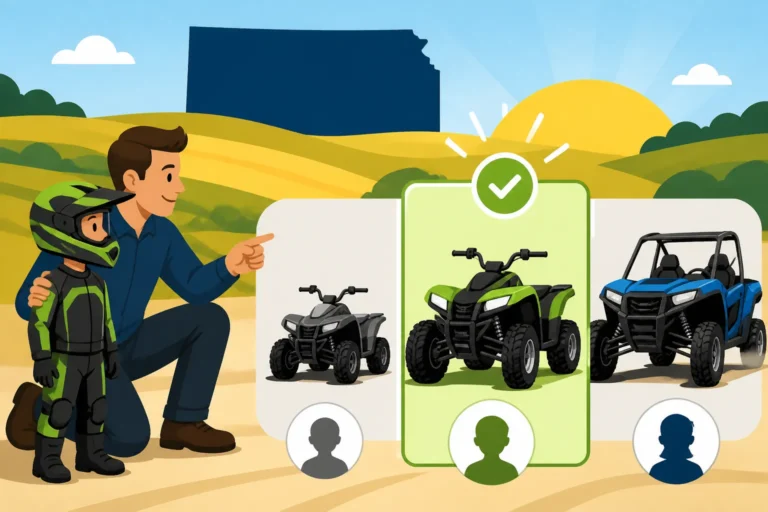
One of the most common mistakes parents make is putting a teen on a machine that is too large or too powerful for their skill level and physical stature. While Kansas law provides the 90cc guideline for riders under 16, this is a minimum and should not be the only factor. A smaller, less powerful ATV or UTV can be safer and more manageable for a developing rider, allowing them to build confidence and refine their skills without being overwhelmed. It’s not just about engine size; it’s about the overall weight, height, and handling characteristics of the machine.
Manufacturers often provide age recommendations for their machines, and these are excellent starting points. A machine that is too heavy can be difficult for a teen to control, especially in an emergency maneuver. One that is too tall might make it hard for them to reach the ground with their feet, affecting balance. Always choose a machine that allows your teen to comfortably operate all controls and maintain balance. Brands like SuperATV offer a wide range of accessories for various machine sizes, which can sometimes aid in ergonomics or protection, but the core machine choice must be appropriate for the rider. Consider [Matching a Child to the Right Machine Size] for a more in-depth look at this vital safety aspect.
Carrying Passengers on ATVs and UTVs
The rules for carrying passengers on ATVs and UTVs, especially when a teen is driving, are often overlooked but critically important. The general rule of thumb for ATVs is one rider, one seat. Most ATVs are designed for a single operator and do not have the proper seating or footrests for a passenger. Attempting to carry a passenger on a single-seat ATV significantly alters the machine's balance and handling characteristics, making it much more difficult to control, particularly for an inexperienced teen rider. This can lead to serious accidents.
UTVs, on the other hand, are typically designed with multiple seats and roll cages, making them much more suitable for carrying passengers. However, even with UTVs, it's crucial to only carry the number of passengers the manufacturer designed the vehicle for, ensuring everyone has a designated seatbelt and handholds. Never exceed the machine's passenger capacity. If your teen is driving a UTV with passengers, they need to understand that their responsibility extends to everyone onboard. Always ensure that any passengers, especially younger ones, are properly secured and wearing appropriate safety gear. More information about this can be found in [Kansas Rules for a Child Passenger]. It’s also important for teens to understand the dangers of riding under the influence, a topic covered in [Kansas DUI Law and Off-Road Machines], as these laws apply to off-road vehicles too.
| Aspect of Teen Riding | ATV Rules | UTV Rules |
|---|---|---|
| Minimum Age (Operation) | Under 16: No machine over 90cc unless directly supervised by 18+ adult. No blanket minimum for smaller machines. | No specific statewide minimum age for all UTVs, but adult supervision always recommended, especially for powerful models. |
| Driver's License | Not required for off-road use. Required if legally operating on public roads (rare). | Not required for off-road use. Required if legally operating on public roads (e.g., city-tagged, WSUV). |
| Adult Supervision | Required for riders under 16 on ATVs over 90cc. Recommended for all inexperienced teen riders. | Recommended for all inexperienced teen riders, especially on powerful machines or challenging terrain. |
| Helmet Requirement | Not mandated by state law for ATVs, but highly recommended for all riders, especially teens. | Not mandated by state law, but highly recommended for all riders. |
| Eye Protection | Not mandated, but essential to prevent injury and maintain visibility. | Not mandated, but essential to prevent injury and maintain visibility. |
| Safety Course | Not legally required, but highly recommended for all new riders to build skills and confidence. | Not legally required, but highly recommended for all new riders to build skills and confidence. |
| Where to Ride | Private land (with permission), designated ORV areas. Limited public road use (agricultural only). | Private land (with permission), designated ORV areas, some public roads (with city ordinance/WSUV rules). |
| Passenger Rules | Generally single-rider machines; never carry passengers on a single-seat ATV. | Carry only the number of passengers the manufacturer designed for, using seatbelts/restraints. |
Disclaimer
This article is for general informational purposes only and does not constitute professional advice. Laws, prices and regulations vary by location and change over time. Consult a qualified professional for guidance on your specific situation.