Andover’s Ordinance in Kansas
Navigating the world of off-road vehicles in Kansas can feel like a maze, especially when you want to take your UTV on city streets. The default state law isn't exactly friendly to these machines on pavement, leaving many riders scratching their heads and wondering if they'll ever legally drive to the gas station or a friend's house. This guide cuts through the confusion, offering a deep dive into Andover's specific ordinance, detailing exactly what you need to know to drive your UTV legally within city limits.
Understanding the Kansas Landscape for UTVs
When it comes to driving your UTV on public roads in Kansas, there's a widespread misconception that it's simply banned everywhere. And while it's true that the state generally restricts off-road vehicles like ATVs and UTVs from public highways and county roads, the reality is far more nuanced, especially within city limits. The state law, found in Kansas Statute 8-15,100, generally prohibits the operation of ATVs on public roads unless specifically authorized. This often leads to frustration for owners who just want to make a quick trip down the street without trailering their machine.
State Law's Default Stance
The initial hurdle for any Kansas UTV owner looking to hit the streets is the general prohibition outlined in state statutes. Most ATVs and UTVs are classified as non-highway vehicles, meaning they aren't designed or legal for standard road use. This classification is a big part of why you won't find traditional license plates or annual tags for these machines at the state level. It's not about being anti-UTV; it's about a foundational legal framework designed for traditional automobiles. For a deeper understanding of how the state views these machines, you can look into [Kansas Titles ATVs as Nonhighway Vehicles] and [Kansas Has No OHV Registration]. This statewide framework puts the onus on local municipalities to create exceptions. Without an explicit city ordinance, riders in most Kansas towns face the default ban, which can result in tickets and fines if they venture onto city streets.
Imagine living just a few blocks from a park or a small store, but being forced to load your side-by-side onto a trailer just to cover that short distance. It's inconvenient, costly, and frankly, a major annoyance for many UTV enthusiasts. This is the precise frustration that city ordinances aim to address, providing a pathway for responsible UTV use where local officials deem it appropriate and safe.
How Cities Create Exceptions
Given the state's restrictive default, cities in Kansas have the power to "opt in" and create their own ordinances to allow UTVs, golf carts, and other similar machines on local streets. This is a crucial distinction: it's not the state granting permission, but the city itself carving out an exception within its own jurisdiction. Each city's ordinance can be vastly different, setting unique rules for everything from required equipment to permissible speed limits and operating hours. This patchwork of rules means what's legal in one town might get you a ticket in the next. It’s why you can't assume that just because your friend rides their UTV on streets in Louisburg, you can do the same in Andover without checking the local ordinance.
These city-specific ordinances typically outline detailed requirements, such as mandating specific safety equipment, driver licensing, and often proof of insurance. They also define which streets are permissible, if any, and what hours of the day are allowed for operation. The process usually involves local government—city councils or commissions—reviewing public input, assessing safety concerns, and then passing a formal ordinance. This local control means that riders often need to be proactive in understanding their specific city's rules. [Kansas Cities That Authorize ATV Street Use] is a good resource for understanding this broader municipal trend.
Diving Into Andover's Specific Ordinance
Andover, like many forward-thinking communities in Kansas, has taken steps to address the growing popularity of UTVs and micro utility trucks. Recognizing the practical needs of its residents and the recreational value of these machines, the City of Andover has passed an ordinance that outlines the conditions under which UTVs can be legally operated on certain city streets. This ordinance provides clarity for residents who wish to use their UTVs for errands, commuting short distances, or simply enjoying the community.
What Andover Permits
Andover's ordinance allows for the operation of "Micro Utility Trucks," "Work-Site Utility Vehicles (WSUVs)," and "Golf Carts" on specific city streets. It's important to note that the ordinance distinguishes between these types of vehicles, and each may have slightly different requirements or restrictions. For UTV owners, the key is often whether their machine qualifies as a Work-Site Utility Vehicle, which typically covers many modern side-by-sides. The ability to use these vehicles on city streets represents a significant convenience for residents, allowing them to travel to local businesses, parks, or neighboring properties without having to load up a trailer.
This permission, however, is not a blanket authorization for all streets or all machines. It comes with specific conditions and responsibilities. The city council thoughtfully considered the balance between resident convenience and public safety when drafting these rules. The goal is to integrate these machines safely into the flow of local traffic, not to turn every road into an off-road playground. For those curious about the state's definitions, [What Counts as a Micro Utility Truck] and [What the Law Counts as a Golf Cart] can offer useful context, though Andover's ordinance provides the definitive local interpretation.
Prohibited Operations and Restrictions
While Andover's ordinance opens up opportunities for UTV use, it also clearly defines what is not permitted. Typically, city ordinances will restrict operation on certain high-traffic roadways, state highways that pass through the city, or streets with higher speed limits. Interstates and federal highways are almost universally off-limits, no matter the city ordinance—the state and federal laws on this are quite clear. [Kansas Bans ATVs on Interstates] and [Kansas Bans ATVs on Federal Highways] reiterate this. Additionally, there may be restrictions on operating UTVs during certain hours, especially late at night, or under specific weather conditions.
Common prohibitions also include operating a UTV in a careless or reckless manner, under the influence of alcohol or drugs, or without the proper safety equipment. These restrictions are in place to ensure the safety of all road users, including pedestrians, cyclists, and drivers of traditional vehicles. Violating these prohibitions can lead to fines, impoundment of the vehicle, and even more serious legal consequences, underscoring the importance of understanding and adhering to the ordinance's limitations. It's not just about what you can do, but what you absolutely must not do.
Key Requirements for Street Legal UTVs in Andover
If you're an Andover resident eager to take your UTV on the local streets, you'll need to ensure your machine meets a specific set of criteria. These requirements are put in place to enhance safety and ensure UTVs are visible and controllable, similar to traditional vehicles. It’s not simply a matter of having a UTV; it's about outfitting it properly for road use and ensuring you, as the operator, are also compliant.
Equipment Standards
Andover's ordinance, much like other Kansas cities that permit UTVs on streets, will mandate certain safety equipment. This usually includes:
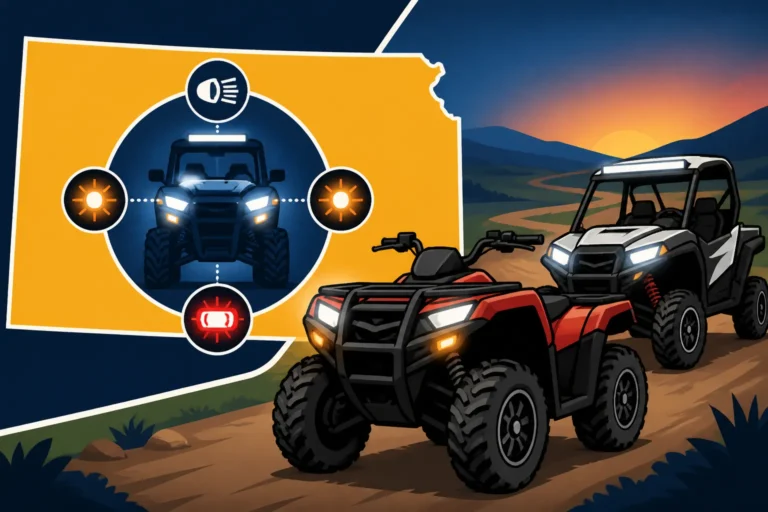
- Headlights and Taillights: These must be fully functional and visible from appropriate distances, especially if you plan to operate your UTV during dawn, dusk, or nighttime hours. Many factory UTVs come with adequate lighting, but some riders choose to upgrade for better visibility or aesthetics.
- Brake Lights: Essential for signaling your deceleration to other drivers. These need to be bright and responsive.
- Turn Signals: Required for clearly indicating your intentions when changing lanes or making turns, just like a car. If your UTV didn't come with these from the factory, you'll need to install an aftermarket kit. Companies like SuperATV offer robust turn signal kits designed for various UTV models, making it easier to meet these requirements.
- Rearview Mirror(s): At least one rearview mirror is typically required, allowing the operator to see traffic approaching from behind. Many choose to add side mirrors for enhanced visibility.
- Horn: A functional horn is necessary for alerting pedestrians or other drivers to your presence.
- Brakes: Your UTV must have functional braking systems on all wheels.
- Seatbelts: All seating positions designed for passengers must have properly working seatbelts, and occupants must use them.
- Windshield: While not always explicitly required for all classes of vehicles, a windshield can be a requirement for Micro Utility Trucks or WSUVs to provide protection from road debris and weather. If your UTV lacks one, aftermarket options are readily available from suppliers like SuperATV.
Before you even think about hitting Andover's streets, perform a thorough check of your machine. Are all your lights working? Is your horn loud enough? Can you see clearly behind you? It's not just about avoiding a ticket; it's about your safety and the safety of others.
Licensing and Driver Requirements
Operating a UTV on Andover's streets isn't just about the machine; it's also about the operator. The city's ordinance will likely stipulate that anyone driving a UTV on public roads must possess a valid Kansas driver's license. This means a provisional license, instruction permit, or an out-of-state license may or may not be acceptable, so it’s crucial to verify the specifics of the ordinance. Typically, if you can drive a car, you can drive a UTV if it meets all other requirements.
There are also age requirements to consider. While Kansas law has provisions for younger riders on private property, city ordinances for street use almost universally require the operator to be a certain age, often 16 or 18, to hold a valid driver's license. This ensures that operators have demonstrated a basic level of driving competence and understanding of road rules. Don't let a younger family member drive on city streets, even if they're perfectly capable off-road. The law is quite strict on this. [Do You Need a License for an ATV in Kansas?] provides a good baseline for state-level understanding, which city ordinances build upon.
Insurance Mandates
Another critical requirement for street-legal UTV operation in Andover is proof of liability insurance. Just like with an automobile, this insurance is designed to protect you financially in case of an accident where you are at fault, covering damages to other vehicles, property, or injuries to other people. The specific coverage limits required will typically mirror those for standard motor vehicles in Kansas.
Many UTV owners mistakenly believe their homeowner's or existing auto insurance policy automatically covers their off-road machine for street use. This is rarely the case. You will almost certainly need a dedicated UTV insurance policy or an endorsement added to an existing policy that specifically covers street legal operation. You'll need to carry proof of this insurance with you whenever you're operating your UTV on Andover streets. Before you even get to the county treasurer's office for a title, you should contact an insurance agent to ensure you have the appropriate coverage. This is one area where cutting corners can lead to massive financial headaches. [Kansas City Insurance Requirements] further details the local nuances of UTV insurance.
Navigating Andover's Streets: Where and How You Can Ride
Once your UTV is properly equipped and you're ready to roll, understanding exactly where and how you can operate it within Andover is paramount. City ordinances don't typically open up every single street for UTV use, and there are almost always specific operational guidelines to follow.
Permitted Streets and Areas
Andover's ordinance will designate which specific streets or types of streets are permissible for UTV operation. It's common for cities to restrict UTVs from state highways that run through their limits, as these are often higher-speed roads outside the city's direct control. Likewise, streets with speed limits above a certain threshold (e.g., 35 mph or 45 mph) might also be off-limits. You'll likely find that UTVs are permitted on local residential streets and collector roads, allowing access to neighborhoods, parks, and local businesses.
Before you embark on your first ride, it's a smart move to consult the official Andover city website or even visit city hall to obtain a map or a clear list of approved streets. Don't rely on word-of-mouth or assume that because a street looks like a residential road, it's fair game. One wrong turn onto a prohibited road could lead to an unexpected interaction with law enforcement. Understanding [Kansas Rules for Riding a City Street] in a general sense is helpful, but Andover's specific map is your real guide.
Speed Limits and Operating Hours
City ordinances often impose specific speed limits for UTVs that might be lower than the posted speed limit for regular vehicles on the same street. This is a safety measure, recognizing that UTVs may handle differently or have different braking characteristics than cars. For instance, an ordinance might state that UTVs cannot exceed 25 mph or 35 mph, regardless of a 45 mph posted limit. Adhering strictly to these UTV-specific speed limits is crucial.
Operating hours are another common restriction. While some cities allow UTVs from sunrise to sunset, others might extend this to certain evening hours, especially if the machine has full lighting. However, late-night operation is often curtailed to minimize noise disturbances and enhance safety in reduced visibility. Always check Andover's ordinance for exact timings. Driving outside of permissible hours, even if your machine is fully lit, could lead to a citation.
Parking and Traffic Laws
When operating a UTV on city streets, you are generally expected to abide by all the same traffic laws as a regular automobile. This includes stopping at stop signs and red lights, yielding the right of way, using turn signals, and following posted parking regulations. Don't park your UTV in a way that obstructs traffic, blocks a sidewalk, or violates any posted parking signs. Treat your UTV as you would any other vehicle on the road.
This also extends to situations like riding in bike lanes or on sidewalks. Almost without exception, UTVs are prohibited from these areas, which are designated for non-motorized traffic or specific types of small vehicles. Stick to the paved roadways where permitted and always operate defensively. A [Kansas Accident Reporting for an ATV Crash] is just as relevant for a UTV on a city street as it is for a car.
The Practicalities of UTV Ownership in Andover
Getting your UTV street legal in Andover involves more than just outfitting it and knowing the rules; there are also administrative steps and potential ongoing considerations to keep in mind. From initial inspections to understanding the local fee structure, these practical aspects are essential for hassle-free UTV ownership.
Inspections and Permits
Before you can legally drive your UTV on Andover streets, it's highly probable you'll need to undergo an inspection process. This inspection, typically conducted by the Andover Police Department or another designated city official, verifies that your UTV meets all the equipment requirements outlined in the ordinance. They'll check your lights, mirrors, horn, seatbelts, and ensure your machine is otherwise safe for road use. This isn't just a formality; it's a critical safety check.
Upon successful completion of the inspection, the city will usually issue a permit or sticker that must be displayed on your UTV. This serves as visible proof to law enforcement that your machine has been approved for street operation. The process might involve an application form, payment of a local fee, and then scheduling the inspection. Make sure you keep all your paperwork, including the permit, current and easily accessible. [Kansas Equipment Checks by Deputies] gives a broader context for what law enforcement looks for.
Local Fees and Costs
While Kansas doesn't charge an annual registration fee for non-highway vehicles like UTVs, Andover's ordinance may include its own local fees for the inspection and permit. These fees are typically collected by the city to cover the administrative costs of the program and the enforcement efforts. The amount can vary widely from city to city, and it might be an annual renewal fee or a one-time charge with a small annual renewal. For comparison, you can look at [Louisburg's UTV Tag Fees in Kansas] to see how another Kansas city structures its fees.
Beyond the city's permit fees, don't forget the costs associated with making your UTV street-legal in the first place. This includes purchasing and installing any necessary aftermarket equipment like turn signals, mirrors, or a horn. Budgeting for these upfront costs, as well as the ongoing insurance premiums, is a crucial part of responsible UTV ownership in Andover. Sometimes, the initial outlay for parts from a company like SuperATV can feel like a lot, but it's an investment in your ability to legally and safely use your machine on the road.
Enforcement and Penalties
Operating a UTV on Andover's streets without meeting all the ordinance requirements, or violating any of the rules, can lead to enforcement actions. This might range from a warning for a minor infraction to a citation and fine for more serious violations. Repeat offenses or dangerous operation could even lead to your permit being revoked or your UTV being impounded.
Law enforcement officers in Andover are responsible for ensuring compliance with the city's UTV ordinance. They have the authority to pull over UTVs, verify permits, check for required equipment, and confirm the operator's license and insurance. Understanding the potential penalties is a strong motivator to adhere to every aspect of the ordinance. The city created these rules for a reason—to maintain order and safety—and they will enforce them. For a general idea of state-level penalties that might apply, [Kansas Penalties for Illegal Road Riding] is worth reviewing.
Common Pitfalls and How to Avoid Them
Even with a clear ordinance in place, UTV owners can sometimes fall into common traps or make assumptions that lead to problems. Being aware of these pitfalls can save you a lot of headache and keep your UTV legally on Andover's streets.
Assuming All Streets Are Open
One of the biggest mistakes riders make is assuming that once their UTV is street-legal in Andover, they can drive it on any city street. This is almost never the case. As discussed, ordinances typically restrict UTVs from certain high-speed roads, state highways, or specific zones. Relying solely on the presence of a permit without understanding the designated routes can quickly lead to a citation.
Always carry a copy of the Andover ordinance or a map highlighting permissible streets, especially when you're first getting accustomed to the rules. If in doubt, err on the side of caution and stick to known legal routes. A quick call to the Andover city clerk or police department can clarify any ambiguities before you risk a ticket. Remember, even if you see others riding on a particular street, it doesn't automatically mean it's legal for you to do so.
Neglecting Maintenance and Safety Checks
Just because your UTV passed its initial inspection doesn't mean it's perpetually street-legal. Equipment can break, lights can burn out, and tires can wear down. Neglecting routine maintenance and pre-ride safety checks is a recipe for trouble. An officer conducting a routine stop will check for functional lights, mirrors, and other required equipment. If something is broken, you could face a citation even if you originally had a valid permit.
Make it a habit to do a quick walk-around before each ride on city streets. Check your lights, test your brakes, ensure your tires are properly inflated, and confirm your horn works. Keeping your UTV in top condition not only keeps you compliant with the ordinance but also significantly enhances your safety. Regular maintenance, including checking components like those you might install from SuperATV, ensures they perform as expected.
Misinterpreting State vs. Local Laws
The interplay between Kansas state law and Andover's local ordinance can be confusing. While Andover's ordinance grants permission for street use, it doesn't override all state laws. For instance, state laws regarding DUI/DWI still apply to UTV operators, as do basic traffic laws like reckless driving. You can't use the "it's just a UTV" excuse if you're pulled over for dangerous driving.
It's crucial to understand that the city ordinance provides a limited exception to the general state prohibition on UTVs on public roads. It doesn't magically turn your UTV into a car. You are still operating an off-road vehicle under specific local rules. Always be mindful of this distinction, and remember that when you're on a public street, even a city street, you are part of the larger traffic ecosystem and must adhere to all applicable laws. [Kansas Rules Riders Get Wrong] often touches on this very point of confusion between state and local regulations.
| Feature | General Kansas State Law (Default) | Andover City Ordinance (Specific) |
|---|---|---|
| Street Use | Generally Prohibited (non-highway vehicles) | Permitted on Designated City Streets (Micro Utility Trucks, WSUVs, Golf Carts) |
| Registration/Tag | No State Registration/Annual Tag Fee | May require City Permit/Sticker and associated local fees |
| Driver's License | Not explicitly required for off-road use | Valid Kansas Driver's License typically required for street use |
| Insurance | Not required by state for off-road use | Liability insurance often mandated for street use |
| Equipment | Minimal requirements for off-road use | Specific safety equipment required (lights, signals, mirrors, horn, etc.) |
| Speed Limits | Not applicable for street use | Specific maximum speed limits for UTVs, often lower than posted car limits |
| Roads Excluded | All public highways, county roads, interstates | High-speed city roads, state highways through city, interstates often excluded |
| Enforcement Body | KHP, County Sheriffs | Andover Police Department, City Officials |
Disclaimer
This article is for general informational purposes only and does not constitute professional advice. Laws, prices and regulations vary by location and change over time. Consult a qualified professional for guidance on your specific situation.