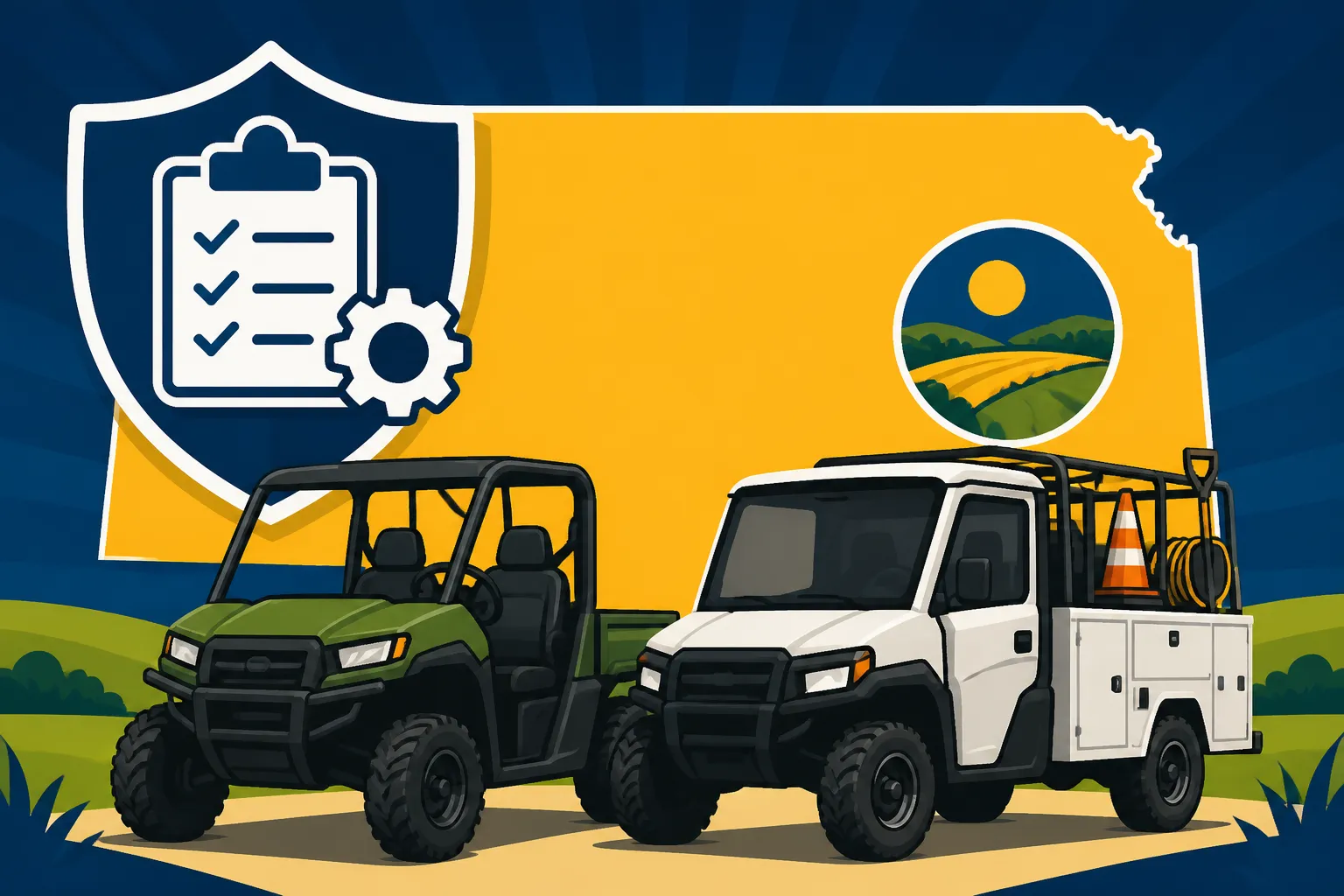
Kansas Micro Utility Truck Equipment Rules
Navigating the specific rules for your micro utility truck in Kansas can feel like trying to solve a complicated riddle, especially when you're just trying to figure out what equipment you actually need to legally take it on certain roads. Many owners assume these compact machines are just glorified golf carts or slightly smaller side-by-sides, only to discover a unique set of requirements. This guide is here to untangle the confusion, helping you understand the essential equipment rules for micro utility trucks in Kansas so you can ride with confidence and stay on the right side of the law.
Understanding the Kansas Micro Utility Truck Definition
Before we dive into the nitty-gritty of equipment, it’s crucial to understand what Kansas law actually considers a "micro utility truck." This isn't just a casual name for any small utility vehicle; it's a distinct classification that comes with its own set of expectations for how it can be equipped and used. Getting this distinction clear from the start will save you a lot of headaches and potential citations down the road. It's often the foundational piece of knowledge that many owners overlook.
What Separates It From Other Off-Road Machines
Kansas defines a micro utility truck as a motor vehicle that has a minimum of four wheels, an enclosed cab, a cargo box or bed, and a gross vehicle weight rating of 2,000 pounds or less. Think of it as a miniaturized pickup truck, often seen in campus settings, large industrial facilities, or sometimes even residential communities for quick errands. They're designed for utilitarian purposes, carrying small loads or a few passengers, rather than high-speed recreation. This definition immediately sets it apart from traditional ATVs, which are built for open-air, rugged terrain, and even many side-by-sides, which often exceed the 2,000-pound weight limit or lack a fully enclosed cab and cargo bed. It's a very specific niche.
Unlike a typical side-by-side that might be an open-air recreational vehicle, a micro utility truck must have that enclosed cab and cargo area. This isn't a suggestion; it's a core part of its legal identity. This distinction means that if you've got a UTV that's designed primarily for sport or has an open-air design, it's unlikely to fit into the micro utility truck category, no matter how small it is. This is important because the rules that apply to one type of machine don't automatically transfer to another, and the equipment you're required to have is directly tied to its classification. For a deeper dive into what makes a machine fall into this category, check out [What Counts as a Micro Utility Truck].
Why the Classification Matters for Road Use
The reason this specific classification matters so much, especially regarding equipment, is because it dictates where and how you can legally operate your machine on public roads. Kansas has different sets of rules for ATVs, golf carts, work-site utility vehicles, and yes, micro utility trucks. Each class has different privileges and restrictions. If your machine is properly classified as a micro utility truck and meets all the equipment requirements, it gains certain permissions on public roads that other off-road vehicles might not have.
For example, while ATVs are generally banned from most public roads, and golf carts have very strict limitations to low-speed streets, a micro utility truck might have slightly broader access, provided it's equipped correctly. This means that if you're planning to use your micro utility truck to haul tools to a job site a few blocks away, or transport supplies across a large property that includes crossing a county road, meeting these equipment standards is your ticket to legal operation. Without the right classification and corresponding equipment, you could be cited for operating an unregistered or improperly equipped vehicle, even if you thought you were just taking a quick, harmless trip. It all boils down to how the law views your specific machine and its intended use. Understanding [Kansas Micro Utility Truck Road Rules] is essential here.
Essential Equipment for Kansas Micro Utility Trucks
Now that we understand what a micro utility truck is, let's talk about the absolute must-haves for equipment if you ever plan on taking it off private property and onto a public road in Kansas. These aren't suggestions; they are legal requirements designed to ensure the safety of both the micro utility truck operator and everyone else on the road. Skipping even one item could put you at risk of a citation and, more importantly, a dangerous situation.
Lighting Requirements for Visibility
One of the most critical aspects of equipping any vehicle for road use, including micro utility trucks, is ensuring it has adequate lighting. When you're sharing the road with cars, trucks, and other vehicles, being seen, especially at dawn, dusk, or night, is non-negotiable. For a Kansas micro utility truck, this means you'll need a full complement of lights, very similar to what you'd expect on a standard automobile.
Specifically, you'll need functional headlamps that emit a white light and are visible from at least 500 feet to the front. These aren't just for seeing where you're going; they're vital for letting oncoming traffic see you. You'll also need taillamps that emit a red light, visible from at least 500 feet to the rear, and brake lights that illuminate when the brake pedal is pressed. Beyond these, turn signals are required both front and rear, clearly indicating your intentions to other drivers. These need to be amber in color for the front and either amber or red for the rear. Many owners find that upgrading their stock lighting, perhaps with a brighter LED kit from a brand like SuperATV, can significantly improve visibility and safety, even if the factory lights technically meet the minimum. For more information on general lighting rules, refer to [Kansas Lighting Rules After Sunset].
It's not just about having the lights; it's about them being in working order. A burned-out bulb could mean a fine, or worse, an accident. Regularly checking all your lights—headlights, taillights, brake lights, and turn signals—should be part of your routine pre-ride inspection. It’s a simple check that can prevent a lot of hassle. If your micro utility truck didn’t come with all these features from the factory, you'll need to install them. This isn't optional for road legality; it's fundamental.
Safety Features Beyond Basic Lighting
While lighting is paramount, a micro utility truck needs more than just lights to be considered road-ready in Kansas. There are several other key safety features that are legally required to ensure the machine can be operated safely among other traffic. These features address everything from driver control to warning others of your presence and intentions.
First, a horn is essential. It must be audible from at least 200 feet, providing a way to alert pedestrians or other drivers to your presence. Imagine trying to navigate a parking lot or cross a busy entrance without a horn – it's just not safe. Next, mirrors are critical for situational awareness. Your micro utility truck must have at least one rearview mirror, typically mounted inside the cab, and usually exterior side mirrors as well, giving you a clear view of the road behind and to the sides. These help you spot vehicles approaching from the rear or in your blind spots before you make a turn or change lanes.
Beyond that, you'll need proper tires that are designed for road use and in good condition. Off-road tires, while great for the trails, might not provide the necessary grip or stability on pavement, especially at higher speeds or in wet conditions. Additionally, a windshield made of safety glass is typically required for enclosed cab vehicles, along with a functional windshield wiper system to maintain visibility in rain or snow. Many micro utility trucks also come equipped with seatbelts, and it's always wise to ensure everyone in the vehicle is buckled up. While Kansas may not have a specific helmet law for ATVs in all situations, ensuring your micro utility truck is equipped with these safety features is about common sense and legal compliance when you venture onto public roads. When a deputy performs [Kansas Equipment Checks by Deputies], these are the items they'll be looking for.
Road Use Restrictions and Considerations
Even with all the correct equipment, micro utility trucks aren't free to roam every road in Kansas. There are specific restrictions on where and how they can be operated, primarily concerning speed limits and the types of roads they can access. Understanding these limitations is just as important as knowing your equipment requirements, because an improperly equipped machine on the wrong road can lead to tickets, accidents, or worse.
Speed Limits and Road Types
One of the primary distinctions for micro utility trucks when it comes to road use in Kansas is related to speed. These machines are not built for highway speeds, and state law reflects that. Generally, micro utility trucks are restricted to roads where the posted speed limit is 35 miles per hour or less. This immediately rules out most state highways, federal highways, and certainly interstates, which often have speed limits much higher than that. The goal is to keep these slower-moving vehicles off roads where they would impede faster traffic, creating a hazard for everyone.
This restriction means your micro utility truck is best suited for residential streets, slower county roads, and within the confines of private properties that might have limited public access points. You might use it to drive from your farm field to your barn, crossing a low-speed county road in the process, or to get around a sprawling industrial park. However, attempting to take it on a road with a 45 mph speed limit, let alone a 65 mph highway, is illegal and dangerous. For specifics on road usage, it's worth reviewing [Kansas Rules for Riding a County Road].
It’s also important to remember that these machines are not designed for long-distance travel. Their limited speed, smaller fuel tanks (if gasoline-powered), and general design make them unsuitable for anything beyond local, short-distance trips. Respecting these speed and road type limitations is crucial not only for legal compliance but for your personal safety and the longevity of your machine.
Local Ordinances and City-Specific Rules
While state law provides a general framework for micro utility trucks, cities and counties in Kansas have the power to enact their own ordinances that can further restrict or even permit the use of these vehicles on their local streets. This creates a patchwork of rules across the state, meaning what's legal in one town might be prohibited just a few miles down the road. This can be one of the most frustrating aspects for owners who simply want consistent rules.
Before you consider taking your micro utility truck on any city street, it is absolutely vital to check with the specific city clerk's office or local law enforcement for their local ordinances. Some cities might allow micro utility trucks on all streets with a 35 mph limit or less, while others might restrict them to only certain zones, or require additional local permits and fees. A city might, for instance, have specific hours of operation, or even require a city-issued tag in addition to ensuring your state-mandated equipment is in order.
This local control is why you can't assume what your neighbor in another town does is acceptable for you. What might be allowed in, say, De Soto, could be completely different from the rules in Louisburg or Andover. Always do your homework! A quick call to city hall can save you from a costly ticket or an uncomfortable interaction with local law enforcement. For context on how local rules vary, consider reading [Kansas Cities That Authorize ATV Street Use], which discusses similar local control for ATVs and UTVs. It underscores the point that city councils hold a lot of power over what's allowed on their streets.
Differences from Golf Carts and Work-Site Utility Vehicles
It's very common for people to confuse micro utility trucks with other compact utility vehicles, especially golf carts and work-site utility vehicles (WSUVs). However, Kansas law treats each of these categories differently, imposing distinct equipment requirements and road use privileges. Understanding these differences is key to avoiding misclassification and potential legal issues. You can't just slap a slow-moving vehicle emblem on a micro utility truck and call it a golf cart, nor can you assume a WSUV's rules apply. [Why Road Rules Change With the Machine You Ride] is an excellent resource for this very reason.
Key Distinctions in Equipment and Purpose
The most significant distinctions between micro utility trucks, golf carts, and WSUVs lie in their fundamental design and intended purpose, which in turn dictates their required equipment. As we discussed, a micro utility truck must have an enclosed cab, a cargo bed, four wheels, and a gross vehicle weight rating under 2,000 pounds. It's built for light-duty utility tasks and short-distance travel on appropriate roads.
Golf carts, on the other hand, are explicitly defined as having at least three wheels, designed to transport golf clubs and up to four persons, and not designed to exceed speeds of 20-25 mph. Their equipment requirements are typically less stringent than micro utility trucks; for example, they might not require turn signals in all contexts, though many owners add them for safety. [Kansas Golf Cart Road Rules] will give you the full picture on those. A golf cart's primary purpose is recreation on a golf course, with limited road-use exceptions.
Work-site utility vehicles (WSUVs) are another distinct category. These are typically larger, more robust machines designed specifically for commercial or industrial work sites, often with a width of 48 inches or more and an unladen weight of over 800 pounds. While they often have cargo beds, their enclosed cab requirement is less rigid, and their road use is generally tied to specific work-related tasks, such as for agricultural purposes or crossing roads between work sites. [Kansas Work-Site Utility Vehicle Road Rules] details these requirements, which often include unique features like an amber warning light. The key is that each machine has a specific set of characteristics that puts it into its legal box, and those boxes don't usually overlap.
Why You Can't Just "Upgrade" a Golf Cart
Many owners, eager to get more utility or road access out of their golf cart, try to "upgrade" it to meet the criteria of a micro utility truck or even a WSUV. This is a common pitfall. The law defines these vehicles by their original design and manufacturer specifications, not simply by what aftermarket parts you add. For instance, putting a small cargo box on the back of a golf cart and adding a windshield typically will not transform it into a micro utility truck in the eyes of Kansas law. The core components, chassis, engine, and overall design are what dictate its classification.
If you take a standard golf cart, add aftermarket headlights, taillights, a horn, and even a lift kit, it's still, legally speaking, a golf cart. It won't magically gain the broader road access or different equipment requirements of a micro utility truck just because you've modified it. The same goes for trying to make a basic utility side-by-side fit the WSUV definition; if it doesn't meet all the stringent width, weight, and sometimes seating requirements, it won't be classified as such.
The reason for this strict adherence to definition is to maintain safety and regulatory clarity. If anyone could simply modify their vehicle to change its classification, the entire system of road safety and vehicle regulation would crumble. If you truly need the capabilities and road access of a micro utility truck, it's generally best to purchase a machine that is manufactured and sold as one, ensuring it meets all the legal definitions and inherent equipment standards from the start. Trying to retrofit a different type of vehicle rarely achieves the desired legal outcome and can lead to expensive fines or even having your vehicle impounded for improper operation. Consider what a city might require to get a special tag, like in [Louisburg's UTV Tag Fees in Kansas] – even then, it's specific to UTVs, not a blanket conversion.
The Importance of Regular Inspections and Maintenance
Just like any other vehicle you operate on public roads, your Kansas micro utility truck needs consistent attention to maintenance and regular inspections. This isn't just about keeping the machine running smoothly; it's absolutely vital for maintaining its legal road-worthiness and, more importantly, ensuring your safety and the safety of others. A well-equipped micro utility truck is only safe if that equipment is in proper working order.
Pre-Ride Checks for Compliance and Safety
Before you ever turn the key and roll your micro utility truck out onto a public road, a quick, thorough pre-ride check is non-negotiable. This routine inspection helps you confirm that all the required equipment is functional and that the machine is generally safe to operate. Think of it as your personal safety briefing.
Start with the lights: check your headlamps, taillamps, brake lights, and turn signals. Make sure they all illuminate brightly and are visible. Have a friend stand behind the vehicle as you press the brakes and engage the turn signals. Test your horn to ensure it's loud and clear. Verify that your mirrors are clean, properly adjusted, and provide a clear view without cracks or obstructions. Are your tires properly inflated and do they have sufficient tread? Worn tires can drastically impact handling and braking, especially on paved surfaces. Check your seatbelts to ensure they latch securely and aren't frayed. Finally, ensure your windshield is clean and your wipers work effectively.
These checks only take a few minutes, but they can identify small issues before they become major problems on the road. Imagine getting pulled over for a burned-out taillight, or worse, getting into an accident because a turn signal wasn't working. Regular pre-ride checks are your first line of defense against both legal issues and safety hazards. They are a core part of responsible vehicle ownership and operation, particularly for a machine that bridges the gap between off-road utility and public road use.
Keeping Your Micro Utility Truck Road-Ready
Beyond those daily pre-ride checks, consistent maintenance is paramount to keeping your micro utility truck road-ready and compliant with Kansas regulations. This means following the manufacturer's recommended service schedule, paying attention to fluid levels, and addressing any mechanical issues promptly. Don't let a small rattle turn into a major repair because you ignored it.
Regularly check your brakes for wear and tear. If they feel spongy or take longer to stop, it's time for professional inspection and service. Ensure your steering is tight and responsive; any excessive play can compromise control, especially if you have to react quickly to road hazards. Keep your windshield clean and free of cracks or chips that could impede your vision. If you have aftermarket accessories, like additional lighting from SuperATV, make sure they are installed correctly and maintained to prevent electrical issues.
Think about the environment where you use your micro utility truck. If it's often dusty, muddy, or exposed to the elements, these conditions can accelerate wear and tear on components. Regular cleaning, especially of electrical connections and critical moving parts, can prolong the life of your equipment and ensure everything functions as intended. A micro utility truck that is properly maintained is not only safer but also more reliable, meaning you can count on it to get the job done, whether that's crossing a field or running an errand on a low-speed city street. Investing a little time in maintenance now can save you a lot of money and frustration later, ensuring your machine always meets the [Kansas Equipment Checks by Deputies] that might come your way.
Disclaimer
This article is for general informational purposes only and does not constitute professional advice. Laws, prices and regulations vary by location and change over time. Consult a qualified professional for guidance on your specific situation.