Kansas Golf Carts Crossing a 30 mph Road
Many Kansans cherish their golf carts for quick trips around the neighborhood, running errands, or simply enjoying the outdoors. But a common headache arises when you need to take that handy cart beyond the golf course or private property: specifically, what are the rules for crossing a public road, especially one posted at 30 mph? It's a common dilemma that leaves many scratching their heads, worried about breaking the law or, worse, getting into an accident. This comprehensive guide will break down the specific regulations, equipment needs, and local considerations for legally and safely operating your golf cart when it means traversing a road with a 30 mph speed limit in Kansas.
Defining a Golf Cart Under Kansas Law
Before we can even talk about putting wheels on asphalt, it's absolutely crucial to understand how Kansas law actually defines a golf cart. This isn't just semantics; it's the foundation upon which all road use regulations are built. Misunderstanding this definition can lead to unintentional violations and even safety hazards.
What Exactly Constitutes a Golf Cart?
In Kansas, a golf cart isn't just "any small electric vehicle." The law provides specific characteristics that distinguish it from, say, a souped-up ATV or even a legitimate Low-Speed Vehicle. Generally, a golf cart is defined as a motor vehicle that has at least three wheels, is designed for operation on a golf course, and is not capable of exceeding a speed of 20 miles per hour. That "not capable of exceeding 20 mph" part is a really big deal. If your cart can go faster than that, even if it looks exactly like a golf cart, the state might classify it differently, which then throws all the rules we're discussing here out the window.
Think about the typical golf cart you see at a country club or a campground. It's usually electric, has basic seating for two or four, minimal suspension, and certainly isn't built for highway speeds. Its primary purpose, as the name suggests, is to carry golfers and their equipment around a course. The moment you start adding performance modifications that boost its speed beyond that 20 mph threshold, you're potentially moving it out of the "golf cart" classification in the eyes of the law. You can dive deeper into the specifics of this definition in our article on [What the Law Counts as a Golf Cart].
Differentiating Golf Carts from Other "Unconventional" Vehicles
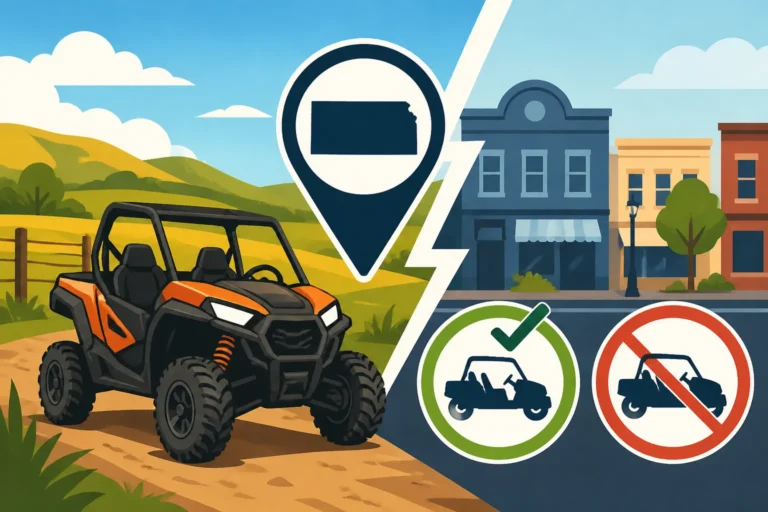
The world of off-road and utility vehicles can be a bit of a alphabet soup of acronyms: ATVs, UTVs, LSVs, WSUVs. Each one has its own set of rules in Kansas, and it's easy to confuse them. A golf cart is decidedly not an All-Terrain Vehicle (ATV) or a Utility Terrain Vehicle (UTV). ATVs are typically single-rider or two-rider machines designed for rugged off-road terrain, often with handlebars for steering. UTVs, sometimes called side-by-sides, are generally larger, have bench or bucket seating, and a steering wheel, often designed for both recreation and work. Kansas even has a special class for [Kansas Work-Site Utility Vehicles Explained], which have their own distinct rules.
A critical distinction is with a Low-Speed Vehicle (LSV). An LSV is designed for street use and can be legally driven on many public roads. Unlike a golf cart, an LSV must be capable of speeds between 20 mph and 25 mph, and comes equipped from the factory with specific safety features like headlights, taillights, stop lights, turn signals, reflective devices, an exterior mirror, a parking brake, and a vehicle identification number (VIN). If your "golf cart" meets those LSV criteria and is manufactured as such, it operates under different regulations, often allowing broader street use. This distinction is vital because simply adding a light kit to your golf cart doesn't magically turn it into a street-legal LSV. Understanding these differences is paramount to staying on the right side of the law and ensuring your safety.
State-Level Rules for Golf Carts on Kansas Roads
Now that we've firmly established what a golf cart is (and isn't) under Kansas law, let's tackle the meat of the matter: how state law generally views their operation on public roads, especially when a 30 mph speed limit is involved. It's not as simple as just driving wherever you want; there are very specific boundaries.
The General Ban and the "Crossing" Exception
Here's the fundamental truth about golf carts on public roads in Kansas: by default, state law generally prohibits them. They are not considered street-legal vehicles in the same way a car or motorcycle is. This blanket prohibition is in place because golf carts lack many of the safety features, speed capabilities, and structural integrity required for conventional road use, especially when mixing with faster-moving traffic. The idea is to keep everyone safe by not putting a slow, vulnerable vehicle in a situation it wasn't designed for. For a broader overview, you can check out our post on [Kansas Golf Cart Road Rules].
However, Kansas law does carve out a very specific and limited exception: a golf cart can be operated on a public road or highway solely for the purpose of directly crossing a street or highway, provided that the street or highway has a posted speed limit of 30 miles per hour or less. This is a crucial nuance. It's not about cruising down the block to your friend's house or taking a scenic route to the corner store. It's about getting from point A on one side of a low-speed road to point B directly across from it. Any deviation from this direct crossing, such as driving down the road for a block or two, would likely put you in violation of state law.
Specific Conditions for Crossing a 30 mph Road
So, you've identified a road with a 30 mph speed limit (or less) that you absolutely need to cross with your golf cart. What are the precise conditions you must meet to do this legally and safely? It's not just about the speed limit; it's about the manner of crossing. The law is designed to minimize your exposure to traffic and reduce the risk of accidents.
First and foremost, the crossing must be as direct and perpendicular as possible. This means you should approach the road, stop, look for traffic, and then proceed straight across to the other side without turning or lingering. You're not meant to merge into traffic flow, even briefly. Imagine drawing a straight line from where you start to where you want to end up directly across the street. That's your path.
Secondly, the crossing should be done at the shortest practical distance. This reinforces the idea of minimal exposure. Don't pick a diagonal path that keeps you on the road longer; aim for the most immediate straight-shot across. This often means choosing an intersection or a point where the road is narrowest, if safe to do so. The emphasis is entirely on brevity and efficiency to get out of the way of other vehicles quickly. Our article on [Kansas Golf Carts Crossing a 30 mph Road] provides more detail on this specific scenario.
Finally, and perhaps most importantly, you must yield to all vehicular traffic on the roadway. Your golf cart is the intruding vehicle in this scenario, and you have a responsibility to ensure you can cross without impeding or endangering any cars, trucks, or motorcycles already on the road. Safety is paramount, and patience is key. If there's any doubt about traffic, wait until the path is absolutely clear.
Required Equipment for Safe Road Crossing
Just because Kansas law allows for a specific exception to cross a 30 mph road doesn't mean you can do it with a bare-bones golf cart fresh off the back nine. Even for brief crossings, your cart needs to be equipped to maximize visibility and communicate your intentions to other drivers. This isn't just about legality; it's about your safety and the safety of everyone else on the road.
Non-Negotiable Safety Features for Visibility
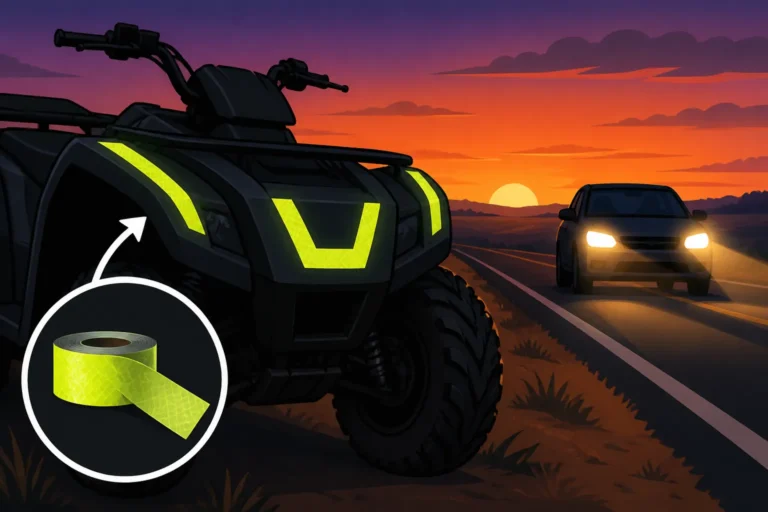
When you're operating a golf cart on any public road, even for a quick crossing, you're sharing space with vehicles that are larger, faster, and often harder to stop. This makes visibility an absolute must. While state law for golf cart crossing doesn't always mandate the full suite of LSV equipment, a common-sense approach, combined with what many cities require for broader use, suggests some non-negotiable items:
- Headlights and Taillights: Even if you're crossing during daylight hours, functional headlights and taillights significantly increase your visibility, especially at dusk, dawn, or on overcast days. A bright set of LED lights can make all the difference in being seen.
- Brake Lights: These are crucial. When you slow down to stop or yield, brake lights alert drivers behind you to your change in speed. Without them, you're leaving other motorists guessing, which is a recipe for disaster.
- Turn Signals: While you're only "crossing," you might need to make a slight adjustment to your path or signal your intention if you're at a complex intersection. Clear, working turn signals help you communicate.
- Rear-View Mirrors: You absolutely need to be able to see what's coming behind you. At least one rear-view mirror, properly adjusted, is essential for monitoring traffic before and during your crossing. Many golf carts don't come standard with these, so adding a sturdy, wide-angle mirror from a reputable accessory maker like SuperATV can be a smart move. They offer a range of mirrors designed for various off-road vehicles that fit golf carts, providing crucial visibility.
- Horn: A working horn allows you to alert other drivers or pedestrians to your presence in situations where they might not see you. It's a fundamental safety device.
Remember, even if the strict letter of the law for crossing doesn't explicitly list all these for a golf cart, if a law enforcement officer pulls you over for a safety concern, a lack of basic visibility equipment could weigh against you. Think about what a deputy might look for during [Kansas Equipment Checks by Deputies] on any unconventional vehicle.
The Importance of the Slow-Moving Vehicle Emblem
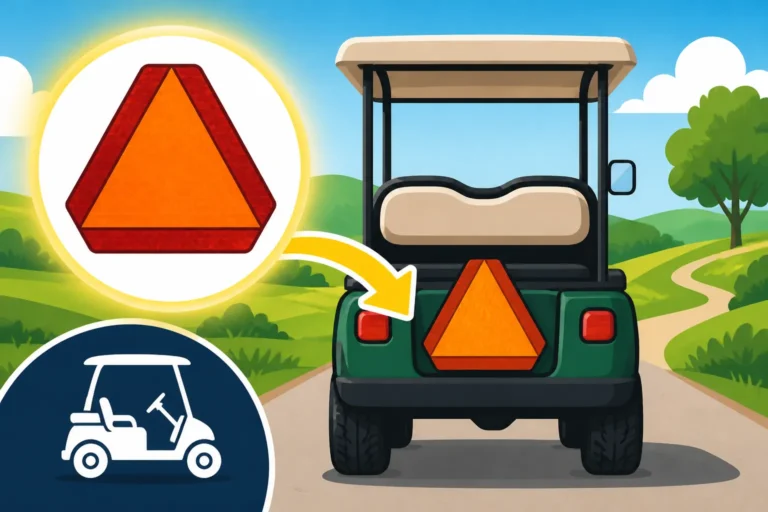
For any slow-moving vehicle operating on public roads, Kansas law requires a Slow-Moving Vehicle (SMV) emblem. This isn't just a suggestion; it's a critical legal requirement designed to prevent rear-end collisions. Our article [Kansas Golf Carts and Slow-Moving Emblems] really zeroes in on this.
What is it? It's that distinctive fluorescent orange triangle with a dark red reflective border, typically mounted on the rear of the vehicle. Its purpose is singular and vital: to alert faster-moving traffic that the vehicle ahead is traveling at 25 miles per hour or less. When a car driver sees that emblem, their brain instantly registers "slow," prompting them to adjust their speed and prepare to pass or brake.
For golf carts crossing a 30 mph road, this emblem is non-negotiable. Without it, you are significantly increasing your risk of being hit from behind, especially if there's any momentary delay in your crossing or if another driver is distracted. The emblem needs to be clean, unobstructed, and mounted prominently on the rear of your golf cart, high enough to be easily seen by following traffic. You can find these emblems at most farm supply stores, hardware stores, or online retailers specializing in vehicle accessories. SuperATV, for example, is known for providing various safety accessories, and while they might focus more on UTVs, the concept of visible safety equipment is universal across slow-moving vehicles. Always ensure your emblem is in good condition and not faded, as its effectiveness relies on its distinct color and reflectivity.
Local Ordinances and Their Impact on Golf Cart Use
While state law provides a general framework for golf cart use in Kansas, particularly regarding crossing roads, it's absolutely crucial to understand that local municipalities hold significant power to create their own rules. This means what's permissible in one Kansas town might be strictly forbidden just a few miles down the road.
How Kansas Cities Create Their Own Golf Cart Rules
The state of Kansas recognizes that local communities have unique needs and traffic patterns. Because of this, state law allows city governments to pass ordinances that can either permit or restrict golf cart operation on public streets within their corporate limits. This is a common practice for many unconventional vehicles; our article [How a City Council Opens Its Streets to UTVs] discusses a similar power for UTVs.
A city council, after considering local conditions, resident input, and safety concerns, can decide to allow golf carts on certain streets, specify speed limits, require additional safety equipment beyond what state law implies for crossing, or even mandate city-specific permits and fees. For instance, a small, quiet town with low traffic volumes might be more inclined to open its streets to golf carts than a bustling city center with multi-lane highways. These ordinances often aim to provide convenience for residents while still prioritizing public safety. The city ordinance will typically define the permissible roadways (often those with speed limits of 30 mph or less), the hours of operation (e.g., [Sunrise to Sunset Without Lights] often applies unless specific lighting is present), and any age or licensing requirements for drivers.
Researching Your Local City's Golf Cart Regulations
Given the power of local ordinances, relying solely on state law for golf cart use within city limits is a significant mistake. If you live in a city or plan to visit one and use your golf cart, you absolutely must research the specific rules for that municipality. This is not optional; it’s essential for avoiding fines and ensuring legality. Our article [Kansas Golf Cart Ordinances by City] is a great resource for understanding this patchwork of rules.
Here's how you can go about researching your local regulations:
- Contact Your City Clerk's Office: This is often the best first step. The city clerk is the official record-keeper for all city ordinances and can either provide you with copies of relevant laws or direct you to where you can find them.
- Check the City's Official Website: Many cities now publish their municipal codes online. Look for sections related to "vehicles," "traffic," "golf carts," or "unconventional vehicles." Use search functions if available.
- Inquire at the Local Police Department or Sheriff's Office: While they enforce the laws, they can also often provide guidance on what's permissible in your area. They're on the front lines and deal with these situations regularly.
- Look for Posted Signs: Some communities that permit golf cart use might have signage indicating approved areas or specific rules, especially in planned communities or retirement villages where golf carts are common.
Keep in mind that these local rules can be quite varied. Some cities might require you to obtain a special city permit or tag for your golf cart, similar to how some cities tag UTVs. Others might specify certain streets as "golf cart friendly" and prohibit them elsewhere. Always verify the most current ordinances, as rules can change. Don't assume anything based on what your neighbor does or what you observed in another town.
Driver Qualifications and Liability Considerations
Even if you've got your golf cart perfectly equipped and you're only planning a legal crossing on a 30 mph road, there are still critical considerations about who can drive it and what happens if something goes wrong. Operating any vehicle on a public roadway, no matter how small or slow, comes with responsibilities.
Who Can Be Behind the Wheel?
This is a frequently asked question, and the answer can sometimes be surprising to golf cart owners. While you might let anyone drive your golf cart on private property or a golf course, that changes the moment its wheels touch a public road, even for a brief crossing.
Generally, under Kansas law, anyone operating a motor vehicle on a public highway or road must possess a valid driver's license. A golf cart, when used in this capacity, falls under the umbrella of a motor vehicle. This means that, for a legal crossing of a 30 mph road, the driver of the golf cart typically needs to hold a valid driver's license. This isn't just about knowing how to steer; it's about demonstrating basic knowledge of traffic laws, understanding signage, and having the mature judgment required to navigate a public road safely.
There are generally no specific exceptions for age or learner's permits when it comes to golf carts on public roads at the state level. If a city ordinance permits broader golf cart use, it might sometimes include provisions for younger drivers with supervision, but for the basic state-level crossing rule, expect a valid license to be required. This is consistent with rules for other vehicles; even for agricultural exceptions for farm machines on highways, a driver's license is still required. Always check your local city ordinance, as they could create specific age requirements if they allow broader use, but assume a license is needed for any public road interaction.
Understanding Insurance and Potential Penalties
Another critical, often overlooked, aspect of golf cart use on public roads is insurance and the consequences of non-compliance. While Kansas state law does not explicitly mandate insurance for a golf cart simply crossing a public road, this does not mean you are off the hook for liability.
Here's the stark reality: if you are involved in an accident while operating your golf cart on a public road, and you are found to be at fault, you could be held personally liable for damages, injuries, and legal fees. Without insurance, this could be financially devastating. Even a minor fender-bender with a car can result in significant repair bills, and if there are injuries, the costs can skyrocket. Therefore, even if not legally required by the state for a crossing, obtaining liability insurance for your golf cart is highly, highly recommended. Many homeowners' policies might offer some limited coverage for golf carts used on private property, but typically not for incidents on public roads. You'd likely need a separate policy or an endorsement to your existing auto or recreational vehicle policy. [Kansas City Insurance Requirements] for golf carts can be much stricter if your city allows broader road use, often requiring minimum liability coverage similar to cars.
Furthermore, if you violate any of the rules discussed – driving on a road with a speed limit over 30 mph, cruising instead of directly crossing, lacking required safety equipment like an SMV emblem, or driving without a valid license – you could face penalties. These can range from a traffic citation and a fine (similar to [Kansas Penalties for Illegal Road Riding] for ATVs) to having your golf cart impounded. Ignorance of the law is never an excuse, and law enforcement officers have the authority to enforce these regulations to protect public safety.
Kansas Golf Cart Road Use: A Quick Comparison
To help clarify the differences between golf carts and other vehicles often seen on Kansas roads, here's a quick comparison of their typical road use profiles:
| Feature | Golf Cart (State Law) | Work-Site Utility Vehicle (WSUV) | Low-Speed Vehicle (LSV) | ATV (All-Terrain Vehicle) |
|---|---|---|---|---|
| Max Speed (Design) | ~20 mph | Varies, often >20 mph | 20-25 mph | Varies, often >30 mph |
| Primary Intended Use | Golf course, private property | Work sites, farms, industrial settings | Local streets, planned communities | Off-road recreation, utility |
| Road Use (State Rule) | Direct crossing of <= 30 mph roads ONLY | Specific road use for work (limited) | Public roads <= 35 mph (generally) | Generally prohibited, limited exceptions |
| Local Ordinances | Can permit broader street use | Can permit broader street use | Cities often define additional rules | Can permit limited street use in some cities |
| SMV Emblem Required | Yes, for road crossing | Yes, for road use | No (built for slightly higher speeds) | No (generally not street legal) |
| Driver's License | Yes, for public road crossing | Yes | Yes | Yes, if used on public road with exception |
| Title/Registration | No (generally) | Yes, as "nonhighway vehicle" | Yes, as "motor vehicle" | Yes, as "nonhighway vehicle" |
| Insurance Mandated | No (state for crossing), but highly advised | Yes (often by city/employer) | Yes (state law) | No (state), but often by city/private park |
| Examples of Mfg. Add-ons | Lights, mirrors, lift kits | Winches, snow plows, cargo beds | Full lighting, seatbelts, windshield | Skids, winches, suspension upgrades |
This table highlights just how distinct the rules are for each type of machine. While a golf cart is simple and often perceived as harmless, its place on a public road is tightly controlled by Kansas statutes and local regulations. Always verify the specifics for your machine and your location to avoid issues.
Disclaimer
This article is for general informational purposes only and does not constitute professional advice. Laws, prices and regulations vary by location and change over time. Consult a qualified professional for guidance on your specific situation.