Why a Hunting License Opens No Trails in Kansas
A Kansas hunting license may let you pursue game, but it does not give you permission to ride an ATV or UTV wherever hunting is allowed. Hunting access, landowner permission, and vehicle access are separate questions. Knowing which rules apply can prevent a frustrating trip, trespass problems, or a ride on a route that is closed to off-road machines.
What a Kansas hunting license does and does not authorize
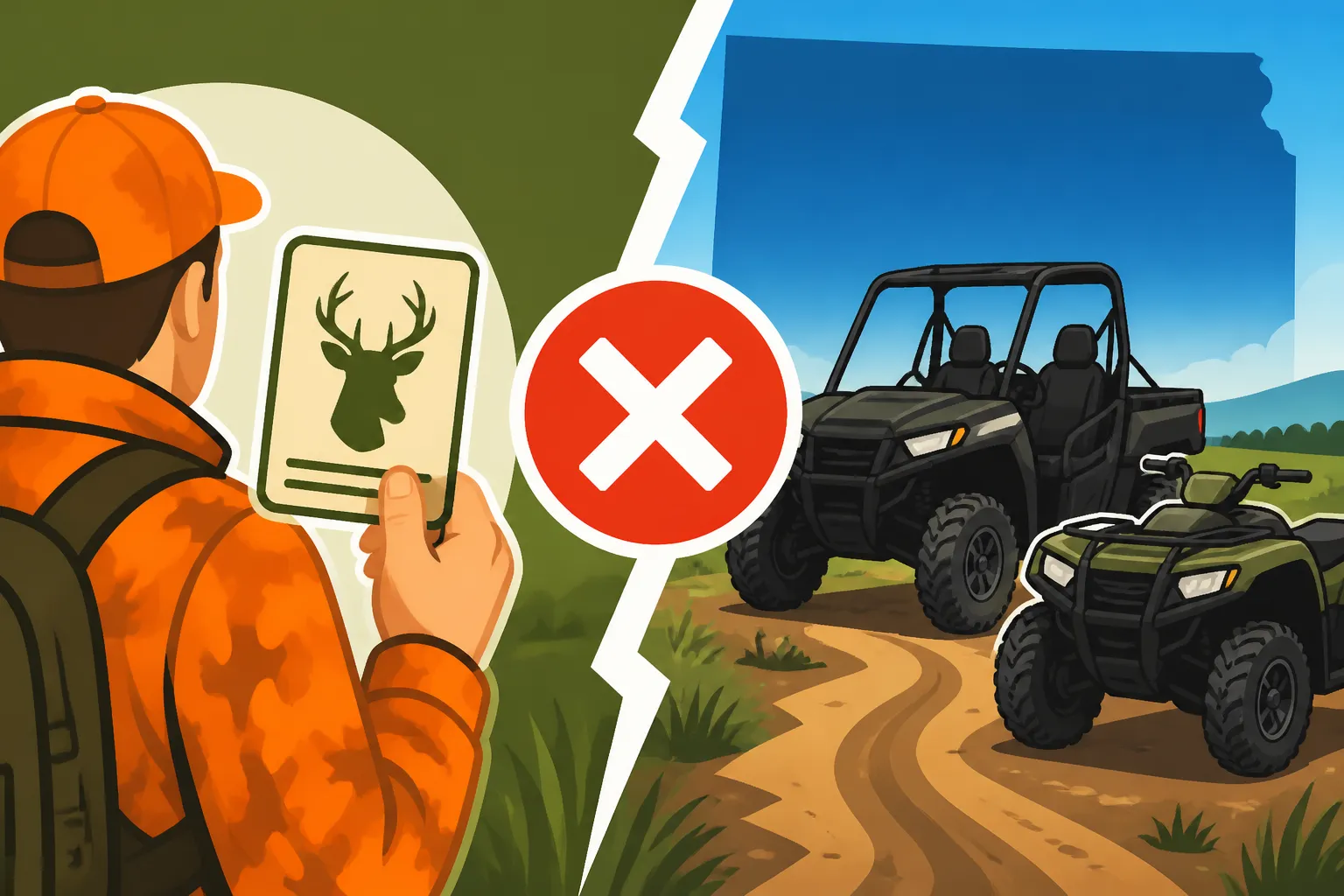
A hunting license is a hunting credential. It does not function as an off-road vehicle permit, trail pass, road tag, or landowner’s consent. Having one does not automatically authorize you to drive an ATV or UTV across public land, down a field edge, along a service road, or through private property.
Think of the trip as involving two separate activities:
- Hunting: Are you licensed for the hunt, species, and season, and are you authorized to hunt that specific property?
- Operating a machine: Is the machine allowed on that property and route, and do you have permission to use it there?
You need to answer both questions. Permission to hunt is not necessarily permission to ride, and being allowed to ride on a road does not necessarily mean you may hunt from it or leave it to reach a hunting spot.
The distinction matters because Kansas land access can come from different sources. A hunter may have permission from a private landowner, access through a walk-in hunting program, or permission to hunt on a public area. Each arrangement has its own limits. A machine may be allowed only on certain roads, or not allowed at all. The rules for the particular property take priority over assumptions based on the hunting license.
| Situation | What the hunting license may cover | What you still need to check for an ATV or UTV |
|---|---|---|
| Private land with the owner’s permission | The license may satisfy the hunting credential requirement | Separate permission to bring and operate a machine, plus any route limits |
| Walk-in hunting property | Hunting access under that property’s program rules | Whether vehicles are allowed beyond designated parking or access areas |
| Public wildlife area | Hunting under the area’s rules and applicable seasons | Posted vehicle routes, closures, and restrictions on machines |
| State park or other managed recreation area | The license does not by itself open vehicle routes | Site-specific permits and the routes where machines may operate |
| Private off-road park | A hunting license does not grant riding access | The park’s admission, machine, and property rules |
For hunting regulations and access programs, start with Kansas Hunting License and Land Access. For vehicle use on a specific type of public property, consult Kansas Wildlife Area Machine Rules and Kansas Department Road Riding Rules. These are separate questions, even when the hunt and ride happen on the same day.
Public hunting land is not automatically an ATV trail system
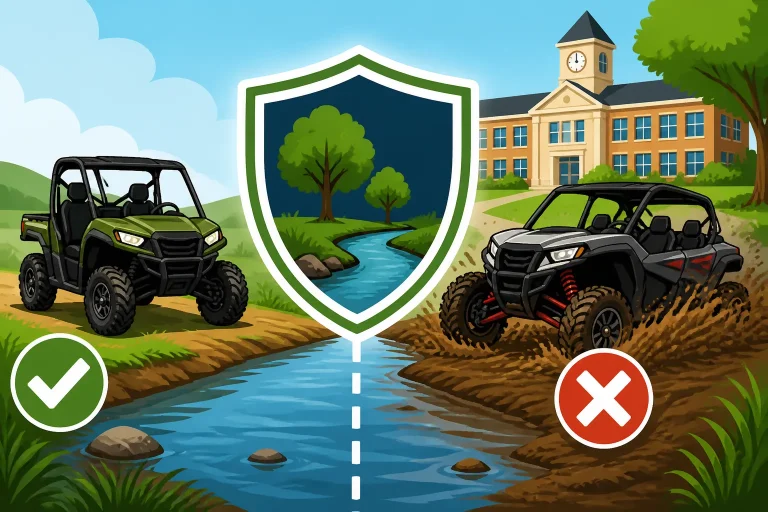
Public ownership does not mean unrestricted vehicle access. A wildlife area, reservoir property, state park, or other public recreation site may allow hunting while limiting motorized travel to particular roads or parking areas. Some areas may close routes seasonally or temporarily, and signs at the property can set additional restrictions.
A route that looks rideable is not necessarily open to ATVs. A two-track, levee, maintenance lane, field edge, or path beside a parking area might be intended for staff, emergency access, or foot travel. Do not treat the absence of a gate as proof that a route is open. Check the property’s current rules and map, follow signs, and ask the managing office if the route is unclear.
This distinction also affects how you plan to reach a hunting location. You might be able to drive a machine to an authorized parking area and continue on foot, while being prohibited from riding farther into the property. If you need a vehicle for mobility or access, ask the land manager what accommodations or permits apply before relying on the route.
Kansas does not offer one general statewide OHV trail pass that makes every public route available. Some locations have their own rules or permit requirements, but a site-specific permit is not a blanket authorization for trails elsewhere. Kansas Has No State OHV Permit explains why a statewide sticker is not the answer to every access question, while Kansas State Parks Have No OHV Trails addresses the difference between park-road use and designated off-road trail riding.
Before loading a machine, verify these details with the property manager or the current official information for the site:
- Whether ATVs, UTVs, or both are allowed
- Which roads or areas are open to motorized use
- Whether access is limited by season, weather, or management closures
- Where to park or unload
- Whether a location-specific permit is required
- Whether hunters may use a machine to retrieve game, and under what conditions
Do not rely on a map app’s route line or another rider’s past trip as proof of current access. A route can cross several types of land or change from open to closed. Check the rules for the exact property and the exact route you intend to use.
Walk-in hunting access does not mean ride-in access
Walk-in hunting access programs can be especially easy to misunderstand. The arrangement is designed to provide hunting access under program rules; it does not automatically create a right to drive onto the enrolled property. In many cases, hunters are expected to park at an allowed location and enter on foot. The property’s posted information and current program rules determine what is permitted.
That matters even when you own a small, quiet machine or intend to use it only to carry gear. Your reason for riding does not replace permission. A hunting license, a map showing a walk-in area, or the fact that the property is enrolled in a public-access program is not, by itself, authorization to drive across it.
Read Kansas Walk-In Hunting Access Rules before planning a trip. For a broader look at the difference between hunting permission and machine use, see Kansas Hunting Land Access by Machine. If access details are not clear, contact the relevant program or land manager before unloading. Ask specifically whether machine travel is allowed, where it may occur, and whether there are separate rules for mobility needs or game retrieval.
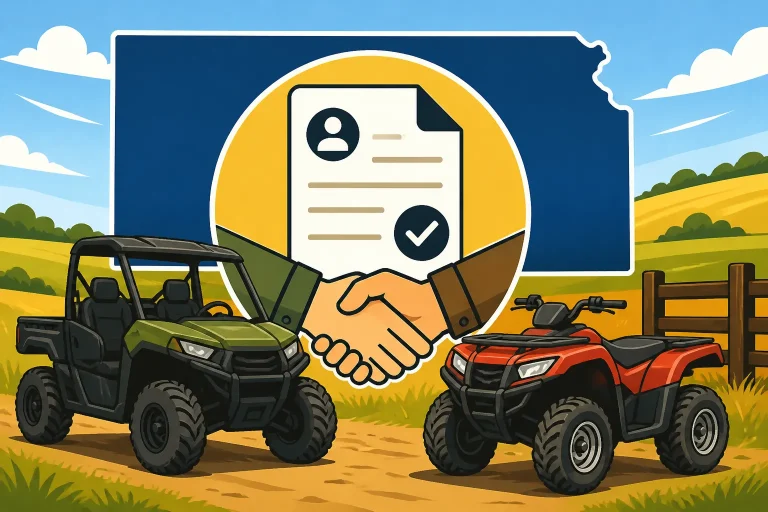
Private land requires the same careful separation of permissions. A landowner may invite you to hunt but expect you to park at the entrance and walk in. Another owner may allow a machine on a particular farm lane but prohibit travel in fields or pastures. Get the permission in clear terms rather than assuming that “you can hunt here” includes every kind of vehicle use.
A useful permission conversation covers:
- Which entrance and parking spot to use
- Whether you may bring an ATV or UTV onto the property
- The exact lanes or routes you may use
- Whether passengers, trailers, or additional machines are allowed
- Whether the permission changes during wet conditions or planting and harvest
- Whether you may use the machine for retrieving game
- Who to contact if a gate is locked or a route is blocked
Written permission can help prevent misunderstandings, especially when the property is leased, shared, or managed by someone other than the owner. It should identify the allowed activity and any vehicle limits. For more on this distinction, see Kansas Landowner Permission Rules.
Plan the hunt and ride as separate parts of the trip
The safest way to plan is to confirm the hunting access first, then independently confirm machine access. Do not assume that a legal hunt makes the ride legal, or that a lawful route gives you hunting rights on the adjoining land.
Use this sequence before you leave:
- Confirm your hunting authorization. Check the current license and season requirements for the species and location. Make sure you are allowed to hunt the property, not merely pass nearby.
- Identify the land manager or owner. Determine whether the property is private, a walk-in access site, a wildlife area, a state park, Corps-managed land, or another type of property.
- Check machine rules for that property. Ask whether your type of machine is allowed and identify the roads or areas open to it. A rule for an ATV may not automatically apply to a UTV.
- Confirm the route and parking plan. Find out where you may unload, park, and travel. Keep the machine on authorized routes and obey signs and closures.
- Ask about the specific purpose. If you want to carry equipment, assist a hunter, or retrieve game, ask whether that use is permitted. Do not assume that a general access rule covers it.
- Check road rules if your route uses public streets or highways. Off-road permission is not the same as authorization to ride on a public road. Local rules and the machine’s classification can matter. Kansas ATV Road Rules Under 8-15,100 and Kansas UTV Street Legal Rules by City cover separate road-use questions.
- Recheck shortly before the trip. Temporary closures, changing conditions, and property-specific notices can affect access. If you cannot confirm a route, choose another plan rather than treating uncertainty as permission.
Keep the machine on the route you were authorized to use. Do not cut across a field to shorten the walk, follow tire tracks through a closed area, or assume a locked gate is the only sign that motorized access is prohibited. On private land, crossing an unapproved area can damage crops, disturb livestock, or create a conflict with the owner. On public land, it can violate site rules even if the machine is being used for a legitimate hunting purpose.
Also separate hunting equipment from vehicle requirements. A hunting license does not replace any title, insurance, road-use, or safety requirement that applies to the machine or location. Those obligations depend on the machine, the route, and the property. If a trip includes both public roads and off-road riding, check each part of the route rather than relying on a single permit or document.
The practical takeaway is simple: a Kansas hunting license opens no ATV trails by itself. It may authorize hunting when the other hunting requirements are met, but vehicle access must come from the landowner, land manager, or rules for the specific site. Confirm both permissions before you load up, and treat hunting access and riding access as two separate parts of the plan.
Disclaimer
This article is for general informational purposes only and does not constitute professional advice. Laws, prices and regulations vary by location and change over time. Consult a qualified professional for guidance on your specific situation.