Campfire Bans During a Kansas Dry Spell
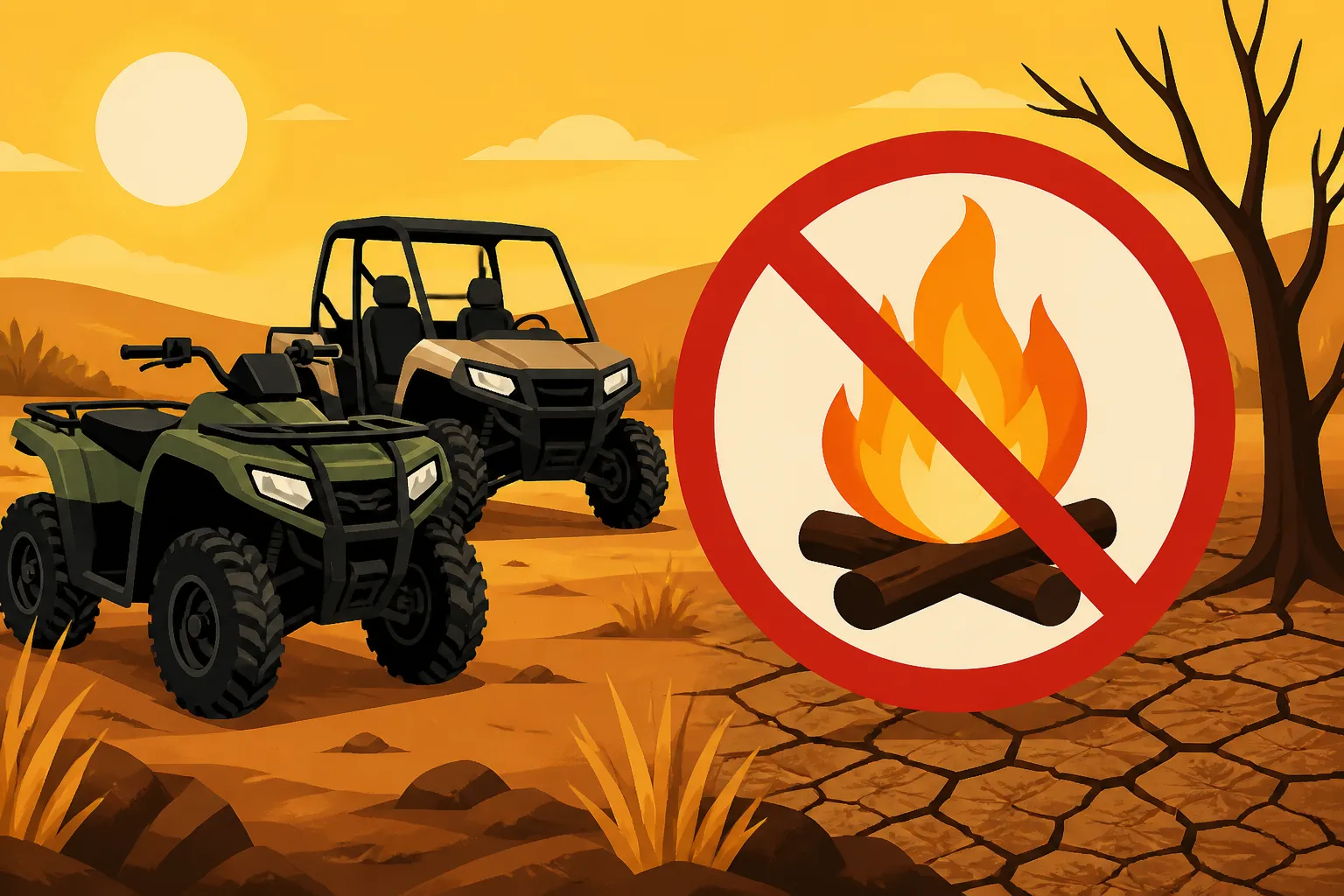
A dry spell can change the rules for a campfire between the time you plan a Kansas riding trip and the time you arrive. The challenge is that a county burn ban, a riding park’s own fire policy and a campground’s rules may not be identical. Check each authority before you travel, and have a no-flame plan that still works if conditions change.
What a Campfire Ban Can Mean in Kansas
A dry spell does not automatically mean every campfire in Kansas is prohibited. Restrictions depend on the current conditions and the authority responsible for the land. A county may issue a burn ban, a park may prohibit fires on its property, or a campground may set limits that are stricter than the rules elsewhere.
The word “burn ban” can be misleading if you assume it covers only brush piles or yard waste. The order’s wording matters. It may restrict outdoor burning broadly, define certain types of fires separately, or allow limited exceptions. Don’t assume a small campfire, charcoal grill, propane stove or fire ring is allowed just because it seems contained. Check whether the specific activity and equipment are covered.
There are several layers to check:
- County restrictions: A county may announce a burn ban or other fire restrictions for its area. The order may apply to unincorporated areas, particular activities or a wider area, so read the actual notice rather than relying on a general summary.
- City rules: If you are camping within a city, municipal fire rules may apply in addition to county restrictions. The rules can differ from those at a rural campground.
- Land manager rules: A public recreation area, campground or other land manager can restrict fires on its property. A state permit or permission to use the area does not necessarily authorize a campfire.
- Private park rules: A private off-road park can set its own conditions for campsites and fire use. Staff may close fire rings or prohibit flames when conditions worsen, even if there is no countywide ban.
- Fire department or emergency instructions: Local officials may provide specific direction about current conditions. If instructions conflict or the scope is unclear, ask before lighting anything.
These restrictions can overlap. You may be allowed to camp but not have a campfire. You may be able to use a riding area while its campground has temporarily stopped allowing charcoal or wood fires. The riding rules and the fire rules are separate questions.
A burn ban also isn’t the only reason a fire might be prohibited. A campground can ban fires as a standing policy, or a land manager can restrict them because of local conditions. Conversely, the absence of a county ban does not prove that a particular park allows fires.
| Situation | What to verify |
|---|---|
| County burn ban is in effect | Whether the order covers campfires, cooking fires, charcoal, propane or other equipment |
| No county ban is listed | Whether the campground or land manager has a separate restriction |
| Staying at a private riding park | The park’s current fire and camping rules, including temporary closures |
| Using public recreation land | The land manager’s rules for that specific site |
| Fire rules are unclear | Contact the authority responsible for the land before lighting anything |
For riding trips, start with the property that will host your camp. The details in Kansas Private Park Camping Rules and Kansas Private Park Waivers and Rules can help you think about how private parks set conditions, but always check the specific park’s current instructions. Park policies can change with weather, staffing and fire risk.
How to Check Restrictions Before You Leave
Check fire rules close to departure, then check again when you arrive. Conditions can change quickly, and a restriction that was not in place when you booked a campsite may be active by the time you reach it.
Identify who controls the campsite
First, establish exactly where you will camp. A riding destination may include private property, public land, a campground run by another organization or nearby lodging that is not managed by the riding area. Rules for one property do not automatically apply to the next.
If you are visiting a private park, check that park’s website or contact its office directly. Ask about wood fires, charcoal, portable grills, propane cooking devices and fire rings. Also ask whether staff will post a restriction at the entrance or campsite, and whether the policy applies to all guests.
If camping on public land, contact the relevant land manager or campground. Don’t assume a general rule for a state or agency covers every site in the same way. The details for Kansas Riding Areas With Camping can help you plan where to stay, while the actual fire decision needs to come from the manager of the specific property.
Check the current county notice
Look for a current notice from the county where the campground is located. County websites and official county or emergency-management communication channels are useful places to start. If the notice is hard to interpret, call the county office or local fire authority and ask whether it applies to the kind of fire you intended to use.
When you call, be specific. “Are campfires allowed?” may not be enough if the rule treats cooking devices differently. Describe what you plan to use and where: for example, a wood fire in a designated ring, a charcoal grill, or a propane stove at a campsite. Ask whether there are exceptions and whether the answer applies to the exact location you’ll be using.
Keep a note of the answer and the time you checked. That does not replace following a later notice, but it helps you remember who gave you the information and what activity you asked about.
Ask about changes after arrival
At check-in, ask whether fire rules have changed since your last check. Read posted signs at the entrance and campground. If a ranger, host or park employee gives an instruction that is stricter than a general notice you saw earlier, follow the property’s direction while you clarify the conflict.
A sign can also be more restrictive than the county rule. The county might not have issued a ban, but a park may still prohibit flames on its property. Treat posted rules as part of your trip planning, not as something to check only after unloading.
Fire restrictions can affect the whole trip. If your site no longer permits fires, confirm whether cooking is allowed with another device, where it may be used and how it must be supervised. A portable stove is not automatically exempt from every restriction. The wording of the order and the campground’s rules determine what is allowed.
Before towing, it can also help to review Kansas Trail Conditions Before You Tow. Weather can affect both riding access and campsite conditions, so a final check gives you a chance to adjust the trip before you arrive.
What to Do When Fires Are Prohibited
The simplest response to a fire restriction is to skip the fire. Don’t try to work around the rule by using a smaller fire, moving it away from the campground or calling it a cooking fire. If an order or property rule prohibits your planned setup, don’t use it unless the responsible authority clearly confirms an applicable exception.
Plan meals that don’t depend on a flame
Pack food that can be eaten cold or prepared using equipment that the land manager expressly permits. If you expect to cook, verify the allowed device and location before you go. Ask about propane stoves, enclosed grills and other alternatives rather than assuming they are permitted because they do not use firewood.
Keep a backup meal in your vehicle or cooler. That gives you an easy option if staff tighten the rules after you arrive or if wind and dry vegetation make cooking unsafe. It’s better to change dinner plans than to risk a fire, a citation, damage to the property or the loss of access for other riders.
Don’t treat equipment as a substitute for permission
Carrying a fire extinguisher, water and a shovel is sensible preparation where fires are allowed, but safety gear does not make a prohibited fire legal. Nor does using a raised fire pit or a metal ring necessarily create an exception. Follow the rule first; use safety equipment as an added precaution only when an activity is allowed.
A portable extinguisher can also be useful in a vehicle or campsite kit. If you shop through Amazon or another retailer, check that the extinguisher is suitable for the types of fires you might encounter, is accessible and is in serviceable condition. It is backup equipment, not a reason to light a fire during a ban.
Use extra caution even when fires are allowed
A restriction may not be active, yet a fire can still escape in dry, windy conditions. If fires are permitted, use only the location and equipment the property allows. Keep the fire attended, clear flammable material from the area if the rules permit, and have the required extinguishing supplies close at hand. Put the fire out completely before leaving or going to sleep.
Avoid burning trash or yard debris. Don’t leave hot coals, ash or embers unattended, and don’t dump them where they can reach dry grass. If wind picks up or conditions feel unsafe, stop using the fire and extinguish it. Permission to have a fire is not a guarantee that conditions will remain safe throughout the evening.
For park-specific restrictions, check the rules before you unload. Kansas Syracuse Dunes Park Rules and Kansas Rocks Park Rules for Riders are useful starting points for understanding that riding destinations have property-specific requirements. Their policies are not interchangeable, and a rule at one park does not establish what another park allows. You can also use Kansas Fire Restrictions in Dry Months as a related reminder to check current conditions rather than relying on what was permitted on a previous visit.
A Practical Fire-Restriction Check for a Riding Trip
Use this short process for each trip, especially when conditions are dry:
- Confirm the camping location. Identify the county, property and campground operator. A nearby riding area and campground may have different managers.
- Check the current county notice. Read the actual restriction and look for language about campfires, cooking fires, charcoal and portable stoves.
- Contact the property manager. Ask what is allowed at your campsite, whether there are temporary rules and whether a restriction has changed since your reservation.
- Check again on arrival. Look for posted signs and ask staff before using any cooking or fire equipment.
- Bring a no-flame backup. Pack food and supplies that work if all open flames are prohibited.
- Follow the strictest applicable instruction. If the county notice, posted signs or staff guidance differ, pause and ask the responsible authority to clarify before proceeding.
This approach is useful for both local riders and visitors. A rule that applies at home may not apply at a campground in another county, and a familiar park may change its policy during a dry spell. The key is to check the location you will actually use, not just the general region.
Fire restrictions can also affect plans for group rides. Tell everyone in the group what the campground has authorized, and make sure no one assumes that a shared fire pit is allowed because it was available on a previous trip. If the group cannot confirm that a fire is permitted, plan to go without one.
If there is smoke, an unattended fire or an immediate danger, notify park staff or the appropriate local emergency service. Don’t try to manage a spreading fire yourself. The priority is to alert people who can respond and keep others away from the hazard.
A Kansas dry spell does not always bring a statewide campfire ban, but that is not a reason to guess. Check the county, the land manager and the campground; understand what each rule covers; and be ready to cook without a flame. That small bit of planning can prevent a dangerous mistake from disrupting the ride or putting the property at risk.
Disclaimer
This article is for general informational purposes only and does not constitute professional advice. Laws, prices and regulations vary by location and change over time. Consult a qualified professional for guidance on your specific situation.