When You Must Be Off the Ice at Night
If you take an ATV or UTV onto frozen water in Kansas, the key question is not just whether the ice can hold the machine. Public access hours and site rules may require you to leave before dark. Here’s how to plan your exit, check the local rule, and avoid mistaking a permit or entry point for permission to ride at night.
The short answer: plan to be off the ice by sunset
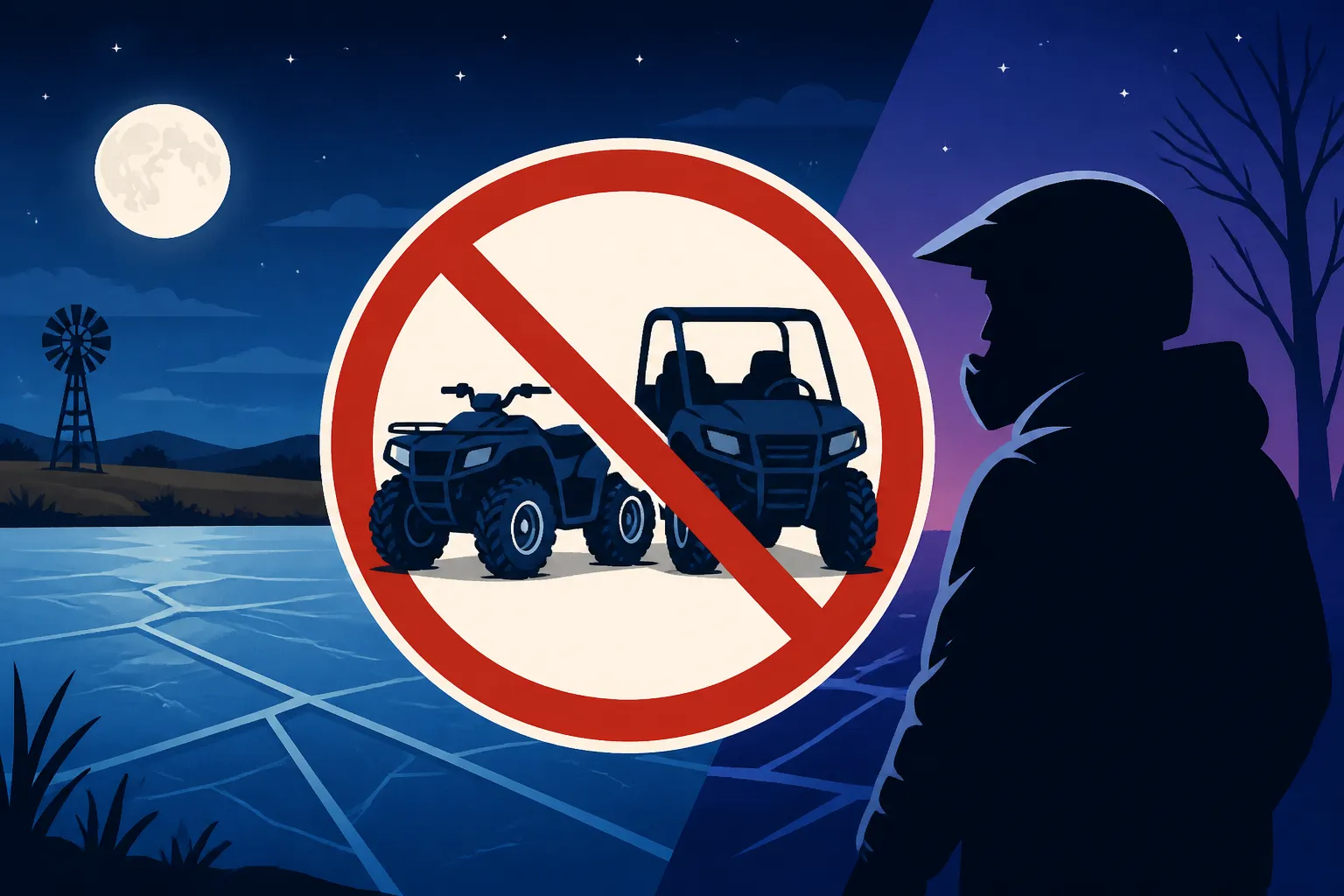
There is no safe assumption that an ATV or UTV may remain on Kansas ice after dark. Access rules can depend on who manages the lake and the area around it, and a rule for one park or access point may not apply elsewhere. At locations with daylight access hours, plan to have the machine off the ice by sunset. If posted rules set an earlier cutoff, follow the earlier time.
The distinction matters: being parked on the ice, fishing from a stationary machine, or heading back to shore after sunset can still leave you on the ice when access is closed. Plan to reach the designated exit point before the cutoff, not merely to start driving toward it at that time.
Before unloading, check the rules for the specific lake and access area. Look for posted hours and restrictions at the entrance, designated ice access, and park office. If the timing is unclear, call the managing office before you go. A state rule, park rule, closure notice, or local sign may affect what is allowed at that location.
For an overview of the rules that apply to machines used for ice fishing, see Kansas Ice Fishing Vehicle Rules. The practical point is simple: do not treat a frozen lake as open for machine use around the clock unless the responsible authority clearly says it is.
What the cutoff means for your ride
A cutoff is easiest to follow when you build it into the whole trip. Ice conditions, distance from the access point, a stuck machine, or a slow group can all make the return take longer than expected. If you wait until the last few minutes of daylight to leave a far side of the lake, you may not make it back in time.
| Situation | Safer plan |
|---|---|
| You are driving onto the ice | Use the designated access point and check its operating hours first. |
| You are fishing far from shore | Set a departure time that leaves a generous return margin before the cutoff. |
| The group includes children or inexperienced riders | Allow extra time to gather gear and move together. |
| A machine is stuck or has a mechanical problem | Do not count on being able to resolve it quickly before dark; contact the site manager if needed. |
| A sign gives an earlier closing time | Leave by that time, even if sunset is later. |
| The posted rule is unclear | Ask the managing office before unloading rather than guessing on the ice. |
Do not rely on the time shown on a phone as your only reminder. Set an alarm well before the cutoff and agree on a group departure time. Keep enough daylight for the slowest rider to reach shore, remove equipment, and get the machine clear of the ice.
The cutoff also does not make ice travel safe up to the final minute. Conditions can change, and snow, wind, darkness, or a sudden equipment problem can make it harder to find an entry route or spot hazards. Leave while you still have useful light and time to respond to trouble.
Access hours for ice fishing may differ from the hours for a nearby road, campground, or parking area. A gate remaining open does not automatically mean you can use a machine on the ice. Likewise, permission to fish does not necessarily give you permission to drive across the lake. Check the specific vehicle and ice rules, not just the general hours for the property.
Check the entry point, permit, and local restrictions
Use only an approved ice entry point when the managing agency requires one. A convenient bank, boat ramp, or gap in the shoreline is not necessarily an authorized route for a machine. The entry point may also be closed because of conditions or other restrictions. Review Kansas Ice Entry Point Rules before deciding where to unload.
The timing for getting onto the ice is another detail to verify. Some Kansas public access rules for ice fishing may allow entry before the ordinary daytime period begins. For example, check the instructions covered by Ice Fishing Access Starts a Half Hour Before Sunrise rather than assuming the same opening time applies at every location. An early opening does not imply that the evening cutoff is extended.
A permit also has limits. A permit that allows a vehicle on certain park roads does not necessarily authorize riding on frozen water, off designated routes, or after hours. Read the rules for the particular area and the particular use. The Park Permit That Covers Roads, Not Trails explains why having a permit is not a blanket approval to operate a machine wherever you choose.
Kansas does not issue a general state OHV permit for all off-road riding, but that does not mean every public area is open to machines without conditions. Site rules, designated routes, closures, and required permissions still matter. See Kansas Has No State OHV Permit for the distinction between a statewide permit and location-specific access requirements.
Visitors should not assume that a registration sticker or permit from another state replaces Kansas or site-specific requirements. Check Kansas Honors No Other State Sticker and confirm the rule with the property manager. Even where an out-of-state document is not required, the local access hours and ice-entry restrictions still apply.
When the wording is confusing, ask a precise question before the trip: “What time must an ATV or UTV be off the ice at this access point, and which entry route is permitted?” Calling a State Park Office Before You Load Up can help you plan what to confirm. If you are using a wildlife area or another public property, contact the office responsible for that location rather than assuming a nearby state park’s rule applies.
Plan your return before you drive onto the ice
A little preparation can prevent a rushed return or an unplanned stay after the access period ends. Before the trip, identify the permitted entry and exit route, note the posted hours, and choose a departure time that leaves room for delays. If the site has a phone number, save it before cell service becomes unreliable.
A useful routine is:
- Confirm who manages the location. The rules may differ between a state park, wildlife area, federal property, or private site.
- Check the current access notice. Look for hours, ice restrictions, entry-point instructions, closures, and any limits on machines.
- Set a return deadline earlier than the official cutoff. Make it realistic for the farthest point you plan to travel from shore.
- Tell everyone in the group. Agree that the group turns back together, even if someone wants to fish longer.
- Keep essential gear easy to reach. A charged phone, basic recovery equipment, warm clothing, and a light can help with a delay, but they do not extend legal access hours.
- Leave promptly if conditions or visibility worsen. Do not wait for the cutoff if the safest choice is to return sooner.
If a machine breaks down or becomes stuck near closing time, do not assume that the posted cutoff disappears. Contact the property manager or appropriate local assistance and follow their direction. Avoid making a risky recovery attempt in poor visibility or on uncertain ice simply to save time.
Also separate the question of a state or park permit from the question of whether the ice is safe. A permit or open access period is not a guarantee of safe ice thickness or uniform conditions. Ice can vary across a single lake, especially near inlets, outlets, moving water, structures, and areas affected by changing weather. Use current local information and make conservative decisions; do not let a schedule pressure you into crossing questionable ice.
The most reliable plan is to be off the ice well before the posted night restriction begins. Confirm the exact cutoff and access route for the location you intend to use, and treat signs or direct instructions from the managing authority as controlling. If no clear rule is available, do not assume that after-dark machine access is allowed.
Disclaimer
This article is for general informational purposes only and does not constitute professional advice. Laws, prices and regulations vary by location and change over time. Consult a qualified professional for guidance on your specific situation.